
Tiny Home Set Up and Delivery Checklist
What happens on your property after the permit is approved: the site visit, excavation, foundation, delivery day, utility trenching, final grade, finish work, and the full step-by-step checklist our crew works from.
Planning for a new home on your property
After your permit has been approved and your house is either close to done or completed, your sales representative will let you know that the Set Up & Delivery team will contact you within a couple of days to say hello and set up a good time to meet on-site for a site visit.
The purpose of this visit is to help set expectations as well as proactively investigate any additional challenges. For a simplified list of what steps are needed to properly place a new modular ADU (accessory dwelling unit) or home on your property, skip to the step-by-step checklist at the bottom.
Obstacles, soil and excavation
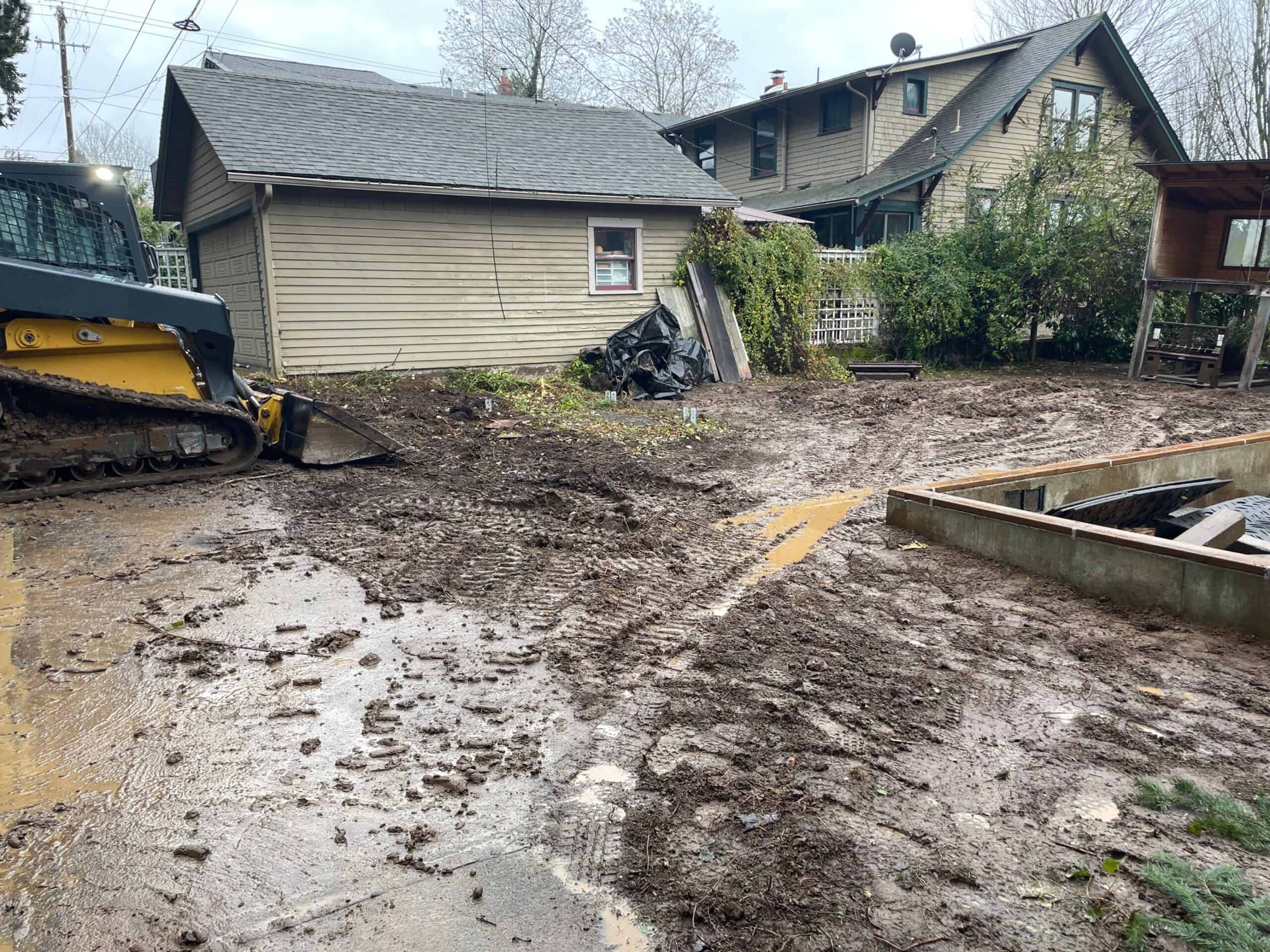
Depending on the soil and the season we could make quite a mess. Most of the time we are able to final grade pretty well and run a rake over the lawn, but sometimes when we’re dealing with sticky wet clay we do what we can to get rough grading done, the idea being that someone can landscape when things dry up and firm up. Many inspectors are cracking down and no longer accepting only straw. Occasionally, there is a chance we’ll need to hydroseed or spread barkdust. ADUs and tiny homes placed in Portland may pass final erosion inspections with grass seed and peat moss spread on top.
We can remove obstacles like fences and shrubs that are in the way, and for an additional fee we can reinstall the fence. However, we prefer to leave fence construction to the experts. Excavation generates a significant amount of displaced dirt: expect multiple dump truck loads by the time we’ve dug the foundation and utility trenches. We’ll restore the area as well as we can, but note that excavation can often damage or destroy any grass in the affected area.
Identifying foundation and utility locations
Using stakes, the footprint of the home is identified on your property. If the on-site markers differ from the site plan we’ll most likely have to get the site plan revised at the permit office. While this isn’t exactly a big deal, it has the potential of setting us back a couple of days.
Next we’ll track down the existing utility connections. We may dig holes with a shovel, crawl into the crawl space, look in the garage, and so on to figure out exactly what we’ll be tying into. We’ll also need to measure distances for material ordering quantities. If we have a hard time finding your utilities we may have to call in a private locator to help us out. This is not very expensive and can save a lot of time.
Erosion control and tree protection
The necessary precautions for placing a new structure vary by location. Before we begin, we’ll install wattles (straw logs), silt fencing, and street drain protection for the erosion control inspection. Additionally, we’ll set up fence posts and a chain-link barrier to safeguard the trees on your property. A tree inspector will need to review these measures before we proceed with construction.
As the foundation excavation begins, we’ll typically only dig for the utilities at this point if we won’t be able to get excavator access after the house is in place. Forming the foundation itself typically takes less than a day.
When it’s time to place concrete, a truck with a tow-behind concrete pump is dispatched. Its hose can be up to a few hundred feet long. The pump operator puts the sections of hose together until it’s long enough to reach the foundation. Then a big concrete truck rolls up and before you know it the foundation is poured. Depending on your road situation this can be tight for traffic and may take a little pre-planning with parking spaces.
For any needed backfill, we’ll get on site with the excavator and grind and clank around until we have a rough final grade. The purpose of this grading is only to get the house in place as easily as possible. The final grade comes later.
Delivering a modular accessory dwelling unit
At this stage, we’re ready to deliver the modular home, a process that typically takes most of the day. Our team usually arrives between 11 AM and noon, though this timing can vary by a few hours. Depending on the site conditions and the complexity of the move, the delivery may extend into a second day. Once the home is positioned, we move straight into setting up the utilities.
To connect all necessary utilities, we’ll be digging trenches throughout the site. Depending on your sewer setup, some trenches may need to be quite deep. We’ve gone as deep as 11 feet to tie into a sewer line. This process displaces a significant amount of dirt, but we do our best to keep the site, the street, and ourselves as clean as possible. Trenching and utility connections typically take a few days, followed by an inspection. Expect the area to be fairly disrupted for about 4 to 5 working days.
After utilities are connected and inspected, we backfill all the trenches and get serious with the excavator. This is where we try our best, and we ask you to remember that landscaping just isn’t in our makeup, even if it looks like it is. After going at it with the excavator we’ll run a rake over the site if it’s rake-able. Once we’ve got the grade where we want it, we do the final erosion control. Depending on what is required at your location we may not do final erosion control on the same day as the final grade.
We finish the siding, deck, covered porch, paint, drywall crack repair, or any other touch-ups needed after transportation. Depending on what options you picked this may take around a week of work. After all jurisdiction requirements are met, we call for the final inspection. Once finished, a Wolf Industries employee performs one last cleaning of the home. This is when you can expect us to email you a final invoice.
Final walkthrough
At the start of our final walkthrough, we present you with the project binder, packed with useful information. Inside, you’ll find details like paint types and colors, manuals, warranty paperwork, maintenance instructions, and more. During the walkthrough, we’ll highlight a few key things, such as how to clean your HVAC (heating, ventilation, and air conditioning) air filter. Once everything is reviewed, we’ll finalize the warranty paperwork and leave you with a copy. This step is mostly a formality. If any issues come up later, give us a call and we’ll take care of it.
The step-by-step checklist
Here’s a simplified checklist of our tiny home set up and delivery process, laid out step by step. It’s the same list our field crew works from.
Updated 2026: Wolf homes are now all-electric, so the gas items below only apply if you are adding a gas service to your project separately. Vent counts and anchor layouts are model-specific and come from the current plan set.
Site visit
- Exchange contact info; verify correct info for daily contact
- Set landscape expectations
- Make a shared project note
- Bring permit to site
- Mark out corners of house
- Locate utilities and measure lengths
- Make parts list for utility connections
- Bracket project extents for utility locates
- Take pictures to post to the project note
- Have customer sign the utility service agreement if a new meter is being set
Erosion control / tree protection
- Install erosion control
- Install tree protection if necessary
- Call in necessary inspections
- (Portland) Post erosion concerns poster; write permit number and address on poster
Excavation
- Mark offsets to keep location accurate
- Dig foundation
- Dig utility trenches if foundation or house will limit excavator access
- Install necessary erosion control
Forming
- Form footings and stem walls
- Install foundation vents per the model’s plan set; do not interfere with hold-down anchor locations
- Install rebar
- Install grade nails
- Install hold-down anchors at proper measurements to match house all-thread
- Bring mudsill anchors for inspector to witness
- Install UFER ground at least 12” from ground level
- Install necessary erosion control
- Call necessary inspections
Pour concrete
- Spray forms liberally with form oil
- Pour footings at a 4” slump and the walls at an 8” slump
- Rough grade concrete with gloves
- Wiggle the wall to even out the top of concrete
- Trowel top of concrete to provide smooth finish
- Install mudsill anchors flush with outside of wall; refer to shear schedule for spacing; one anchor 6” from end of each mudsill board (12’ long)
- Make sure UFER ground is protruding toward the inside of the foundation at an angle
Backfill / mudsill
- Remove forms and load on truck/trailer to be brought back to shop (do not leave concrete forms on site)
- Make sure top of concrete is level and free of debris
- Install mudsill on foundation
- Move dirt to rough location needed for final grade
- Backfill with house delivery in mind
- Trench for utilities if house will limit excavator access
- Install necessary erosion control
House delivery
- Move the house over foundation and lower into place
- Install shear plywood
- Connect hold-down straps or all-thread
- Spread plastic over dirt in crawl space
- Extend radon vent down to ground and tape plastic around tee
- Put radon vent warning sticker on radon vent
- Install dryer vent: use only hard pipe, a maximum of one screw per joint, and tape all joints
- Start drywall repair: re-tape if existing tape is broken; carve out mud and reuse existing tape if it is in good shape
Trenching
- Pothole utility connections
- Make list of needed material for the utility connections
- Dig utility trenches: 24” wide if gas and electrical will be in the same trench; 24” wide if water and sewer are in the same trench in CRWWD; water to be 24” deep in Portland
- Install necessary erosion control
Plumbing
- Install under-house plumbing
- Connect bath sink and shower together before connecting to main line directly downstream from the toilet
- Connect kitchen sink and washer to main line downstream of bathroom group
- Install two-way cleanout 24” from house at exterior
- If using an ejector pump: use all pressure pipe and fittings; do not use transition glue under any structure; tie into top 90 degrees of mainline; make sure vent pipe leaves room for gutter
- Make sure underground pipes are properly sloped and bedded
- Flush water pipes thoroughly before connecting to house
- Install tracer wire for water and drain
- Extend 3/4” CPVC pressure relief pipe to within 24” of ground
- Extend 3/4” PVC condensate drain to drain in appropriate location
- Put plumbing on test
- Call necessary inspections
Electrical
- Install conduit
- Upsize conduit if over 150’
- Schedule electrician
- Report length of conduit run
Gas (only if the project includes a gas service)
- Install underground gas line with 12” separation from electrical
- Install union and gas valve directly outside of the house
- Install tracer wire
- Put on test: 15 psi using a 30 psi gauge
- Call inspection
Final grade
- Backfill trenching
- Slope grade away from house
- Try to make decks less than 30” off final grade to avoid handrails
- Spread topsoil at trench backfill if necessary for existing lawn reconstruction
- Install necessary erosion control
Deck / siding
- Install deck per local code: handrail if 4 or more risers; guard rail if deck is more than 30” above ground; risers within 1/4” tolerance; 3’×3’ gravel landing at bottom of steps; per standard details if larger than standard 40”×40”
- Install siding over shear plywood
- Caulk joints
- Silicone threshold
- Touch up all exterior paint
- Call final inspection
Final cleaning
- General cleaning; schedule final cleaning
- Sweep up large debris
- Make sure there is no mud on outside of house
- The final cleaning of the outside of the house is the delivery crew’s responsibility
Paint
- Final crack touch-up
- Final paint touch-up on outside and inside of house
Plumbing check
- Check that the shower valve’s temperature safety mechanism is not inhibiting the valve’s full range of motion
- Make sure water heater operates normally
Electrical check
- Check all lights and fans to ensure proper function
- Make sure all appliances are plugged in and working
Doors / windows
- Make sure door is sealing against threshold
- Test all doors to ensure proper latching
- Make sure all cabinet doors are properly aligned
- Make sure windows slide and latch properly
HVAC
- Spray air filters clean
- Pour water into coil drain pan to test condensate drain
- Test to ensure proper function
Customer
- Ensure customer is happy and has no issues
- Bring the customer a Wolf sweatshirt
- Ask for a review online
Final walkthrough
- Present paper copy of final invoice
- Present project binder; explain each section briefly
- Sign warranty sheet; both parties sign both copies, one copy for each party
- HVAC filters and operation; explain switch next to indoor unit
- Static pressure vent (leave open)
- Explain moisture situation
- Range: explain broiler drawer if equipped; show how to adjust low setting on burners
- Explain extra switch by sink if no sink grinder is installed
- Explain air transfer fans if installed
- Show water shut-off location
- Show sewer cleanout location
- Explain outdoor HVAC maintenance: none except a possible coil clean after 5–10 years; do not pressure wash, it can bend the coils
- Show water heater strainer and explain that both cords always need to remain plugged in
- Answer any questions
For more info and photos, visit our Delivery and Setup page. Questions about a specific site? Start with a free property evaluation.