
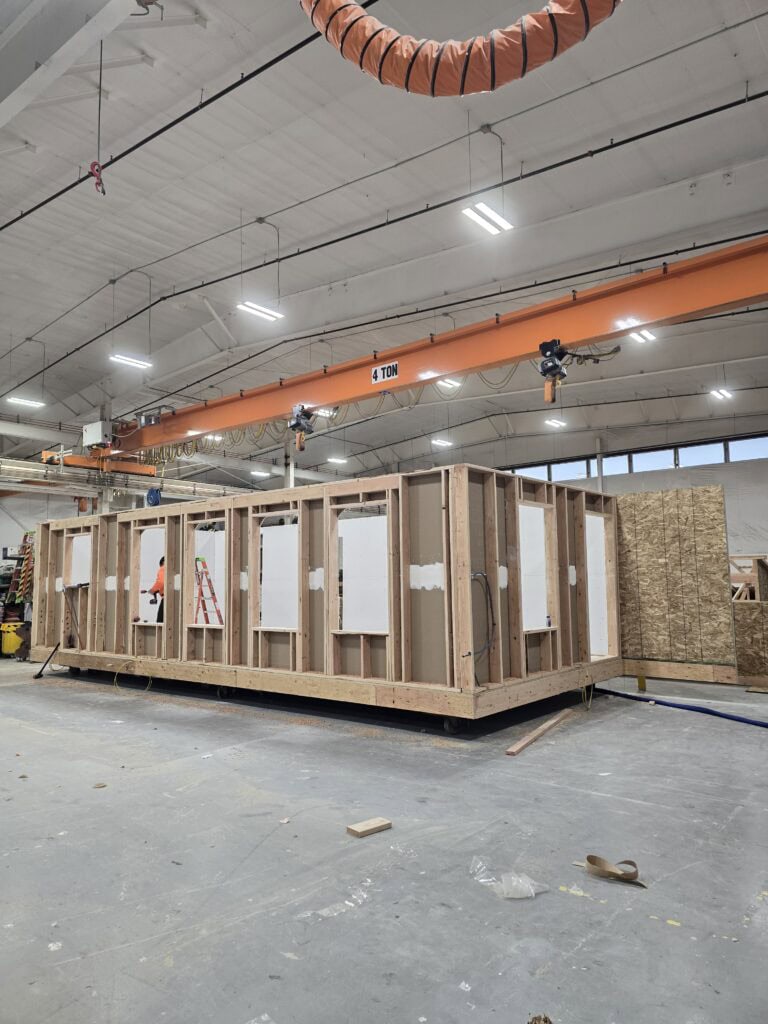
What if the extra space your family needs is already possible, but the traditional building process is what is holding you back?
For many homeowners across the Pacific Northwest, the idea of adding an accessory dwelling unit (ADU) is exciting. A backyard home could create space for aging parents, adult children, rental income, guests, downsizing, or long-term flexibility. But once people start looking into design, permits, contractors, sitework, timelines, and costs, the dream can start to feel overwhelming fast.
That is where a prefab ADU can make a major difference.
A prefab ADU, also called a prefabricated accessory dwelling unit, is built using a controlled off-site construction process before being delivered and completed on your property. Instead of building the entire home piece by piece in your backyard, much of the work happens in a production environment where the process can be more consistent, organized, and efficient.
At Wolf Industries, we have built over 600 prefab ADUs and modular homes throughout the Pacific Northwest. That experience matters. Every property is different. Every jurisdiction has its own requirements. Every project needs careful planning before construction begins. Our process is designed to help homeowners understand what is possible, avoid unnecessary confusion, and move forward with a proven path.
If you are considering a prefab ADU, the best first step is to request Wolf’s Free Property Evaluation. It is the simplest way to learn what may be possible on your specific property before spending significant time, money, or energy on a project that may need to be adjusted.
What Is a Prefab ADU?
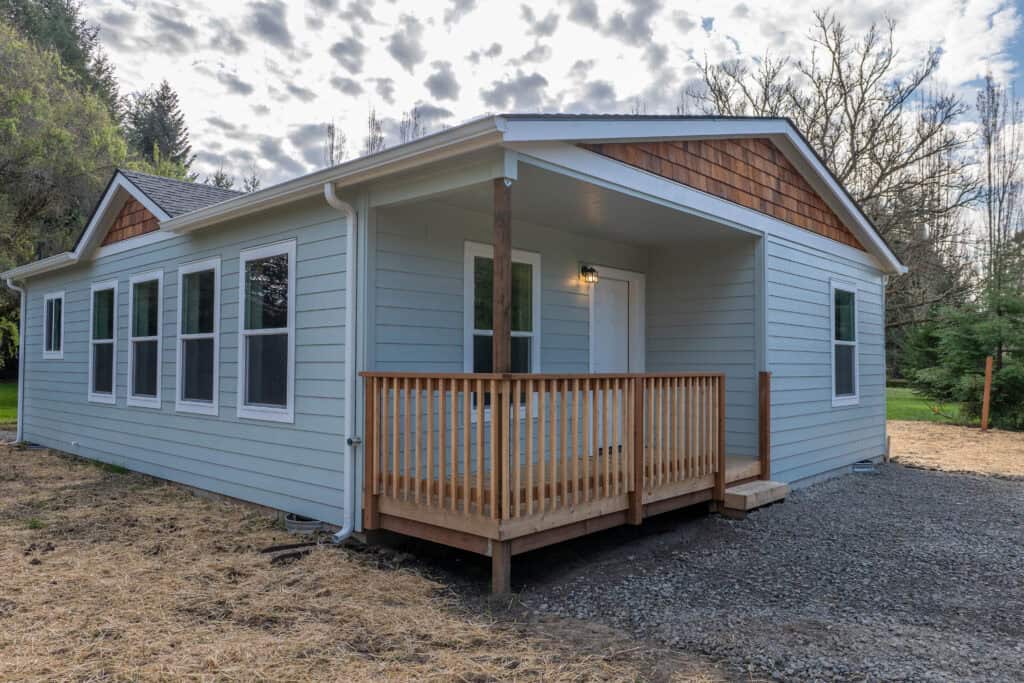
A prefab ADU is an accessory dwelling unit that is partially or largely built off-site before it is installed or completed on your property. ADU stands for accessory dwelling unit, which usually means a smaller secondary home located on the same lot as a primary residence.
Prefab ADUs are often used as:
- Mother-in-law suites
- Backyard cottages
- Guest houses
- Rental units
- Housing for adult children
- Aging-in-place homes for parents
- Downsizing options
- Flexible long-term property investments
The key difference between a prefab ADU and a traditional site-built ADU is the construction process. With traditional construction, the home is built almost entirely on the property. That can expose the project to weather delays, jobsite congestion, multiple subcontractor schedules, and a longer period of disruption around the home.
With a prefab ADU, much of the home is built in a controlled production environment. Sitework can often happen separately while the home is being constructed. That creates a more streamlined approach and can reduce some of the common frustrations associated with traditional construction.
Why More Homeowners Are Considering Prefab ADUs
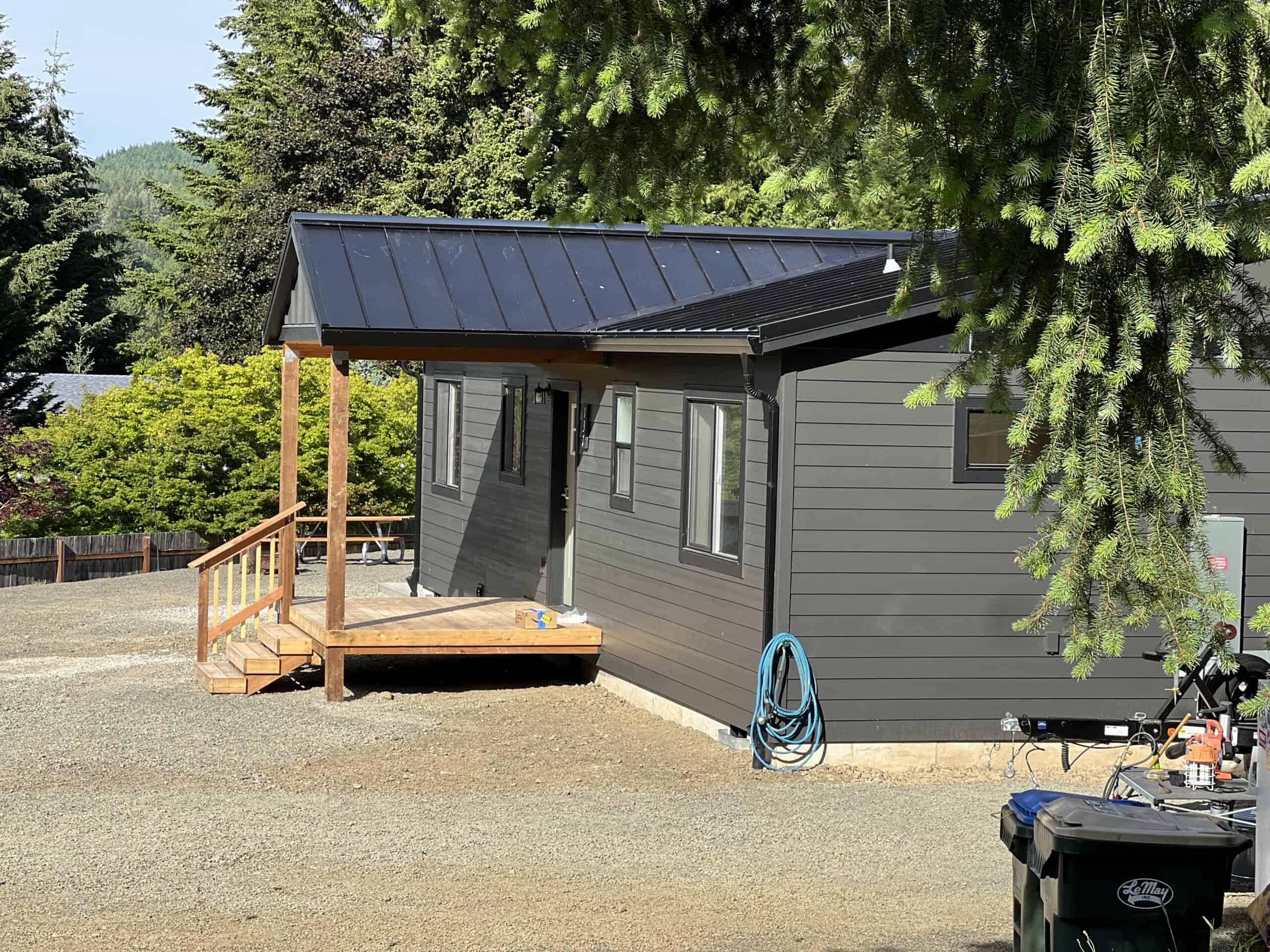
Across Washington and Oregon, homeowners are looking for practical ways to make their properties work harder. Housing is expensive. Families are changing. Aging parents may need to live nearby. Adult children may need a place to land. Property owners may want long-term rental income or a flexible guest space.
A prefab ADU can help answer a very real question:
“How do I create more usable living space without taking on the uncertainty of a full custom build?”
For many homeowners, the appeal is not just the finished ADU. It is the process.
A prefab ADU gives you a clearer starting point. Instead of beginning with a blank page and hoping the design, budget, jurisdiction, and contractor team all come together smoothly, you start with a proven model, a defined process, and a builder that understands the full path from property evaluation through delivery and setup.
That does not mean prefab is instant or one-size-fits-all. Your property still matters. Local rules still matter. Site conditions still matter. Utilities, access, setbacks, grading, stormwater, trees, and permitting all need to be reviewed.
But with the right builder, prefabrication can remove a lot of unnecessary guesswork from the process.
The Advantages of the Prefabrication Process for ADUs
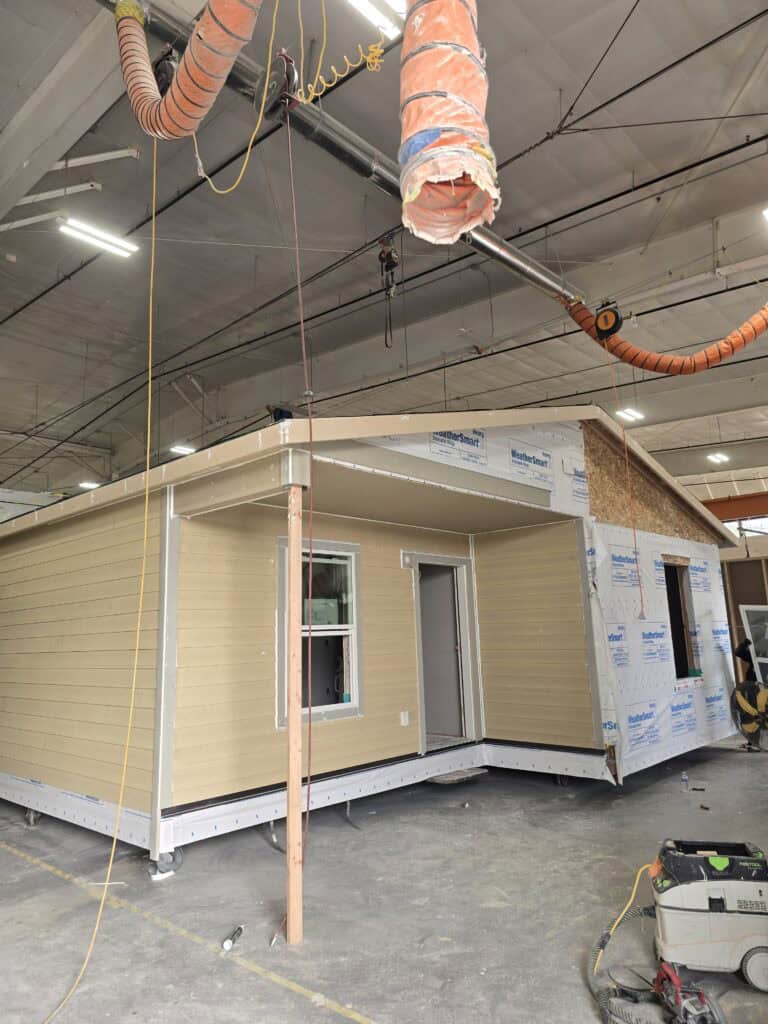
A prefab ADU is not just about speed. It is about control, consistency, and planning. Here are some of the biggest advantages of the prefabrication process.
1. More Construction Happens in a Controlled Environment
When a home is built outdoors from the ground up, the project is exposed to the elements. Rain, mud, wind, cold weather, and scheduling conflicts can all affect progress. In the Pacific Northwest, that matters.
Prefab construction allows much of the home to be built in a controlled production environment. Materials, tools, workers, and inspections can be coordinated in a more predictable setting. That can help create a more organized build process and reduce the number of variables that affect the home during construction.
For homeowners, this can mean fewer unknowns and a smoother experience.
2. Less Disruption on Your Property
Traditional construction can turn a backyard into a jobsite for months. Materials may need to be stored on-site. Subcontractors come and go. Weather can slow progress. Noise, traffic, and disruption can become part of daily life.
With a prefab ADU, much of the construction happens before the home arrives. There is still important sitework to complete, including foundation, utilities, access planning, and final setup, but the amount of on-site construction can be reduced compared to a fully site-built project.
That can be a major advantage for homeowners who are living on the property during the build.
3. Sitework and Home Construction Can Move Forward Separately
One of the strongest advantages of prefab construction is that the home and the site can often move forward on parallel tracks.
While the ADU is being built off-site, work can be happening on the property to prepare for delivery and setup. This may include excavation, utility planning, foundation work, permit coordination, and site access preparation.
That overlap can create a more efficient project flow than waiting for every step to happen sequentially on-site.
4. Proven Models Can Simplify Decision-Making
A custom build can create decision fatigue. Every wall, window, finish, layout, cabinet, fixture, and design choice may need to be selected from scratch.
Wolf offers proven prefab ADU and modular home models that give homeowners a clearer starting point. Instead of trying to invent the entire project from the ground up, you can begin with a design that has already been built, refined, and used in real Pacific Northwest projects.
That does not remove every decision, but it can make the process feel much more manageable.
5. A More Predictable Path Than Starting From Scratch
Every ADU project has variables, especially when it comes to property conditions and local permitting. But the more experience your builder has, the easier it is to identify potential issues early.
Wolf has built over 600 prefab ADUs and modular homes throughout the Pacific Northwest. That gives our team real-world experience with a wide range of sites, jurisdictions, access challenges, utility conditions, and homeowner goals.
A prefab ADU still needs careful planning. But when you work with a company that has successfully completed hundreds of these projects, you are not starting from zero.
Wolf’s Proven Process for Prefab ADUs
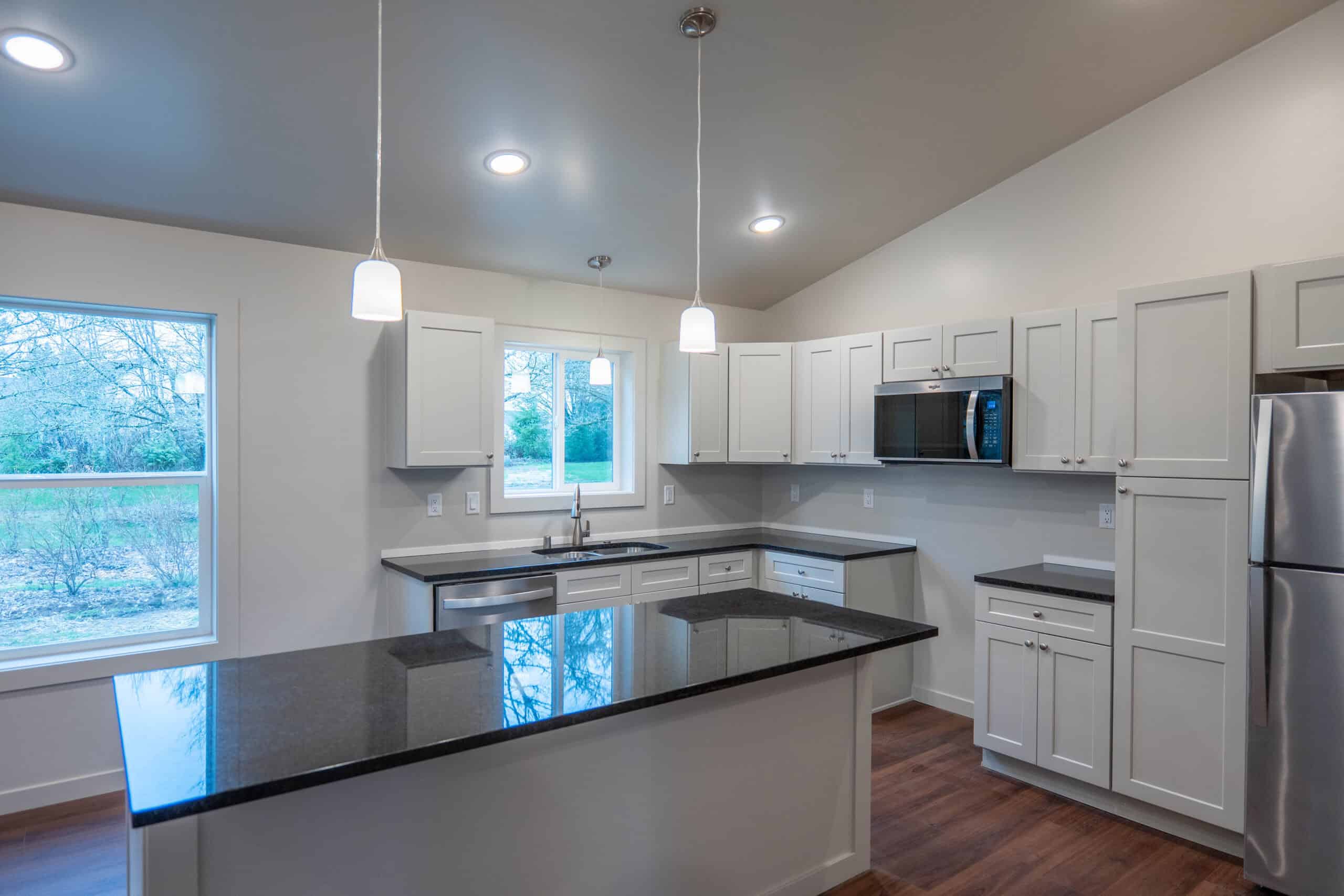
A prefab ADU is only as strong as the process behind it.
At Wolf Industries, we do not believe homeowners should have to figure out feasibility, permitting, production, delivery, setup, and site coordination alone. Our process is designed to help you move from “I wonder if this is possible?” to a clear understanding of what your property may support.
Here is how the Wolf process works.
Step 1: Start With a Free Property Evaluation
The Free Property Evaluation is the best first step if you are considering a prefab ADU.
Before you fall in love with a specific model or spend money on detailed plans, you need to understand your property. Can an ADU fit? What do local rules allow? Are there access concerns? What about utilities, setbacks, trees, slopes, or other site conditions?
Wolf’s Free Property Evaluation helps identify the early possibilities and potential roadblocks. It gives you a more informed starting point so you can decide whether it makes sense to move forward.
Start here: request your Free Property Evaluation and learn what may be possible on your property.
Step 2: Review the Right Model and Project Fit
Once there is a better understanding of your property, the next step is finding the right fit.
- Are you trying to create a home for aging parents?
- Do you want a backyard rental?
- Are you planning for adult children?
- Do you need a guest house?
- Are you looking for a downsizing option?
- Do you want a flexible space that can change with your family over time?
The right prefab ADU depends on your goals, your property, and your budget. Wolf’s model options make it easier to compare layouts and choose a direction that fits the way the home will actually be used.
Step 3: Feasibility, Planning, and Proposal
After the initial evaluation and model discussion, the project moves into more detailed planning. This stage is where the practical questions become more specific. What sitework will be needed? How will utilities connect? What does access look like? What will the jurisdiction require? What model makes the most sense for the property?
A strong prefab ADU process should not rely on vague promises. It should help you understand the real project, not just the home itself.
That is one of the reasons Wolf’s experience matters. Having built over 600 prefab ADUs and modular homes throughout the Pacific Northwest, we understand that the success of an ADU depends on both the structure and the property it is going on.
Step 4: Permitting and Project Coordination
Permitting is one of the most intimidating parts of building an ADU. Homeowners often start with a simple idea, then quickly discover that local rules, zoning, setbacks, utility requirements, and building codes all need to be addressed.
Wolf’s process is built to help manage that path. While every jurisdiction is different, our team has experience working through permitting and project coordination across many communities in the Pacific Northwest.
A prefab ADU is not a shortcut around local requirements. It still needs to be permitted correctly. But having a team that understands how prefab and modular construction fits into the permitting process can make the experience much easier to navigate.
Step 5: Production in a Controlled Environment
Once the project is ready for production, the home is built using Wolf’s prefabrication process.
This is where prefab construction really shows its strength. The home is built off-site by a team that works within a repeatable process. Materials, sequencing, labor, and quality control can be coordinated more efficiently than on a scattered outdoor jobsite.
For the homeowner, this means the ADU is taking shape while the property is being prepared for its arrival.
Step 6: Delivery, Setup, and Final Site Work
After production, the prefab ADU is delivered to the property and set in place. This stage requires planning, coordination, access review, equipment, and skilled crews.
Delivery is one of the reasons it is important to work with an experienced prefab ADU builder. The path to the property, the crane or placement strategy, the foundation, the utilities, and the finishing details all need to come together correctly.
Wolf’s process is designed around the full project, not just the home sitting in the production facility. That full-picture approach is essential for a successful prefab ADU.
Is a Prefab ADU Right for Your Property?
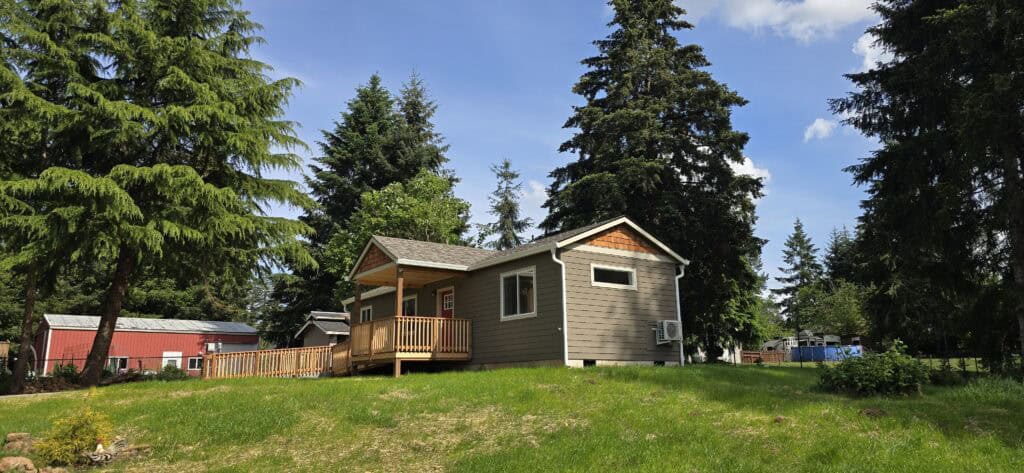
A prefab ADU can be a great option, but the answer depends on your specific property.
Some lots are straightforward. Others have challenges such as tight access, slopes, utility limitations, trees, septic considerations, stormwater requirements, or zoning restrictions. The only way to know what is realistic is to look at the property itself.
That is why Wolf’s Free Property Evaluation is such an important first step.
Instead of guessing, you can get a clearer understanding of what may be possible. You can learn whether a prefab ADU makes sense, which models may fit, and what questions need to be answered before moving forward.
If you are even slightly curious about adding a prefab ADU, start with the Free Property Evaluation. It is the best way to move from wondering to knowing.
Common Reasons Homeowners Build a Prefab ADU
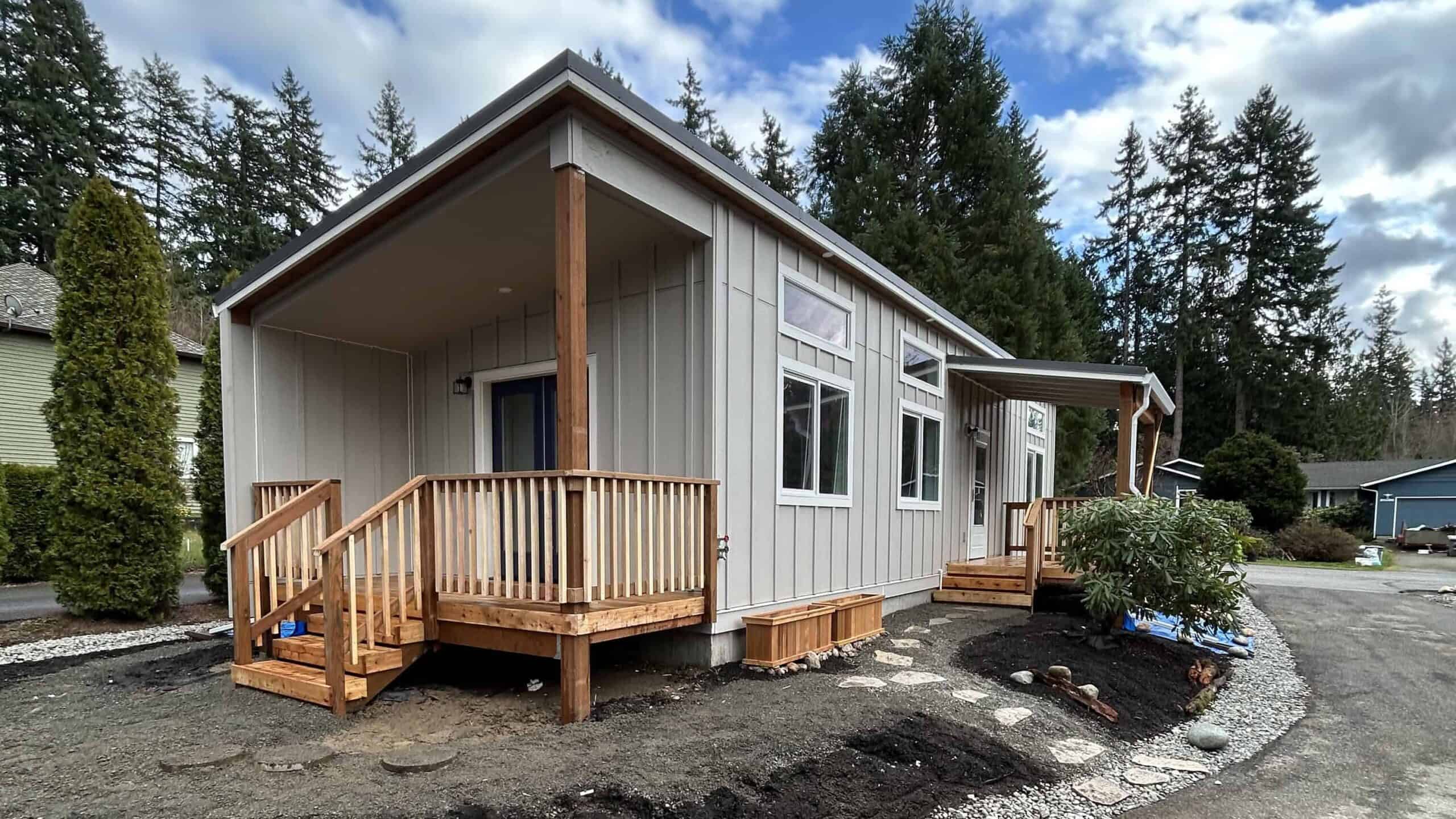
Every homeowner has a different reason for exploring an ADU, but many of the motivations are deeply practical.
Some families want to keep aging parents close while still giving them privacy. A prefab ADU can create a separate, comfortable home just steps away from the main house.
Some homeowners want to help adult children transition into independence without forcing them into an expensive rental market.
Others want a guest house that can serve family and friends without giving up privacy in the main home.
Some property owners are thinking long-term. They want a flexible asset that can support family needs today and possibly provide rental income or downsizing options later.
A prefab ADU is not just an extra building. It is a way to make your property more useful, more flexible, and more prepared for the future.
Prefab ADUs and the Pacific Northwest
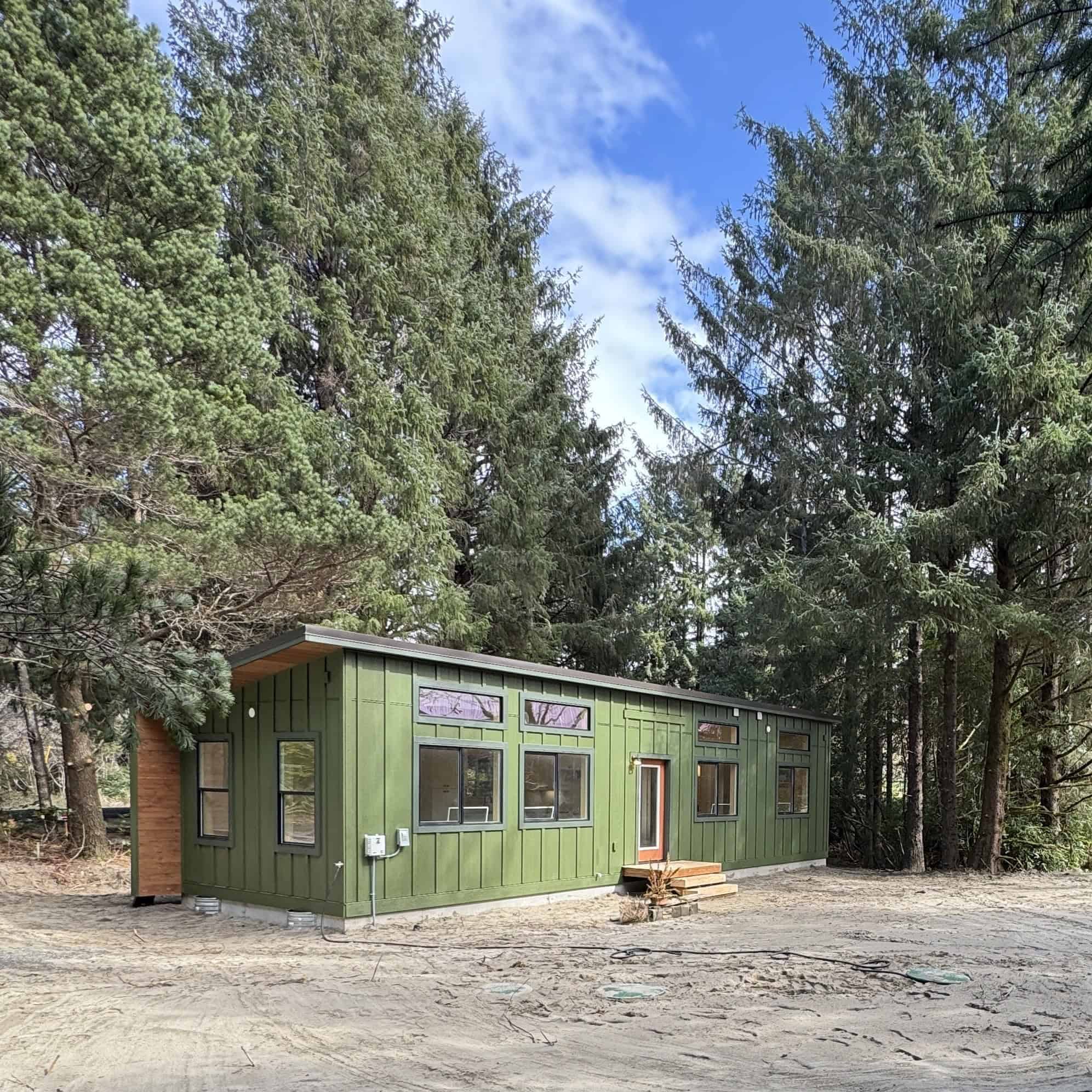
The Pacific Northwest is a strong fit for prefab ADUs because homeowners here often face a combination of rising housing costs, limited available land, changing family needs, and weather-sensitive construction conditions.
Building in Washington and Oregon also means navigating local jurisdictions, property-specific rules, and a wide range of site conditions. A prefab ADU can help simplify parts of the construction process, but local knowledge still matters.
Wolf’s experience throughout the Pacific Northwest gives homeowners an advantage. We understand that building an ADU in this region is not just about choosing a floor plan. It is about understanding the land, the rules, the delivery path, the utilities, and the final use of the home.
That is why starting with a Free Property Evaluation is so valuable. It connects the idea of a prefab ADU to the reality of your property.
The Best First Step: Free Property Evaluation
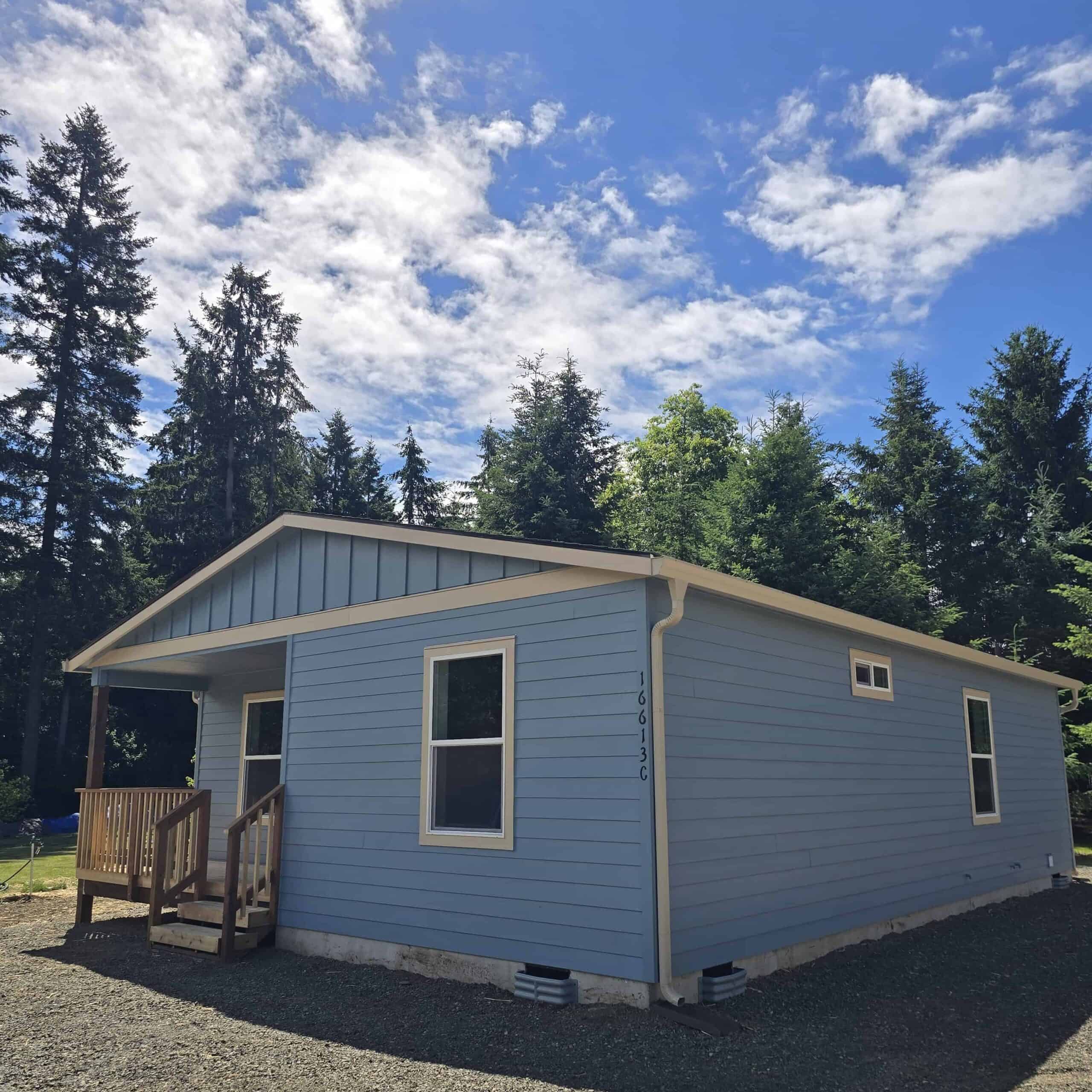
If you are researching prefab ADUs, you may already be asking questions like:
- Can I build an ADU on my property?
- How much space do I need?
- Which model would work best?
- What will my city or county allow?
- How difficult will permitting be?
- Can utilities reach the ADU?
- Will delivery access be a problem?
- What should I do first?
The best first step is simple: request Wolf’s Free Property Evaluation.
This gives you a practical starting point without forcing you to commit to a full project before you understand the basics. It helps you see what may be possible and gives you a better path for making decisions.
Build More Space With a Proven Prefab ADU Builder
A prefab ADU can be one of the smartest ways to add flexible living space to your property. It can help solve real family needs, create long-term options, and make better use of land you already own. But the builder you choose matters.
Wolf Industries has built over 600 prefab ADUs and modular homes throughout the Pacific Northwest. Our proven process is designed to help homeowners understand their property, choose the right model, navigate the project path, and move forward with confidence.
If you are ready to explore what a prefab ADU could look like on your property, start with Wolf’s Free Property Evaluation. Your property may have more potential than you think. The first step is finding out what is possible.