
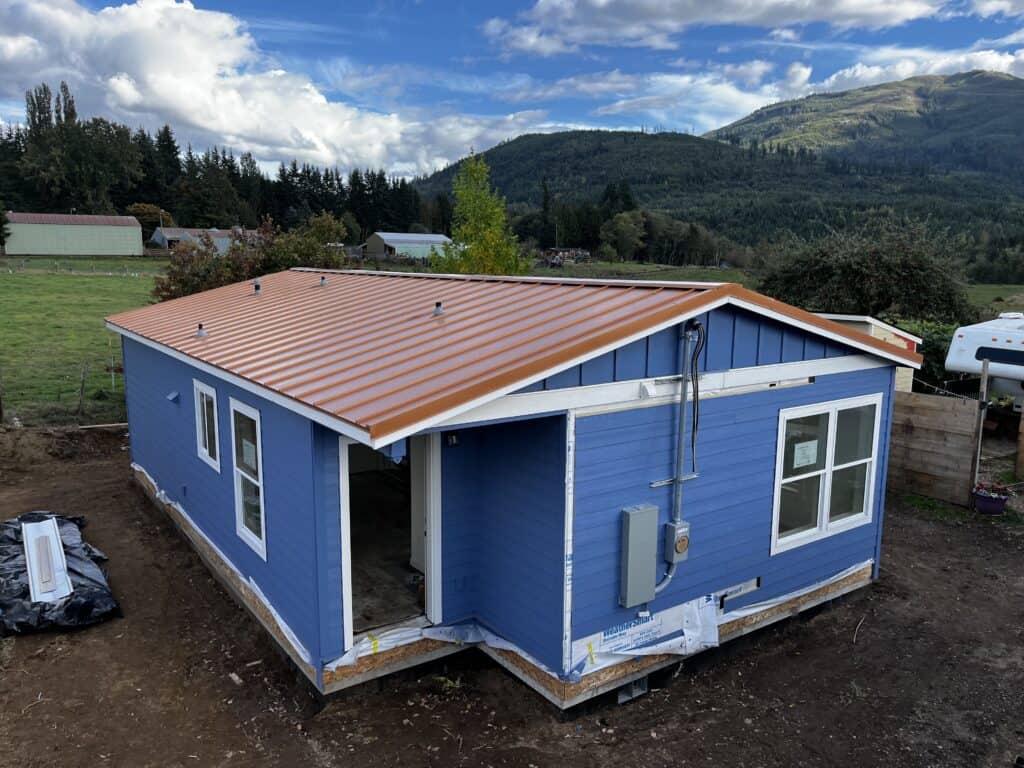
If you are searching “ADU Rules and Regulations Whatcom County,” you are probably not browsing for fun. You want a second living space that solves something real, fast. A place for parents who need to be close but not under the same roof. A rental that helps your mortgage feel less like a monthly punch in the face. A home office that does not steal your kitchen table forever.
Here is the problem: most people start with floor plans. Whatcom County forces you to start with feasibility. Because in this county, the difference between “easy” and “impossible” is rarely the building. It is the lot, the zoning, and the site constraints you cannot wish away.
This guide lays out what Whatcom County looks for, what has changed recently (especially inside Urban Growth Areas), and how to move from “I think we can build an ADU” to “we have permits in hand and a delivery date.”
If you want to skip the learning curve, start with Wolf’s free property evaluation. Submit your address and we will help you confirm feasibility, surface the likely constraints early (zoning, site layout, utilities, setbacks, critical areas), and map the cleanest path forward.
What counts as an ADU in Whatcom County?
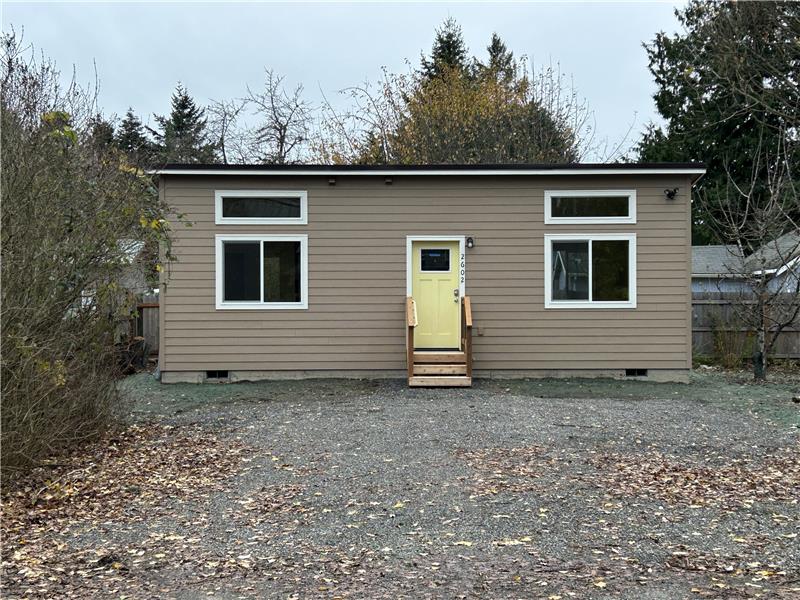
Whatcom County defines an Accessory Dwelling Unit (ADU) as a smaller, independent residential dwelling unit on the same lot as a stand-alone single-family home. ADUs show up in a few common forms:
Internal ADU
A conversion within the existing home (think basement apartment).
Attached ADU
An addition that shares at least one wall with the primary home.
Detached ADU
A stand-alone structure, or a conversion of an existing accessory building like a garage or barn.
If it has independent living facilities (sleeping, sanitation, and a kitchen setup), it is treated like a dwelling, which means it triggers zoning and permitting rules that are not optional.
The real “yes or no” checklist for your property
Before design, before pricing, before anything, Whatcom County tends to care about a handful of make-or-break factors.
Zoning and whether you are inside an Urban Growth Area (UGA)
Your zoning district matters, but so does whether your lot is inside a UGA. Recent Whatcom County updates created a clearer, faster path for many UGA lots, while lots outside UGAs often follow a more involved route.
Lot of record and plat restrictions
Some lots created through plats (especially those recorded after specific dates) can carry restrictions that require extra verification. Translation: two parcels that look identical on a map can have very different answers when the County reviews the recorded documents.
Critical areas
Wetlands, streams, habitat areas, steep slopes, and other regulated critical areas can reduce or eliminate usable building area. Sometimes the only way to know is to involve a qualified consultant and map out buffers early.
Water and wastewater
Your ADU needs legal water service and an approved wastewater path, whether that is sewer or septic. Septic can be the biggest bottleneck, especially if expansion, replacement, or reserve areas come into play.
The 2025 shift: UGA ADUs got simpler (for many lots)
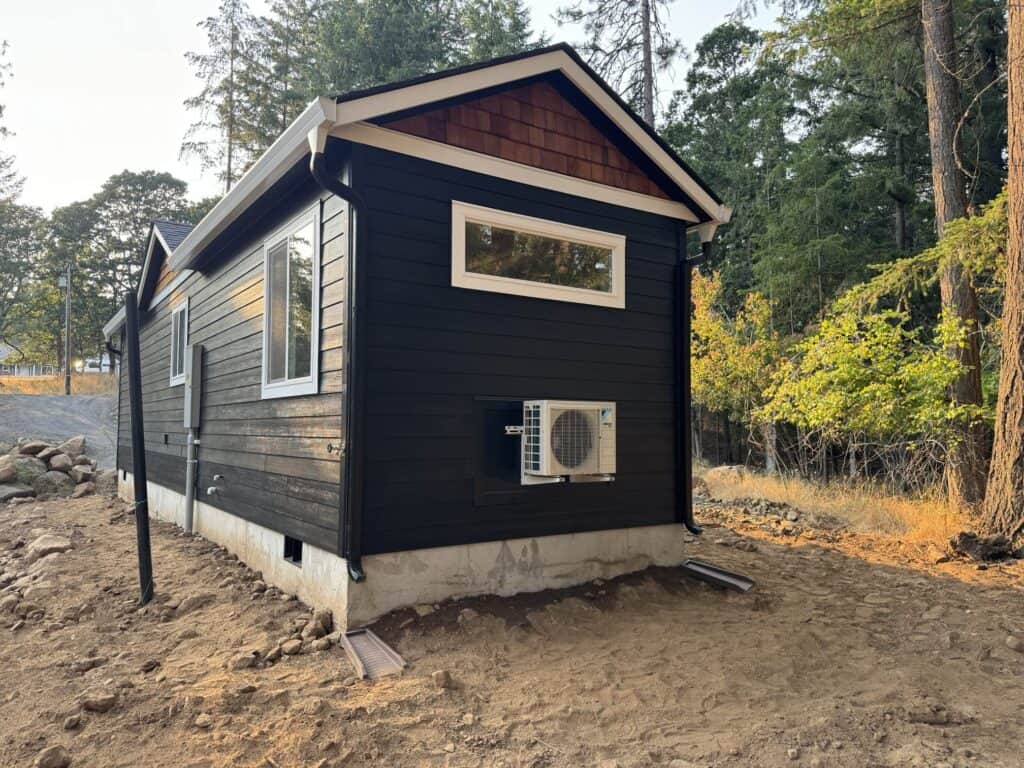
If your property is inside a UGA (and not in certain excluded zoning districts or special overlay areas), Whatcom County’s newer standards are designed to make ADUs easier to permit and more predictable to build.
Here are the highlights, in plain English:
Permitted use pathway
In many UGA cases, ADUs are treated as a permitted use, which can mean you apply directly for building permits instead of going through extra land use steps.
Up to two ADUs per lot
For eligible UGA lots, the County allows up to two ADUs per lot (attached, detached, or a mix).
No minimum lot size requirement (UGA eligible lots)
For eligible lots in UGAs, there is no minimum lot size requirement for either attached or detached ADUs, as long as the parcel is a confirmed lot of record.
No owner-occupancy requirement (UGA eligible lots)
For eligible UGA lots, owner occupancy is not required.
Conversions can be easier
Converting an existing structure (garage or barn) may be allowed even if that structure does not meet current setback or lot coverage standards.
Alley condition advantage
A detached ADU may be allowed on a zero-foot setback on a lot line that abuts a public alley.
Parking can be lighter on small lots
On lots smaller than 6,000 square feet, the County limits off-street parking to no more than one space per unit.
Size and design expectations still apply
The County still expects the ADU to be subordinate to the primary residence, with typical maximum size standards and site planning that reduces visual impacts.
This is the good news. But it comes with an important reality: “UGA eligible” is the key phrase. If your lot sits in certain overlays or excluded districts, or if site constraints limit buildable area, you may be back in the more traditional pathway.
Outside UGAs: where the lot size rules get serious
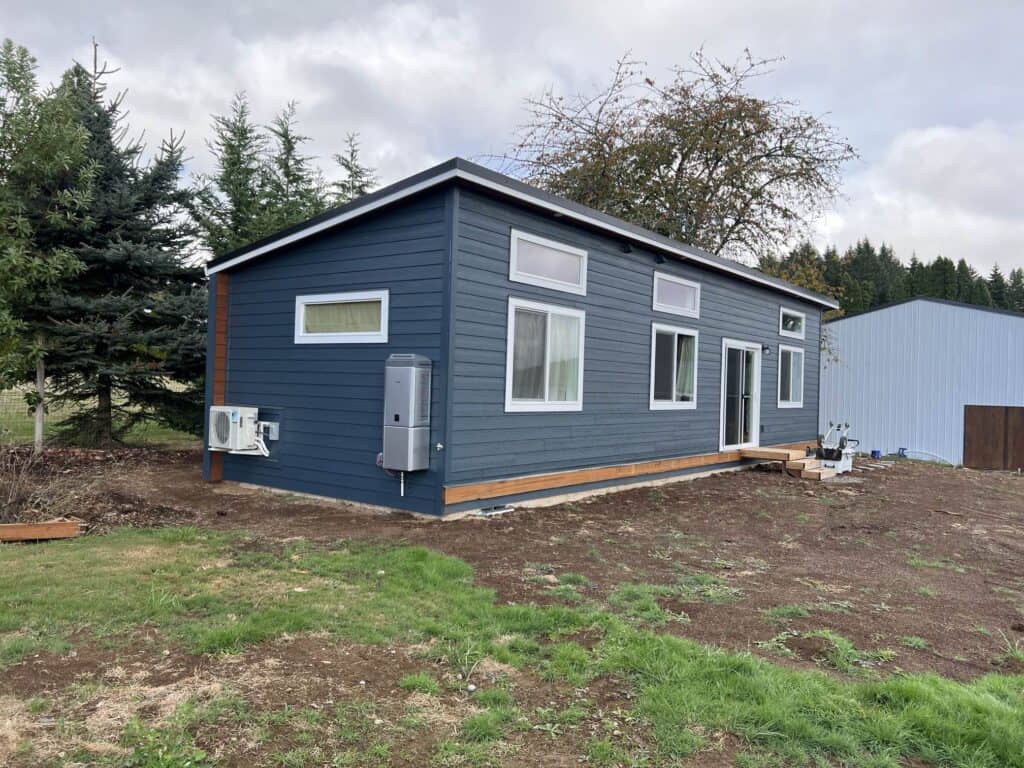
If you are outside a UGA, Whatcom County’s minimum lot size requirements for detached ADUs can become the controlling factor.
The County’s published table lays out minimums by district. A few examples that commonly surprise people:
Residential Rural (RR)
Detached ADU minimum lot size can be 4.5 acres.
Rural Residential Island (RR-I)
Detached ADU minimum lot size can be 10 acres.
Agriculture (AG)
Detached ADU minimum lot size can be 40 acres.
Rural Forestry (RF)
Detached ADU minimum lot size can be 20 acres.
Lake Whatcom Watershed Overlay
Minimums increase significantly (often 10 acres, and higher in some cases depending on underlying district).
Even when minimum lot size is not the issue, the approval path often is.
Typical pathway outside UGAs
Land Use Checklist
A smart first move when you are not sure which submittals apply. It helps clarify whether an Administrative Use Permit is required.
Administrative Use (when required)
This step can come with specific documentation requirements and may include site plan approvals and conditions you must carry into the building permit.
Building Permit
Once land use and administrative steps (if required) are satisfied, you move into building permit review, inspections, and construction rules.
The state-level rules you should know (because they influence local rules)
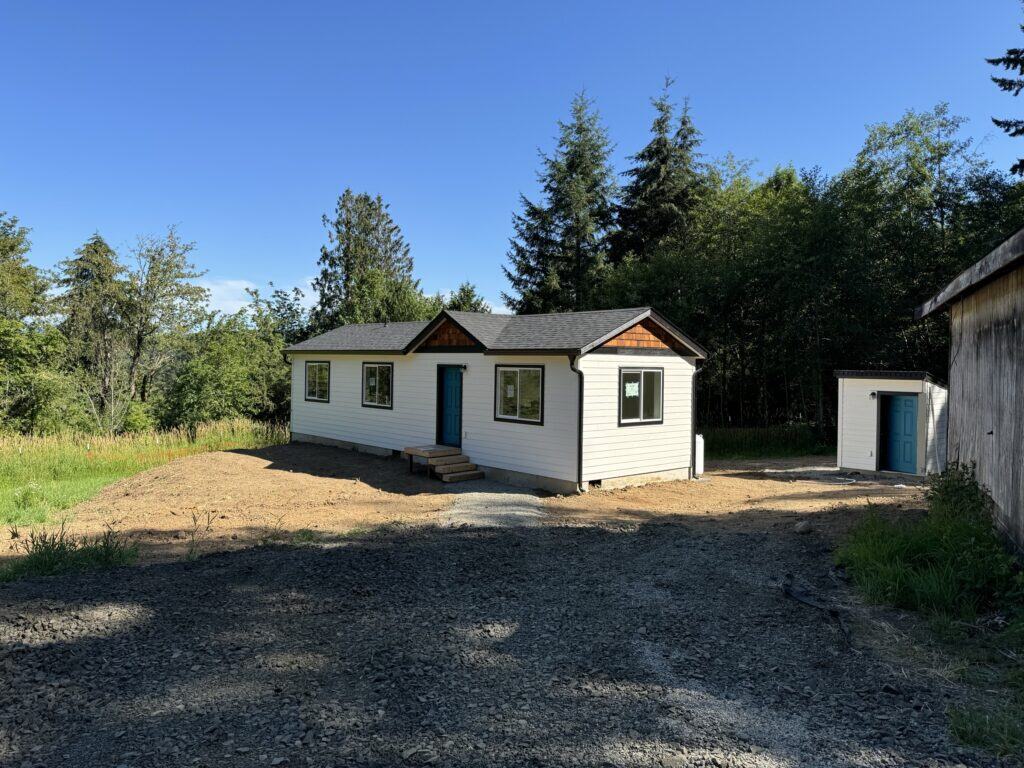
Washington State has been pushing jurisdictions to reduce friction for ADUs, especially inside UGAs under the Growth Management Act.
Key themes from state guidance and summaries include:
Two ADUs per lot in UGAs (in many cases)
The state framework pushes toward allowing two ADUs per residential lot in UGAs, subject to defined limitations.
Minimum size floor
Local rules generally cannot force ADUs below certain minimum size thresholds (commonly referenced as at least 1,000 square feet allowed).
Owner occupancy limits
State direction discourages owner-occupancy mandates in many UGA situations.
Parking restrictions near transit
Parking requirements are limited in specific contexts, especially near major transit stops.
Impact fee limits
For many ADUs, impact fees are capped relative to the primary dwelling.
What this means for homeowners in Whatcom County: the County’s direction of travel is clear, and many of the 2025 UGA updates reflect that. But the exact answer still depends on your parcel, your zoning, and your site constraints.
The biggest permitting mistakes we see (and how to avoid them)
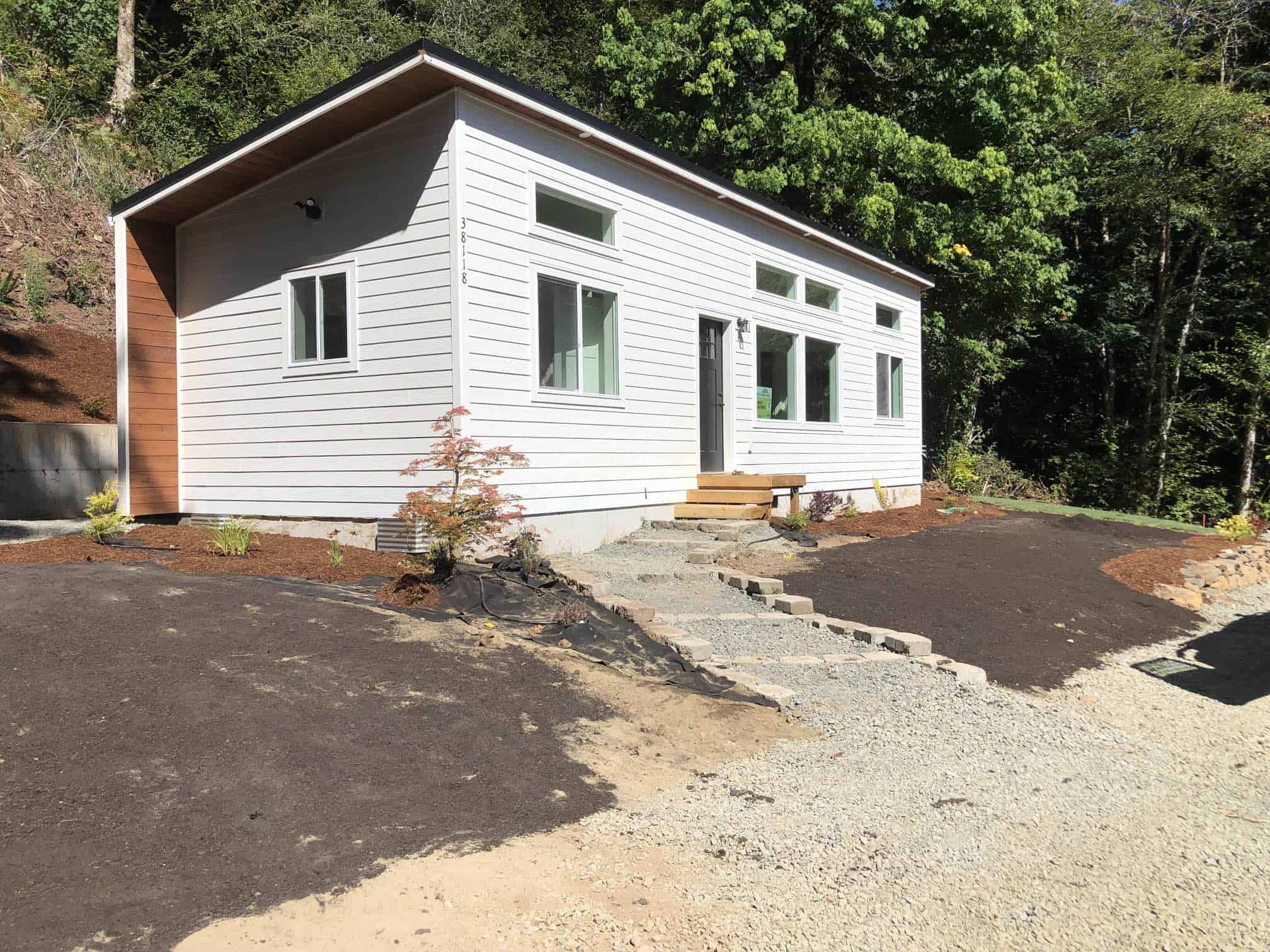
Mistake 1: Choosing a plan before confirming buildable area
Critical areas and setbacks can shrink your usable footprint quickly. Confirm buildable area first, then design to fit it.
Mistake 2: Ignoring wastewater reality until late
If you are on septic, treat it like a first-class constraint. Capacity, reserve area, and clearance requirements can dictate placement and size.
Mistake 3: Assuming “detached ADU” means “simple”
Detached ADUs can be straightforward in the right zoning and inside many UGA scenarios, but they can be far slower outside UGAs or in overlays with tighter rules.
Mistake 4: Underestimating access and site logistics
Driveway access, shared access expectations, delivery staging, utility trenching, and slope management can turn a good idea into a change order festival.
So why work with an ADU builder instead of piecing it together?
Because the hard part is not just construction. It is managing the chain of dependencies without blowing time or budget. With Wolf, the goal is simple: take the messy parts that derail ADU projects and make them boring.
Factory-built quality and predictability
Wolf builds indoors in a controlled environment, which reduces weather delays, improves consistency, and keeps the schedule moving.
A faster overall timeline through parallel work
While permits move forward, key parts of the build can be coordinated so the project does not sit idle for months.
Turn-key coordination
From early feasibility to permitting support to delivery and setup, the process is built to reduce handoffs, confusion, and “now what?” moments.
If you want to know what your property can support in Whatcom County, start here:
https://wolfind.com/contact/property-evaluation/
FAQs for “ADU Builder Whatcom County” searches
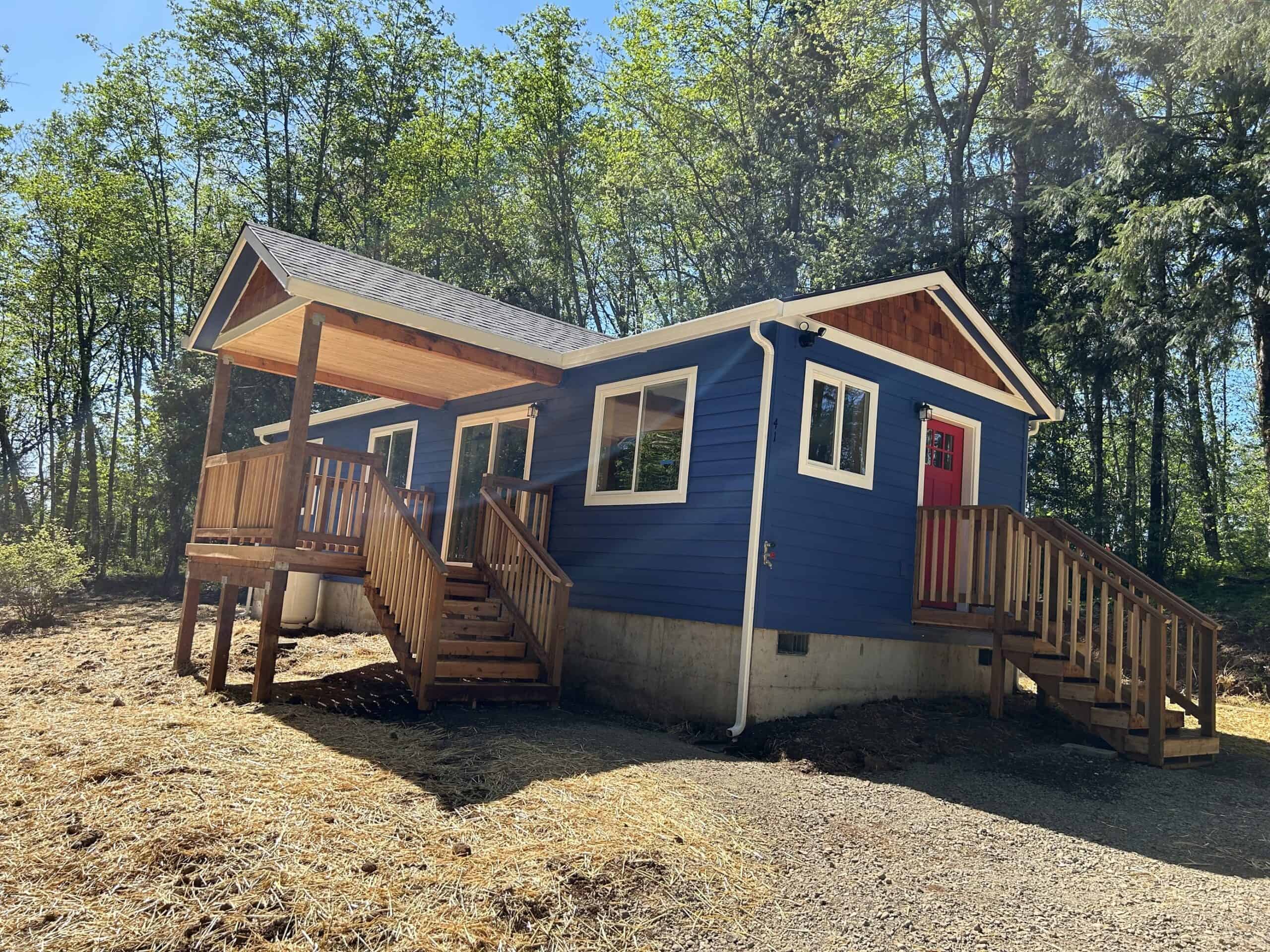
Can I build two ADUs on my property?
Many eligible lots inside UGAs can support up to two ADUs per lot under Whatcom County’s updated standards, but eligibility depends on zoning, overlays, utilities, and site constraints.
What is the maximum ADU size in Whatcom County?
Whatcom County commonly references a typical maximum size standard for ADUs (often cited around 1,248 square feet), but details vary based on code provisions and specific situations like program incentives or special conditions.
Do I have to live on the property?
For many eligible UGA lots, owner occupancy is not required under the updated standards. Outside UGAs, different rules may still apply depending on the permitting pathway and property characteristics.
Do I need extra parking?
On smaller lots (often under 6,000 square feet), Whatcom County limits off-street parking requirements to no more than one space per unit. Parking rules can vary based on location, lot size, and overlay districts.
Ready to find out what your lot can really support?
If you are serious about building an ADU in Whatcom County, do not start with guesses. Start with a clean feasibility read.
Fill out Wolf’s free property evaluation and we will help you understand what is realistic on your specific parcel, what the permitting path looks like, and how to avoid expensive missteps:
https://wolfind.com/contact/property-evaluation/
Sources
Whatcom County, Planning & Development Services: ADUs – Accessory Dwelling Units
https://www.whatcomcounty.us/4481/ADUs—Accessory-Dwelling-Units
Whatcom County: Accessory Dwelling Unit (ADU) Brochure (PDF)
https://www.whatcomcounty.us/DocumentCenter/View/102115/Accessory-Dwelling-Unit-ADU-Brochure
MRSC: Accessory Dwelling Units (ADUs)
https://mrsc.org/explore-topics/housing-homelessness/housing/accessory-dwelling-units
Washington State Department of Commerce: Accessory Dwelling Units (ADUs)
https://www.commerce.wa.gov/growth-management/housing-planning/adus/
MRSC Insight: Major Changes to Washington’s Housing Laws (July 2023)
https://mrsc.org/stay-informed/mrsc-insight/july-2023/major-changes-to-washington-housing-laws
MRSC: Guidance for Accessory Dwelling Units in Washington State (PDF)
https://mrsc.org/getmedia/54c058a5-4d57-4192-a214-15f2fa5ac123/Accessory-Dwelling-Units.pdf?ext=.pdf