
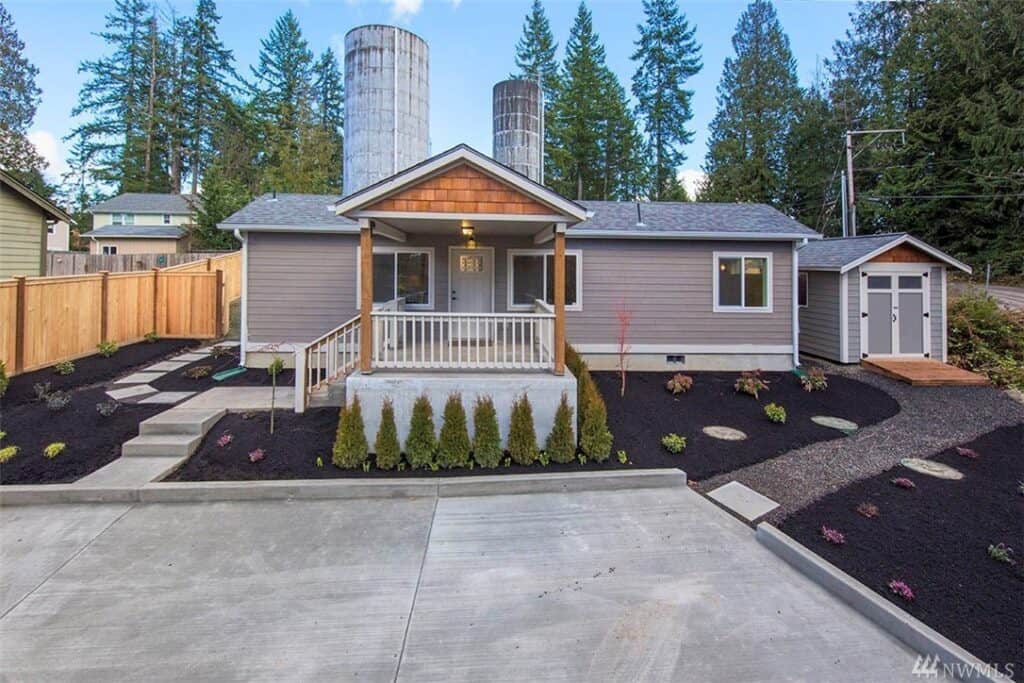
If you have ever thought, “An ADU should be simple… why does it feel like I need a law degree?” you are not alone. In Kitsap County, the rules are not impossible, but they are specific, and the biggest “gotchas” usually come down to one thing: whether your property is inside an Urban Growth Area (UGA) or outside it.
This guide breaks down the current ADU rules and regulations for Kitsap County in plain English, including the big differences between inside and outside a UGA, what counts as an accessory dwelling unit (ADU), typical limits on size and location, parking expectations, and how the permitting process works. It also covers Kitsap’s pre-approved ADU plan options that can help you move faster.
If you want to skip the learning curve, start with Wolf’s free property evaluation. Submit your address and we will help you confirm feasibility, surface the likely constraints early (zoning, site layout, utilities, setbacks, critical areas), and map the cleanest path forward.
What counts as an ADU in Kitsap County?
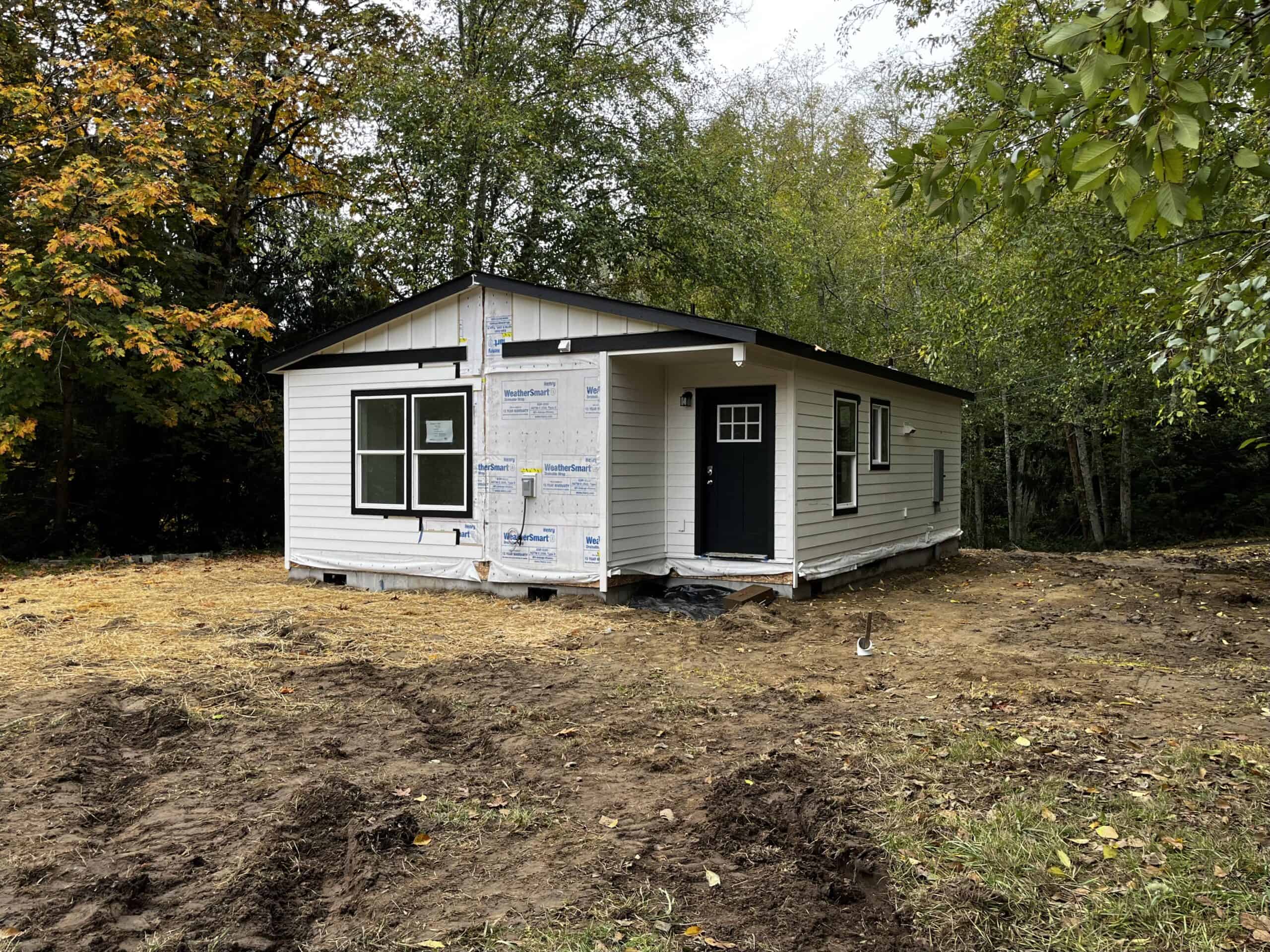
Kitsap County recognizes two types of accessory dwelling units.
An attached ADU is a separate dwelling unit contained within, or directly connected to, the habitable space of the primary residence. Kitsap’s definition focuses on a real connection to habitable space, and a garage does not qualify as habitable. If the ADU is separated from the home by a garage, it is not considered “attached” under the County’s definition.
A detached ADU is a separate dwelling unit that does not meet the attached definition. Kitsap also draws a clear line between ADUs and guest houses, and it does not treat a mobile home or recreational vehicle as an ADU.
If you are early in the process, this definition matters because it affects the size limits and other standards, especially outside a UGA.
The single most important question: Is your property inside a UGA?
Kitsap County separates many ADU requirements depending on whether the property is located inside an Urban Growth Area (UGA) or outside one. This is where most homeowners get surprised, because the allowances can change in meaningful ways, including how many ADUs you can have, whether owner occupancy is required, how big the ADU can be, where it can sit on the lot, and parking requirements.
So, before you sketch floor plans or price out a build, confirm your jurisdiction and whether you are inside a UGA. Start with Wolf’s free property evaluation to see your clearest path forward.
ADU rules inside a UGA in Kitsap County
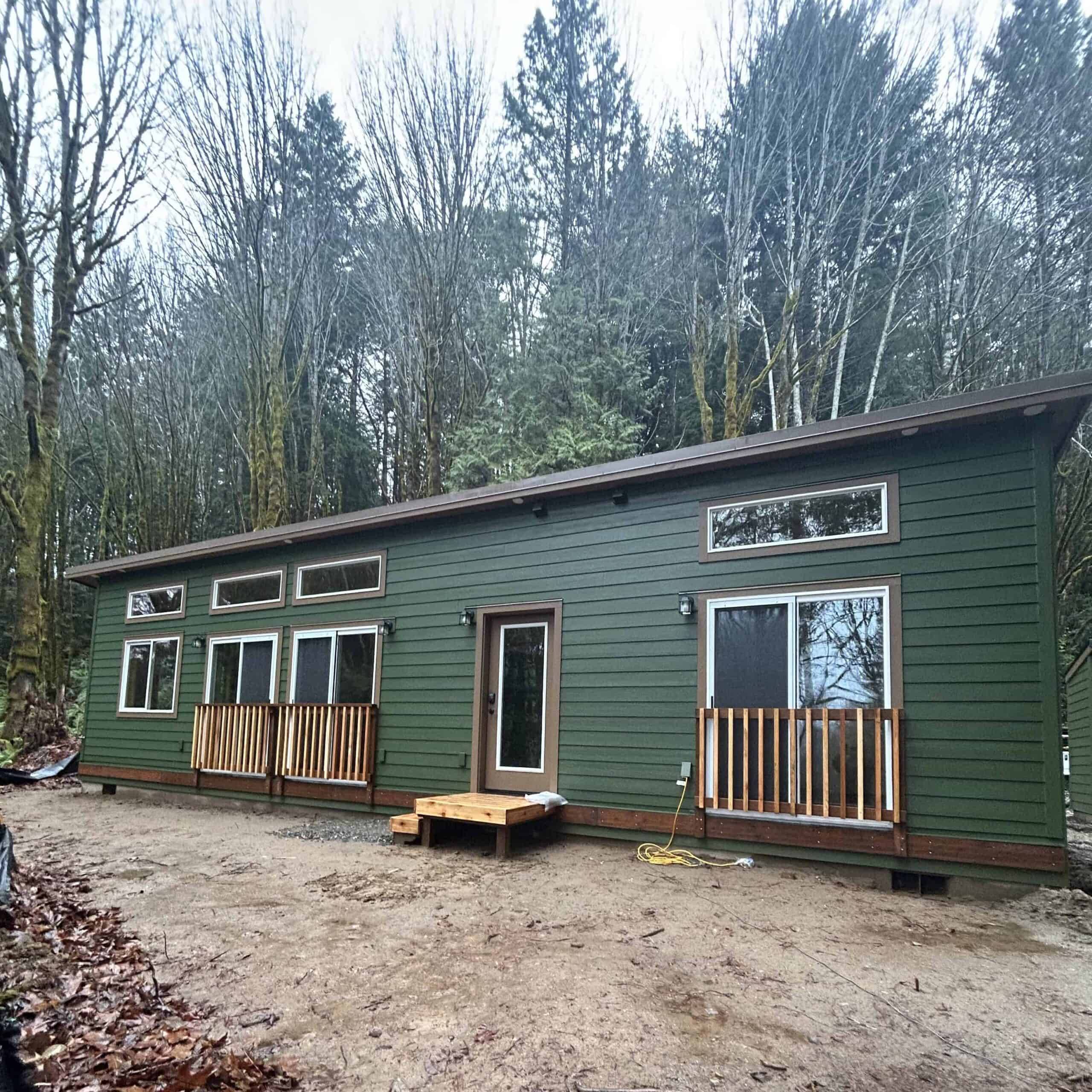
Inside a UGA, Kitsap County is generally more flexible.
Owner occupancy inside a UGA
Kitsap County’s ADU standards do not require the owner to live on-site as a condition of having an ADU inside an UGA.
Number of ADUs allowed inside a UGA
Kitsap County allows up to two ADUs per lot inside a UGA. Those can be attached, detached, or a combination.
Size limits inside a UGA
The ADU size limit is based on whichever is smaller, a 1,000 square feet or 60 percent of the primary residence’s habitable area inside a UGA. Whichever of those two numbers is smaller is the cap you should plan around.
Location considerations inside a UGA
Inside a UGA, Kitsap’s standard is aimed at keeping future subdivision options on the table. In other words, the ADU should be placed in a way that does not block a future subdivision of the lot needed to meet the minimum density for the zone.
Parking inside a UGA
Additional off-street parking may not be required for a single ADU if certain conditions apply inside a UGA. Kitsap’s guidance points to scenarios such as the primary dwelling already meeting parking requirements, on-street parking being available, or the ADU being within a quarter mile of a transit stop. The practical takeaway is that parking can be easier inside a UGA, but you still need to confirm the site’s situation against the County’s parking standards.
ADU rules outside a UGA in Kitsap County
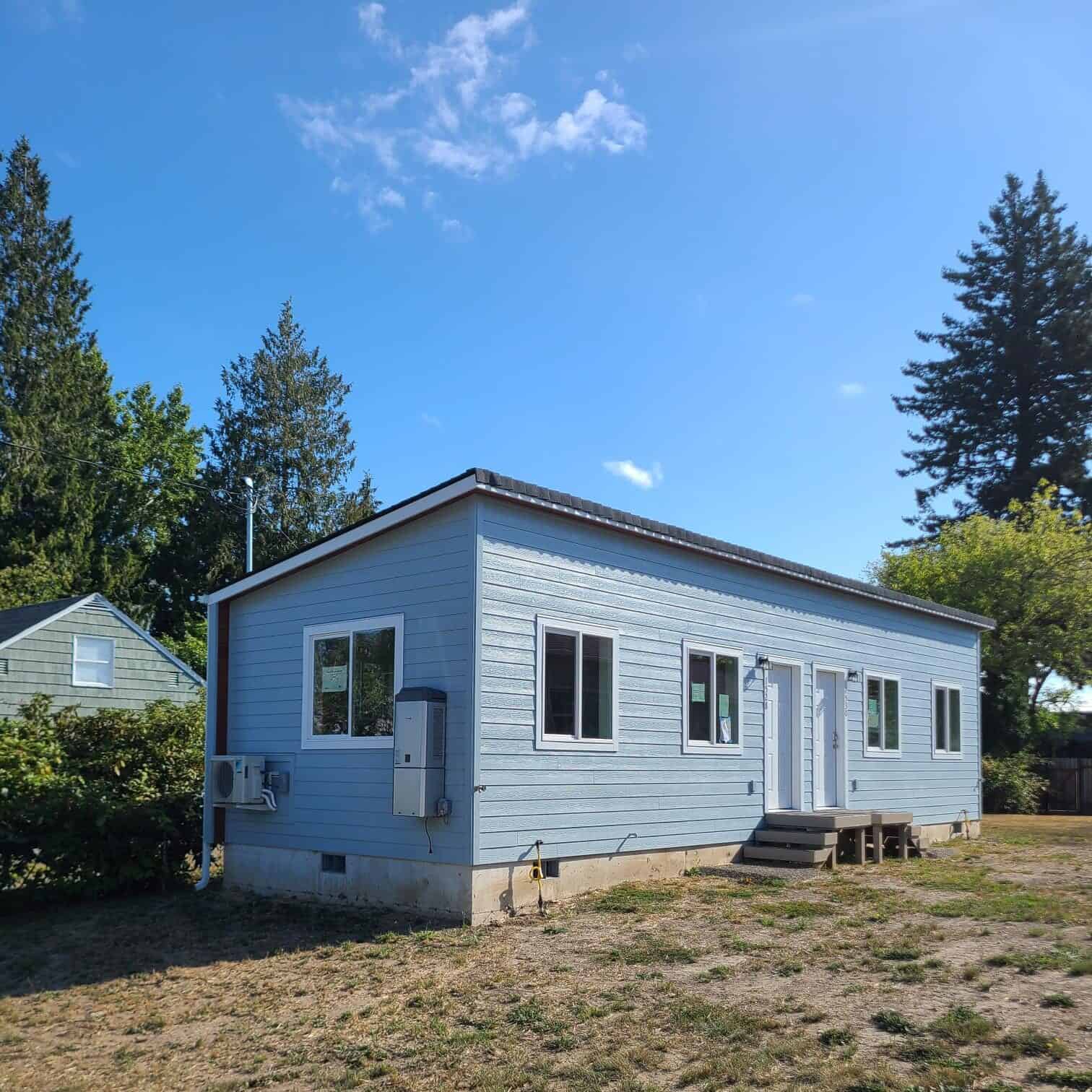
Outside a UGA, Kitsap County typically applies more constraints. These are the rules that tend to drive design decisions early, because they can limit size and placement.
Owner occupancy outside a UGA
Outside a UGA, the owner must occupy either the primary residence or the ADU.
Number of ADUs allowed outside a UGA
Kitsap County allows one ADU per lot outside an UGA.
Size limits outside a UGA
The size limits for ADUs outside a UGA depend on whether the ADU is attached or detached.
For an attached ADU, the size is limited to no more than 50 percent of the primary residence’s habitable area.
For a detached ADU, the size limit is 900 square feet, or no more than 50 percent of the primary residence’s habitable area, whichever is smaller.
Location limits outside a UGA
Outside a UGA, Kitsap’s guidance includes a proximity expectation. The ADU should be within 150 feet of the primary residence, or it may be created by converting an existing detached structure such as a garage. This is a major planning factor because it can limit where a new detached ADU can go, especially on larger rural parcels where “farther back” might feel more natural.
Parking outside a UGA
Kitsap’s guidance is straightforward outside a UGA: one additional parking space is required for an ADU, in addition to what is required for the primary home.
Design intent outside a UGA
Outside a UGA, the ADU should be designed to maintain the appearance of the primary residence. This is not a requirement to make it identical, but it signals that the County expects the ADU to feel compatible with the main home and the rural context.
Permits and approvals: What Kitsap County typically requires
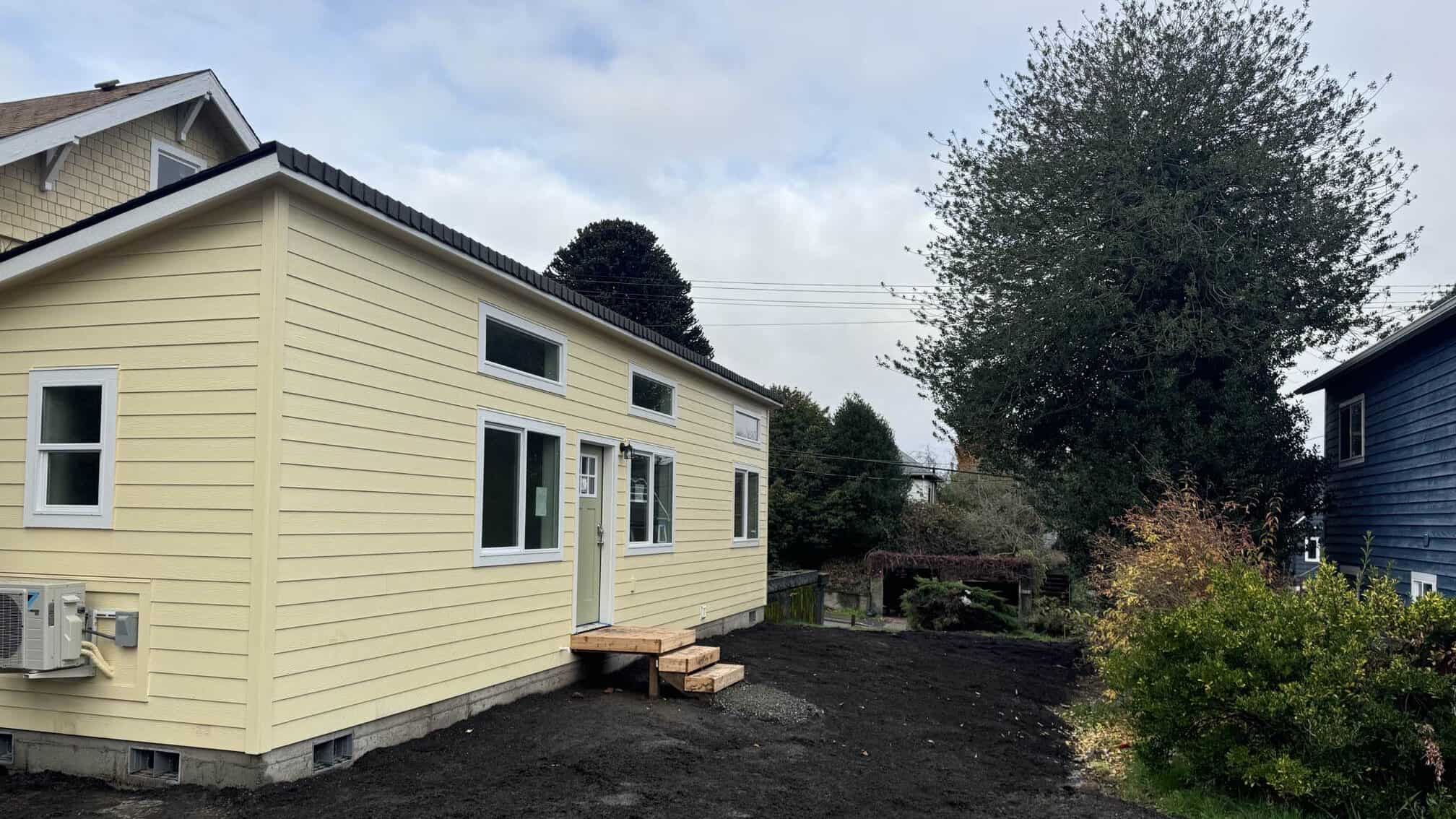
Kitsap County’s ADU guidance frames the process around a building permit, with the possibility that some zones will also require land use review before building permit review begins.
Building permit is the baseline
Whether you are building new or remodeling an existing structure, you should plan on a building permit.
Some properties need land use approval first
Depending on zoning and the project specifics, a Conditional Use Permit (CUP) or an Administrative Conditional Use Permit (ACUP) may be required. If that is the case, Kitsap’s guidance indicates it must be approved before you start the building permit process.
Common submittal items you should expect
Kitsap’s checklist-style guidance highlights several items that commonly show up in a complete submittal.
- A complete building permit application and associated fees.
- A site development plan using Kitsap’s site plan requirements.
- Scaled floor plans that clearly show the square footage of both the primary home and the ADU so the County can verify size compliance.
- Building elevations for new structures, or when exterior changes are proposed.
- Impact fees, which may apply.
- Proof that your water supply is potable and has adequate flow, plus confirmation that sewer or septic can handle the additional demand.
This is also where many rural projects slow down, because septic capacity and site constraints can become the true limiting factor even when zoning allows an ADU.
Pre-approved ADU plans in Kitsap County: The fastest path for many homeowners
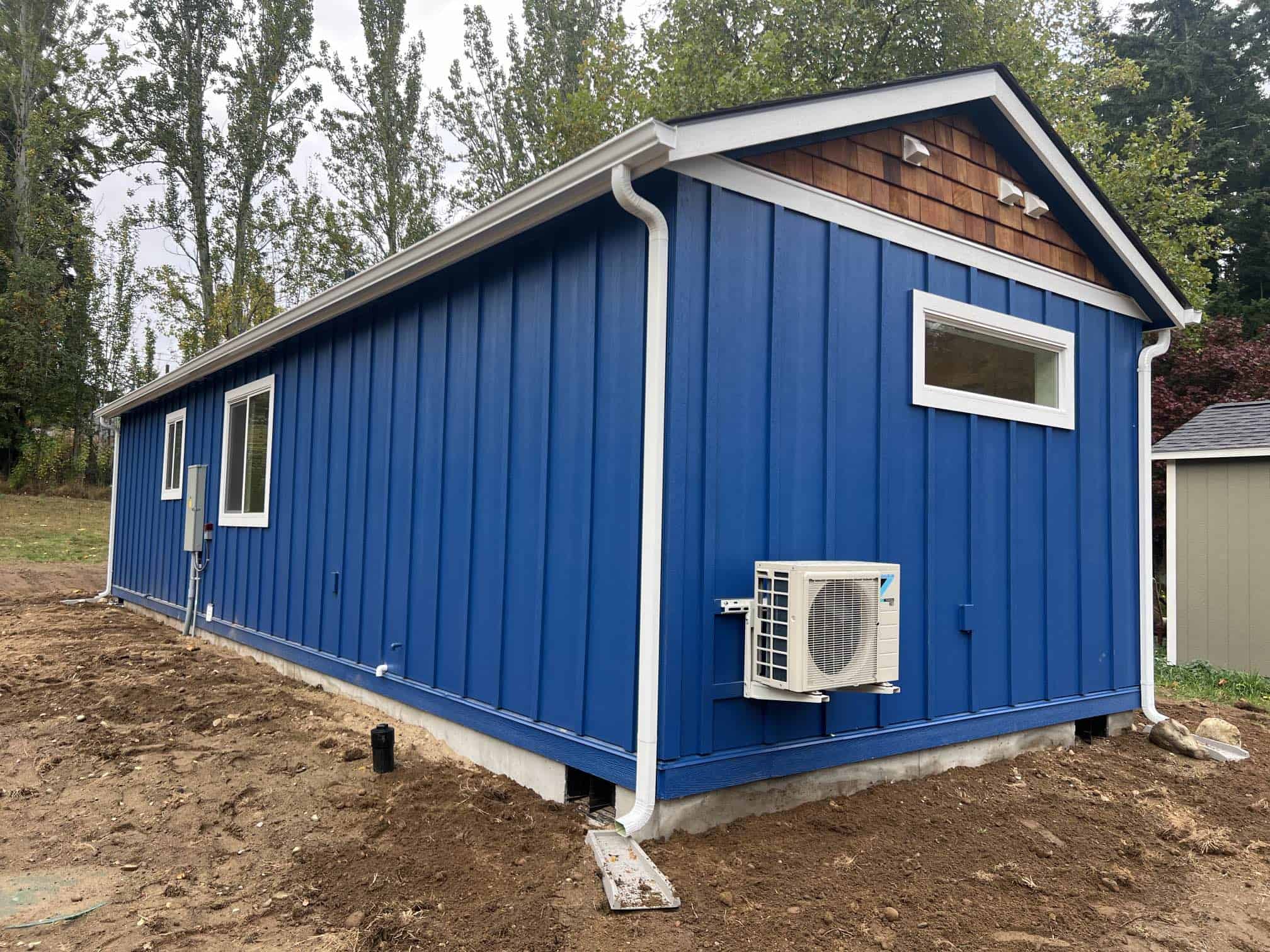
If you want to reduce design time and move through permitting faster, Kitsap County and regional partners have developed pre-approved ADU plan sets intended to streamline the process.
Where the pre-approved plans can be used
Kitsap County’s pre-approved plan option is focused on urban areas. In unincorporated Kitsap County, the free pre-approved plans are available in urban areas within UGAs. They can also be used within the city limits of Bremerton, Bainbridge Island, Port Orchard, and Poulsbo, as long as the plan is not modified.
Kitsap’s guidance also notes that these plans are not free in the rural areas of unincorporated Kitsap County, defined as areas outside a UGA or Type 1 Limited Area of More Intensive Rural Development (LAMIRD). If you live outside those eligible areas, the plans may still be available, but the access and rules differ.
What you can customize without triggering a full redesign
The pre-approved plan sets are designed with built-in flexibility for non-structural choices. That includes items like colors and finishes, certain window options, roof pitch or style selections within the plan set, siding and trim choices, door styles, and lighting fixtures. Changes beyond that generally push you back into a standard plan review track, often with architect and engineering involvement.
Examples of the plan set sizes
The Kitsap Regional Coordinating Council highlights multiple plan set options across a range of sizes, from smaller footprints up through larger ADUs. These include plan sets around 480 square feet, 600 square feet, and multiple options in the 800 square foot range, among others.
The right way to use these plans is to treat them like a head start. They can reduce friction, but you still need a site plan, utility confirmation, and compliance with zoning and critical area constraints.
If you want to skip the guessing and experience a turn-key ADU process, led start with Wolf’s free property evaluation.
How Washington State rules interact with Kitsap County ADU regulations
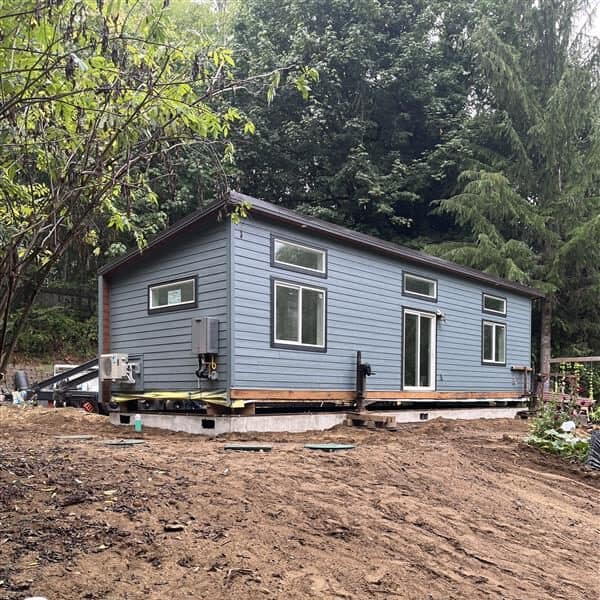
Washington State has been moving aggressively to expand ADU capacity, especially in areas planning under the Growth Management Act.
State guidance explains that fully planning cities and counties are required to regulate ADUs consistent with state law within urban growth areas, including allowing two ADUs per residential lot, allowing an ADU of at least 1,000 square feet, limiting ADU impact fees to no more than 50 percent of the principal unit’s impact fees, and generally not requiring owner occupancy except in certain short-term rental situations. State guidance also addresses parking requirements tied to transit and lot size, and it recognizes the concept of allowing attached, detached, or conversions of existing structures.
The practical takeaway for Kitsap County homeowners is simple: there is a state-wide push toward more ADU flexibility in UGAs, but your actual project still lives or dies by local zoning, site constraints, utilities, and the permitting path required for your parcel.
A simple way to sanity-check your ADU plan before you spend money
If you want to avoid the most common planning mistakes, run your idea through this sequence.
Step 1: Confirm jurisdiction and UGA status
Determine whether the property is in unincorporated Kitsap County or inside a city, and confirm whether it is inside a UGA.
Step 2: Decide attached vs detached vs conversion
Choose the ADU type based on what you want to build and what your lot can support. Remember that outside a UGA, detached ADUs have a hard cap at 900 square feet or 50 percent of the primary home’s habitable area, and placement is constrained by the 150-foot proximity standard or conversion of an existing structure.
Step 3: Check utilities early
For sewer, verify connection requirements. For septic, verify capacity and what upgrades might be necessary. This can be the real budget driver.
Step 4: Evaluate parking and access
Inside a UGA, parking can be more flexible depending on circumstances. Outside a UGA, plan on providing one additional parking space and meeting the access expectations.
Step 5: Use pre-approved plans if you qualify
If your property is eligible and your needs fit a plan set, pre-approved plans can shorten the front end of the process. If you know you need structural changes, plan for a traditional design and plan review pathway.
Final thoughts: Kitsap ADU rules are workable if you design to the right category
Kitsap County allows ADUs in many zoning designations where a primary residence is allowed, but the County’s standards are intentionally different inside versus outside a UGA. If you get that categorization right at the beginning, the rest becomes much more predictable.
Inside a UGA, many homeowners can plan around two ADUs per lot, no owner-occupancy requirement, and an ADU size cap tied to 1,000 square feet or 60 percent of the main home’s habitable area.
Outside a UGA, the rules tighten: one ADU per lot, owner occupancy is required, size limits become stricter (especially for detached units), and placement is constrained by proximity to the primary residence.
If you match your design to the right rule set before you draw plans, you avoid expensive redesigns later.
If you are serious about building an ADU in Kitsap County, do not start with guesses. Start with a clean feasibility read.
Fill out Wolf’s free property evaluation and we will help you understand what is realistic on your specific parcel, what the permitting path looks like, and how to avoid expensive missteps:
https://wolfind.com/contact/property-evaluation/
Sources
Kitsap County Department of Community Development: Accessory Dwelling Unit (ADU) (PDF)
https://www.kitsap.gov/dcd/FormsandBrochures/Accessory%20Dwelling%20Unit.pdf
Kitsap Regional Council: Accessory Dwelling Units (ADUs)
https://www.kitsapregionalcouncil.org/adu
Kitsap County Department of Community Development: Accessory Dwelling Units (ADUs)
https://www.kitsap.gov/dcd/Pages/adu.aspx
Washington State Department of Commerce: Accessory Dwelling Units (ADUs)
https://www.commerce.wa.gov/growth-management/housing-planning/adus/