
If you are researching ADU Rules and Regulations Columbia County OR, you are probably trying to answer a practical question: Can I legally add an ADU to my property, and what will Columbia County OR require? The answer depends on your property’s zoning, whether it is inside or outside a city urban growth boundary, and how the ADU will be served by utilities, access, and fire protection.
For property owners in Columbia County, understanding these rules early matters. It can help you avoid delays, plan for site constraints, and move forward with a project that has a better chance of fitting local requirements. At Wolf, we have built many ADUs in the Columbia County area and over 600 modular homes and ADUs across the Pacific Northwest. That experience gives us firsthand insight into the kinds of zoning, permitting, and site planning issues that often come up during the early stages of an ADU project.
If you want help evaluating whether your property may be a fit, Wolf offers a free property evaluation to help you take the next step.
How Columbia County defines an ADU
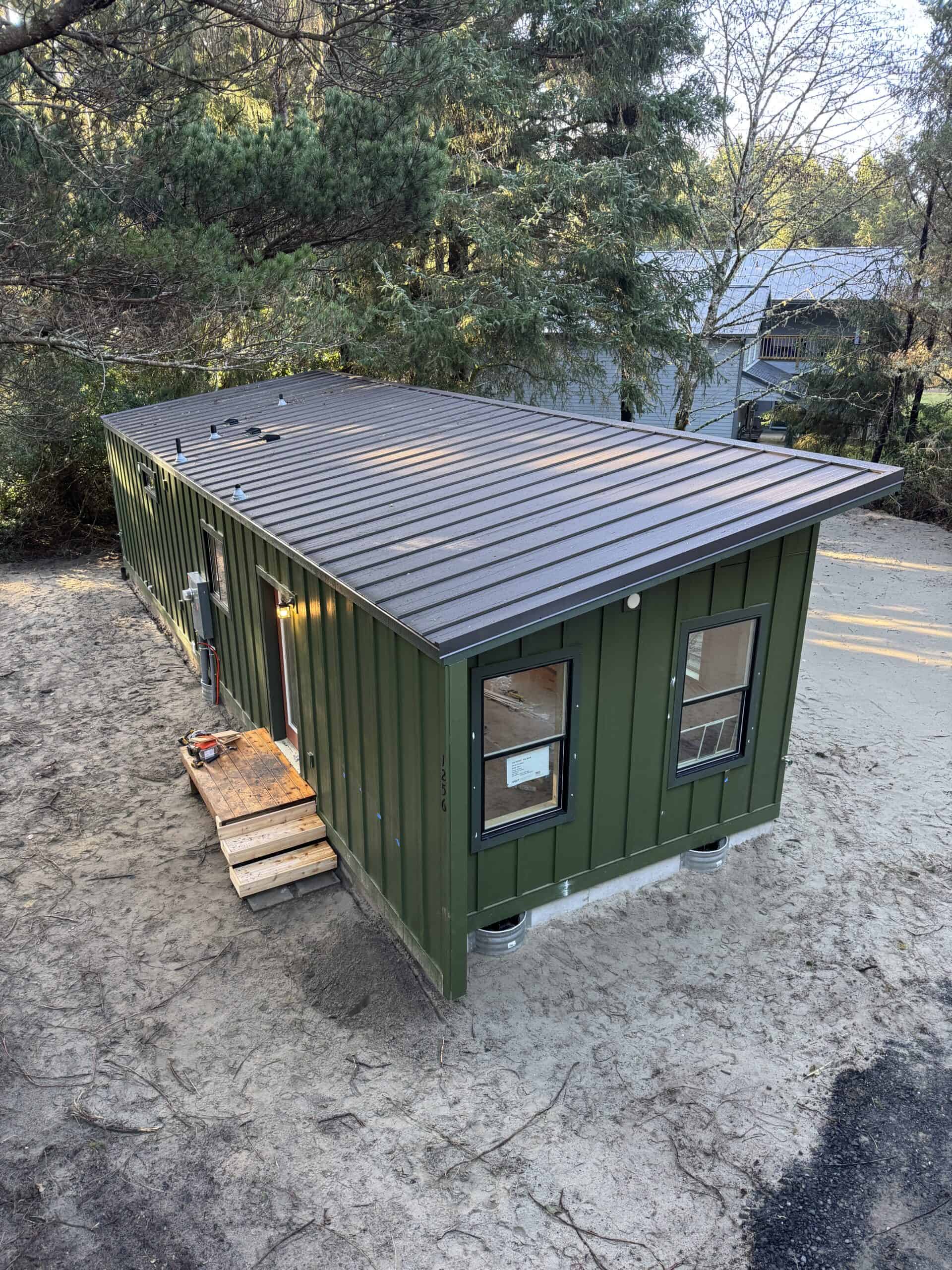
Columbia County’s zoning ordinance defines an Accessory Dwelling Unit as a self-contained interior, attached, or detached residential structure used in connection with a single-family dwelling. In simple terms, an ADU is a secondary living space that goes with a primary home rather than functioning as a completely separate primary residence on its own parcel.
That distinction matters because ADU approval is tied to the existing home, the parcel, and the county’s development standards for that specific property.
Why ADU rules vary in Columbia County
One of the biggest reasons people get confused about ADU Rules and Regulations Columbia County OR is that the rules can vary depending on location. Columbia County’s ADU application materials include requirements tied to certain city-related properties, while separate ordinance language addresses ADUs in Rural Residential zones outside urban growth boundaries.
That means there is not always one universal answer for every parcel in Columbia County. Your zoning, lot size, and location relative to city boundaries can all affect what standards apply.
This is also why it helps to work with a builder that understands how local property conditions, planning requirements, and site readiness all connect. If you want help sorting through those questions, Wolf’s free property evaluation is a good place to start.
ADU Standards in Columbia County Rural Residential Zones
For rural residential properties, Columbia County adopted standards specifically addressing ADUs outside urban growth boundaries. Based on the county ordinance materials, these standards include the following:
- A minimum lot size of two acres
- A maximum of 900 square feet of useable floor area
- The ADU must be located no farther than 100 feet from the primary dwelling
- The property must be served by a fire protection district
- The ADU may not be used for vacation occupancy
These are important limitations for landowners who may assume that any large rural parcel automatically qualifies for an ADU. Even when a parcel appears promising, the county may still look closely at utility service, access, fire protection, and other site-specific conditions before approval.
Other Development Factors That Can Affect ADU Approval
In Columbia County, ADU approval is not just about whether the structure itself meets a size limit. The county’s materials also point to broader infrastructure and land use concerns, such as:
- Wastewater and sanitation requirements
- Approved water supply
- Road access
- Fire protection and emergency access
- Wildfire-related standards
The county also states that a rural ADU cannot be used to justify a partition that would separate the ADU from the primary dwelling. In addition, only one ADU may be approved on the lot or parcel under the rural residential standards discussed in the ordinance materials.
For many property owners, these issues are what make an ADU project more complex than it first appears. A property may seem like a strong candidate until septic, water, setbacks, driveway access, or fire service requirements are reviewed in more detail.
That is exactly why early due diligence matters. If you are considering building an ADU in Columbia County, Wolf’s free property evaluation can help you better understand whether your property may be a fit for a modular ADU project.
What Columbia County Asks for in an ADU Application
Columbia County’s ADU application packet and planning materials show that applicants should be ready to provide detailed property and site information. This includes items such as:
- Property ownership information
- Tax account number
- Zoning and acreage
- Current and proposed use
- A detailed site plan
- Utility and sewage disposal information
- Water source documentation
- Road access information
In some cases, applicants may also need supporting approvals or service letters related to sewer, septic, well capacity, or community water service.
The county’s checklist also asks for a site plan showing important details such as distances to property lines, septic locations, parking, entrances, and driveway length. The application packet also references matching exterior materials and, in some situations, compatibility review connected to nearby cities or urban growth boundary areas.
City-related Standards May Also Apply
Another important point is that some properties may be affected by city-related standards. The county’s ADU packet includes a chart with different size and owner occupancy standards for cities such as Columbia City, Clatskanie, Rainier, Scappoose, Saint Helens, and Vernonia.
So, if your property is in unincorporated Columbia County but connected to a city urban growth boundary review process, you should not assume the same standards apply as they would on a rural parcel outside those areas.
What property owners should do first
If you are trying to understand ADU Rules and Regulations Columbia County OR, the best first step is to narrow down a few key questions:
- What is the zoning of the property?
- Is the parcel inside or outside a city urban growth boundary?
- Is there adequate water, wastewater, and road access?
- Does the property meet fire protection and emergency access expectations?
- What size ADU may be allowed on the site?
Columbia County advises applicants to contact the Planner On Duty before submitting an application, and that is good advice. Getting clarity upfront can save time and help you avoid designing around assumptions that may not apply to your parcel.
If you are thinking about adding an ADU in Columbia County, Wolf can help you start with the property itself. We have built many ADUs in the Columbia County area and over 600 modular homes and ADUs across the Pacific Northwest. Our team understands that a successful project starts with making sure the site, zoning, and overall plan align from the beginning.
Get started with Wolf’s free property evaluation:
https://wolfind.com/contact/property-evaluation/