
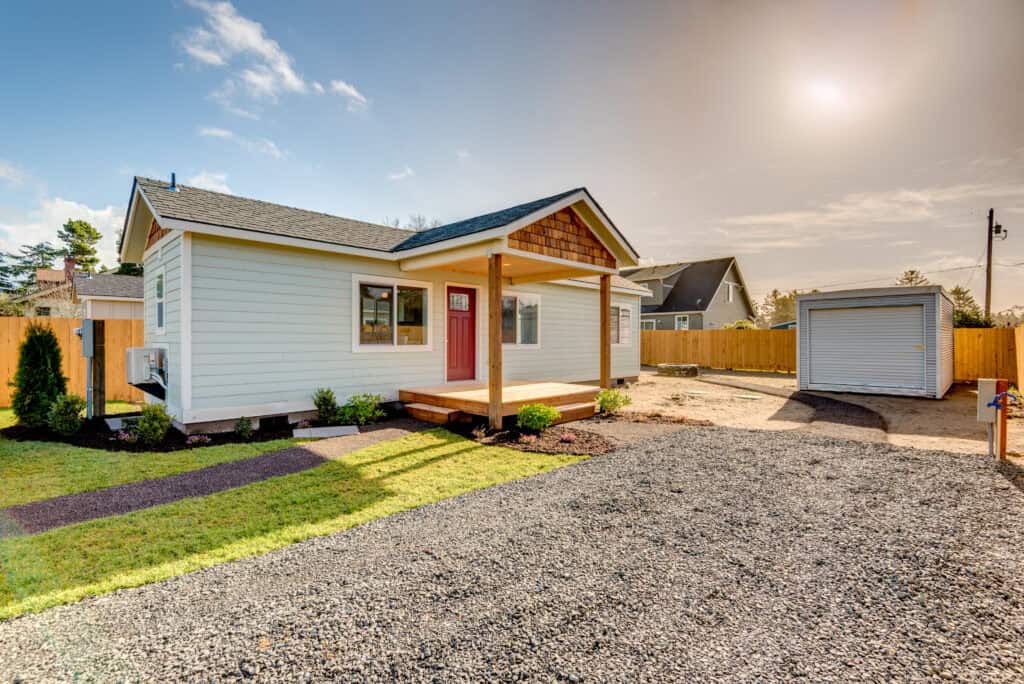
You have land in Pacific County. You have a reason for more space. Maybe it is family moving closer. Maybe it is simply that you want a backup plan that gives you options. Then you hit the wall every ADU project hits:
“What are the actual rules in Pacific County, and what will the county approve?”
This post translates the county’s ADU-related language into plain English so you can plan with confidence. It is not legal advice, but it will help you avoid the biggest mistake people make: designing an ADU before they confirm the rules that control their specific lot.
If you want the fastest path to clarity, start with Wolf’s free Property Evaluation:
https://wolfind.com/contact/property-evaluation
What Pacific County means by “ADU”

In Pacific County’s zoning draft, an Accessory Dwelling Unit (ADU) is defined as a detached or attached accessory structure that is secondary to a principal single-family residential unit, designed and most commonly used for irregular residential occupancy by family members and guests.
Separately, Pacific County’s accessory section also uses the term “accessory residential dwellings (living quarters)” and then lists the requirements that control most real-world ADU projects.
Practical takeaway: when you communicate with the county, use their phrasing. “Accessory residential dwelling” and “living quarters” are terms you will see in review comments and requirements.
The core Pacific County ADU rules most homeowners care about
These are the standards that usually decide whether your plan is simple or a headache.
One ADU per lot
Pacific County’s accessory section limits you to no more than one accessory residential dwelling per lot of record. That supports the classic plan of “one primary home plus one ADU.” If you are trying to do more than that, you need to confirm your zoning and any special pathways before you invest in design.
Size limit: up to 1,200 square feet
Pacific County’s accessory section limits the accessory dwelling to no more than 1,200 square feet.
That is good news if you want a real two-bedroom layout, a comfortable living room, or space that can work for long-term living. But remember, setbacks, site constraints, and utilities can effectively reduce what you can build even when the size cap is generous.
It must be clearly subordinate to the main home
Pacific County requires accessory dwellings to be clearly a subordinate part of an existing residence. That “subordinate” concept matters. It signals the county’s intent: the ADU should read as accessory, not a second primary home trying to sneak through.
In practice, subordinate usually comes down to:
- Size relative to the main home
- Placement on the lot
- Overall site layout and how it functions day to day
A good plan makes the relationship obvious from the site plan, not just from what you call it in the application.
Health code requirements control the project
Pacific County requires the ADU to meet current local and State health code standards for potable water and wastewater disposal. This is where many ADU projects in rural counties bog down.
If you are on septic, you must think about capacity, drain field location, reserve area requirements, and inspection or upgrade needs. If you are on a well, you may need to confirm supply and any relevant health requirements.
The ADU itself is often the easy part. Utilities and wastewater are what decide feasibility, timeline, and budget.
If you want Wolf to help you understand feasibility on your specific property, start with the free Property Evaluation: https://wolfind.com/contact/property-evaluation/
You cannot sell the ADU separately
Pacific County’s accessory section states the accessory dwelling and the land it is located on cannot be sold separately from the primary residential dwelling. That matters if you are thinking about future strategies like a lot split or selling off a “second unit.” An ADU can still be a strong investment, but it is not the same thing as creating a separate buildable lot.
Where ADUs are allowed in Pacific County

Pacific County’s ADU standards do not exist in a vacuum. Your ability to build depends on your Land Use District and any site constraints that come with it.
The accessory section makes this clear by requiring ADUs to meet:
- Minimum setbacks established in the Land Use District
- Height limitations established in the Land Use District
So, there is not one universal setback chart for ADUs across the whole county. The district controls it. That means the first step is not picking a floor plan. The first step is identifying the district and the development standards that come with it.
Setbacks, height, and placement: why the site plan matters
Two requirements show up over and over in county review comments: setbacks and placement.
Here are the placement realities you should plan for.
You must follow the district setbacks and height limits
Your ADU must meet the setbacks and height limits of the district where it is placed. This affects:
- How close you can build to side and rear lines
- Whether you can fit the ADU behind the house the way you pictured it
- Whether you can place it near a driveway or access lane
- How your roof design and overall height fits the rules
Accessory structures have separation expectations
Pacific County’s accessory section also includes a separation standard for accessory structures, generally, accessory structures should be separated from the primary building by at least five feet, with limited flexibility when certain conditions are met. This is one of those small details that can reshape a site plan fast. If you were envisioning a detached ADU tucked right next to the main home, confirm the separation approach before you commit.
What the “Type I review process” means
Pacific County’s accessory section states accessory residential dwellings are subject to a Type I review process (as referenced in Pacific County Ordinance 145, and any amendments).
In plain English: this is an administrative review path. It is not a public hearing process, but it still requires a complete and compliant application.
Type I reviews tend to go smoothly when the plans are clear and the basics are proven. They get slow when the county has to guess.
If you want fewer back-and-forth cycles, your submittal should usually include:
- A clear site plan with all setbacks called out
- A clear description of the ADU as accessory and subordinate
- Utilities and wastewater plan notes
- Access and parking considerations (when applicable)
- Any constraints that apply to your lot (critical areas, slope, access, etc.)
If you plan to short-term rent the ADU, read this first
Pacific County’s zoning draft includes vacation rental standards and contains a key line for properties that have both a residential dwelling and an accessory residential dwelling:
Only one residential structure may be rented out as a vacation rental, not both.
This does not mean you cannot build an ADU and do short-term rental. It does mean you should plan carefully if your business model assumes you can short-term rent both units on the same property. If short-term rental is part of your plan, verify your intended use early so you do not design yourself into a corner.
A step-by-step plan to build an ADU in Pacific County without wasting time
Most ADU stress comes from doing the steps in the wrong order. Here is the order that tends to reduce surprises.
Step 1: Confirm zoning and district standards
Identify the Land Use District and confirm setbacks, height, and any special development standards.
Step 2: Confirm utilities and wastewater feasibility
If you are on septic, confirm what the county will require for an additional dwelling and whether upgrades are needed. If you are on well or public water, confirm the requirements and constraints that apply.
Step 3: Choose an ADU design that fits the site, not just your wish list
This is where size, placement, and “subordinate” expectations come together. The goal is a plan that is livable and also obviously compliant from the drawing set.
Step 4: Prepare a clean permit package
A good package answers the county’s likely questions before they have to ask them.
Step 5: Build, inspect, and finish strong
Even with a factory-built modular ADU, the site work and coordination will make or break the schedule. Plan for access, utilities, foundation approach, and inspections from the beginning.
How Wolf helps you build an ADU in Pacific County WA
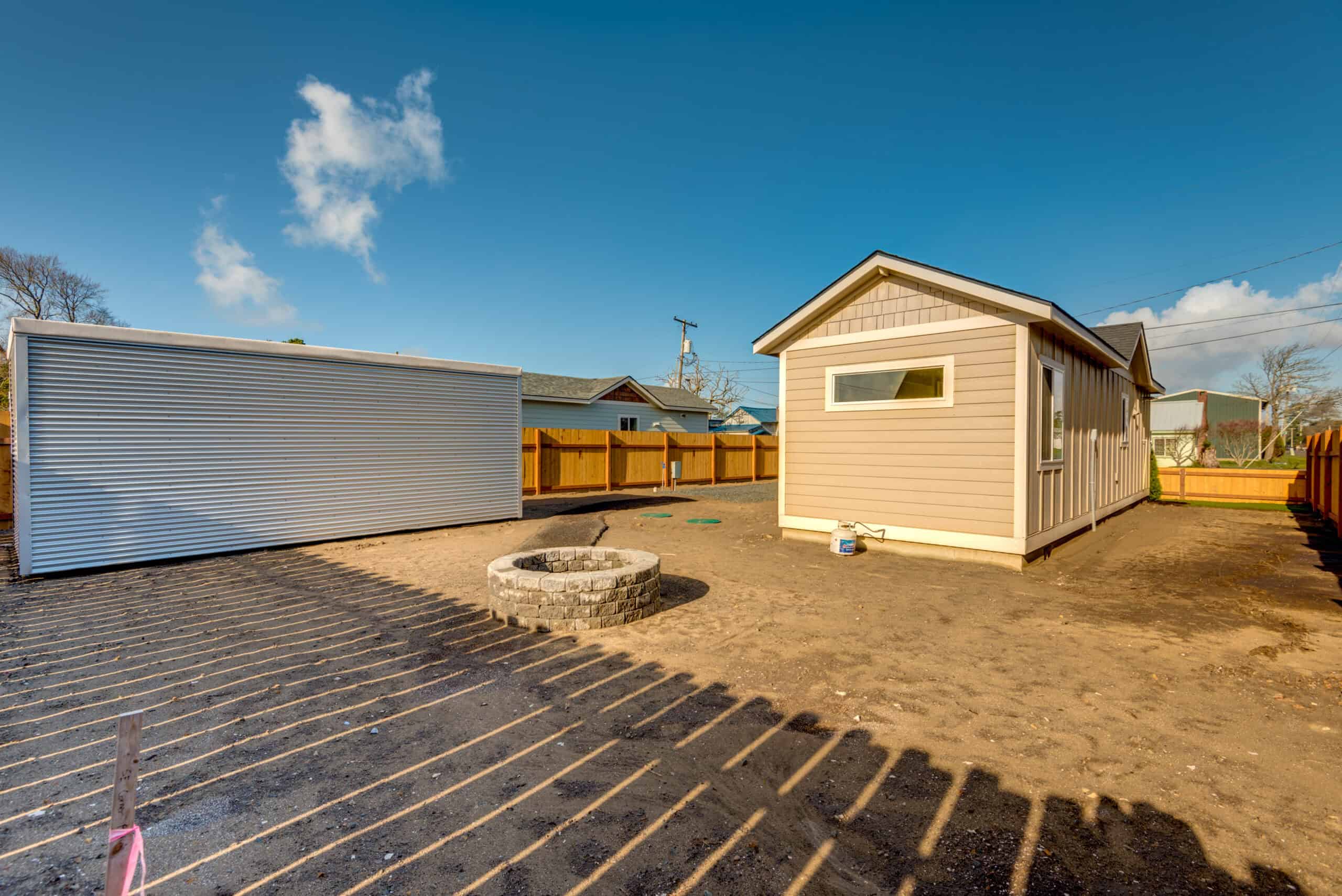
Wolf has built many ADUs in Pacific County WA and across the Pacific Northwest. We have seen what delays projects, what reviewers focus on, and what homeowners tend to overlook when they start with a floor plan instead of a feasibility check.
We can help you:
- Figure out what is realistic for your specific property
- Plan a layout that fits district standards and the accessory dwelling requirements
- Navigate the permitting path with a clearer plan and fewer surprises
- Deliver a well-built ADU that is designed for real life, not just a brochure photo
If you want to know what your lot can support and what it will take to install an ADU, start with our free Property Evaluation: https://wolfind.com/contact/property-evaluation/
FAQs: ADU Rules and Regulations Pacific County WA
How many ADUs can I build in Pacific County?
The county’s accessory section allows no more than one accessory residential dwelling per lot of record.
How big can an ADU be in Pacific County?
The county’s accessory section limits accessory dwellings to no more than 1,200 square feet.
Do ADUs have to meet setbacks and height limits?
Yes. The county requires ADUs to meet the minimum setbacks and height limitations of the Land Use District where they will be placed.
Can I sell my ADU separately from the main home?
The county’s accessory section states the accessory dwelling and the land it is located on cannot be sold separately from the primary dwelling.
What is the biggest factor that surprises people?
Utilities and wastewater. Your ADU plan is only as feasible as your potable water and wastewater disposal plan.
Next step
If you are serious about adding an ADU in Pacific County, do not start by guessing. Start by validating your lot. Wolf’s free Property Evaluation is the simplest way to find out what is possible and what it will take: https://wolfind.com/contact/property-evaluation/
Sources
Pacific County WA Website: https://www.co.pacific.wa.us/dcd/images/PC/PC%2003-03-11%20Accessory%20Building%20section%2021%20F%20Draft%2012%2013%2010.pdf
Pacific County WA Website: https://www.co.pacific.wa.us/ordres/1-2024-Draft-Zoning-Ord.-No.-194-%20track-change.pdf