
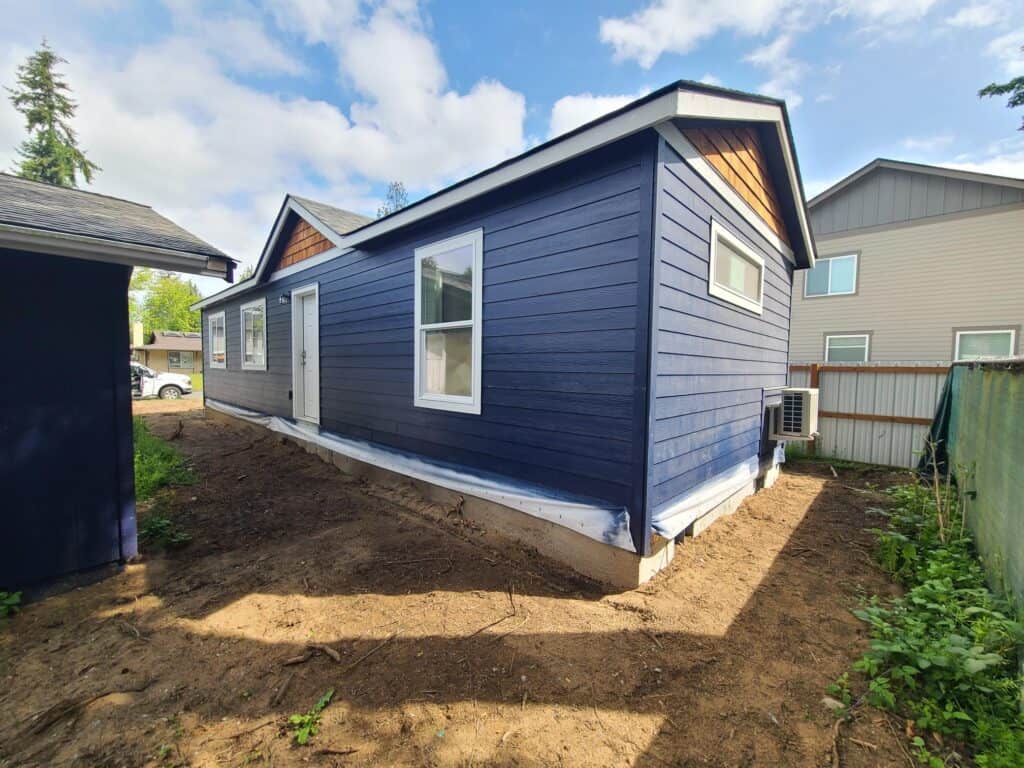
If you are searching “ADU Rules and Regulations Snohomish County,” you are probably trying to answer one real question:
Can I actually build an accessory dwelling unit (ADU) on my property, and what are the rules that will make or break it?
Here is the tricky part. Snohomish County rules depend on whether your property is inside city limits (Everett, Lynnwood, Marysville, etc.) or in unincorporated Snohomish County. The details below focus on unincorporated Snohomish County, because that is where the County’s permitting bulletins and Countywide ADU guidance apply.
If you want to skip the guessing, start with Wolf’s free property evaluation. Wolf has built many ADUs in Snohomish County, and we can quickly help you confirm jurisdiction, zoning, utilities, and what the County is likely to approve before you spend money on plans.
Start here: City limits vs unincorporated Snohomish County
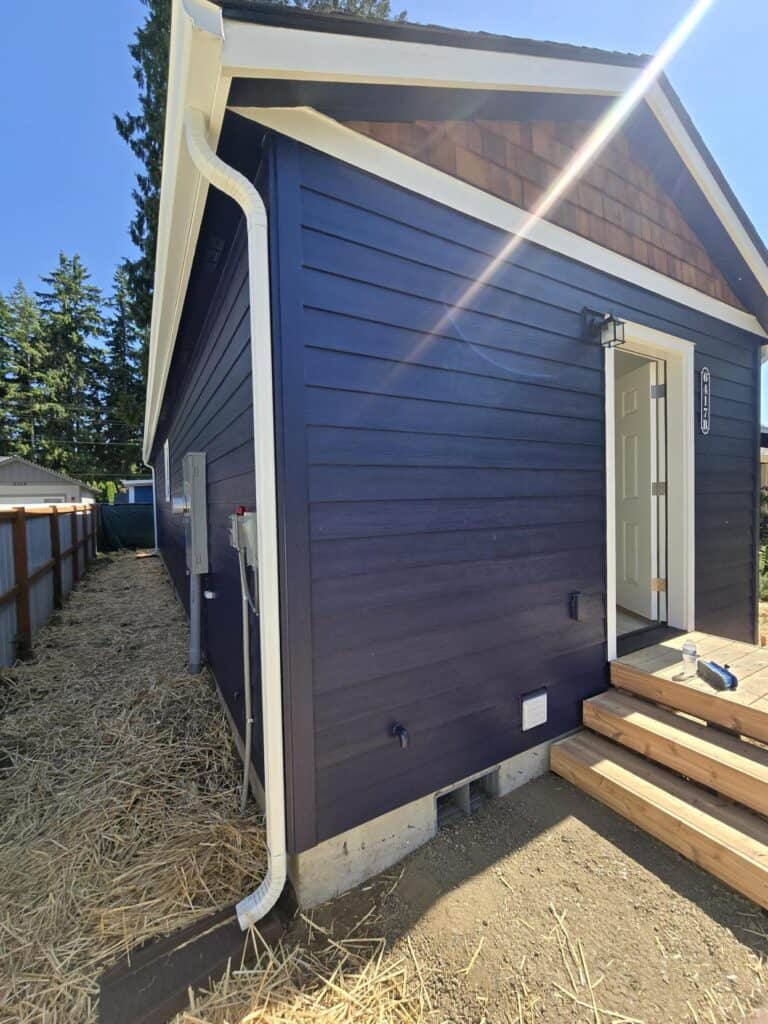
Before you fall in love with a design, confirm which rules apply to your parcel.
If your property is inside an incorporated city, the city’s municipal code governs ADUs and the County bulletins may not apply. If your property is in unincorporated Snohomish County, you will be working with Snohomish County Planning and Development Services and the County’s standards.
This is the first reason Wolf recommends a property evaluation first. Two properties a mile apart can have very different ADU rules based on jurisdiction.
What is an ADU, and what counts as a detached ADU (DADU)?
Snohomish County describes an ADU as a self-contained living space on the same property as a principal dwelling. ADUs can be attached to the main home or detached in a separate structure.
A detached ADU, often called a DADU, is a separate structure that is still on the same lot as the legally established principal unit, and it is intended to function as a complete independent living facility with living, sleeping, eating, cooking, and sanitation.
Translation: a finished backyard “bonus room” is not automatically an ADU. To be treated as a DADU, it must be permitted and built as a separate dwelling unit that meets County requirements.
How many ADUs can you build in Snohomish County?
Urban unincorporated areas
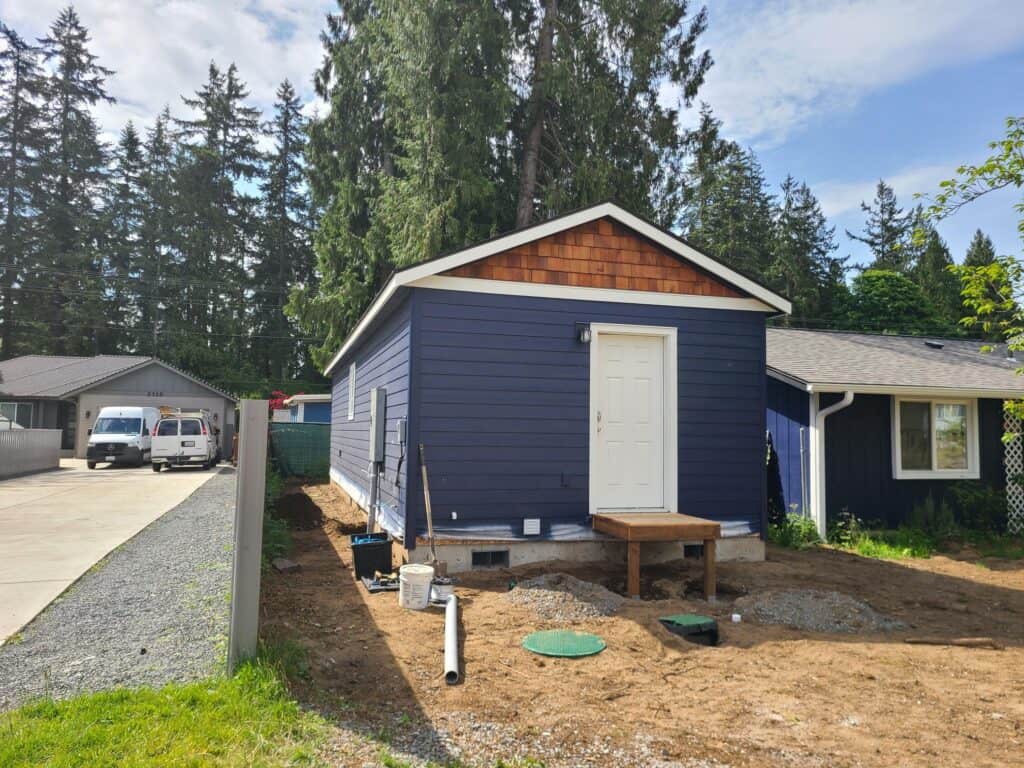
In urban zones that allow single-family homes, Snohomish County’s guidance reflects the statewide push to remove barriers and allow more ADUs. In urban areas, two ADUs must be allowed, and they can be configured in several ways, including:
- One attached ADU and one detached ADU
- Two attached ADUs
- Two detached ADUs
This matters because it changes the “best plan” for many properties. Instead of choosing between an attached suite or a backyard cottage, some lots may be able to support both, assuming the site, utilities, and zoning details pencil out.
Rural unincorporated areas
In rural unincorporated areas, the County guidance states that one ADU is allowed per lot that has a legally established single-family dwelling.
If you are outside the urban growth area, you should expect more “one-unit” limitations and more utility constraints (especially septic). This is where early feasibility work is critical.
Duplexes and other principal unit types
County materials also describe expanded ADU options tied to the type of principal unit, including duplex situations in certain urban contexts. The fastest way to get this right is to verify how your existing home is classified and confirm your zoning category.
Wolf can help you identify what you actually have, what the County will treat it as, and which ADU options are realistically on the table.
ADU size limit in Snohomish County
One of the most searched questions is also one of the simplest:
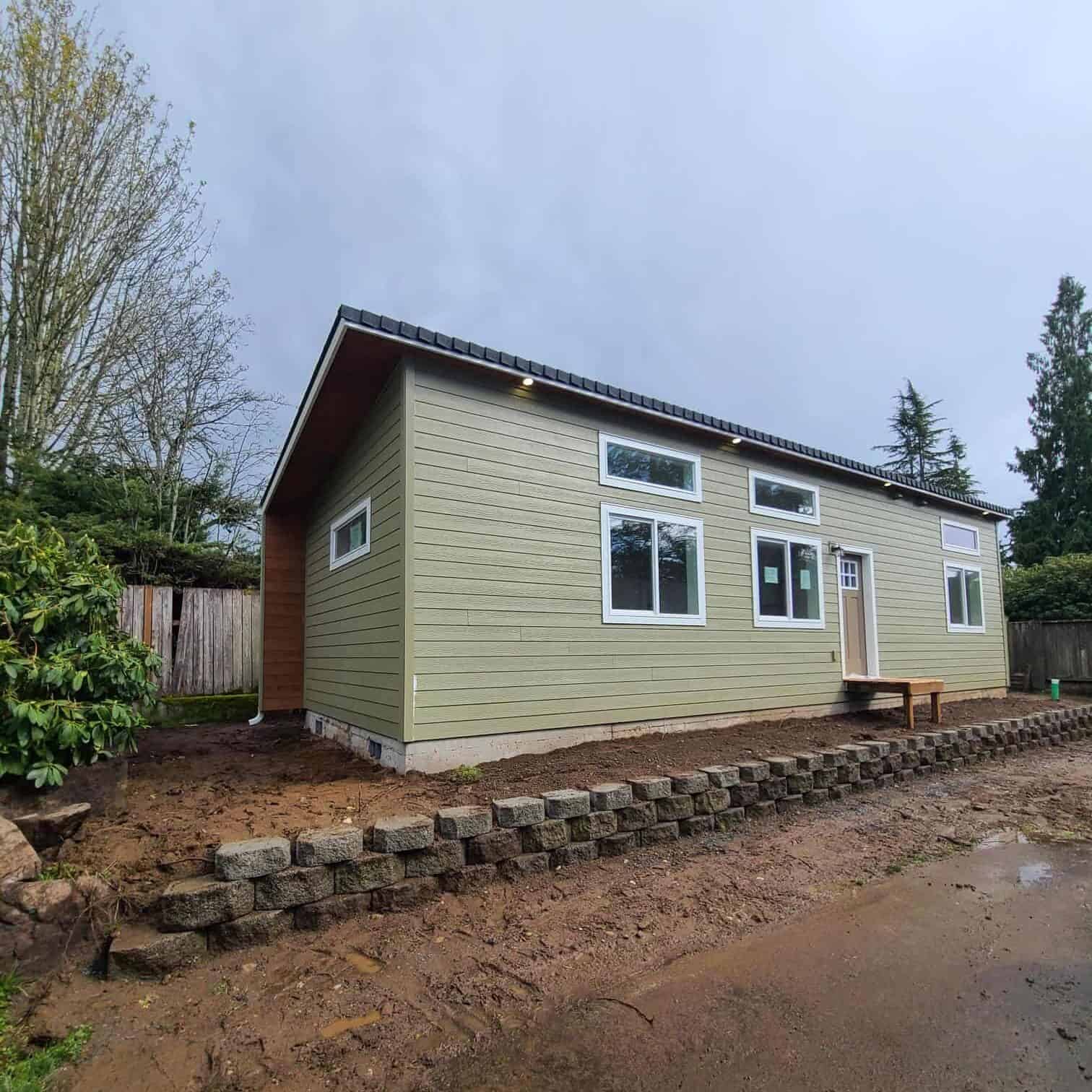
The County guidance states the maximum size of an ADU is 1,200 square feet.
For detached ADUs specifically, the County bulletin also clarifies what does not count toward that floor area, such as garages, porches, unheated storage areas, or unfinished basements.
What this means for your project is straightforward. You can design a very livable ADU under 1,200 square feet, but you want to be intentional about layout, storage, and mechanical space so you are not wasting square footage.
If you are considering a larger footprint, this is where model selection and site planning matter. Wolf has multiple ADU-friendly models and can help you choose an approach that fits both the rules and your goals.
Water and septic or sewer requirements: the rule that stops projects
Snohomish County’s guidance is clear that ADUs must demonstrate adequate water availability and sewage or septic capability.
In the detached ADU permit bulletin, the County lists verification requirements, including:
- Water and sewer availability letters for projects on public water and sewer
- Construction clearance approval from the Snohomish County Health Department for projects on septic and wells
- Documentation showing physical and legal access to potable water with adequate flow
This is where DIY ADU plans often run into trouble. A property can look perfect on paper, but water, sewer, or septic constraints can force redesigns, delays, or expensive upgrades.
If you want the fastest path to “yes,” do not treat utilities as a later step. Treat them as step one. Wolf’s free property evaluation is designed to surface these constraints early so the rest of the project stays predictable.
Parking rules: what Snohomish County does and does not require
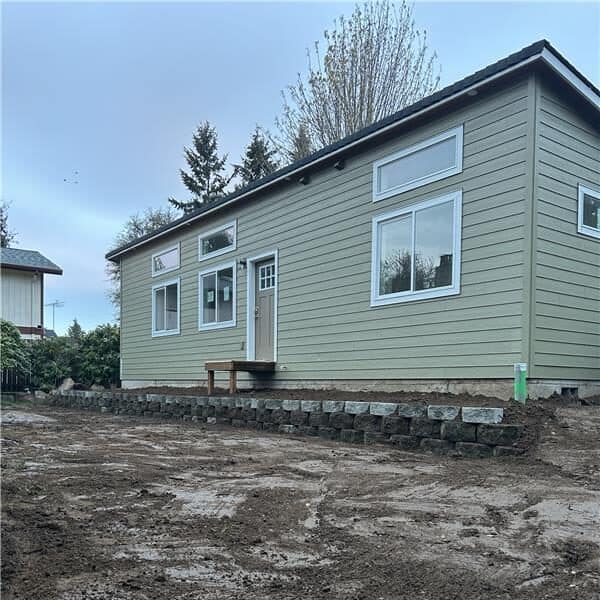
Parking requirements can change based on location and context.
County materials note that the County does not require additional off-street parking for ADUs in urban residential zones. County guidance also notes state-level rules tied to proximity to major transit stops, and it highlights that parking standards have been evolving in Washington.
If you are in rural, resource, or other zones, do not assume you get the same parking flexibility. Rural and non-urban contexts tend to be stricter, and the practical realities of access, driveway layout, and site circulation matter just as much as the written rule.
If parking is tight on your lot, Wolf can often help you solve it through smarter site planning, placement, and design choices.
Setbacks and design standards: more flexibility than many homeowners expect
Washington State law has been driving changes that limit how restrictive local ADU design requirements can be. Snohomish County’s guidance reflects this direction and notes that jurisdictions cannot impose ADU design requirements that are more restrictive than those for principal units, including items like setbacks, door locations, or aesthetic requirements.
In addition, the County’s ADU materials describe updates to County regulations that increase flexibility, including:
- ADUs no longer required to match the design of the principal unit
- Maximum lot coverage increased
- Setback requirements for ADUs relaxed
There is also a specific siting note in the County’s ADU guidance that an ADU can be sited on a rear property line if it abuts a public alley.
The practical takeaway is that many lots that would have been difficult under older standards may now have a cleaner path. That said, “more flexible” does not mean “anything goes.” Your site plan still has to work with critical areas, access, utilities, and the realities of your parcel.
Where ADUs may be limited or not allowed
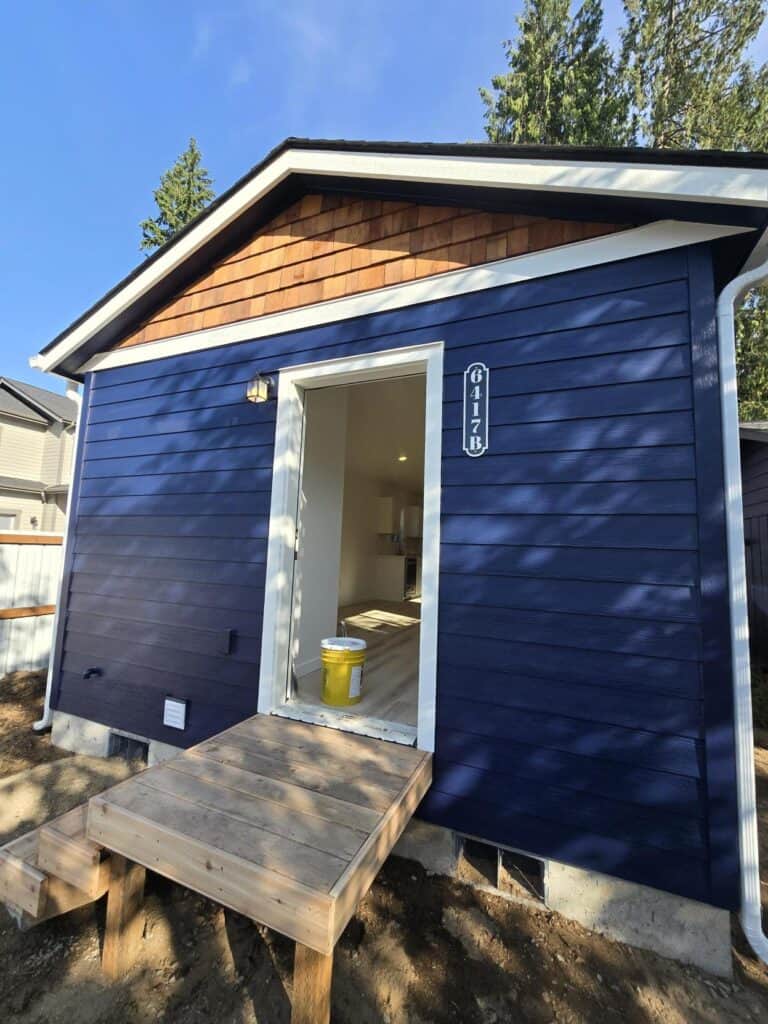
Even when a zone allows ADUs, there are location-based limits that can block development. Snohomish County’s guidance points to restrictions where development is limited by other laws or rules, including critical areas and on-site sewage infrastructure constraints.
The County guidance also notes that jurisdictions can choose not to allow ADUs in areas not served by sewer and in shoreline areas designated under a shoreline master plan.
If you have steep slopes, wetlands, buffers, shoreline designations, or a constrained septic area, do not assume you are out of luck. It just means you need a smarter plan and early verification.
This is another area where Wolf’s experience in Snohomish County ADU projects can save you time. We have seen the common constraints, and we know how to build a plan around them.
Owner occupancy, condo sales, and fees
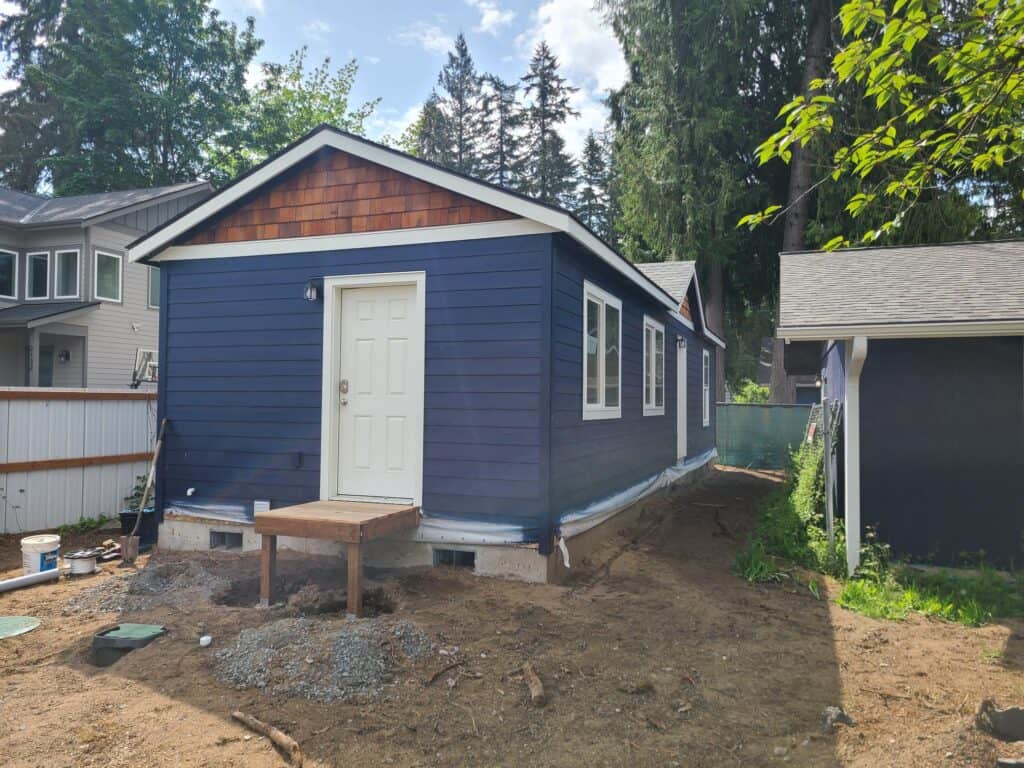
Homeowners also ask whether they must live on-site.
Snohomish County’s ADU guidance states that a city or county may not require an owner to occupy a unit on a lot with an ADU, while also noting that this does not prevent local regulation requiring owner occupancy for ADUs used as short-term rentals.
County guidance also states that ADUs can be developed as a condominium and sold separately from the principal unit.
On fees, the County’s ADU guidance summarizes state law direction that impact fees for ADUs are capped at 50 percent of the impact fees that would be imposed on the principal unit, and that a city or county may not require public street improvements as a condition of permitting an ADU.
This is one of the reasons ADUs are so attractive. They can be a comparatively efficient way to add housing and value without triggering the same scale of requirements as larger forms of development.
How to get a detached ADU permit in unincorporated Snohomish County
Snohomish County’s detached ADU bulletin outlines a clear online permitting path through the PDS Permit Portal, including the application selection path:
- Construction Permit
- Residential Building Permit
- Accessory Dwelling Detached
- Work Type: New
The bulletin also lists typical submittal requirements, including permit fees, a site plan, construction plans, and verification of water and sewage disposal.
What most homeowners underestimate is not the form itself. It is the completeness of the package. When the site plan is missing critical details or utility verification is incomplete, the project slows down fast.
If your goal is a smooth permitting experience, the winning strategy is simple:
- Confirm your rules and constraints first
- Design within those constraints from day one
- Submit a complete, coordinated package
That is exactly why Wolf starts with a feasibility-first approach and why we push the free property evaluation so early in the process.
Why homeowners choose Wolf for Snohomish County ADUs
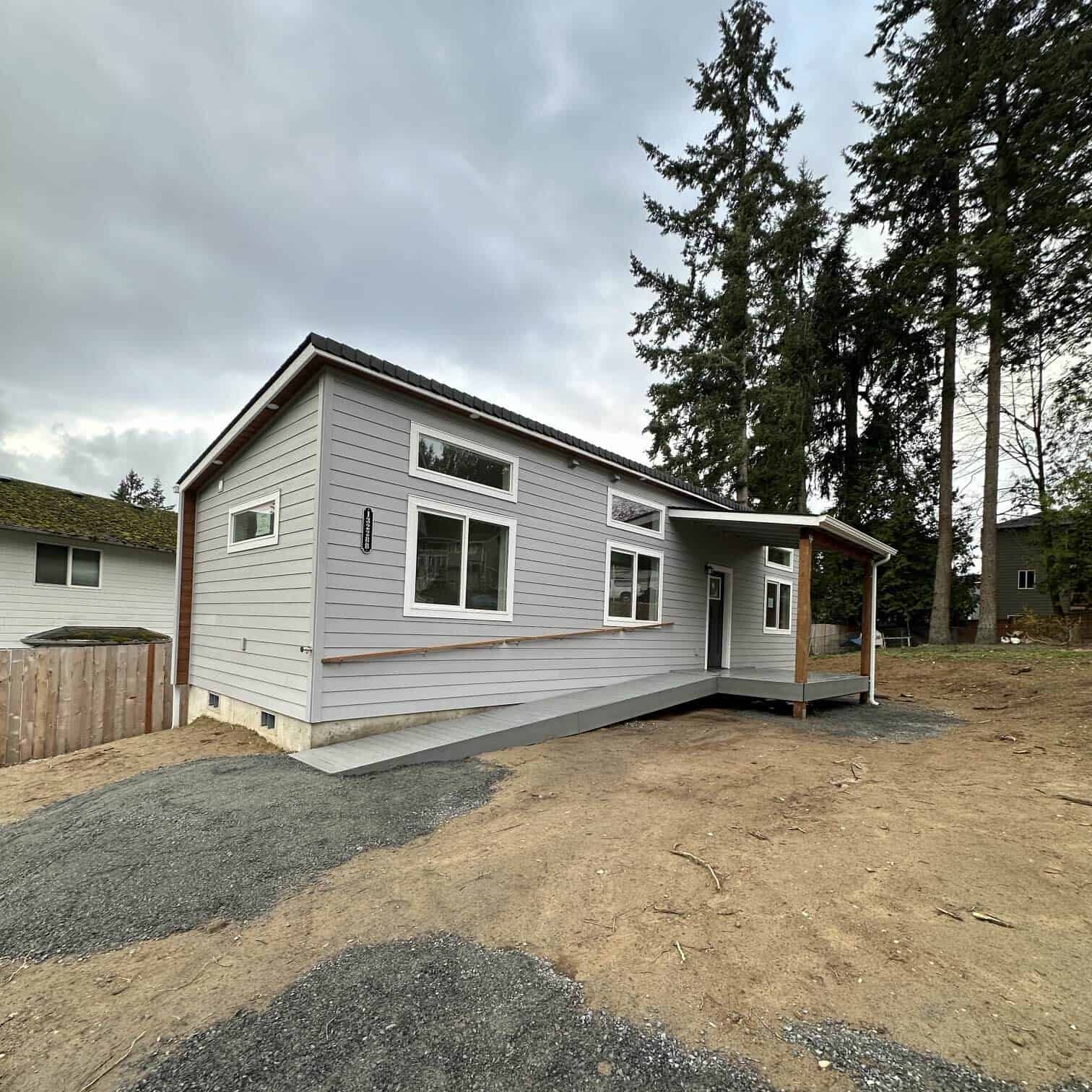
An ADU is not just a small house. It is a puzzle with a dozen moving pieces: zoning, jurisdiction, site layout, setbacks, utilities, permitting, scheduling, and construction coordination.
Wolf has built many ADUs in Snohomish County. We know what tends to delay projects, what tends to be straightforward, and what needs to be proven early so the rest of the project stays predictable.
If you are considering an ADU in Snohomish County, start with clarity before you start spending.
Get Wolf’s free property evaluation and find out what your site can actually support.
Quick FAQ: ADU rules and regulations Snohomish County
What is the maximum ADU size in Snohomish County?
County guidance states the maximum ADU size is 1,200 square feet.
How many ADUs can I build?
In urban zones that allow single-family homes, two ADUs must be allowed with multiple configuration options. In rural unincorporated areas, one ADU is allowed per lot with a legally established single-family dwelling.
Do I need water and septic approval?
Yes. County guidance requires demonstrating adequate water availability and sewage or septic capability. The detached ADU bulletin outlines documentation such as water and sewer availability letters or Health Department clearance for septic and well.
Are there parking requirements?
County materials indicate the County does not require additional off-street parking for ADUs in urban residential zones, and state-level rules can also affect parking requirements.
Do these rules apply inside Everett, Lynnwood, or other cities?
No. County permit bulletins for detached ADUs apply to unincorporated Snohomish County and do not apply inside incorporated city limits.
Sources
Accessory Dwelling Units, Snohomish County Tomorrow: CAB (July 17, 2025) (PDF). https://www.snohomishcountywa.gov/DocumentCenter/View/137750/SCT-CAB—ADU
Detached Accessory Dwelling Units, Assistance Bulletin #12 (Revised June 2025) (PDF). https://snohomishcountywa.gov/DocumentCenter/View/8052/12—Accessory-Dwelling-Units-Detached-PDF
Snohomish County Council staff report on ADU configurations and proposed SCC 30.28.010 changes (August 2024) (PDF). https://www.ezview.wa.gov/Portals/_1976/Documents/adu-examples/Snohomish%20Co%20Staff%20Report%20to%20Planning%20Commission%20on%20ADU%20Configurations.pdf
Snohomish County Council legislation detail for Ordinance 25-014 (Revising ADU Regulations) (Feb 20, 2025 page). https://snohomish.legistar.com/LegislationDetail.aspx?GUID=F54563EE-18F6-4FF7-BE56-DB6981BAD984&ID=7146809&Options=&Search=