
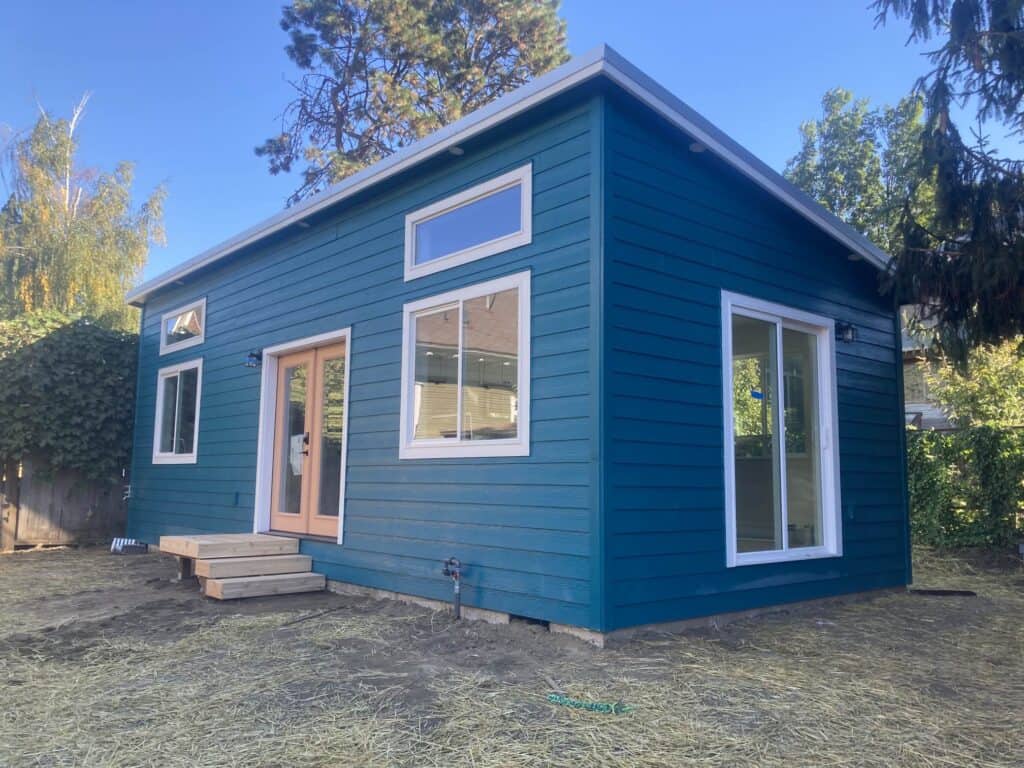
If you are searching for a backyard ADU builder, you are probably not just shopping floorplans.
You are trying to answer the real questions:
- Will my property even allow an ADU?
- How long will permits take?
- How disruptive will construction be?
- What is this actually going to cost once site work and utilities show up?
Most homeowners do not get stuck because they are not motivated. They get stuck because they cannot get a straight path from “idea” to “keys.”
This guide lays out what a good backyard ADU builder should help you solve, what to expect at each stage, and how to avoid the most common timeline and budget traps.
If you want clarity for your specific address, the fastest next step is Wolf’s Free Property Evaluation. It is designed to replace guesswork with real constraints, real feasibility, and a clear plan forward.
What a Backyard ADU Really Is (And Why It Is Not Just a Shed With Plumbing)
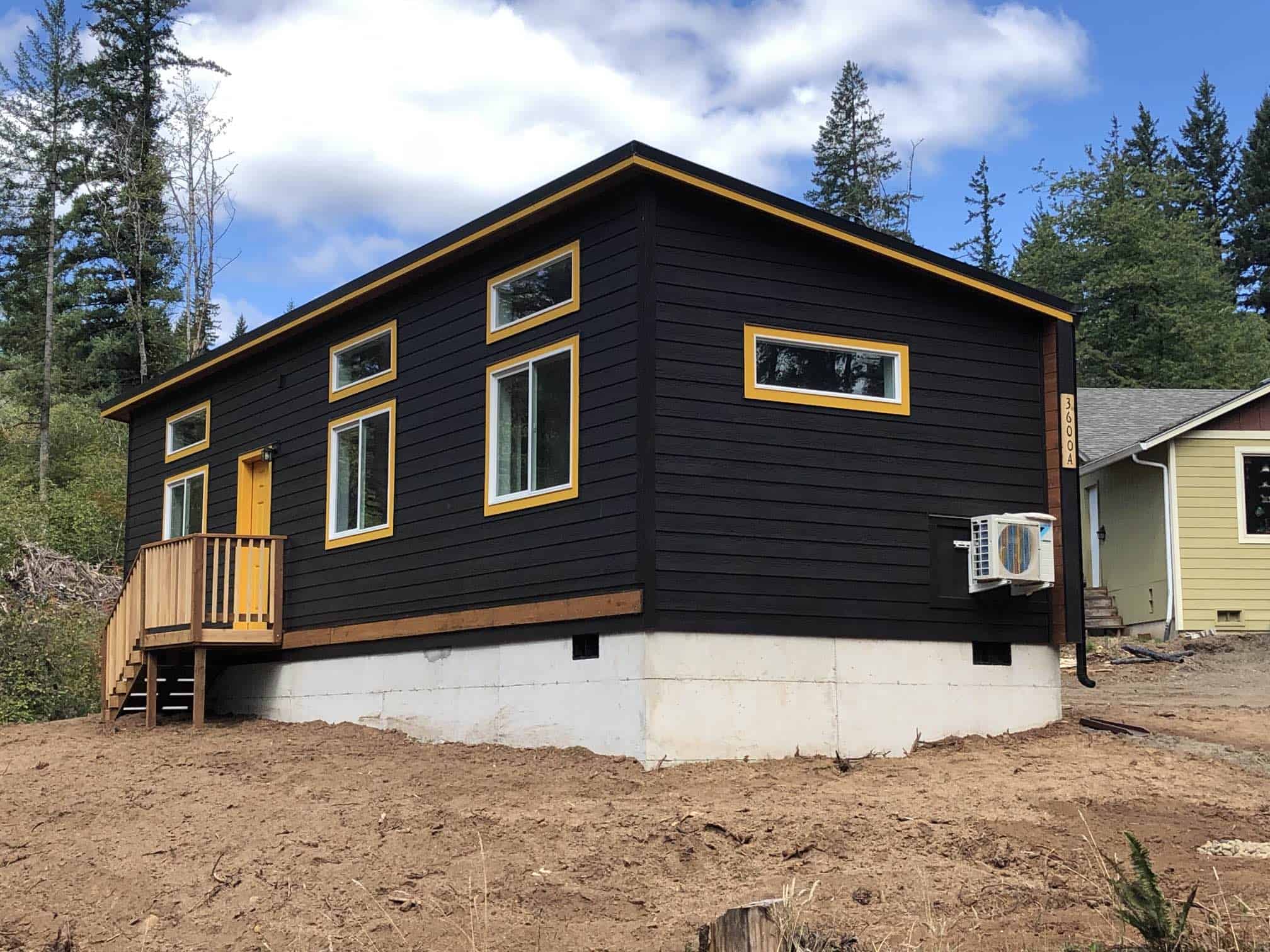
An ADU, or accessory dwelling unit, is a legal secondary home on a property that already has a primary residence. In plain terms, it is a backyard home that has to meet real residential requirements and pass inspections.
That “legal” part matters. Many homeowners start with Pinterest boards and a rough budget, then hit a wall when they learn their jurisdiction has size limits, height limits, setback rules, utility requirements, and specific permitting pathways.
A true backyard ADU builder helps you navigate all of that early, before you spend money in the wrong direction. Wolf’s Free Property Evaluation is the easiest place to start.
Why Backyard ADU Projects Can Go Sideways
Most ADU nightmares have very little to do with the house itself. They come from everything around the house.
The feasibility gap
Homeowners assume the backyard has room. The city assumes nothing.
Access for delivery and construction, slope and drainage, easements, environmental constraints, and utility tie-ins can change the entire scope.
The permitting gap
Permits do not move at the speed of your motivation. They move at the speed of your jurisdiction’s review process, corrections, and requirements.
Some areas are relatively quick. Others require multiple review rounds and can stretch out for months.
The scope gap
This is the one that breaks budgets.
If the builder is only quoting “the building,” you may still be on the hook for site work, trenching, foundation complexity, electrical upgrades, stormwater requirements, and more.
A backyard ADU builder should close these gaps up front, not after you have already committed.
What You Should Expect From a Real Backyard ADU Builder

There are two kinds of builders in the ADU world.
One sells you a unit.
The other delivers a finished, permitted backyard home.
If you want fewer surprises, look for a builder that can guide and coordinate the full path:
Clarity first
A property evaluation that checks zoning, feasibility, access, and utilities before you start making irreversible decisions.
A proposal that spells out the whole project
Not just a number, but a scope that explains what is included, what is assumed, and what could change based on your site.
Permitting support that actually reduces friction
Permitting is a specialty. When it is treated like an afterthought, it becomes a delay factory.
A production and delivery plan you can track
A real timeline, real milestones, and communication that keeps you out of the dark.
Wolf is built around this end-to-end approach. We are one of the most experienced ADU builders in the industry, and our process is designed to make backyard ADUs predictable, not painful.
If you are considering an ADU, start with the Free Property Evaluation. You will get clarity on eligibility and the practical path forward before you spend months chasing the wrong plan set.
The Wolf Approach: A Backyard ADU Process Built for Predictability
Wolf’s process is built around three big ideas:
- One accountable team
- Clear phases
- No mystery scope
Here is how that looks in practice.
Phase 1: Proposal and Project Planning
This is where most ADU projects should start, even if most do not.
Wolf begins with a property evaluation, then moves into a proposal that outlines costs and requirements across the entire project. Instead of guessing, the proposal is built around your actual site, your model choices, and the realities of delivery and setup.
During the proposal stage, Wolf reviews three major areas with you.
- Permits and likely jurisdiction requirements
- Home details like model, roof style, orientation, decks, and upgrade options
- Site and delivery factors like access, topography, tree removal, demolition, excavation, and utilities
The point is simple: you should not be making ADU decisions in a vacuum.
Phase 2: Permitting
Permitting is where “simple backyard ADU” turns into “why is there another checklist.”
Wolf’s permitting team supports the paperwork, plans, and coordination needed to move through jurisdiction review. Depending on your site and location, permitting can involve items like site plans, stormwater plans, erosion control, and utility coordination.
Wolf also calls out a reality most builders avoid: permitting timelines can vary widely by jurisdiction. In the Pacific Northwest, permit timelines can be as short as several weeks in some cities and can extend to months in others.
This is exactly why the property evaluation and proposal phases matter. You want to understand the likely timeline range and requirements before you commit to a schedule that was never realistic.
Phase 3: Factory Production
Backyard ADU projects often feel disruptive because the property becomes a long-term jobsite.
Modular construction changes that. Most of the build happens indoors, on a controlled production line, so your backyard is not a construction zone for an extended period of time.
Wolf’s production process is structured in stages and is designed to keep projects moving with weekly updates. Wolf homes move through the production line in a matter of weeks, not seasons.
This off-site approach tends to reduce weather delays, reduce jobsite chaos, and improve consistency because the same specialized teams repeat the same stages every day.
Phase 4: Delivery and Setup
This is the part that homeowners imagine first, the set day, which is the moment it becomes real.
But the real value is what happens around it.
Wolf’s field team coordinates the site work, foundation, placement, utility connections, testing, inspections, and final walkthrough. After final inspection, Wolf completes the handoff and provides a homeowner binder and warranty information.
If you want to know what delivery access looks like for your property, start with the Free Property Evaluation.
Backyard ADU Costs: The Truth About What Drives the Budget
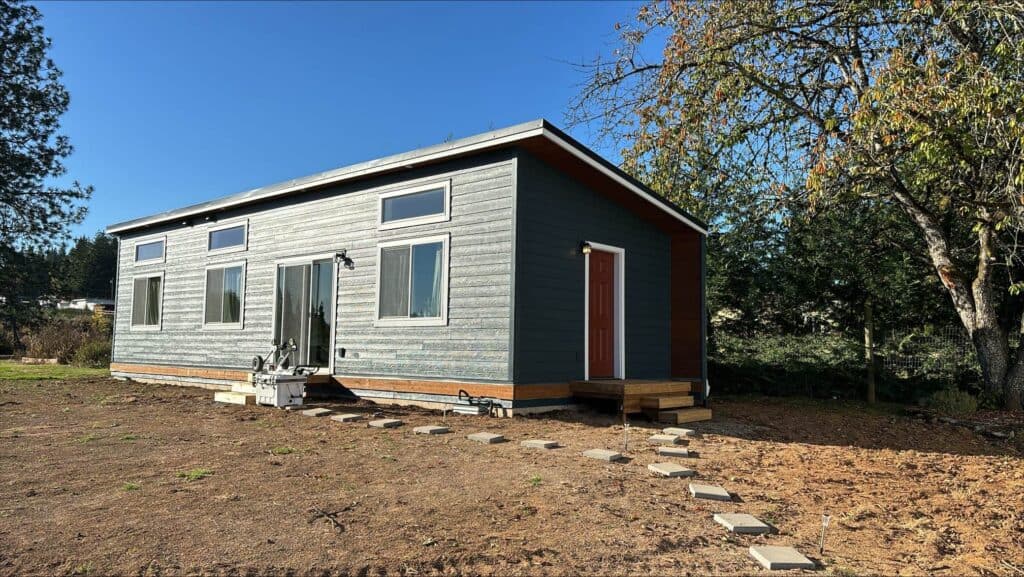
Most homeowners do not blow the budget because the ADU itself was more expensive than expected. They blow the budget because site work and utilities were treated like footnotes.
Here are the biggest cost drivers that should be discussed early.
The home and customization level
Model size, layout, finishes, and upgrades change costs quickly.
Foundation and excavation complexity
Flat, accessible sites are simpler. Slopes, poor soils, tight access, and complex foundations change the scope.
Utilities and trenching
Long trench runs, electrical service upgrades, sewer or septic considerations, and stormwater requirements can be major budget items.
Permitting requirements and fees
Some jurisdictions require additional reviews, documentation, or system development charges depending on the scope and history of the property. The right move is not to hunt for an “average cost.” The right move is to evaluate your site, then build a plan around reality.
Use Wolf’s Free Property Evaluation to understand feasibility, constraints, and realistic budget ranges.
10 Questions to Ask Any Backyard ADU Builder
1) How do you confirm my property can legally support an ADU?
If the answer is “we will figure it out later,” run.
2) Do you support permitting or coordinate it end-to-end?
Permitting is not a side quest. It is the gate.
3) What is included in your scope, and what is excluded?
You want clarity on site work, utilities, foundation, and allowances.
4) How do you handle site work and delivery access constraints?
Backyard ADUs fail when access is an afterthought.
5) How do you prevent timeline drift?
Ask how often you will receive updates and how milestones are tracked.
6) What assumptions are you making about utilities?
Assumptions are where surprise invoices live.
7) How do change orders work?
You want a process, not improvisation.
8) What is your quality control process?
Ask how inspections and punch lists are managed.
9) What does “turn-key” mean in your company?
Make them define it in plain language.
10) What does handoff and warranty support look like?
A backyard ADU is a home. You want the same accountability you would expect from a primary residence builder.
The Bottom Line: The Best Backyard ADU Builder Starts With Clarity

A backyard ADU can be one of the smartest ways to add value and flexibility to your property.
- Rental income.
- A place for family.
- A private home office.
- A long-term plan for aging parents.
But none of that matters if the project turns into a slow-moving construction mess.
Start with Wolf’s Free Property Evaluation and get a clear answer on what your property can support, what it will take, and what the smartest next steps are.