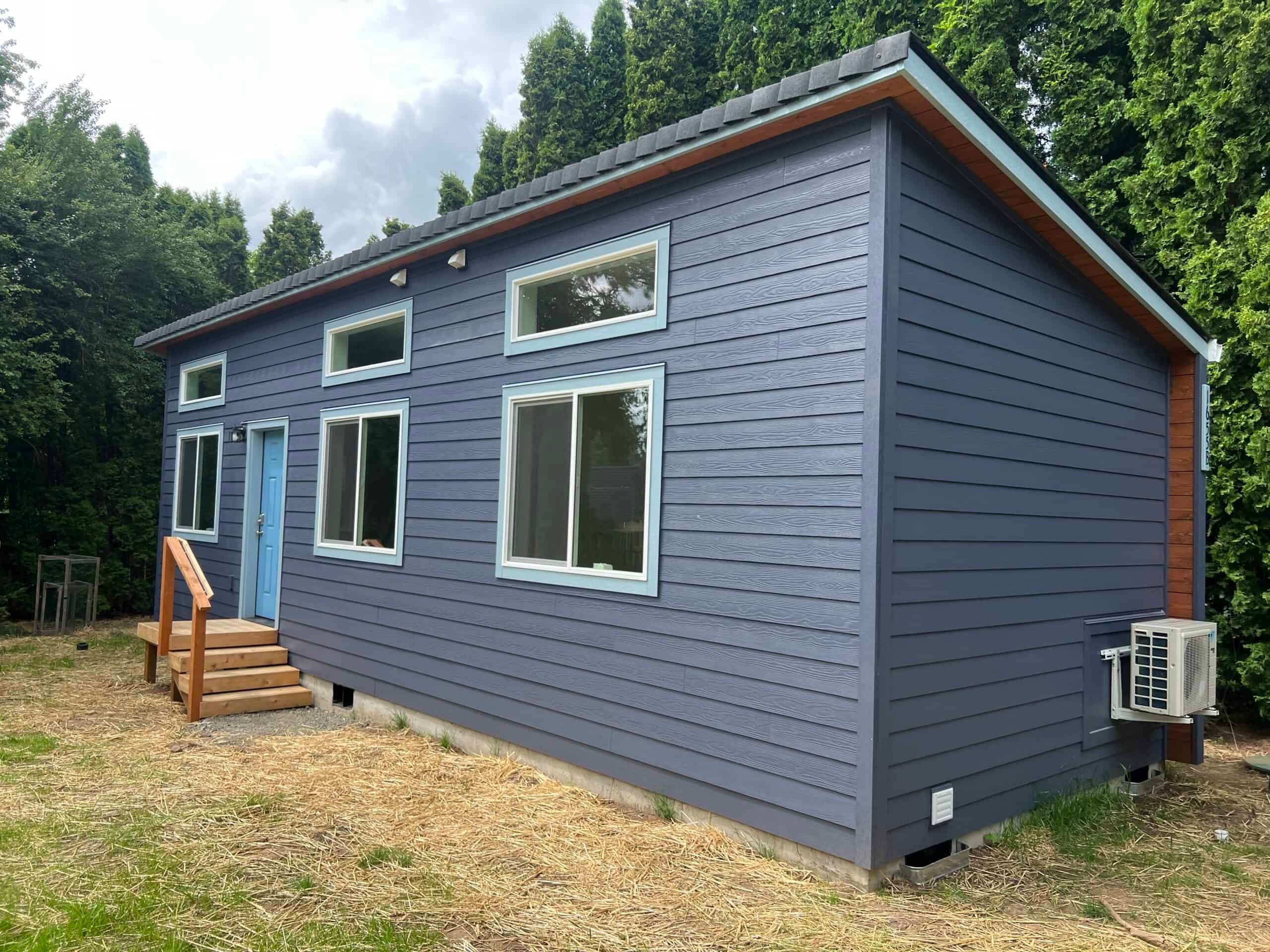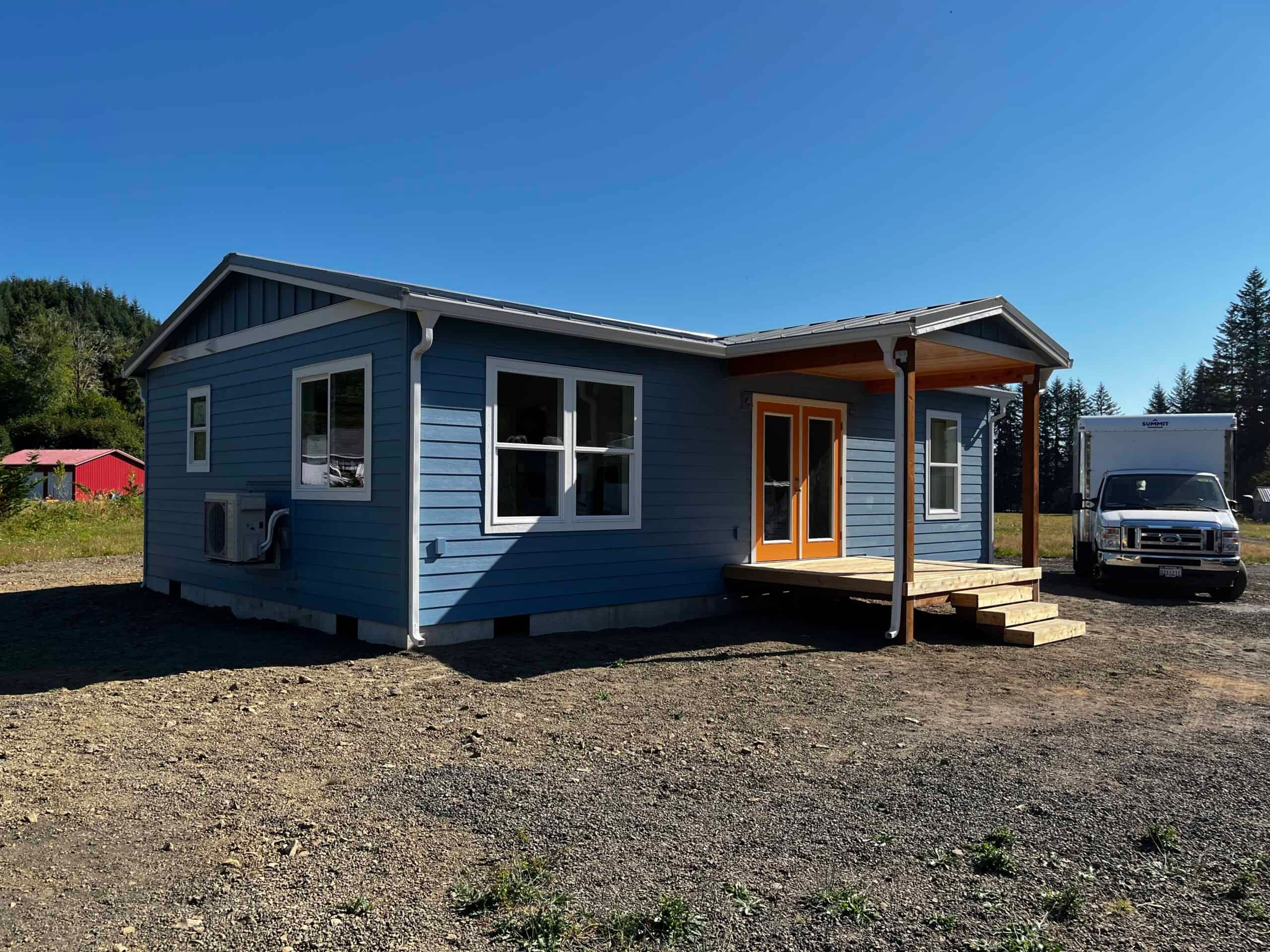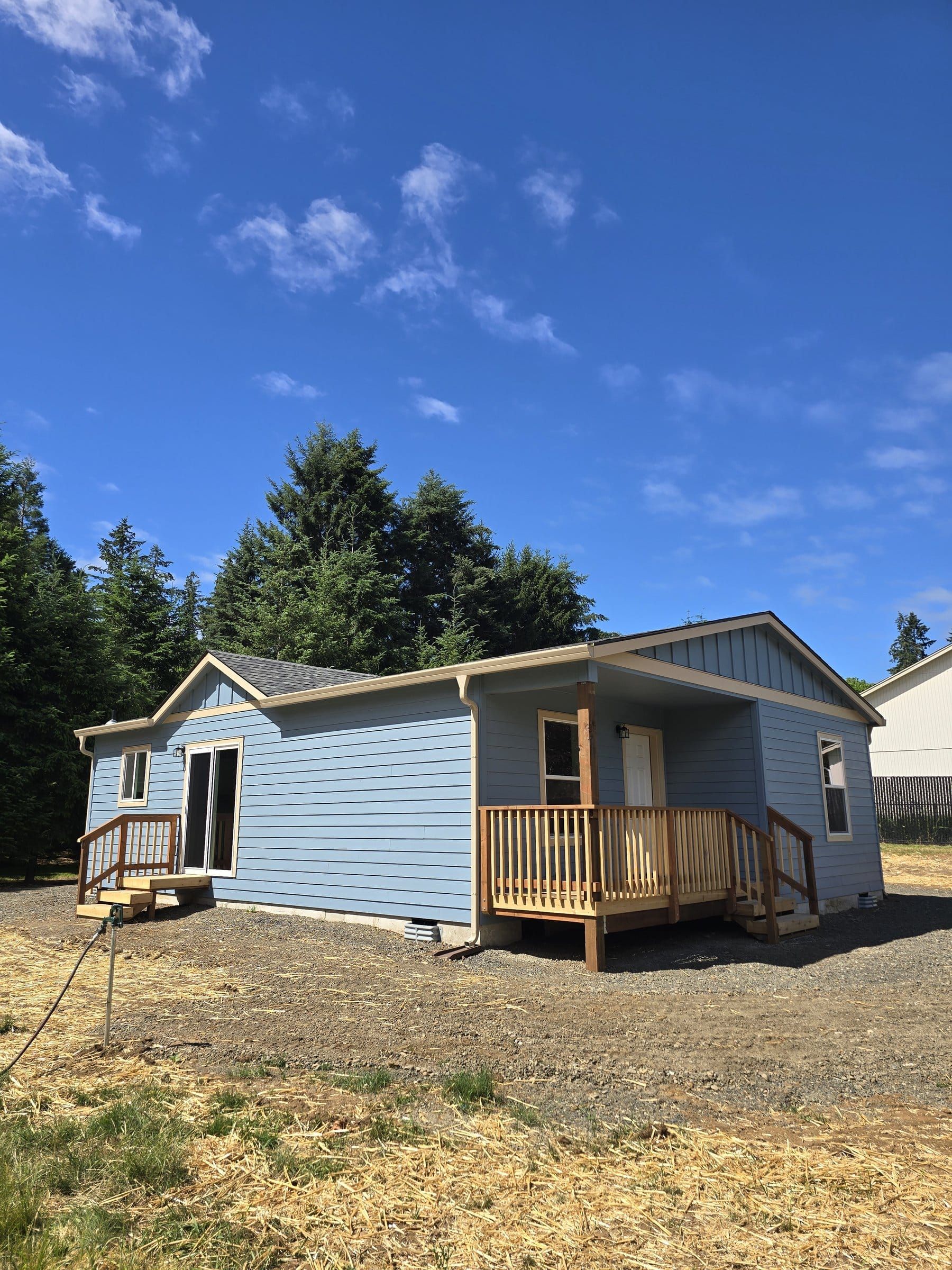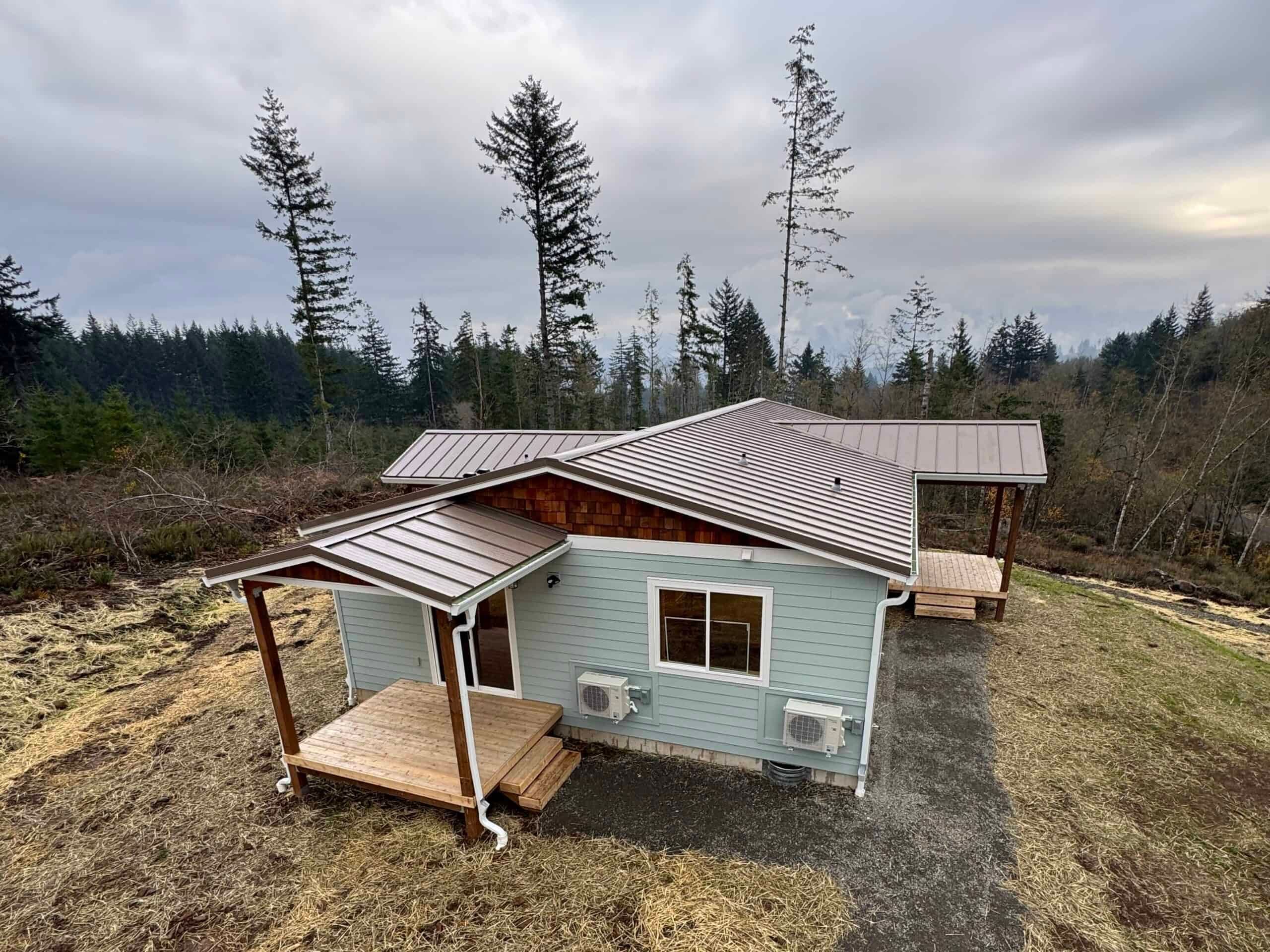
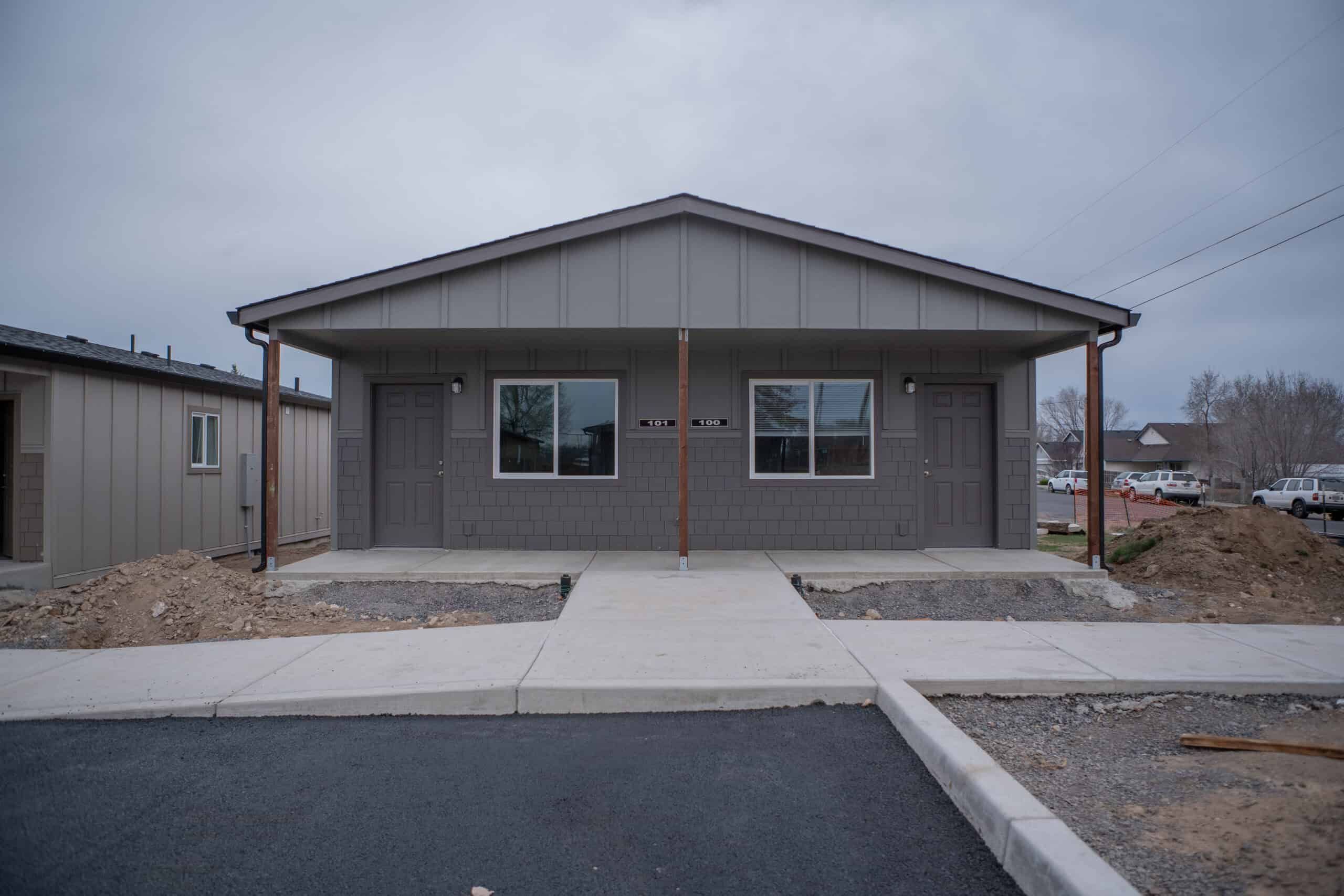
Bend is high desert: juniper, lava rock, real winters, and a delivery that leaves our factory, crosses the Cascades, and arrives in a town that treats snow storage as part of the site plan. Housing is tight here and lots are expensive, which is why so many Bend homeowners look at ADUs. The early questions are jurisdiction, utilities, and whether a factory-built cottage can reach the pad in January.
Rental rules matter here too, and the City of Bend and unincorporated Deschutes County handle them differently. If you’re counting on rental income, settle that before you pick a floor plan.
City of Bend or Deschutes County
If the taxlot is inside Bend city limits, the Bend Development Code and Building Safety cover it. If it’s outside, say Tumalo-adjacent, rural residential off a county road, or a Sisters mailing address that’s actually county, you’re in Deschutes County Community Development. Plenty of homeowners assume Bend rules apply to anything with a 97701 address, and on county parcels they don’t.
Inside the city, we work from the city’s ADU hub until we confirm the current packet:
- Detached ADUs must be 800 square feet or less. Portland’s 75-percent-of-living-area rule doesn’t apply in Bend.
- The development code allows up to two ADUs on a residential lot in many cases. Special-area rules and private CC&Rs can still block it, so two units isn’t guaranteed on every plat.
- No minimum on-site parking for ADUs, per the city’s ADU code requirements. Driveway layout, snow storage, and where cars actually go in February still matter.
- The ADU hub notes you apply for one permit covering Planning and Building Safety. That saves a trip between counters. It won’t save you from a redesign if you chose a model before measuring setbacks, trees, and sewer laterals.
Unincorporated Deschutes County follows the rural ADU path in our Deschutes County ADU guide: eligible zones only (RR-10, MUA-10, UAR-10, SR-2 1/2, WTZ, but not EFU, forest, or Open Space), typically 2 acres (5 acres in parts of South County), 900 square feet of usable floor area, placement within 100 feet of the primary dwelling (the guide explains how new construction and conversions are measured differently), septic or sewer confirmation, fire-district access, and a recorded covenant against vacation rental. Sunriver, Tumalo, and Terrebonne unincorporated communities are not eligible for the rural program. For statewide background, see Oregon ADU rules.
Short-term rental is a separate permit
Bend’s owner-occupied short-term rental guidance says those bedrooms must be in the structure you live in and cannot be in an attached or detached ADU or guest house. If the plan is to build a cottage and run it as your owner-occupied STR, confirm that scenario first. Whole-unit STR licensing is a separate city process from the ADU building permit, and getting one doesn’t get you the other.
On rural county lots, vacation rental of the ADU (and often the primary home) is prohibited, and the county records that restriction before issuing building permits. A long-term rental or a family unit is the simpler path. We leave Airbnb income out of a Bend-area budget until the address and the intended use pass that check. Send us the scenario.
Snow, rock, and a longer delivery
Our factory is in Battle Ground, north of Portland, and Bend is a long haul from there. The Cascade passes (Santiam, or the Gorge and then US-97) add weather windows, escort questions on some loads, and a set day planned around snow, ice, and whether the driveway can take a modular truck. We plan Bend deliveries as their own Central Oregon trip.
On the lot, frost depth, lava-rock excavation, and drainage on pumice soils move foundation cost more than any cabinet upgrade. Snow storage belongs on the site plan so the plow pile doesn’t bury the ADU entry or the only parking spot. Juniper and ponderosa in the crane path need the same planning a Portland maple does.
Some lots on the edges sit in the wildland-urban interface, which brings defensible-space requirements. An access road that works for a pickup won’t always work for a set, so tell us early if yours is tight.
Models against the 800-square-foot city cap
These are modular homes, not HUD (the federal standard for manufactured homes) manufactured.
- Model K (~432 sq ft) fits well under Bend’s city ADU cap and is the usual one-bedroom for guests or a long-term rental.
- Model E / Model F (~616 sq ft) give you two bedrooms under 800, which makes them the typical two-bedroom ADU in city limits.
- Model J (~828 sq ft published) and Model L (~984 sq ft) go over the 800-square-foot ADU cap if the city measures floor area the way we publish it. Owners ask about them for a larger cottage, and they can work as a small primary home on a vacant or larger site. For a city ADU, we check how Bend measures floor area before anyone commits to one.
On qualifying rural county lots the usable-floor cap is 900, which still rules out some larger Wolf plans unless porches and garages are the only extras. Measure usable floor the way the county does.
Bend neighborhoods and CC&Rs
Old Bend, west of the parkway near downtown and the river, has tight yards, alleys, and big trees, and there’s often lava rock under the lawn. Southeast plats and newer east-side neighborhoods are wider, but they come with CC&Rs, drainage easements, and HOA (homeowners association) design review, and some HOA packets ban a second dwelling the city would allow. Read your covenants, because city ADU law doesn’t override a recorded restriction.
North toward Deschutes Market Road and west toward Tumalo, the mailing address often says Bend when the parcel is county. If your neighbor has an ADU, find out who issued the permit, Bend Community Development or the county on Bond Street, before you copy their site plan.
Shevlin, Awbrey, and other hillside neighborhoods put retaining walls and crane setup on the first drawing. River and canal-adjacent lots add drainage questions and, on some maps, flood or canal easements that we confirm from the records, not a listing photo. Rim-rock lots and lots with old fill usually need a geotech report.
Nearby cities
Redmond has its own city hall and a different last mile for delivery. Sisters is a small-town permit with forest-edge fire questions. Sunriver is an unincorporated community where the county rural ADU program doesn’t apply. Madras is in Jefferson County, with its own county planning office.
What a Bend permit file contains
Expect a plot plan showing the primary house, the proposed ADU, setbacks, utilities, and how a fire truck or modular trailer reaches the pad. City files under the combined Planning/Building Safety permit still need a complete site drawing. County rural files add the planning ADU permit, a septic site evaluation, driveway and access, and recording of the vacation-rental covenant. Leaving any of those out is a common cause of redesign.
Geotech shows up on rim rock, fill, and canal banks. Snow load and frost depth are part of the structural review in Central Oregon, even though the module is already state-inspected. Local review still covers the foundation, the connections, and whether the unit sits where the zone allows.
Cost drivers besides finishes
We see three main cost drivers in Bend: site work and utilities (trench length, tie-ins), design changes that affect the foundation or mechanical systems, and permitting time. Digging through rock costs more than a Willamette Valley trench. Electrical service, and whether the ADU needs its own panel, is another Bend-specific cost. We quote after we see the lot. Most Bend owners pay with a HELOC or a cash-out refinance, and some use a construction lender who has closed factory-built homes before; see financing.
Who Bend ADUs house
Bend ADUs house parents who are done with the west-side winter commute, adult children who work in town and can’t afford to buy, long-term tenants in a market short on monthly rentals, and sometimes guests at a second home. Second home plus ADU plus STR is the combination that usually fails: county rural ADUs can’t be vacation rentals, and city owner-occupied STR rules keep those bedrooms out of the ADU. Tell us whether the cottage is for your mother or for January ski rentals, so we can check it against the rules before you spend anything.
Single-level living and a dry, shoveled path from parking to the door matter more here than a loft. Plan for ice, and for where the snow goes when you shovel that path.
If it has a kitchen and bath and someone will live in it, Bend treats it as a dwelling, whether you call it a tiny home, guest house, or studio.
What a Bend evaluation looks at
Bring the address, a rough idea of where the cottage would sit, and any survey or prior permit you have. We start with the jurisdiction question, because the city and county programs have different size caps, different acreage rules, and different limits on renting the unit. Then we look at:
- City or Deschutes County, then the zone and any overlay or special area.
- For city ADUs: the 800-square-foot cap, whether a second ADU is possible, real-world parking, and CC&Rs.
- For county lots: acreage, eligible zone, the 100-foot rule, septic, fire access, and the vacation-rental covenant.
- The delivery route over the Cascades, driveway width, snow, overhead lines, and staging.
- Use: family, long-term rental, or STR, since each has different rules.
- Water source, and whether a second dwelling is a simple lateral or a well question.
After the set
Punch list visits in Central Oregon are scheduled trips from the factory, and weather limits when the remaining exterior work can happen. Then inspections, occupancy, keys, and warranty. If you have a plot plan or a prior Bend permit, send it. A taxlot number is enough to start, and if a truck can’t reach the pad, we’ll tell you at the evaluation.
Send the address. Tell us whether it’s in Bend or the county, where the building would sit, and how you plan to use it. We’ll tell you whether the 800-square-foot city cap or the 900-square-foot rural cap applies and which model works with the snow, rock, and truck access on your lot.