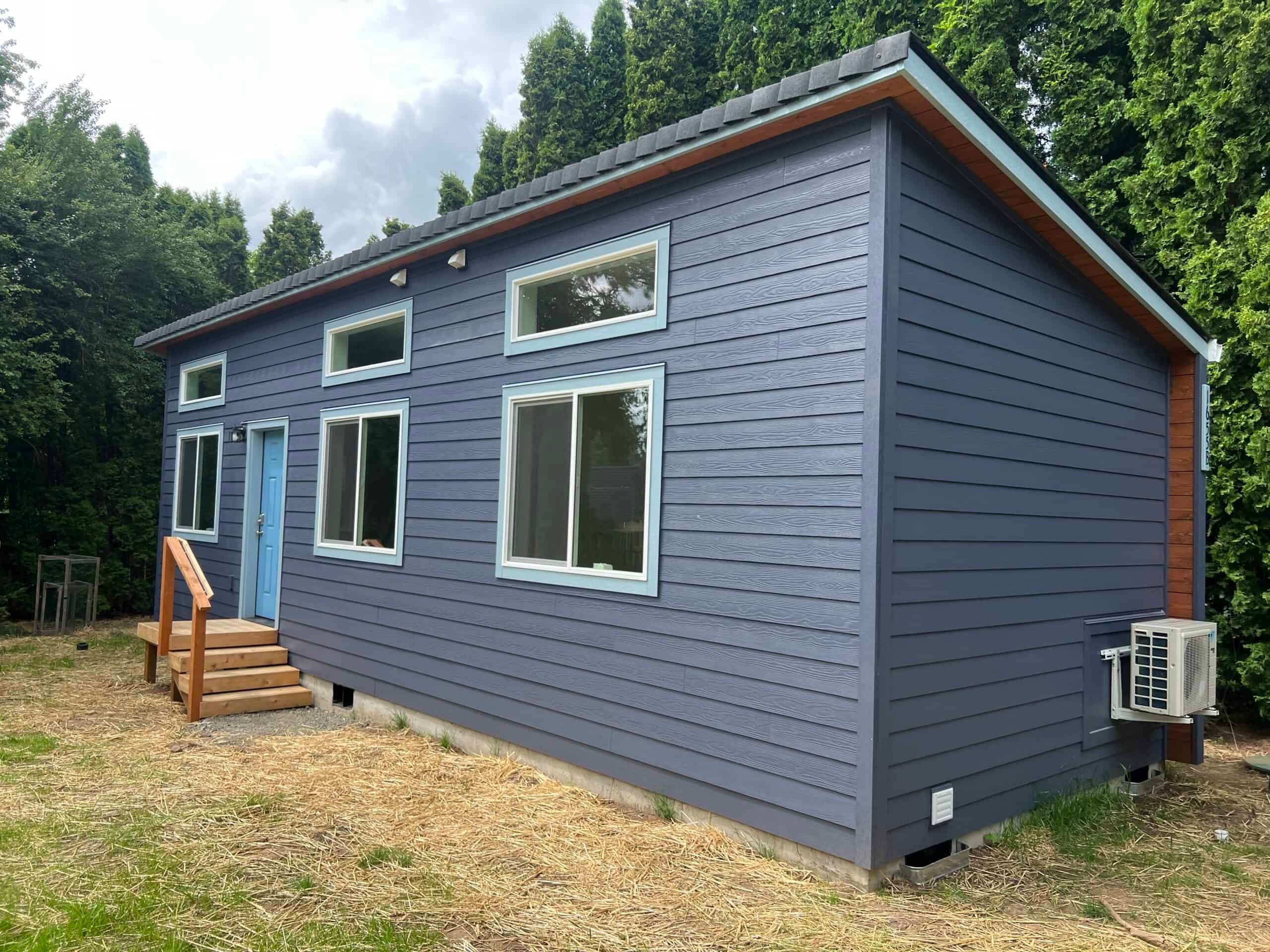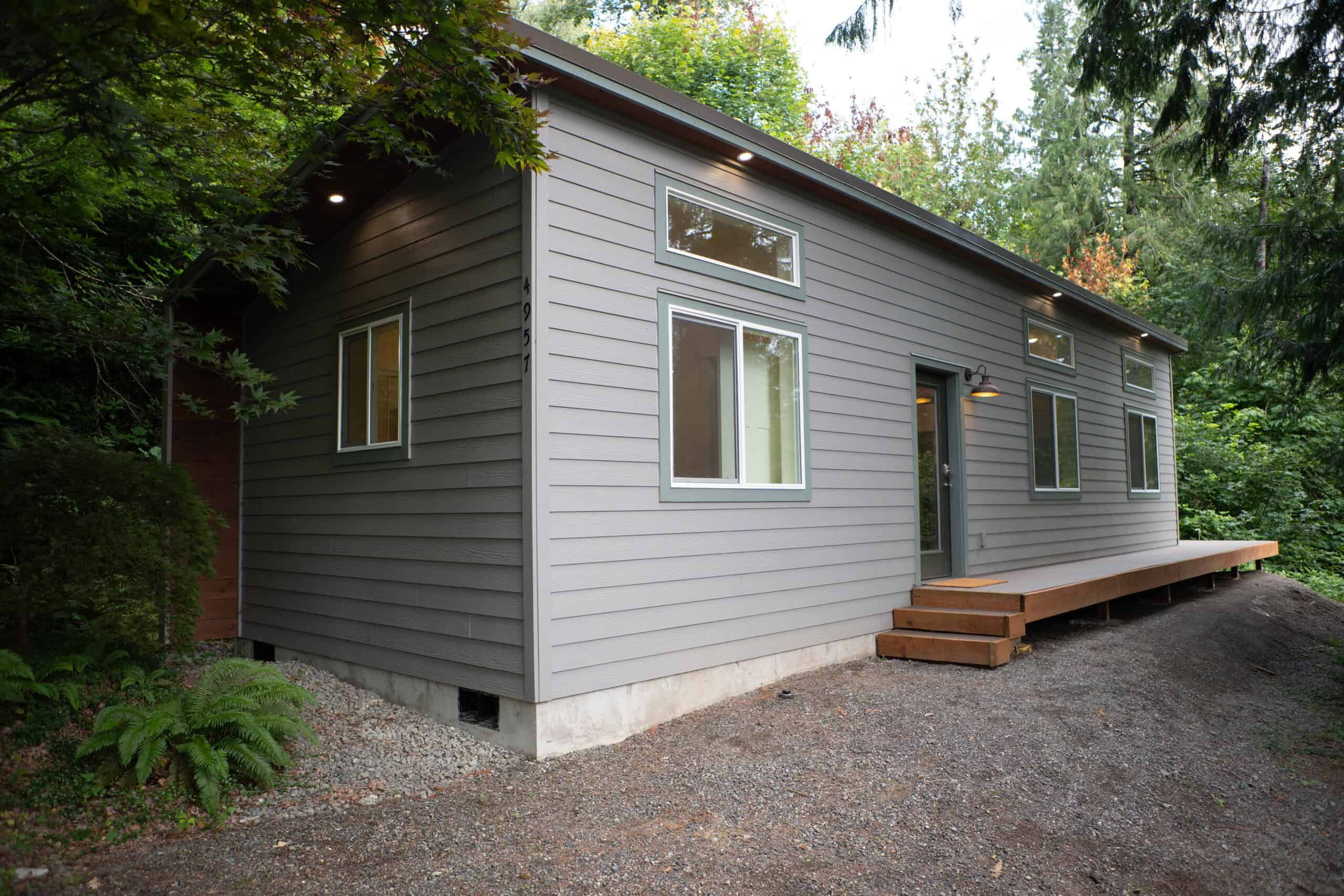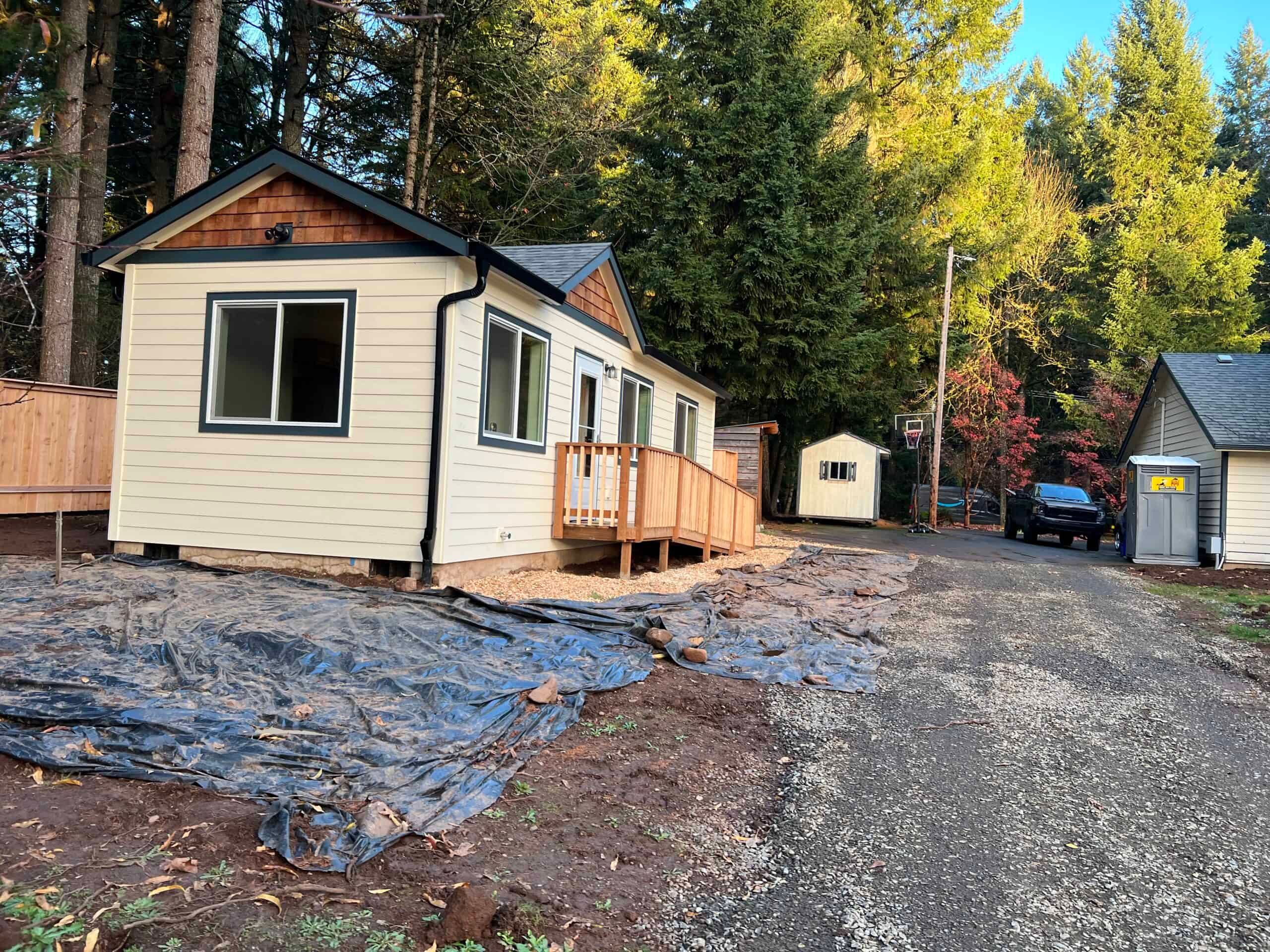
Corvallis sits in the mid-Willamette Valley, and Oregon State University drives a lot of its housing demand. On one street you might find faculty families, graduate students, and parents who moved west to be near a student. You’ll also find owners who want a long-term rental in a tight market.
Our factory is in Battle Ground, just north of Portland. Delivery runs I-5 to Highway 34 or 99W. That’s farther than Tigard, but it’s a routine trip compared with the coast.
Your permit goes to one of two offices. Inside the city, it’s City of Corvallis Development Services at corvallispermits.com. Outside the city, it’s Benton County. The two have different standards.
The facts that matter most start with Land Development Code Section 4.9.40 and the 900 / 85 percent size cap. Next is the Green Area standard, which sets how much of the lot has to stay landscaped or open. The last is whether the taxlot is inside the city at all. Tree-lined streets and riverfront paths can also limit crane access and cut into Green Area. Lots in Philomath or unincorporated Benton County go to a different office with different rules.
How Corvallis regulates ADUs
Inside city limits, we work from the city’s ADU page. ADUs are permitted outright on most residential lots under LDC 4.9.40. That means a unit that meets the standards goes through the building permit process. It doesn’t need a separate discretionary land-use case, the kind of review where planners can approve, deny, or add conditions. You can reach Development Services at 541-766-6929.
Here are the published standards we work from. Confirm 4.9.40 when you file.
- The ADU can’t be larger than 900 sq ft of floor area, or 85 percent of the main house’s floor area, whichever is less. That leaves more room than Beaverton’s 50 percent or Oregon City’s 60 percent. A 1,000 sq ft house allows up to 850 sq ft. At 50 percent, you’d get 500.
- The zone’s height, lot coverage, and Green Area standards apply to the ADU the same way they apply to the house. There’s no Private Outdoor Space requirement for an ADU.
- Setbacks, the distance a building has to sit from the property line, follow the house’s zone standards. The one exception is that ADUs don’t have to meet maximum front yard setbacks. Townhouse lots have special setbacks for detached ADUs in 4.9.40.e.
- Only one ADU per property.
- The unit must meet the Oregon Residential Specialty Code. It has to connect to water and sewer, usually by tying into the house’s existing services. A sewer lateral is the pipe that links a property to the main in the street. When you add the ADU, any publicly maintained sewer lateral in the right-of-way is expected to be at least 6 inches under Engineering Standards Chapter 4. That rule can turn a simple cottage into a public-works project.
Lot-specific questions, like a corner-lot setback or a shared driveway, are easier to answer once we have the address.
At the state level, ORS 197A.425 applies. There’s no rule that the owner has to live on the property. Under HB 2001, long-term units also don’t need extra off-street parking. Corvallis still sets Green Area, the 6-inch lateral rule, and fees. Our Oregon ADU rules guide walks through the statute.
Benton County lots
If the property is outside city limits, the corvallispermits.com process doesn’t apply. Our Benton County ADU guide covers the county path.
Unincorporated land inside a UGB, the urban growth boundary where a city plans to grow, uses the county Development Code ADU standards. The county’s published materials cap habitable space at 900 sq ft. They allow one ADU per legally established single-family home, and garage area doesn’t count as living area.
On rural lots, septic, well, road approach, and fire-district rules decide what’s possible. Philomath and Adair Village have their own city halls, even when the mailing address says Corvallis. Some Albany-area addresses sit in Benton County and still aren’t a Corvallis file.
The official county starting point is Benton County’s ADU Development Code Standards. The county sends owners inside city limits to the city, and so do we.
Models that fit 900 or 85 percent
Wolf doesn’t sell HUD code (the federal standard for manufactured homes) manufactured homes. Our homes are modular dwellings under Oregon’s BCD prefabricated-structures program. Each one sits on a local foundation under a city or county installation permit. Every home leaves the factory with the Oregon insignia of compliance. Corvallis or Benton County still inspects the foundation, the set, and the utilities.
- Model K (~432 sq ft). A one-bedroom ADU for a parent, a graduate student household, or a small rental.
- Model E (~616 sq ft). Two bedrooms, well under 900. Model F uses the same shell. Model J (~828 sq ft) can fit when 85 percent of your house and the Green Area standard leave room for it.
Near campus, access limits more lots than the 900 sq ft cap does. Measure the driveway before you settle on a Model J.
Permits: corvallispermits.com
City Development Services permits, including revisions, go through www.corvallispermits.com. You create an account and pick the application type. Then you upload plans, pay fees when the city emails them, and download stamped plans from the portal. It’s a separate system from Portland’s DevHub, Salem’s system, Albany’s Accela, and the Benton County counter.
The first question is always the same: City of Corvallis or Benton County? After that come zoning and whether the lot qualifies for a detached ADU. Next are the site, foundation, and utility plans, plus the modular compliance documents. Then we submit, answer revision requests, and move on to foundation and placement.
Our process starts with feasibility work. That covers city versus county, the 900 / 85 percent test, Green Area, the 6-inch lateral, trees, and the truck path from 34 or 99W. A scoped proposal comes next. Then our permit team files a corvallispermits.com building file with the BCD modular documents. How long the city takes to review it depends a lot on how complete that file is.
System development charges
Corvallis charges system development charges, or SDCs. These are one-time fees on new construction that help pay for city infrastructure. As far as we know, Corvallis has no citywide ADU SDC waiver like Salem’s. It also has no parks-and-transportation exemption like Tigard’s. So we check the current worksheet for each project.
On a small ADU, these fees can be a real share of the total, even when the starting home price is predictable. We figure them from your property’s meter and EDU count, the number of household units the city charges you for.
Where Corvallis lots run into trouble
- Campus neighborhoods versus quieter south-town plats. College Hill, the area north of campus, and the downtown river grid are tight and older. They’re also hard to deliver to. South Corvallis and some west-hills lots off Walnut Boulevard deal with grade and trees instead.
- Green Area. A backyard can look empty and still be at the landscaping and open-space minimum once you add a footprint.
- The 6-inch lateral. If the public sewer line in the right-of-way is smaller than the engineering standard, upgrading it can add real cost.
- Willamette and Marys River. Lots near the rivers have floodplain and drainage issues. Jackson-Frazier and other natural areas change the overlays, the extra map layers that add rules to a lot.
- Student rental assumptions. State law broadly allows long-term ADU rentals. Short-term and party-house use are up to local rules.
- Philomath Road and 99W delivery. The highway part is easy. The last 400 feet to your lot often isn’t.
How people use these homes
Corvallis ADUs house parents, adult children, and graduate students. They also work as long-term rentals, guest cottages, and places to downsize. The intended use matters because it can shape the layout, parking, and financing plan.
If you’re near campus, tell us whether the home is for a relative or a 12-month tenant. The size cap stays the same either way. The answer can still affect parking disputes and HOA (homeowners association) noise concerns.
In Corvallis, a granny flat or mother-in-law unit with its own kitchen and bath is a 4.9.40 dwelling. It goes through the same 900 / 85 percent test and the same portal as any ADU.
Factory build and the Highway 34 set
Once Corvallis issues the permit, we build the home at our factory while site work moves forward. Delivery takes a day, via I-5 to Highway 34 or 99W through Monmouth and Philomath. Set day is the day the home is placed on its foundation, and we weather-seal it that same day. Two-piece plans like the Model J add a day to join the halves.
Mid-Valley rain from October through May is why we build indoors. Marys River silt and west-hills clay are why winter foundations need careful planning.
OSU’s calendar affects set days near campus. Move-in weeks, game days, and street parking can look nothing like they did when we walked the lot in March. South Corvallis and Philomath Road lots usually avoid that. They deal with grade or Green Area instead, so tell us which neighborhood you’re in.
Utilities
Inside city limits, water and sewer are city utilities. The 6-inch public-lateral rule is the one that catches people off guard. Power usually comes from Pacific Power or Consumers, not PGE, which a lot of westside owners don’t expect. Benton County lots add a well, septic, and a fire-district screen that city files never see. We confirm the provider map before trenching.
What goes into a Corvallis proposal
Two Corvallis properties with the same model can end up with different totals. Site work, a required 6-inch lateral, Green Area plantings, SDCs, and electrical upgrades all play a part. Building in the factory makes the home price more predictable, but local engineering requirements still add cost. Our financing page covers ways to pay for the project.
Neighboring cities and the county each have their own rules. Albany is in Linn (and partly Benton) County. It uses Accela and has a different size test. Unincorporated Benton County follows the county guide. Eugene is in Lane County. Salem waived ADU SDCs, which Corvallis hasn’t done.
After the set
Inspections, occupancy, keys, and warranty come next. Corvallis or Benton County inspectors decide when you can move in, so keep the approved drawings on site until they sign off. Your home comes with a one-year warranty, and we stand behind our workmanship for years afterward. Highway 34 is our route for punch-list visits. It’s a longer drive than a Tigard job, but we still treat Corvallis as a home market.
What a Corvallis evaluation looks at
Bring the address and a backyard sketch. A corvallispermits.com login, a sewer-lateral camera inspection, or a Benton County pre-application letter helps if you have one. We can also start from the address alone.
The free property evaluation is our first look at zoning, setbacks, and what’s generally allowed on the lot. For a Corvallis address, that means:
- City of Corvallis versus Benton County versus Philomath.
- The 900 / 85 percent test and Green Area.
- Flood maps along the Willamette and Marys.
- Intended use: family, long-term rental, or short-term.
The deeper site checks come next, as the project moves forward. Paid work starts only after you sign an agreement. Those checks cover:
- Sewer lateral size in the right-of-way.
- Water, sewer, and electrical: laterals, panel, and meter.
- The truck path from 34 or 99W to the curb.
The first answers you’ll get are whether the lot is city or county and what 85 percent of your house works out to. Whether the public lateral is 6 inches comes with the site checks. Tell us city or county and the size of your house, and we’ll match a model to 85 percent of that number. Send us the address to get started.