
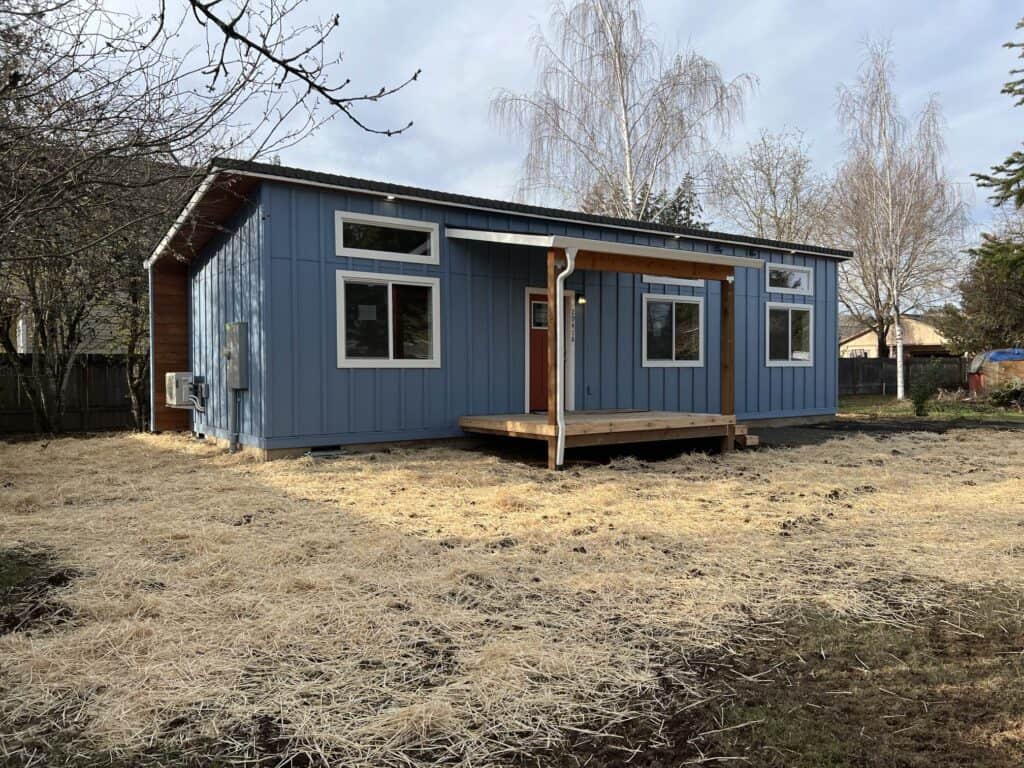
Thinking about adding an ADU in Marion County, Oregon? Before you start sketching floor plans or shopping for a backyard home, there is one question that matters more than almost anything else:
What will Marion County actually allow on your property?
That question can get confusing fast. Marion County has different ADU rules depending on whether your property is in an urban growth boundary area outside city limits, or in rural Marion County. The county’s rules also distinguish between interior ADUs, attached ADUs, detached ADUs, modular dwellings, manufactured homes, RVs, park models, guest houses, and tiny homes on wheels.
In other words, the dream is simple. The rules are not.
That is why one of the smartest first steps is to get Wolf Industries’ free property evaluation. Wolf can help review your address, zoning, site conditions, and ADU feasibility so you are not guessing your way through county code before you know what is even possible.
First, Is Your Marion County Property Urban or Rural?
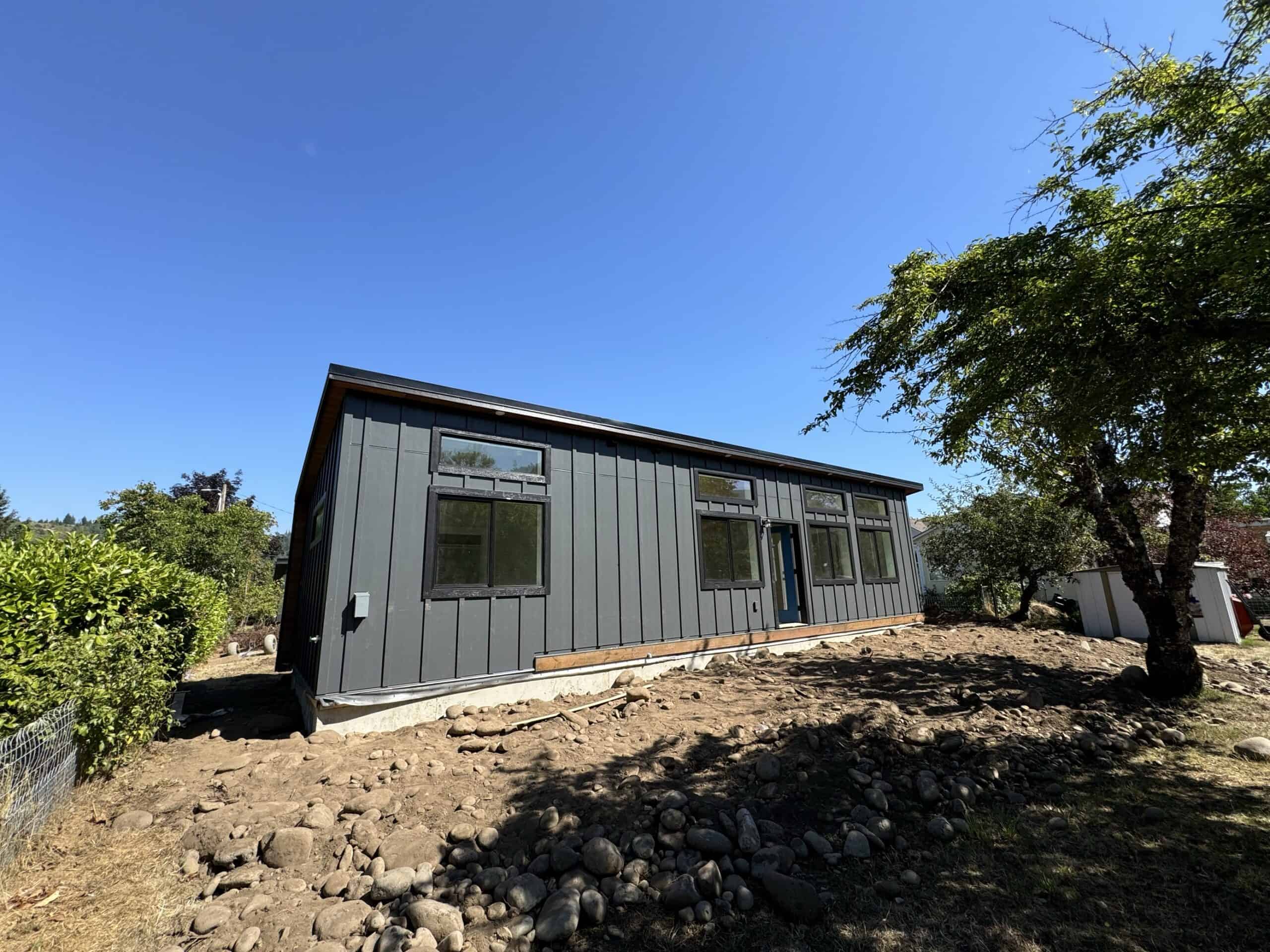
The first major ADU question in Marion County is whether your property falls under the county’s urban ADU rules or rural ADU rules.
Marion County adopted urban ADU regulations in 2017 through Ordinance #1382, allowing ADUs in urban growth boundary areas of Marion County outside city limits.
Rural ADU rules changed later. Marion County’s rural ADU handout states that in January 2024, the Marion County Board of Commissioners adopted Ordinance #1458 allowing ADUs in the Acreage Residential, or AR, zone outside city limits.
That difference matters. A property near Salem, Silverton, Woodburn, Stayton, or another Marion County community may be subject to one set of standards, while a rural acreage property may be subject to another. And properties inside city limits may fall under city rules instead of county rules.
This is exactly where homeowners get stuck. You may have enough land. You may have a great location. You may even have the perfect family or rental use in mind. But if the zoning, setbacks, access, or utility requirements do not line up, the project may need to change.
Before you spend money on plans, engineering, or site work, start with Wolf’s free property evaluation. It is one of the easiest ways to find out what your Marion County property may be able to support.
What Counts as an ADU in Marion County?
Marion County defines an accessory dwelling unit as a second dwelling unit built on a lot that already has an existing house, attached house, manufactured home, or existing dwelling unit. The ADU must remain accessory to the main dwelling and cannot function as a separate, independent lot.
Marion County recognizes three basic types of ADUs:
Interior ADU: Built inside an existing dwelling or attached garage.
Attached ADU: Built as an addition to a dwelling or attached garage, or as a new structure within 5 feet of an existing dwelling.
Detached ADU: An existing or new structure located more than 5 feet from the existing dwelling or attached garage. In the urban ADU handout, detached ADUs may include modular and manufactured dwellings if they meet the applicable standards.
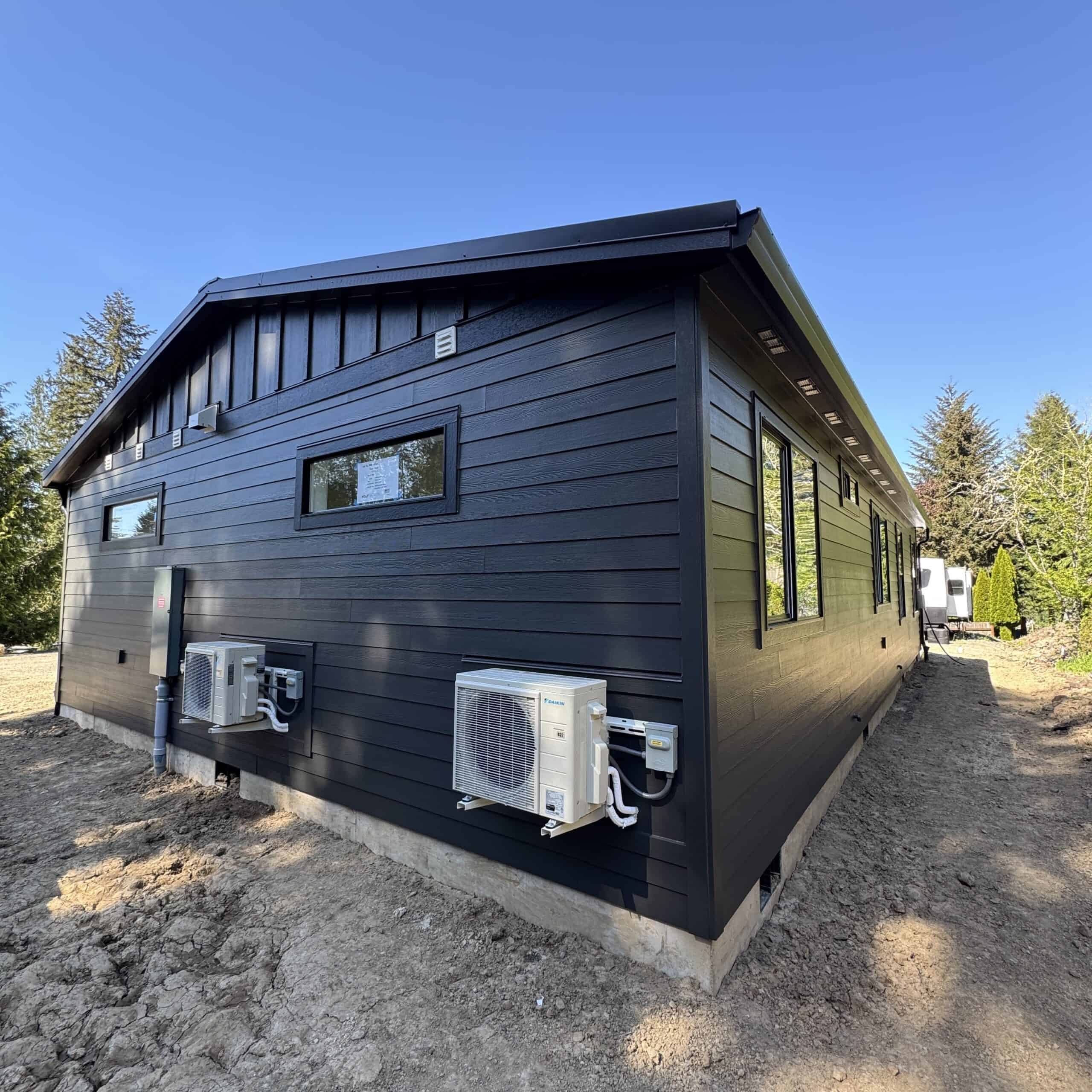
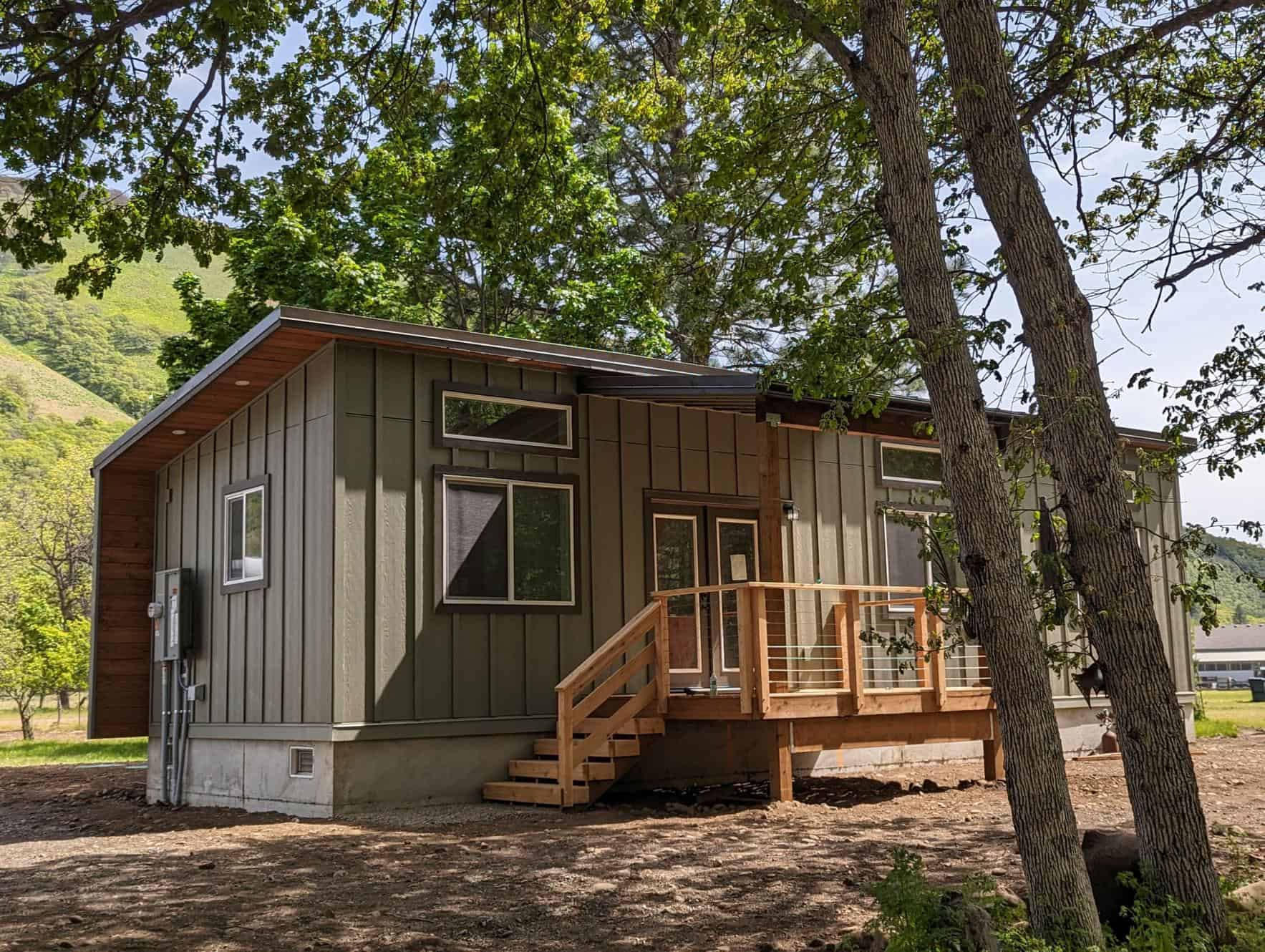
That is good news for homeowners who want a real, livable second unit without turning their property into a construction zone for a year. Wolf Industries builds modular ADUs in a factory, delivers them to the site, and helps with the process from permits, sitework, utilities, and final inspection.
What Cannot Be Used as an ADU?
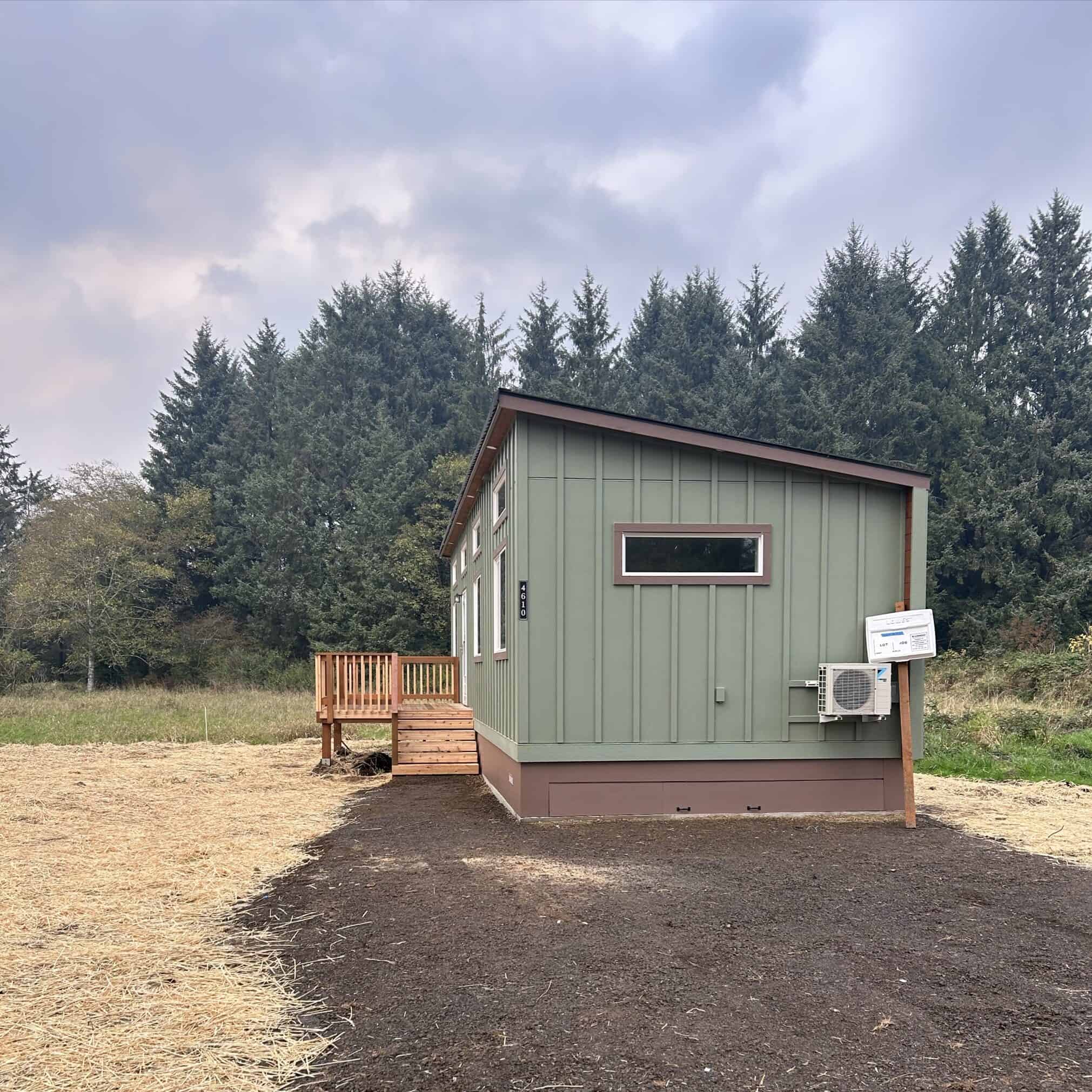
In Marion County, structures on wheels generally cannot be used as ADUs. The county’s urban ADU guidance says recreational vehicles are not allowed as ADUs because they are considered vehicles. Tiny houses on wheels and park models are also not allowed as ADUs because they are built to RV standards and can be registered with the DMV.
The rural ADU guidance says generally any structure on wheels that can be registered with the DMV cannot be used as an ADU because those structures are built to standards other than the State Building Code. The rural guidance lists recreational vehicles, park models, and tiny houses on wheels as examples of structures that cannot be used as ADUs.
A tiny home that is not on wheels may be possible if it meets the required standards. A manufactured home may also be allowed as an ADU if it meets ADU standards and is Energy Star certified with the proper HUD certification label.
Modular homes are allowed as ADUs because they are built to IRC standards and placed on foundations, thus meeting the required code for ADUs.
The bottom line: Marion County is not just asking whether a unit is small or cute. It is asking whether the structure qualifies as a legal dwelling under the applicable building and zoning standards.
Urban ADU Rules in Marion County OR
For urban growth boundary areas of Marion County outside city limits, ADUs are only allowed in certain zones.
Marion County’s urban ADU handout says:
Urban Transition Zone: Allows interior or attached ADUs only, subject to MCC 16.26.100.
Single Family Residential and Urban Development zones: Allow interior, attached, or detached ADUs, subject to MCC 16.26.100.
Urban ADUs must also meet standards for size, location, height, parking, rental duration, and deed restrictions.
Urban ADU Size Limits
In urban Marion County ADU areas, the maximum ADU size is 900 square feet in floor area or 75% of the footprint of the main dwelling, whichever is less. That “whichever is less” language matters. A 900 square foot ADU may not be allowed on every property if the main dwelling’s footprint is small.
Urban ADU Location Rules
Detached ADUs are allowed only in side yards or rear yards. Attached or interior ADUs may be located in front, side, or rear yards. Only one ADU is allowed on a property, and the portion of the property containing the ADU cannot be divided off from the rest of the property containing the main dwelling.
Urban ADU Height and Setbacks
For urban ADUs, detached ADUs have a maximum height of 25 feet. Attached or interior ADUs follow the same height requirements as the primary dwelling.
Setbacks vary depending on whether the property is in the Salem urban area or another urban growth boundary area. For urban growth boundary areas outside the Salem urban area, attached or interior ADUs follow the same setback requirements as the primary dwelling. Detached ADUs must meet accessory structure setback standards, including side yard and rear yard restrictions.
For the Salem urban area, the county’s handout lists different ADU setbacks, including 5 feet from property lines for detached ADUs in the rear yard, 3 feet from property lines for detached ADUs in the side yard, and attached ADU setbacks of 3 feet in the side yard and 14 feet in the rear yard.
Urban ADU Parking, Rentals, and Permits
Marion County’s urban ADU guidance says one additional parking space is required, and existing driveway or garage space may be enough. No new curb cuts are permitted, though existing curb cuts may be expanded with an approved access permit up to the maximum width allowed.
If rented, an urban ADU must be rented for a minimum duration of 30 days. The county explains that this rule is intended to prevent ADUs from being used as short-term rentals or vacation stays and to support longer-term housing.
A building permit from Marion County Building Inspection Division is required. The county handout says no land use or zoning review is required for qualifying ADUs, and a deed restriction must be recorded acknowledging the use and standards for ADUs.
Rural ADU Rules in Marion County OR
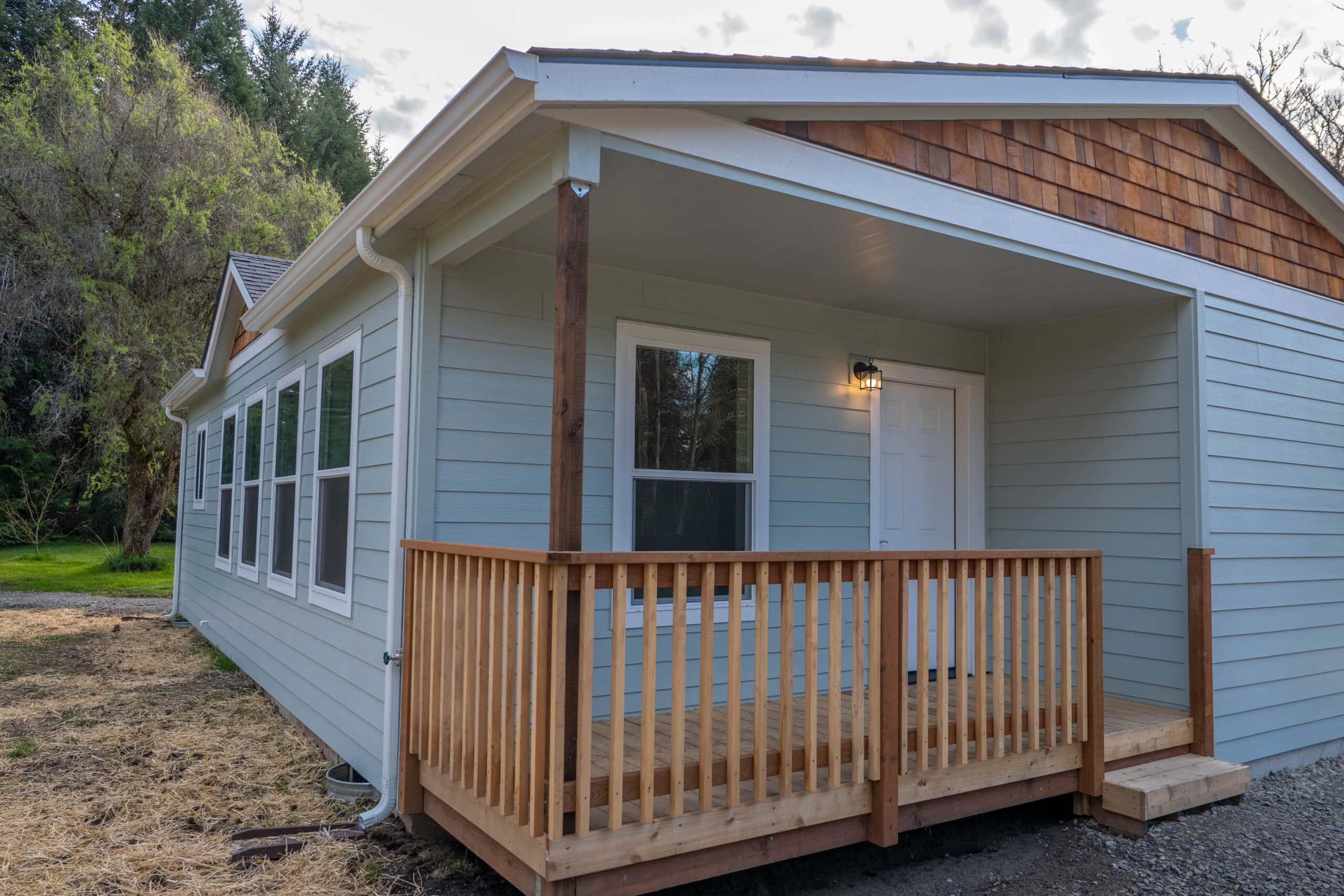
Rural ADU rules are more restrictive.
Marion County’s rural ADU handout says ADUs are only permitted in the Acreage Residential (AR) zone on parcels greater than 2 acres in size. They are not permitted in any other rural zone.
Marion County Code 17.128.020 also states that one ADU may be allowed on a lot or parcel with an existing single-family dwelling if the property is at least 2 acres, is not in an urban reserve, is not in a designated area of critical state concern for water, and is not in an area where new or existing groundwater uses have been restricted by the Water Resources Commission.
Rural ADU Size, Location, and Height
For rural Marion County ADUs, the maximum size is 900 square feet of living space. A portion of a larger structure may be used as an ADU if the ADU requirements can be met and the living space is confined to 900 square feet.
A portion of a detached rural ADU must be located within 100 feet of the primary dwelling. New ADUs also receive special setbacks from resource zones and are subject to MCC 17.128.050.
The maximum rural ADU height is 35 feet, the same as primary dwellings. Attached or interior ADUs follow the same setback requirements as the primary dwelling, while detached ADUs must meet residential structure setbacks in MCC 17.117.
Rural ADU Rental Rules, Water Rules, and Driveways
Only one ADU is allowed per rural parcel. If rented, a rural ADU must be rented for a minimum duration of 45 days.
If the property is located in the Sensitive Groundwater Overlay zone, the ADU must be connected to a 1,000-gallon water storage tank for use with the primary well, and an SGO declaratory agreement must be recorded into the deed.
A rural ADU may have a separate driveway if an access permit is issued by Marion County Public Works Land Development, Engineering, and Permits Department.
Rural ADU Permits
For rural ADUs, Marion County says building permits from the Marion County Building Inspection Division must be obtained, but no land use application is required. The county also notes that certain standards in Oregon Revised Statutes, including size, location, and minimum parcel size for new ADUs, cannot be varied by the Marion County Planning Division.
That means rural ADU eligibility can be very property-specific. Parcel size, zoning, groundwater restrictions, septic feasibility, access, fire district standards, and site layout may all matter.
If you own rural property in Marion County and are wondering whether an ADU is possible, do not start by guessing. Start with Wolf’s free property evaluation so you can get a clearer picture of your lot, zoning, access, and next steps.
The Biggest Mistake Marion County Homeowners Make
The biggest mistake is assuming that “ADUs are allowed” means “my ADU is allowed.” That is not how Marion County ADU rules work.
A detached ADU may be allowed in one urban zone, but not another. A rural ADU may be possible on an AR-zoned parcel over 2 acres, but not in other rural zones. A tiny home may work if it is built to code and placed legally, but not if it is on wheels. A modular ADU may be a strong fit, but it still has to meet the applicable county standards for zoning, size, setbacks, access, utilities, and permits.
This is why the property evaluation step is so valuable. Wolf Industries offers modular ADUs that are built in a factory, delivered to the site, and supported through zoning, permitting, delivery, and utility setup.
So, Can You Build an ADU in Marion County OR?
Possibly, yes. But the answer depends on your exact property.
You may be a good candidate if:
- Your property is in a qualifying urban growth boundary area outside city limits.
- Your property is in a qualifying urban zone that allows the ADU type you want.
- Your rural property is in the AR zone and is greater than 2 acres.
- Your proposed ADU can meet size, setback, height, parking, access, rental, utility, and building code requirements.
- Your unit is built as a legal dwelling, not an RV, park model, or tiny home on wheels.
The most frustrating part is that many homeowners do not know which of those boxes they check. The best part is that you do not have to figure it out alone.
Start With a Free Property Evaluation
If you are searching for ADU Rules and Regulations Marion County OR, you are probably already asking the right question.
You do not just want a pretty ADU. You want a legal ADU. You want a realistic project. You want to know what your property can support before you waste time, money, and energy heading down the wrong path.
Wolf Industries can help you start with the facts. Their free property evaluation is designed to help homeowners find out whether their address may be eligible and what the next steps could look like.
Before you commit to a floor plan, before you assume your lot is too small, and before you let confusing rules stop you from moving forward, get your property reviewed.
Get your free property evaluation from Wolf Industries and find out what is possible for your Marion County property.
Sources
Marion County Planning Division, “Accessory Dwelling Units: Regulations for accessory dwelling units in Marion County.”
https://www.co.marion.or.us/PW/Planning/Documents/ADU.pdf
Marion County Planning Division, “Rural Accessory Dwelling Units: Regulations for accessory dwelling units in Rural Marion County.”
https://www.co.marion.or.us/PW/Planning/Documents/ADU%20Rural.pdf
Marion County Code, Chapter 17.128 AR Acreage Residential Zone.
https://www.codepublishing.com/OR/MarionCounty/html/MarionCounty17/MarionCounty17128.html
Marion County Code, Chapter 16.26 Use Standards.
https://www.codepublishing.com/OR/MarionCounty/html/MarionCounty16/MarionCounty1626.html