
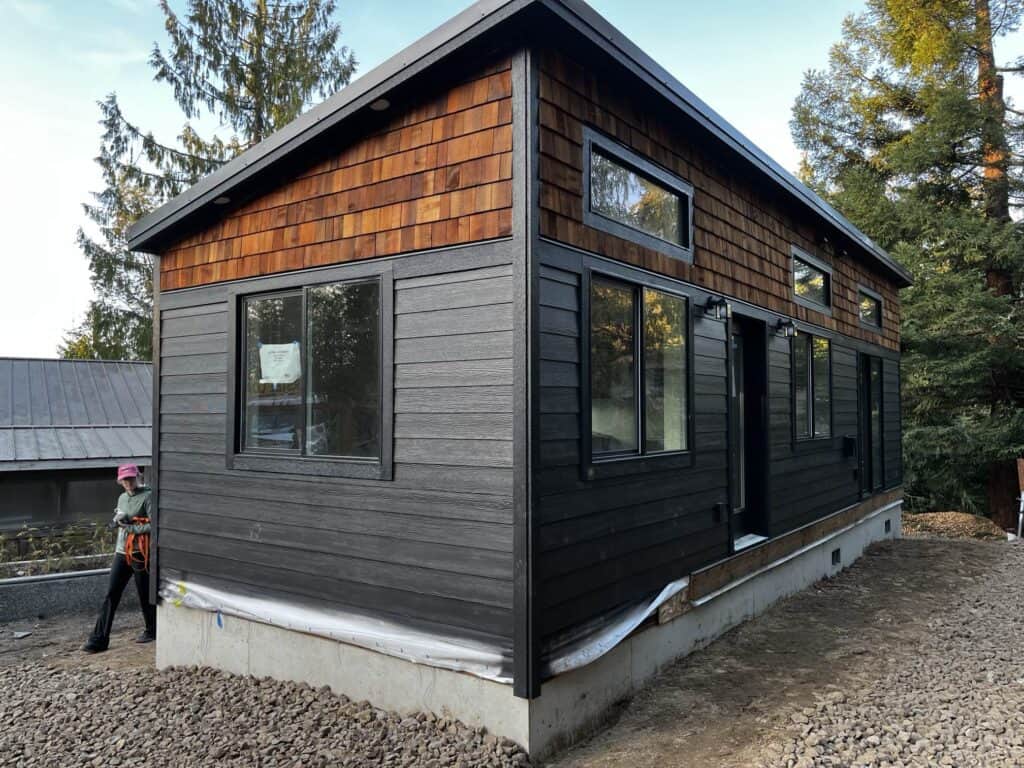
Adding an ADU in Clallam County can be a smart way to create space for family, generate rental income, support aging-in-place, or make better use of land you already own. But before you start choosing a floor plan, it is important to understand the basic ADU rules and regulations in Clallam County.
The good news is that ADUs are allowed in many situations, but not every parcel qualifies. Clallam County says eligibility depends on both the zoning designation and the size of the parcel, and property owners should review Chapter 33.50 of the Clallam County Code for detailed requirements.
Instead of guessing whether your property can support an ADU, we offer a free property evaluation that will help review the basics of your lot, zoning, access, utilities, and project path so you understand what may be possible before moving too far into the process.
What Counts as an ADU in Clallam County?
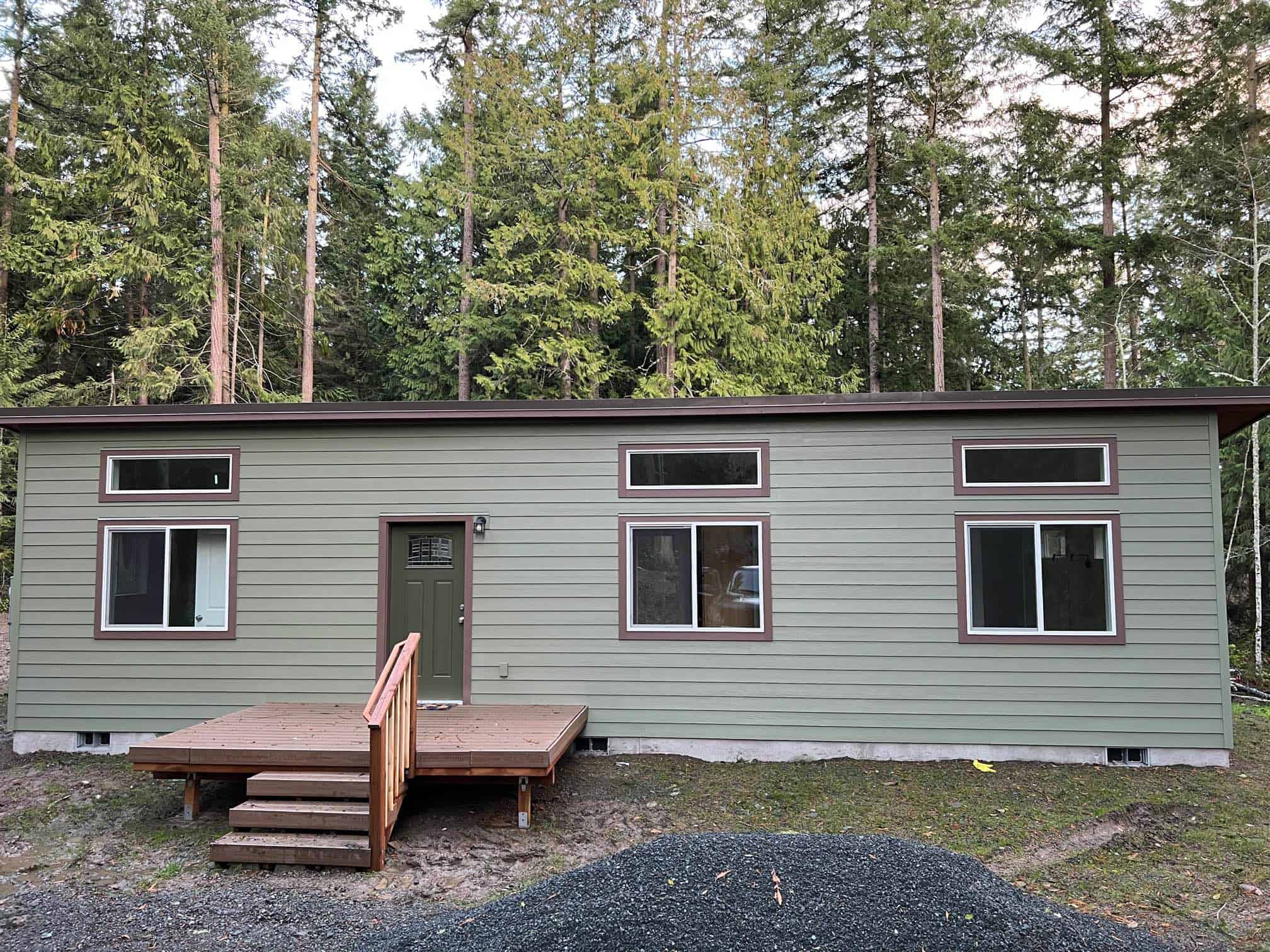
Clallam County defines an ADU as a separate dwelling unit within a single dwelling or as a separate structure associated with a single-family dwelling. The unit must be incidental and subordinate to the primary residential use of the property.
Clallam County recognizes two basic types of ADUs.
An attached ADU shares a common wall, floor, or ceiling with the primary dwelling.
A detached ADU is a separate structure or an ADU built within an existing outbuilding. If the ADU is connected to the primary home only by a covered breezeway or similar structure, Clallam County still treats it as detached.
For homeowners, that distinction matters because attached and detached ADUs can be subject to different size standards, site requirements, and feasibility considerations.
Clallam County ADU Size Restrictions
According to Clallam County’s ADU information page, a detached ADU may not exceed 50% of the gross floor area of the primary dwelling and may not exceed 1,250 square feet in gross floor area. Attached ADUs may not exceed 35% of the gross floor area of the primary dwelling.
There are also draft and state-law-related updates worth watching. A Clallam County Chapter 33.50 draft development regulation document includes updated language showing detached ADUs at 50% of the primary dwelling or 1,000 square feet, whichever is greater, with a 400-square-foot exception, and attached ADUs at 35% of the primary dwelling or 1,000 square feet, whichever is greater. Because local ADU rules are evolving under Washington law, homeowners should verify current requirements before designing a project.
Zoning and Parcel Eligibility
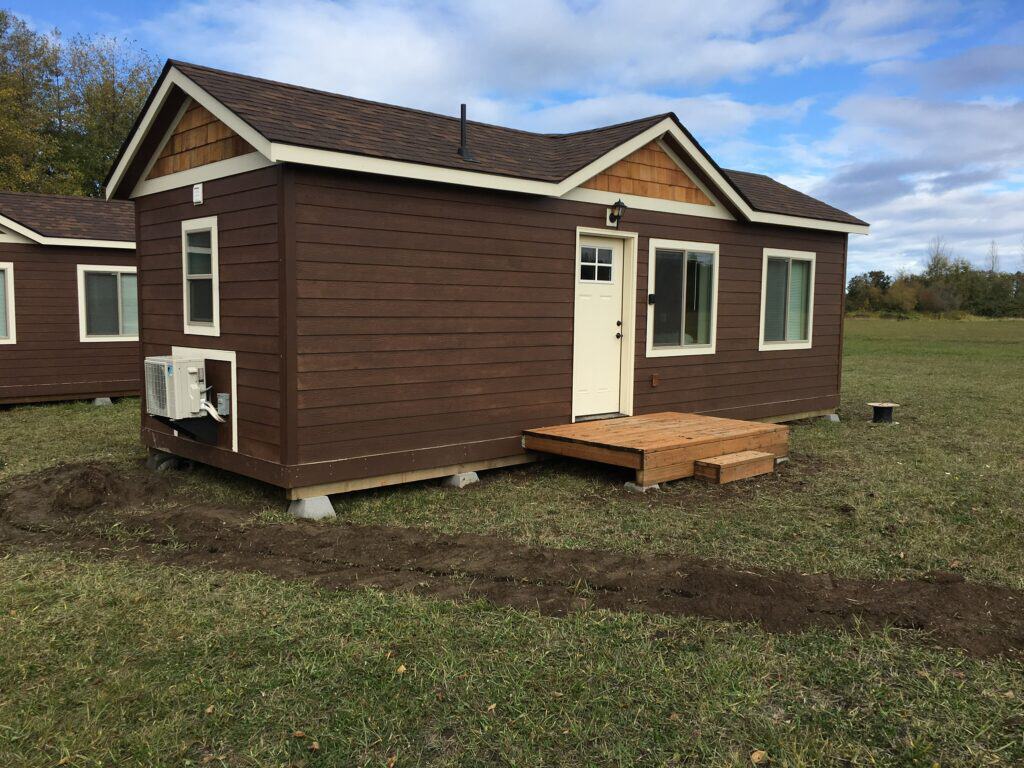
Not every property in Clallam County can automatically support an ADU. Clallam County’s Planning Division explains that there are more than 50 zones in the county, each with its own development rules, and what is allowed on a parcel depends on that parcel’s zoning. The county recommends using the Multipurpose Map with the zoning layer or parcel search to determine zoning.
Chapter 33.50 materials also show that the property must be a legally created parcel. Outside designated urban growth areas, a detached ADU generally requires at least 1.5 acres, although that standard may be waived if the detached ADU will be served by a community water supply and an adequate sewage disposal system. Detached ADUs are prohibited in Commercial Forest zones, and Agricultural Retention zones have additional restrictions.
This is one of the biggest reasons to start with our free property evaluation. A lot may look large enough, but zoning, access, septic, water, critical areas, and setbacks can all affect whether an ADU is realistic.
Parking and Access Requirements
Clallam County’s ADU page lists a basic access and parking requirement: both dwellings must use a single access point from the road, and on-site parking must be provided.
The ADU worksheet reinforces this by asking staff to confirm whether only one dwelling entrance faces the road frontage, whether the ingress and egress access point is shared, and whether on-site parking is provided for the proposed ADU.
The draft Chapter 33.50 development regulation document includes more specific parking language: one off-street parking spot per ADU for lots smaller than 6,000 square feet and two off-street parking spaces per ADU for lots larger than 6,000 square feet. It also states that vehicle access for the ADU must share the same legal access as the primary dwelling and that no new access may be established for the ADU.
For a modular ADU, access is not just a zoning issue. Delivery access, crane access, driveway width, turning radius, site slope, and staging space can all affect the final project plan. Our property evaluation can help identify those issues early.
Utility Requirements: Water, Septic, Sewer, and Power
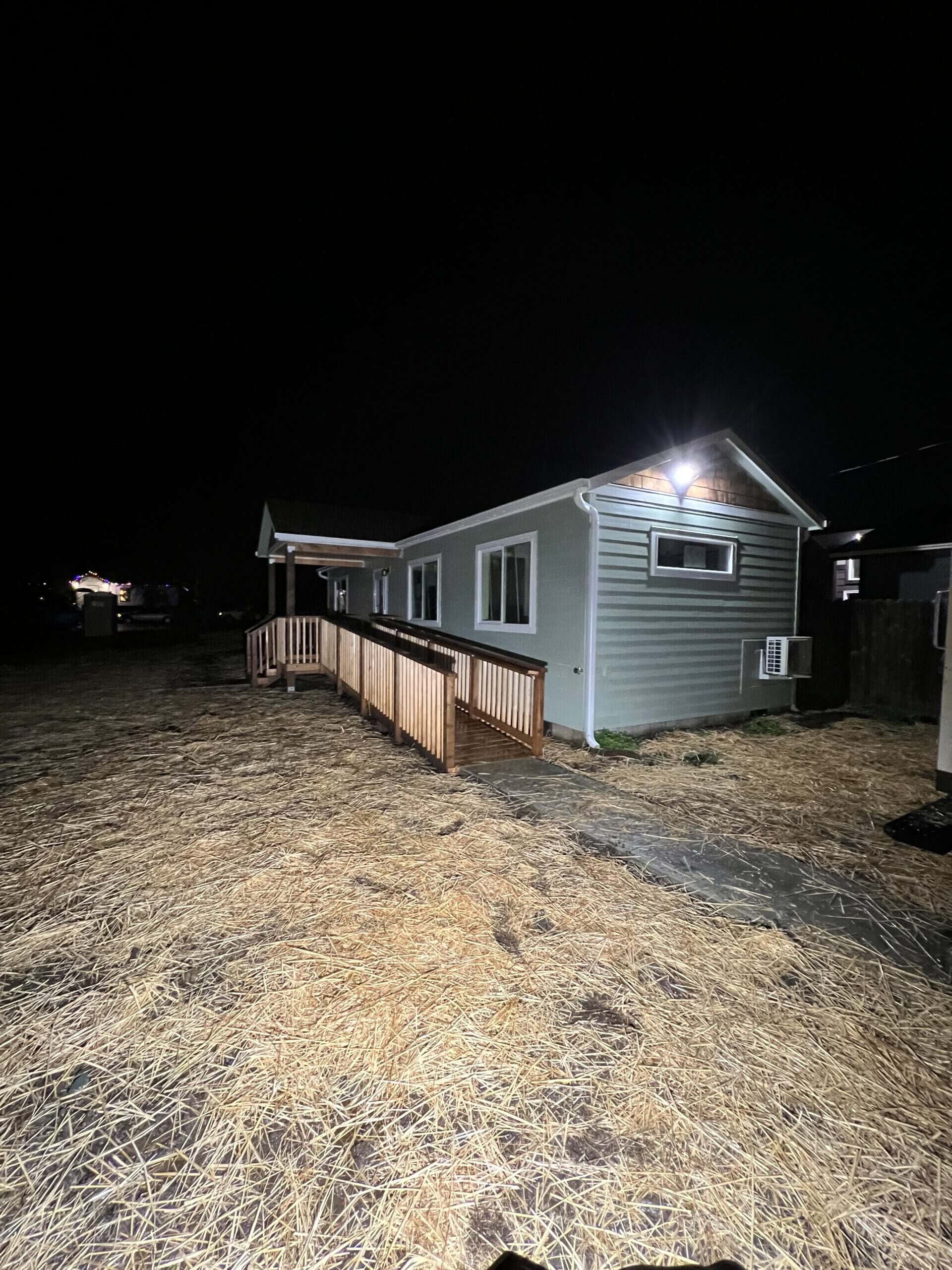
Utilities are one of the most important parts of ADU feasibility in Clallam County.
Chapter 33.50 materials state that accessory housing must use the same potable water source as the associated primary residential dwelling. The county also states that accessory housing is not permitted unless the Environmental Health Division certifies that the water supply and sewage disposal facilities are adequate for the projected number of bedrooms.
The ADU worksheet asks applicants to identify the potable water supply as either an existing individual well or a community water system. It also asks whether sewage disposal will be handled by an existing individual septic system, a community system, or municipal sewer.
Clallam County’s residential building permit page lists possible additional permit requirements, including proof of potable water, current septic system, proof of sewer connection, a 911 address, road approach permit, drainage plan, and an ADU worksheet. It also notes that sites near water bodies or critical areas may have special conditions, electrical permits are issued by Washington State Department of Labor and Industries, and parcels in the Dungeness Water Rule area may require mitigation for well use.
In practical terms, this means your ADU plan needs to answer several questions early.
- Can the existing septic system support the added bedroom count?
- Is municipal sewer available?
- Is there an adequate potable water source?
- Will the ADU use the existing utility source?
- Will electrical service need to be upgraded?
- Does the property fall under the Dungeness Water Rule or a critical area review?
We have built many ADUs and modular homes in Clallam County, and that experience matters when utility coordination, septic review, delivery planning, and county permitting all need to work together.
Building Permit and ADU Worksheet Requirements
Clallam County requires an approved building permit for new construction or modification of an existing structure to serve as a dwelling. The county also states that an ADU worksheet must accompany the building permit application.
For residential new construction, additions, and alterations, Clallam County may require a detailed scaled site plan, structural drawings, structural calculations, Washington State energy calculations, proof of ownership, and other supporting documents.
The ADU worksheet asks for property information, tax parcel number, acreage, zoning designation, site plan confirmation, primary dwelling floor area, ADU type, ADU floor area, structure type, water source, sewage disposal method, and legal ingress/egress details.
That is a lot for a homeowner to coordinate alone. Wolf Industries helps simplify the process by guiding homeowners through site feasibility, permitting, site work, factory production, delivery, utility coordination, and finish work. Wolf has permitted and built over 600 ADUs and modular homes and has experience across nearly 50 jurisdictions throughout the Pacific Northwest and western United States allowing us to take the worry away for your ADU project and you to focus on the things that matter most to you for your project.
Owner Occupancy, Vacation Rentals, and Notice to Title
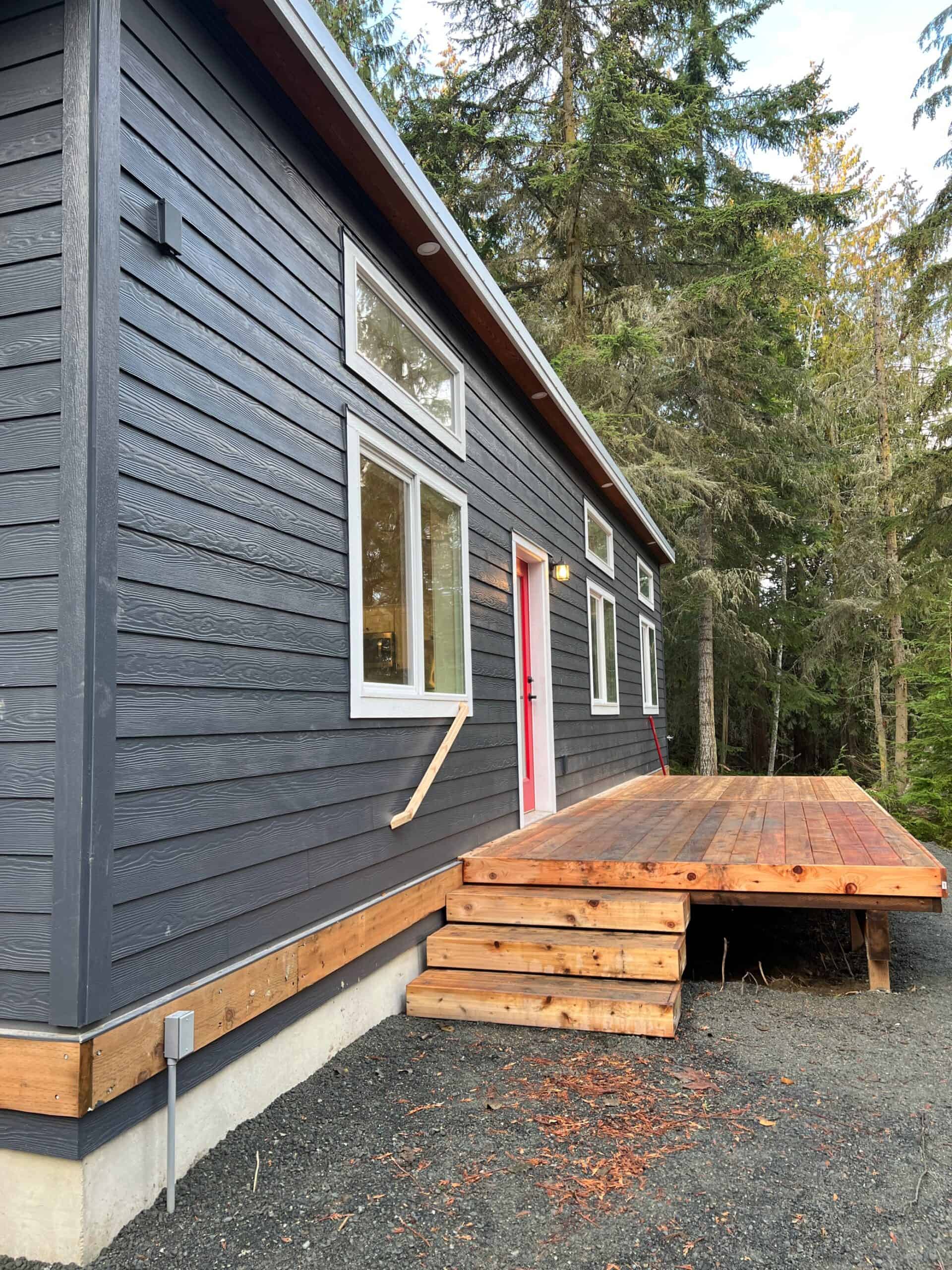
Clallam County’s ADU page states that the owner of the parcel must live in either the primary dwelling or the ADU as their primary residence. It also says either the primary dwelling or the ADU may be used as a vacation rental, but not both.
The county also requires a Notice to Title to be recorded. Chapter 33.50 materials describe the notice to title as a recorded document with the Clallam County Auditor that runs with the land and gives notice to future owners of the accessory housing unit and applicable restrictions.
Because Washington’s ADU laws are changing, it is important to confirm the current version of these requirements before making assumptions about owner occupancy, short-term rental use, or separate sale. Washington State Department of Commerce notes that House Bill 1337 requires fully planning cities and counties to allow two ADUs on residential lots that allow single-family homes within urban growth areas, with some limitations, and that local regulations conflicting with state statute may be preempted in some circumstances.
Is a Modular ADU a Good Fit in Clallam County?

A modular ADU can be a great fit for many Clallam County properties because so much of the home is built in a controlled factory environment before being delivered to the site. That can help reduce some of the uncertainty that comes with traditional construction.
Wolf Industries builds fully code-compliant ADUs in a factory setting, delivers them to the property, and handles everything from permits to setup. We offer multiple ADU floor plans, fully engineered units built to residential code, help with zoning, permitting, delivery, and utility setup, and a free property evaluation that includes a zoning and code compliance check, access and delivery feasibility review, and a clear understanding of next steps.
Wolf has built many ADUs and modular homes in Clallam County and more than 600 modular homes and ADUs throughout the Pacific Northwest and western United States. That local and regional experience can be especially valuable in a county where parcels vary widely, from rural acreage to properties near Sequim, Port Angeles, Forks, coastal areas, forest zones, agricultural zones, and shoreline or critical area constraints.
Is a Modular ADU a Good Fit in Clallam County?
The best first step is not guessing. It is finding out what your property can actually support.
Our free property evaluation is designed to help homeowners understand whether their address may be eligible, what zoning and access issues may apply, what utility questions need to be answered, and what next steps make sense.
If you are considering an ADU in Clallam County, start with Wolf’s free property evaluation. It is the simplest way to move from “Can I build an ADU?” to a clear plan for what is possible on your property.
Sources
Clallam County – Accessory Dwelling Units (ADUs)
https://www.clallamcountywa.gov/1252/Accessory-Dwelling-Units-ADUs
Clallam County Code – CCC 33.50.040
https://clallam.county.codes/CCC/33.50.040
Clallam County – Draft Development Regulations, Chapter 33.50 CCC
https://www.clallamcountywa.gov/DocumentCenter/View/23173/Draft-Development-Regulations—Chapter-3350-CCC
Clallam County – ADU Checklist PDF
https://clallamcountywa.gov/DocumentCenter/View/8399/ADU-Checklist-PDF?bidId=
Clallam County – Residential New Construction, Additions, and Alterations
https://www.clallamcountywa.gov/1372/Residential—New-Construction-Additions
Clallam County – Planning Division
https://clallamcountywa.gov/1360/Planning-Division
Washington State Department of Commerce – Accessory Dwelling Units Guidance
https://www.commerce.wa.gov/growth-management/housing-planning/adus/