
An Introduction to Tiny House Rentals
Why Wolf's founder started building small rentals, how a tiny home rental compares with a house or an apartment door, and the finishes that keep upkeep low.
I personally listen to someone who has what I want and has been in my shoes.
Going from a position with a business that ran me, and a demanding family life with four kids (back then), I wanted more out of life. When I wrote down what I wanted, I had all the usual items on the list. Beyond my basic needs, there were things such as residual income, new toys, vacations, and so on.
I looked at all of those who had built substantial wealth in their careers, and they all had money working for them, no matter whether they had started out with nothing or inherited a large fortune. It didn’t make a difference who it was, what background they came from, or who their friends were.
They all had money working for them.
But what did this look like specifically? I wanted the highest and best return on my money and something I could build or invest in that I understood. I don’t buy into people touting secret market knowledge and closed-door investor groups.
Note: The dollar figures in this section are from 2019, when this was written, and are kept so the math still reads. Home prices, rents, and Wolf’s model pricing have all changed since. See the models page for current starting prices and run the math with today’s local rents.
Look at a single-family home with an average sales price of $350,000. What do you get per month in rent? About $1,500 per month. Look at an apartment building that has a per-door cost of about $150,000. What is the rent coming in on that? About $1,150 per month.
I took a few liberties on this. In evaluating investments, one must rule out the appreciation factor in the short term.
I took the $1,500 and multiplied it by 12, which comes to $18,000 in revenue per year. This, divided by $350,000, is a 5% return of capital per year.
I took the $1,150 and multiplied it by 12, which comes to $13,800 in revenue per year. This, divided by $150,000, is 9%.
As I pondered this, I was driven to come up with a better solution than both, as these were the two major players in the market.
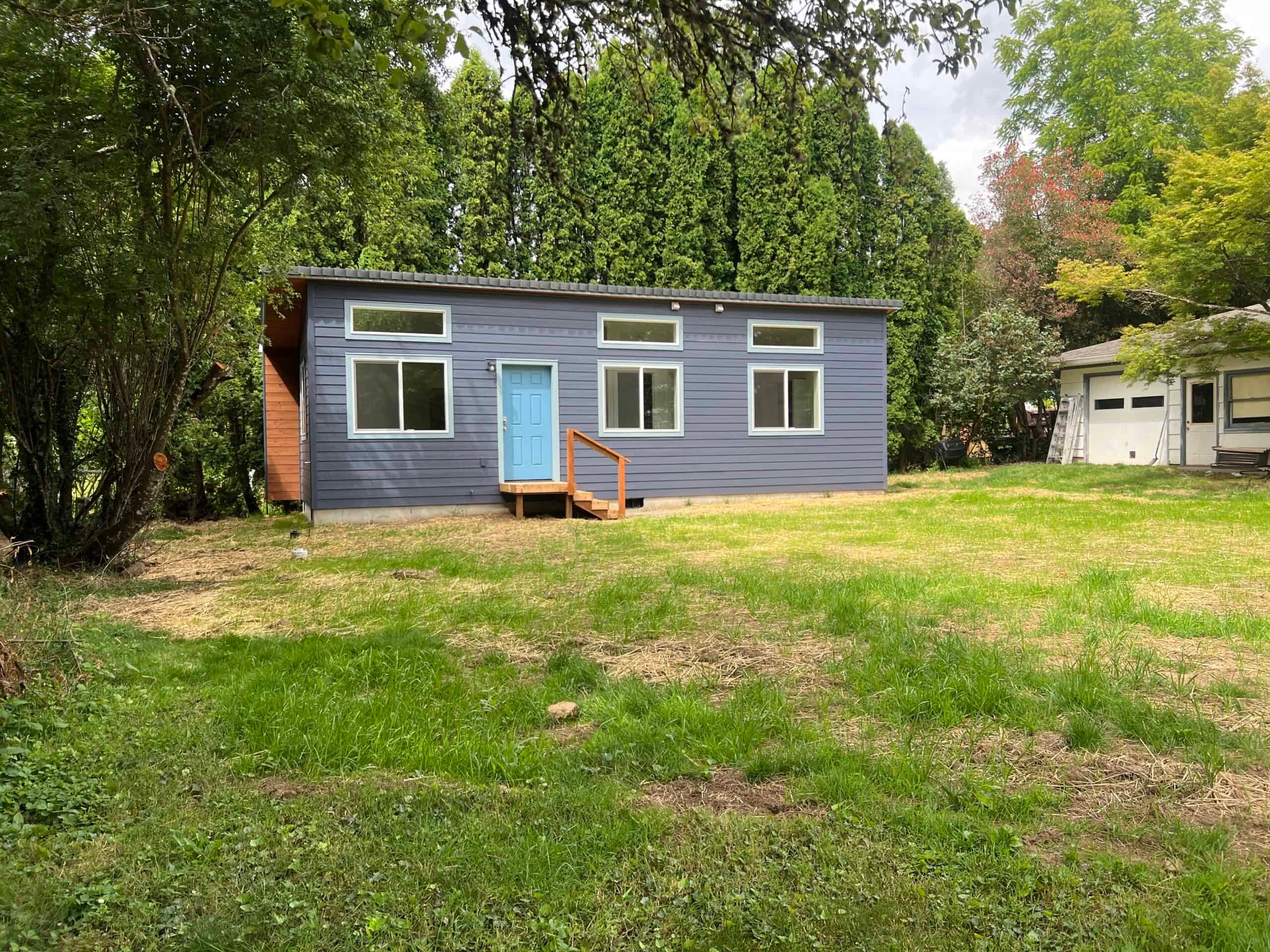
When you take an $80,000 tiny home, which (in our case) lives and functions just like a regular home, you can demand, on average, $850 per month. Near a major population center, that amount can double, with accessory dwelling units in Portland, Oregon renting for over $1,600 a month. Taking the return on investment, a regular home is at just 5% return per year and apartments at 9%, while tiny houses were sitting at 12%. I knew that the tiny house would have a lower barrier to entry with an easier marketing message to the average public.
Taking a look back
I built our first tiny house here at Wolf Industries within two short months. I had to find out if this was a viable market. Starting with one allowed me to determine if there really was a market for tiny homes. The short answer was yes. I had that first home rented out within a very short period, and I was starting on my next house. To scale up, I had to make sure the product was fully legal.
In a separate blog post, I write about all the codes involved in how a tiny house must be built. I hit the books, the internet, and all the people I knew who worked in the space of code compliance, and cracked the code. We now build modular homes that happen to be small, whereas almost all other modular factories build large units.
Let’s get back to the essence of this article: the benefits of tiny house rentals.
Financial gain with tiny house rentals
A person can look at the financing costs on a short-term or long-term basis.
I’ll explain.
If you roll an ADU (accessory dwelling unit) project into your regular home loan, locking in interest rates for 30 years, you will have a payment of around $355 in interest and principal (on the 2019 numbers above). This leaves a huge bonus on your monthly cash flow. I rent out my ADU out in the country for $850. This adds $495 to my monthly cash flow.
The other route is for a person who does not like long-term debt and would rather pay off the house as quickly as possible. Take the $850/month and use a reverse calculator to see how long it would take to pay off with a 4.5% loan rate and payments every month. It will take about 116 months to pay off a tiny home that will generate income for years to come. After that, all cash flow proceeds are yours free and clear.
For a current look at the same math, read An ADU That Pays for Itself and our ADU for rental income page.
Tips for building tiny house rentals
As most landlords can attest, there are a few pointers that can help considerably.
Let’s start with the outside.
- When you have an income-producing asset, it’s nice to set it and forget it. You don’t want to be dealing with repairs and associated issues. Look for low-maintenance siding such as HardiePlank or similar.
- Also, make sure that it’s a complete system. A complete system will have trim made from a matching product and an approved weather barrier behind it. The caulking will be compatible and installed correctly. Having a good system is like having a good insurance policy. What I don’t recommend is the trending 1×6 pine or cedar T&G on the exterior. That is prone to cracking and fading and will require maintenance at a much higher rate than, say, Hardie or vinyl siding. I know, it looks good, but only for so long.
- Low-maintenance roofing such as a 30-year architectural shingle or a metal roof is a minimum. Check to make sure the tiny house has a gutter and downspout system, because you don’t want to shed all that water and let it funnel down your siding.
Now let’s move on to the inside.
- Look for a waterproof floor, especially in the bathroom, where the tenant may not be as considerate as a homeowner about where the water from the shower goes. It doesn’t take long, and a bathroom can rot out quickly. If you can’t get a waterproof floor, look for a water-resistant option instead. The second consideration is the color and durability of the surface. Look for a surface that doesn’t show dirt much, as your tenants will appreciate what looks like a clean floor. If the floor is scratch resistant, it will also maintain a nicer look. See our flooring guide.
- On the walls, the biggest thing is that they need to be repairable. The trending shiplap and different woods will be more challenging than, say, sheetrock because they require putty that matches the wood grain. If the gouge is too large, finding a replacement piece can be challenging, not to mention the difficulty of getting the UV fade dialed in to match. T&G woods are better left on the ceiling for rental applications. Sheetrock will easily patch with a little compound. Dab some paint on it and you’re good to go. If possible, look for smooth-wall sheetrock, as then you don’t have to match the texture.
- Durable countertops in the kitchen will keep the place feeling brand new for a long time. Quartz, granite, or any of those solid surfaces will do. You don’t want a tenant taking a hot pan off the stove and placing it on a Formica counter, which can leave a burn spot. Another consideration is that the kitchen usually sells the place. If it looks good, is welcoming, and is well lit, people will feel drawn to it.
- This brings me to the next consideration. In order to compete in the marketplace, tiny house rentals must be bright and cheery. If you have someone who doesn’t want it to be bright and cheery, let them cover the windows or draw the curtains or shades. In general, people love the sun coming into their house.
Now, if all of this is a major challenge to make happen, it’s not worth anything. As the old saying goes, “Time is money.”
Developing tiny house rentals can be a daunting task. We have a lot of experience here and would love to offer our services to you. Give us a call, book a time, or stop by our office. And if you’d like to see rentals we operate ourselves, visit the Wolf rentals page.
To your landlording success!