
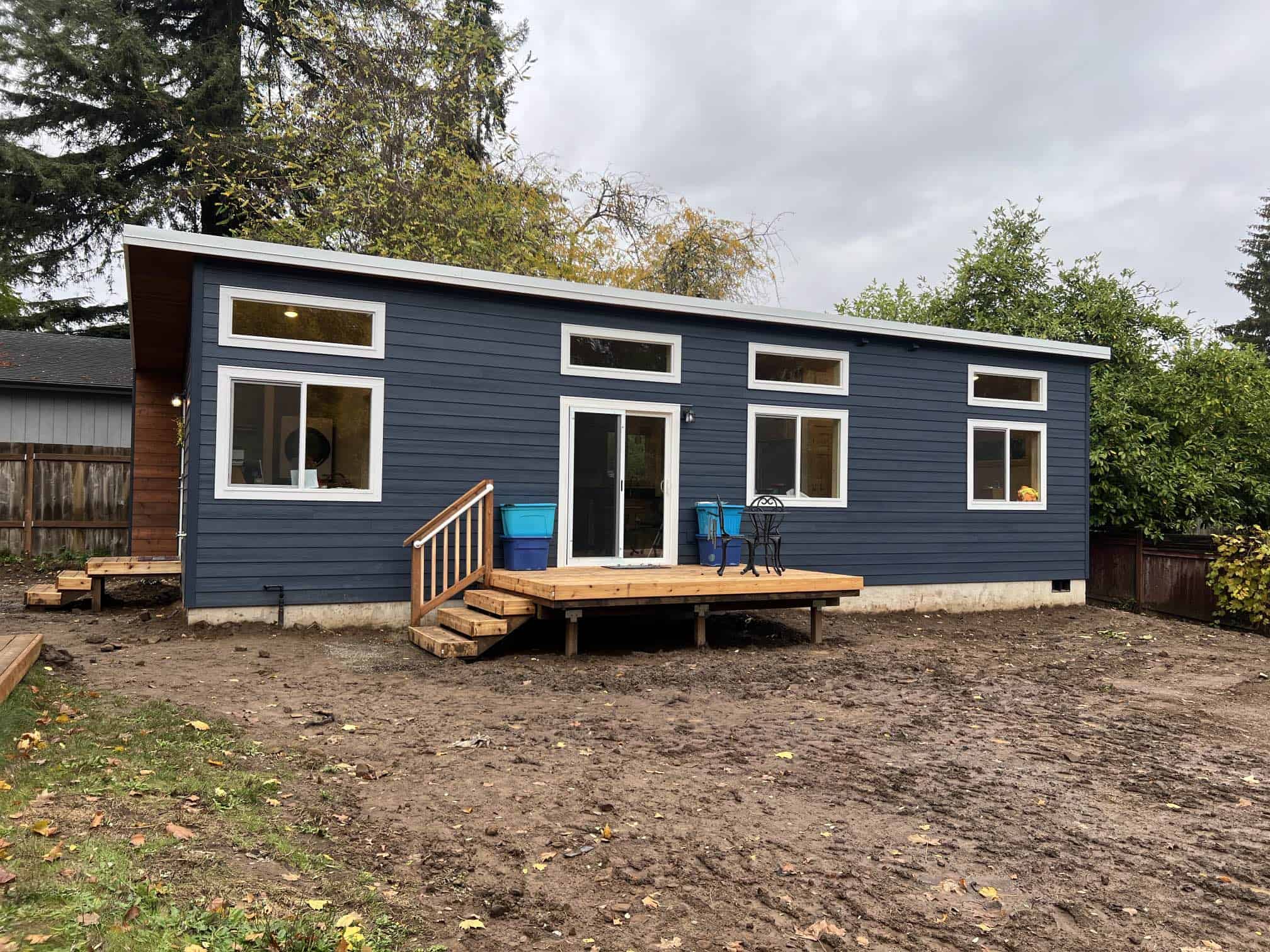
Framed by the Willamette River and surrounded by lush greenery, Eugene Oregon offers a balance of city convenience and outdoor living that makes it an ideal setting for a small, efficient home. Whether tucked behind an existing house or placed on a new property, a prefab ADU or modular tiny home can create extra space for family, provide rental income, or support a simpler lifestyle.
Building a tiny home in Eugene involves understanding the city’s zoning and permit requirements. While Oregon is known for being supportive of accessory dwelling units, each property has its own unique parameters. Navigating building codes, site preparation, and utility connections can feel daunting without guidance from professionals who understand Eugene’s specific standards.
Fortunately, we’re here to help. Check out our guide below on how to make adding a tiny home or modular ADU to your property easy.A modular or prefab tiny home can be a practical and rewarding solution for a range of homeowners in Eugene. For some, it’s an opportunity to bring family closer—whether creating a private space for an aging parent or a first home for an adult child. For others, it’s an investment in their property, generating long-term rental income without expanding the main house.
Before moving forward, consider what you want the space to accomplish. Will it serve as a guest suite, an income-producing rental, or your primary residence? How will it integrate with the character of your property and the existing utilities?
You might find a tiny home is the right choice if you:
Own property with enough available space and access for installation
Want a secondary dwelling without the expense of a full custom home
Prefer faster construction timelines with fewer site disruptions
Seek flexibility to age in place or accommodate changing family needs
Value sustainability and reduced living costs
Eugene’s permitting process begins by determining which jurisdiction governs your property. Most homeowners within city limits will apply through the City of Eugene’s Planning and Development Department, while properties outside may fall under Lane County’s authority. Both have zoning maps and building code information available online.
Next, you’ll identify what type of structure you’re building. A secondary home on a property with an existing primary dwelling will typically be classified as an accessory dwelling unit (ADU). Depending on how it’s attached and how it’s used, it could also be referred to as a detached accessory dwelling, a secondary dwelling, or a guest home.
Partnering with a builder experienced in Eugene’s ADU permitting process can make all the difference. Early consultation ensures compliance, speeds up review timelines, and helps avoid costly design changes later.
Visit the City of Eugene Planning Division to verify if your property is within city limits. Properties outside city boundaries should refer to Lane County Land Management
Check Zoning and Allowed Uses
Use the Eugene Zoning Map to confirm that your property allows ADUs. Review setback, height, and lot coverage limits to ensure your structure meets the requirements.
Review ADU and Building Standards
Consult Eugene’s Accessory Dwelling Unit Standards to learn about design, size, and occupancy rules. Building codes are enforced through the Permit and Information Center
Apply for Permits
Prepare and submit your building and site plans through the Eugene Online Permitting Portal Include details about utility connections, foundation, and access.
Work With a Builder Familiar With Local Codes
Engage a licensed modular builder who understands Eugene’s permitting path and state-approved modular certification requirements. They’ll coordinate engineering, transportation, and installation logistics with city inspectors.
This Jurisdiction Requires atleast the following permits:
Choosing a builder for your Eugene tiny home means finding a team that understands both modular construction and local regulations. Experience matters—especially when it comes to working within Oregon’s state-approved modular framework and meeting the city’s ADU standards.
A proven builder will have completed similar projects, offering examples that demonstrate both design quality and adherence to local code. Look for reviews and testimonials that highlight communication, reliability, and successful outcomes. A builder’s familiarity with Eugene’s planning and utility requirements can prevent delays and reduce unexpected costs.
Transparency is key. A trustworthy builder will offer a clear cost breakdown, realistic timelines, and open dialogue about potential obstacles. Ask about materials, warranty options, and post-installation support. The right team should blend craftsmanship, honesty, and efficiency to bring your project to life.
Modular home construction starts in a controlled factory environment, where your home is built in pre-engineered sections called modules. These modules are assembled indoors, inspected for quality, and then transported to your Eugene property for installation.
This process minimizes weather delays, ensures consistent workmanship, and allows for faster delivery than traditional site-built methods. Modular construction also reduces waste and material exposure, contributing to a more sustainable build.
On-site construction, by contrast, happens entirely at the property and offers flexibility for one-off designs or unique topographies. However, it can be slower and more weather-dependent. The modular approach provides a streamlined balance between customization, efficiency, and cost control—perfect for Eugene’s moderate but often rainy climate.
Modular home builders offer significant savings when it comes to off-site built ADUs. Here’s an example of how combining the permitting, production and installation of a tiny home adds up:
| Item | Cost |
|---|---|
| Model E (Base price) | $97,500 |
| Upgrades (Optional additions & Appliances) | $12,000 |
| Site work, Foundation, Delivery & Setup | $34,000 |
| Sub Total w/ Tax (WA) | $155,172 |
| Permits (Wolf Service Fee & Jurisdiction Fee) | $7,500 |
| Total | $162,672 |
Your property in Eugene has potential—and our team can help unlock it. From understanding your lot’s zoning to handling permits, production, delivery, and installation, we make the process straightforward.
Whether your goal is to house family, earn rental income, or downsize into something simpler, our turn-key modular tiny homes are built to fit your vision. Let’s take the first step together and explore what’s possible on your land.
Free Property Evaluation
Want to know if your address is eligible? Fill out the form below and we’ll get back to you with a free property evaluation!
(360) 912-9519
607 SE Eaton Blvd, Battle Ground WA 98604
Sales@Wolfind.com