
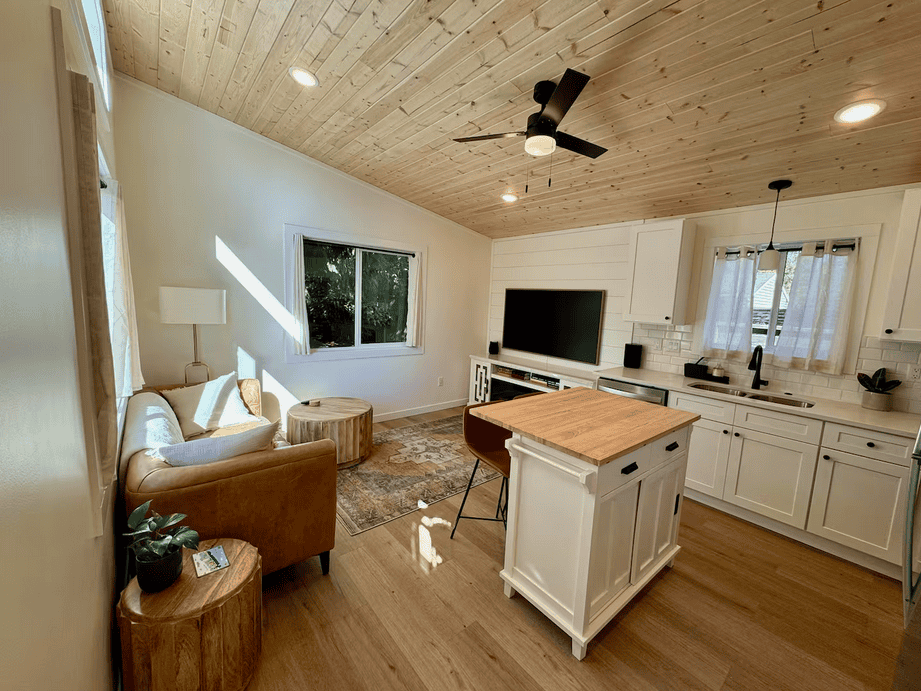
With its coastal charm, sandy beaches, and backdrop of forested hills, Seaside, Oregon, offers a distinct appeal for homeowners wanting to expand their property with a tiny home, prefab ADU, or backyard guest cottage. Whether your goal is to create a rental unit for seasonal income, a comfortable space for family, or a peaceful retreat by the ocean, Seaside provides a setting that blends lifestyle and investment potential.
Adding a small home on your property, however, can feel intimidating. Every jurisdiction along the Oregon Coast has its own requirements for permitting, setup, utilities, and delivery of modular accessory dwelling units. What starts as a simple idea can quickly grow into a complex process without clear guidance.
Fortunately, we’re here to help. Check out our guide below on how to make adding a tiny home or modular ADU to your property easy.Determining whether a tiny home is right for you begins with understanding how you plan to use it and what your long-term goals are for your property. Homeowners in Seaside are often drawn to the flexibility these structures provide — from housing extended family to earning steady rental income during the busy tourist season.
If you’re exploring the idea of a modular ADU, consider the following scenarios:
You already own land and want to add an efficient, fully built home for guests or renters
You’re looking to keep aging parents or adult children close by while maintaining privacy
You plan to purchase property in Seaside with space for a secondary dwelling
You want to offset your mortgage or boost income through short- or long-term rentals
A well-designed tiny home can adapt to any of these purposes while increasing your property’s value and versatility.
Before beginning your project, it’s essential to determine which agency governs your property. Depending on your site’s location, you’ll file permits either with the City of Seaside or with Clatsop County if your property falls outside city limits. Each jurisdiction outlines zoning, building codes, and ADU regulations on their respective websites.
Once you’ve identified your permitting authority, the next step is to confirm what types of dwellings are allowed on your property. Secondary structures may qualify as accessory dwelling units, guest houses, or detached residential units. The classification affects required setbacks, utility connections, and design standards.
Engaging with a local building planner or a modular home permitting specialist early in the process can help you avoid missteps, reduce costs, and move your project forward efficiently.
How to Obtain Building Permits in Seaside, Oregon
Determine Jurisdiction
Visit City of Seaside Building Department or Clatsop County Building Codes to confirm whether your property falls within city limits or the county.
Review Zoning and ADU Guidelines
Each zoning district has unique standards for setbacks, height limits, and lot coverage. Seaside’s zoning map and ADU information can be found through the city’s planning department.
Prepare Site Plan and Building Drawings
Include your property boundaries, proposed foundation layout, utility connections, and access routes for installation. Modular ADUs must comply with Oregon State Building Code and be approved through the state’s modular housing program.
Submit Permit Application
Applications can be submitted through the Seaside Building Department’s online portal or in person at City Hall. County applications follow Clatsop County’s submission process.
Schedule Inspections
After approval, inspections are scheduled for foundation, utility, and final placement stages to ensure compliance with local and state standards.
Receive Final Approval
Once all inspections pass, you’ll receive your certificate of occupancy and can officially begin using your new dwelling.
This Jurisdiction Requires atleast the following permits:
Selecting a qualified builder is one of the most critical steps in ensuring your project’s success. Look for a company with direct experience in modular ADUs and familiarity with Oregon’s coastal permitting and environmental conditions.
A reliable builder will have a portfolio of completed homes similar to what you’re envisioning and a track record of on-time, high-quality projects. Review client testimonials, ask for references, and confirm that they understand state modular certification requirements.
The ideal builder communicates clearly, provides transparent pricing, and guides you through every phase — from design to final delivery. They should also offer warranty coverage and post-installation support, ensuring peace of mind long after your home is placed.
Modular homes are constructed in sections inside a controlled facility before being transported and assembled on-site. This process allows for consistent quality control, protection from weather, and shorter build times since factory work and site preparation can happen simultaneously.
On-site construction, by contrast, is built entirely outdoors and is subject to coastal weather delays and material exposure. While this method allows for more customization, it often involves longer timelines and higher labor coordination.
Modular ADUs combine efficiency with quality — built to meet or exceed Oregon’s strict building codes while offering the durability and energy efficiency homeowners expect in a long-term structure.
Modular home builders offer significant savings when it comes to off-site built ADUs. Here’s an example of how combining the permitting, production and installation of a tiny home adds up:
| Item | Cost |
|---|---|
| Model B (Base price) | $67,500 |
| Upgrades (Optional additions & Appliances) | $12,000 |
| Site work, Foundation, Delivery & Setup | $34,000 |
| Sub Total w/ Tax (WA) | $125,172 |
| Permits (Wolf Service Fee & Jurisdiction Fee) | $7,500 |
| Total | $132 672 |
Ready to create your coastal retreat or income-producing ADU in Seaside? Our experienced team can guide you through design, permitting, and installation with a turnkey approach that makes the process seamless from start to finish.
Whether your goal is to house family, generate rental income, or simply enjoy more space, we’ll help you make the most of your property.
Contact us today to learn how our modular tiny homes can fit perfectly into Seaside’s coastal lifestyle.
Start your Property Evaluation!
Free Property Evaluation
Want to know if your address is eligible? Fill out the form below and we’ll get back to you with a free property evaluation!
(360) 912-9519
607 SE Eaton Blvd, Battle Ground WA 98604
Sales@Wolfind.com