
The Story Behind the Model E: Our First Two-Bedroom Modular Home
Why Wolf built the 616 sq ft Model E in 2019 after customers kept asking for a second bedroom, and what changed in framing, roof lines, windows, HVAC (heating, ventilation, and air conditioning), and transport to make it work.
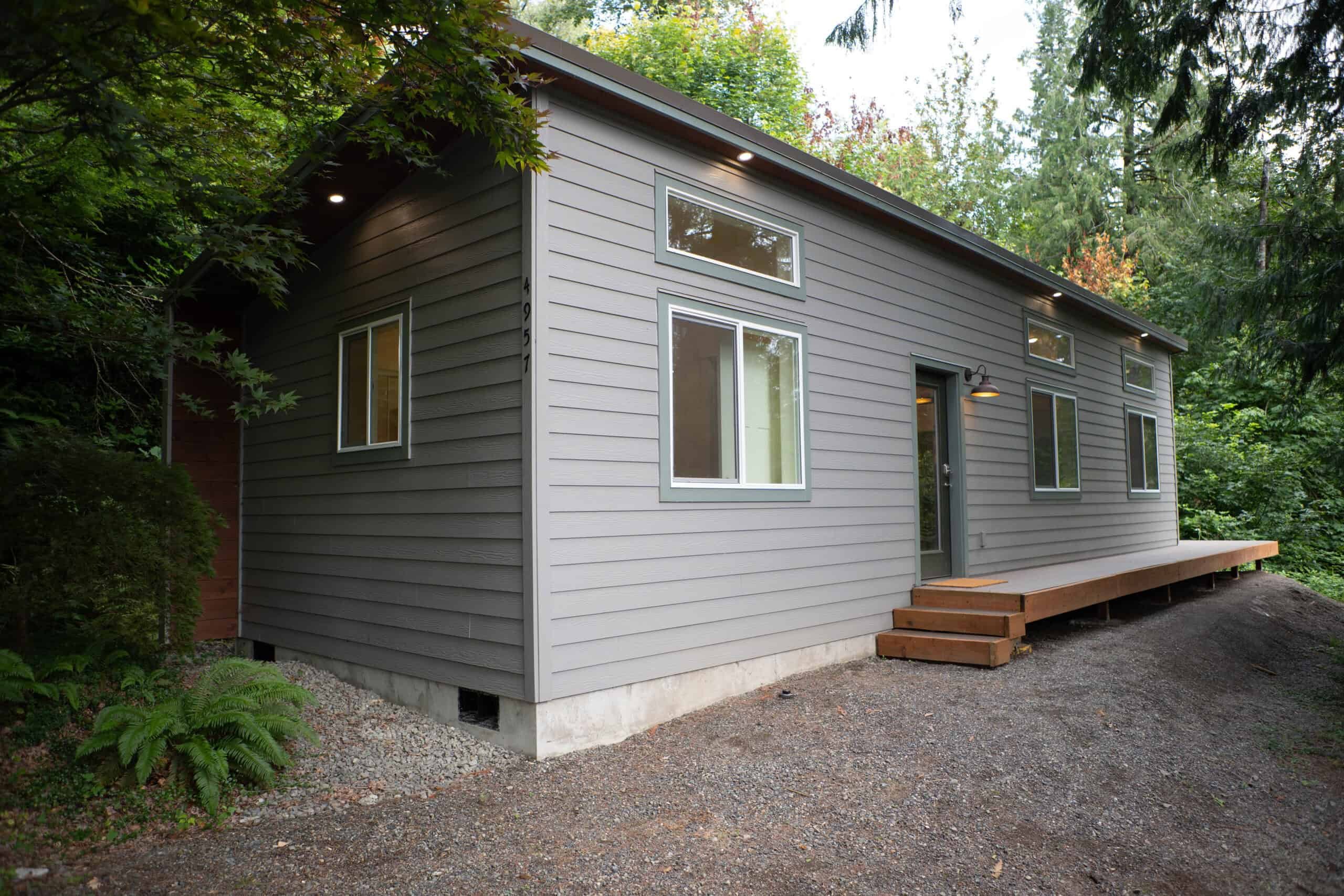
Updated 2026: This article was written when the Model E launched in 2019. The Model E is still in the lineup at 616 sq ft with two bedrooms, and it has been joined by the two-bedroom Model F and larger plans. A few details below have changed since launch: Wolf homes are now all-electric, so the water heater is electric rather than a gas tankless unit, and the single-bedroom Model C referenced below is no longer in the lineup (the closest current one-bedroom plan is the Model K). For current specs, floor plans, and pricing, see the Model E page.
The Model E is the newest addition to the lineup of small modular homes we offer here at Wolf Industries. In the early stages of building small modular, we had started with what we thought the market would like. This worked well for the scope of people who wanted them in their back or skinny side yards. Repeatedly, potential clients would ask if we had something that offered a two-bedroom option, and we didn’t. From this customer perspective, we developed a two-bedroom model, and it changed what we could offer.
The previous models to date have historically been for an aging single parent, maybe an older couple, or just used for Airbnb. Now that we have an additional bedroom, this opens up a ton more opportunity, including a small family, mother and daughter, a single mother with an older child who needs their own room, and many other options. This is quickly becoming our most popular option, with it being able to be financed like a regular home on a regular piece of land.
Financing
Technically, our tiny homes can be borrowed against just like any conventional site-built home. The regulations all allow it. There’s no minimum size per Fannie Mae or Freddie Mac. The challenge is trying to find a comparable to support the appraisal. If the (rare) average small 400 sq ft home is selling for X amount and then we install a Model C at 413 sq ft asking for a premium, it becomes a tougher sell for the appraiser to the bank, justifying the higher cost. This drove us to offer the 616 sq ft Model E, which has opened up a lot more comparables in the marketplace. The bottom line is that we’ve had good luck getting financing for the Model E, as it is much closer to a normal home that banks are used to. (See financing for current lenders.)
Size
The average tiny modular we’d built to that point was 300 or 413 square feet. When we added another bedroom, we went 14’ wide by 44’ long, making it a whopping 616 sq ft and maxing out our facility’s production capacity at the time. This added width makes for a very comfortable and spacious feel. We also took the height up a notch over the Model B and C by adding 6 more inches, making a notable difference as you take it all in.
Framing and structure
The framing and bones of this house also had to be upgraded to support the extra width. The typical 2×8 floor joist was upgraded to a 2×10 to make for a stiffer floor and fewer squeaks. Nobody likes to wake the sleeping baby with a squeaky nail in the floorboards. Another feature we added to the base model is luxury vinyl plank flooring. This is waterproof, scratch resistant, and basically ready for whatever life throws its way. (Read our flooring guide.)
Roof line
This house has two rooflines on offer. They both have different pros and cons. The standard shed roof, which is a single slope, allows us to have more wall height on one side. With the added height, we’ve thrown in some transom lights that line up with the window directly below. If the shed roof doesn’t work, as happened on a project we did in Long Beach, WA, where the city code required a minimum 6:12 roof pitch, we offer a conventional gable roof. This roof style doesn’t allow for the transom windows but offers a unique feel inside with the vaulted trusses. Both are great options; it just depends on the look and feel a person is going after. (More in shed vs. gable roof.)
Windows
Windows are abundant on this model, with every room offering at least one large window. In total, this home has ten expansive windows for a small space, making the Model E super open and bright. Having all the windows double-pane makes for comfortable living without the greenhouse effect. These windows are also properly flashed with Hardie trim, which is the most weather-resistant product on the market aside from brick or other masonry products. Our crew is trained on the installation process, so the deferred maintenance can just be deferred a little bit longer.
HVAC
The HVAC system is the same as on previous models, using a Daikin indoor/outdoor mini-split heat and AC system. These have worked so well that we continue to use them. They keep the place chilly cool in the summer and toasty warm in the winter. It also helps that these tiny modular homes are over-insulated to keep up with the current energy code. (Read why tiny homes need mini-split AC.)
Plumbing
At launch, a tankless water heater was the highlight of the plumbing system, keeping a constant supply of hot water for those long showers when propane or natural gas was hooked up; today the Model E ships with an electric water heater. One bathroom and one kitchen, along with a hose bib, make for a well-thought-out plumbing system. The shower valve and head are located inside interior walls, so the cold won’t penetrate and freeze the pipes solid. All the other pipes are well within the insulated envelope, keeping things well laid out.
Siding and roofing
As with our other models, we offer a metal roof on the Model E as well. Standing seam is the preferred choice, as it has no fasteners through the panel face. All fasteners are through a clip system, preventing the number-one issue of fasteners losing their seal. HardiePlank siding with Hardie trim complements the exterior of all our homes nicely, as it performs as well as it looks. Accent corners or niches are often complemented with a touch of natural wood; yes, real wood is higher maintenance, but the looks are amazing and worth it.
Transportation to the site
A home this large takes a dedicated team and special equipment. Here at Wolf Industries, we take care of it all. From foundation to delivery and connection to utilities, we have the equipment, expertise, and experience to make it happen. There are jobs where we have to take down fences, trees, gates, bushes, you name it; we do what it takes, as “the house must get through.” The Model E takes two pilot cars in transit to the site. We have in-house pilot-car-trained drivers who help guide and navigate for the CDL (commercial driver’s license) driver pulling the house. See the delivery and setup page for how set day works.
The Model E has been a popular option for keeping up with market trends and demands. Book a tour to get your own perspective on what a Model E could mean for your future. You never know how “big” a tiny home is until you’ve seen one first hand.