
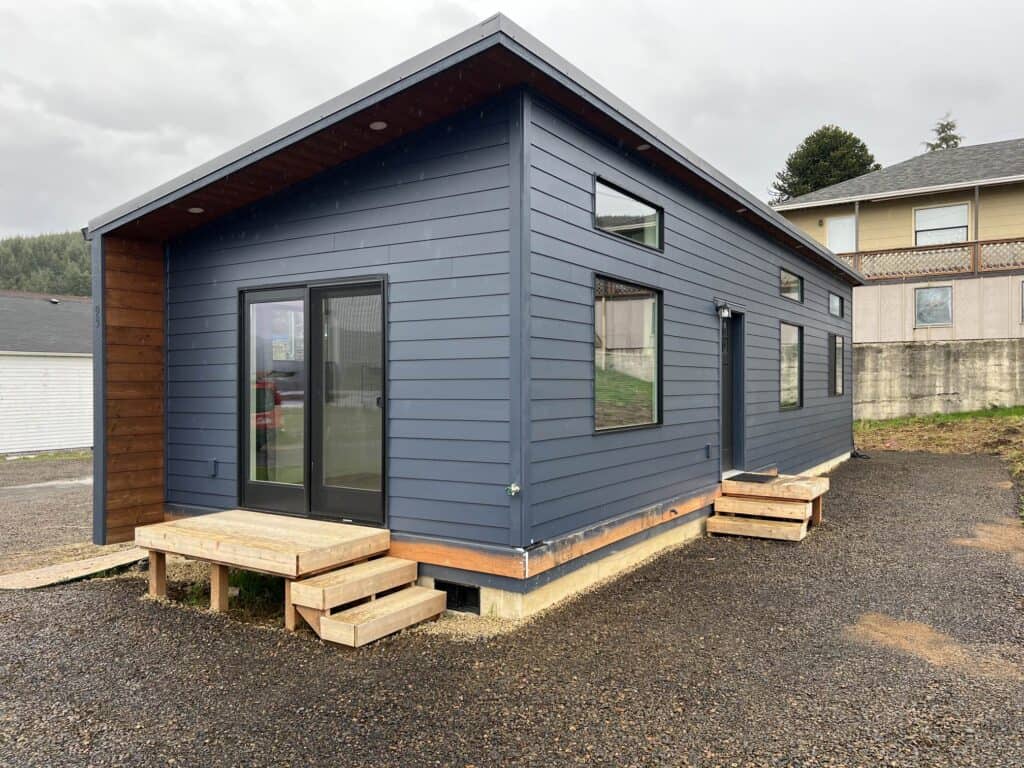
What if the extra space on your Springfield OR property could become a comfortable home for aging parents, independent living space for an adult child, or a potential source of rental income?
For many Springfield OR homeowners, an accessory dwelling unit is not simply another structure. It is a way to solve a real housing problem while making better use of property they already own.
The challenge is figuring out where to begin.
Can an ADU fit on your property? Is there enough room for delivery? Where will the utilities connect? What permits will be required? How much sitework will be needed? And who will coordinate all the different contractors involved?
Wolf Industries helps answer those questions.
As an experienced ADU builder in Springfield OR, Wolf Industries has built more than 600 ADUs and modular homes throughout the Pacific Northwest, including many projects in the Springfield and greater Lane County area.
Our turn-key process is designed to take homeowners from the first property evaluation through permitting, production, site development, delivery, installation, inspections, and final occupancy.
Instead of trying to manage a complicated construction project on your own, you can work with one experienced team from start to finish.
The best place to begin is Wolf’s Free Property Evaluation. It is the simplest way to learn what may be possible on your Springfield OR property before spending significant time or money on plans.
Why Springfield OR Homeowners Are Considering ADUs
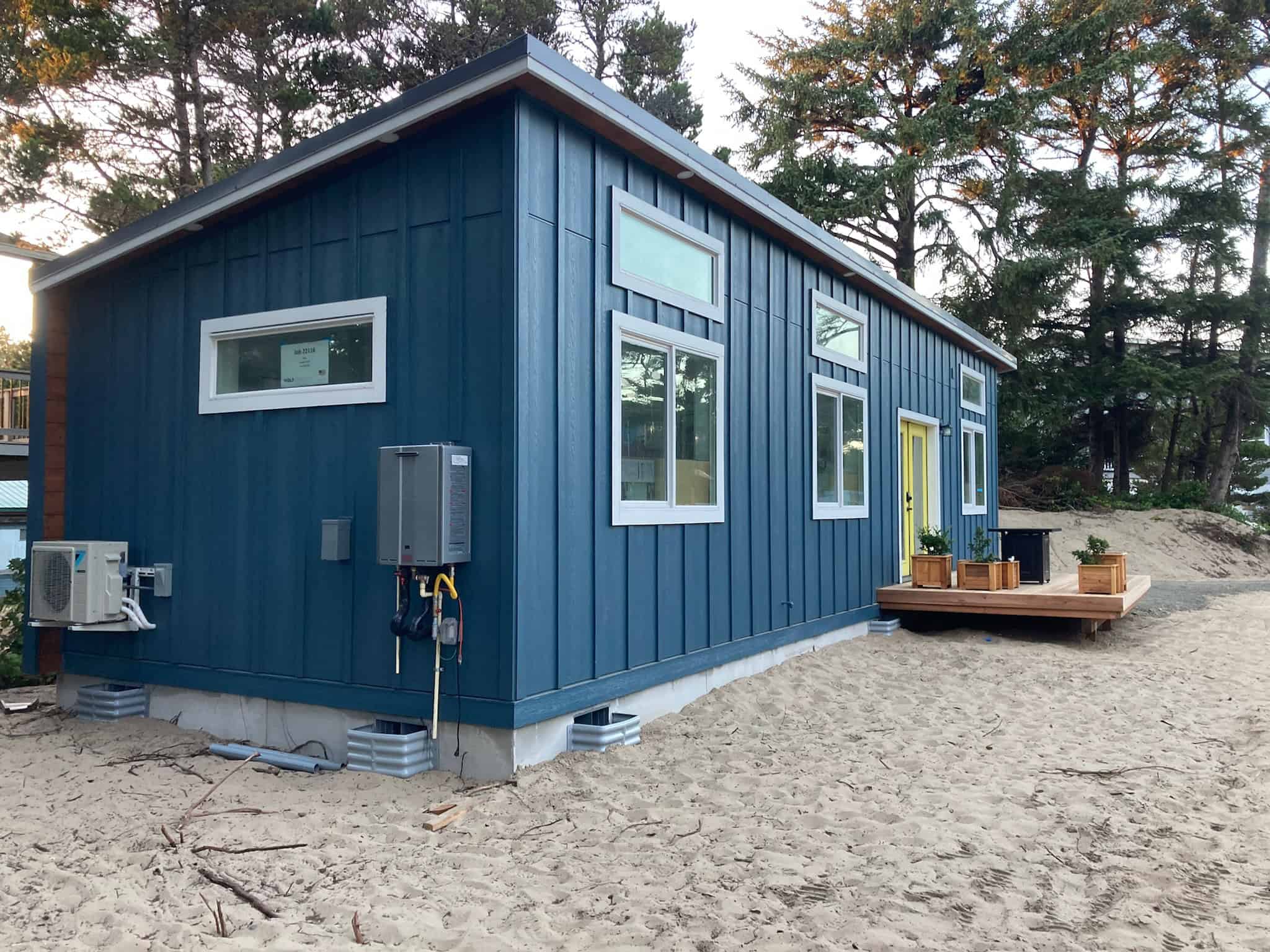
An accessory dwelling unit is a secondary, independent residence located on the same property as a primary home. It typically includes its own kitchen, bathroom, sleeping area, living space, and entrance.
For Springfield OR homeowners, an ADU can create several valuable possibilities.
You may want to build an ADU to:
- Create a private home for aging parents
- Help a family member live independently
- Provide housing for an adult child
- Add a potential long-term rental
- Create a comfortable guest house
- Prepare for future caregiving needs
- Downsize while remaining on your property
- Increase the usefulness of an underutilized lot
An ADU can adapt as your family’s needs change. A home built for a parent today could become a rental in the future. A rental could eventually become a home for an adult child. A guest house could later provide space for a caregiver. That flexibility is one of the biggest reasons homeowners are exploring ADUs.
However, a successful project requires more than selecting an attractive floor plan. It begins with understanding the property.
Before Choosing an ADU, Evaluate the Property
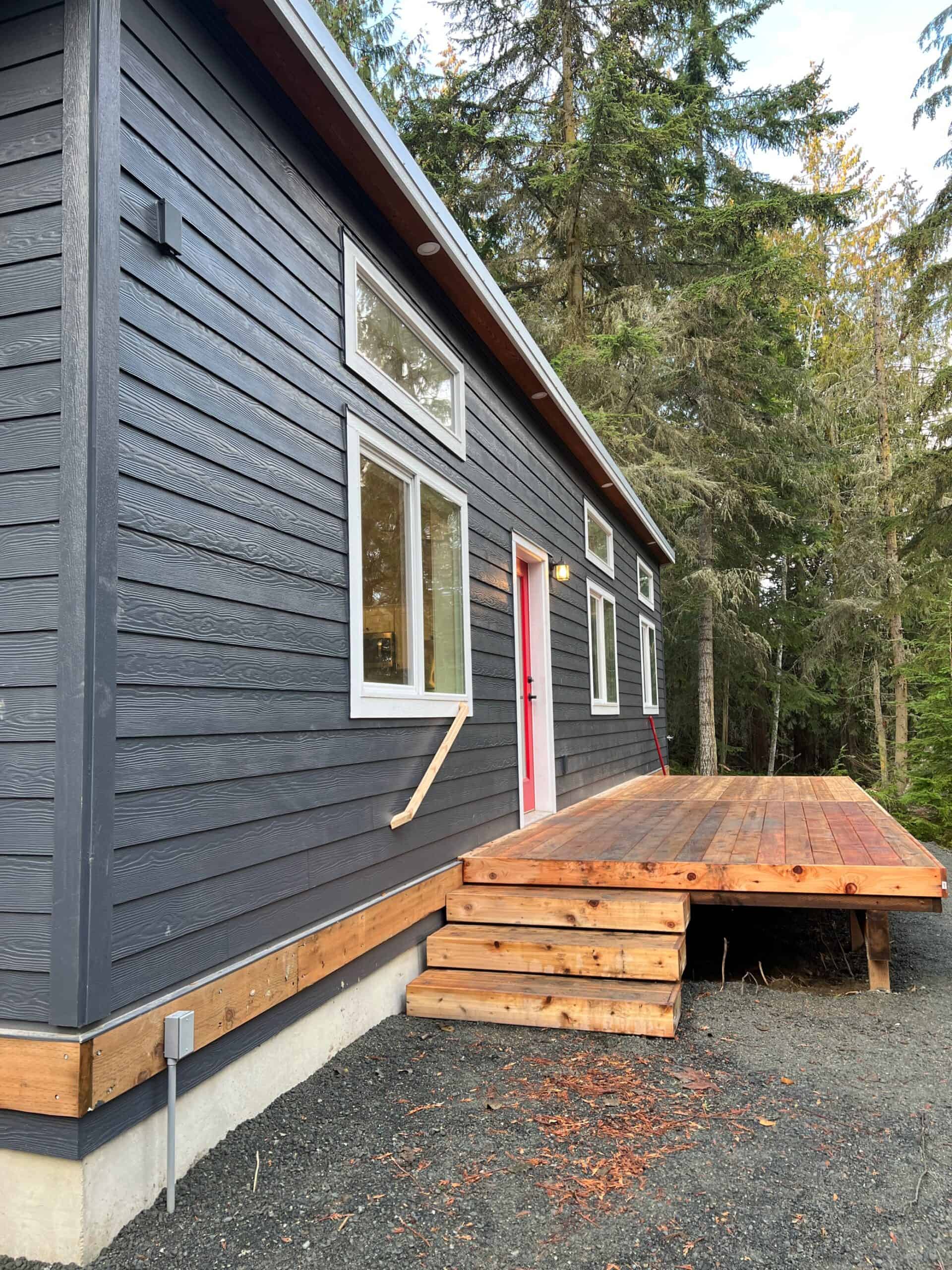
It is easy to start an ADU project by looking at floor plans, finishes, and exterior colors. Those decisions are important, but they should not be the first decisions you make. Before selecting a home, you need to understand what your Springfield OR property can realistically support.
Important questions may include:
- Does the property have enough buildable space?
- Where could the ADU be positioned?
- Are there setbacks or easements that affect placement?
- Can the home be delivered to the proposed location?
- Are trees, fences, slopes, or neighboring structures in the way?
- Where are the existing water, sewer, septic, electrical, and other utility connections?
- Will a new driveway, walkway, or parking area be needed?
- Is there adequate access for construction equipment?
- What foundation and site preparation will be required?
- Are there accessibility considerations for the future resident?
The answers can vary significantly from one property to another. Two neighboring lots may have completely different construction requirements because of utility locations, access, topography, drainage, existing improvements, or other site conditions.
That is why Wolf recommends starting with a Free Property Evaluation. The evaluation gives Wolf’s team an opportunity to review the property, identify potential concerns, and help determine what may be possible before you invest heavily in plans or permits.
Ready to find out what your property may support? Start with Wolf’s Free Property Evaluation.
Why Modular Construction Makes Sense for an ADU
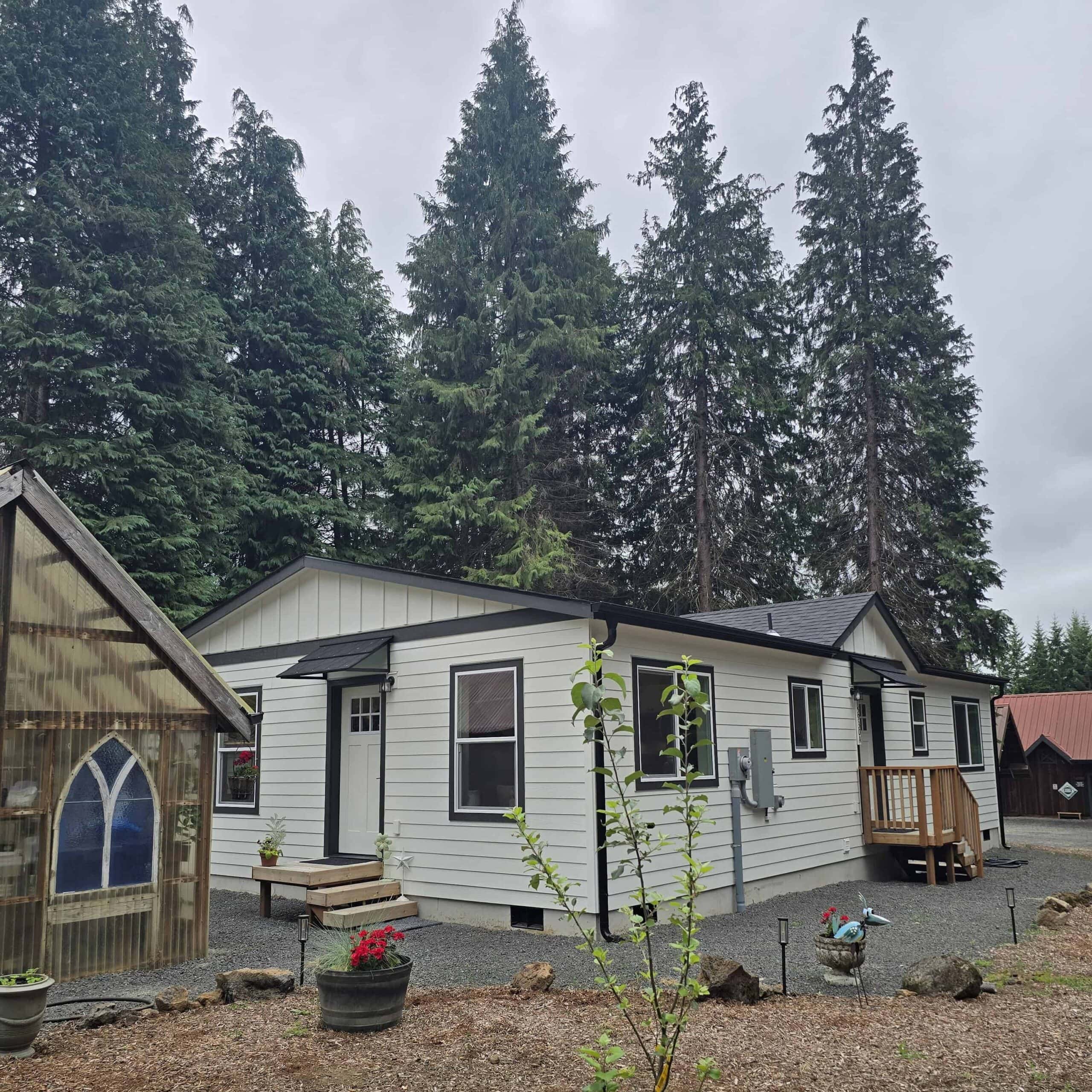
Traditional site-built construction can involve months of activity in your backyard.
Materials must be delivered and stored on the property. Multiple subcontractors need to be scheduled. Framing, roofing, insulation, electrical, plumbing, drywall, cabinets, flooring, and finishes are completed outdoors or inside a partially protected structure.
Every delay can affect the next phase of the project.
Modular construction offers a different approach.
Wolf builds the home in a controlled production environment while site preparation and other portions of the project can move forward separately. Once the property is ready, the completed home is delivered, placed on its foundation, connected to utilities, and finished on-site.
This creates several important advantages.
A More Controlled Building Environment
Building inside a production facility protects the home and many of its materials from prolonged exposure to rain, wind, mud, and changing weather conditions.
This is especially valuable in western Oregon, where wet weather can complicate conventional construction schedules.
A controlled environment also allows teams to follow consistent processes, keep tools and materials organized, and perform quality checks throughout production.
More Predictable Scheduling
Traditional construction depends heavily on the availability of multiple contractors and subcontractors.
When one trade falls behind, the entire project can be affected.
Wolf’s modular process brings much of the homebuilding work together under one coordinated production system. The home can also be constructed while eligible sitework activities move forward, rather than waiting for every site phase to be completed before vertical construction begins.
Less Construction Activity Around Your Home
Building an ADU should improve your property, but the construction process can temporarily disrupt everyday life.
Factory production reduces the amount of time that crews need to spend constructing the home itself in your backyard. Sitework, foundation installation, utility connections, delivery, setup, and finishing still need to occur, but much of the home arrives substantially complete.
That can mean less material storage, fewer weather-related disruptions, and a more organized jobsite.
Consistent Quality
Wolf has built more than 600 ADUs and modular homes throughout the Pacific Northwest.
That experience has allowed our team to develop repeatable building processes, practical floor plans, and a coordinated approach to production and installation.
Every home must still be built for its specific project and applicable requirements, but proven systems help reduce unnecessary guesswork.
Efficient Use of Space
ADUs need to make every square foot count.
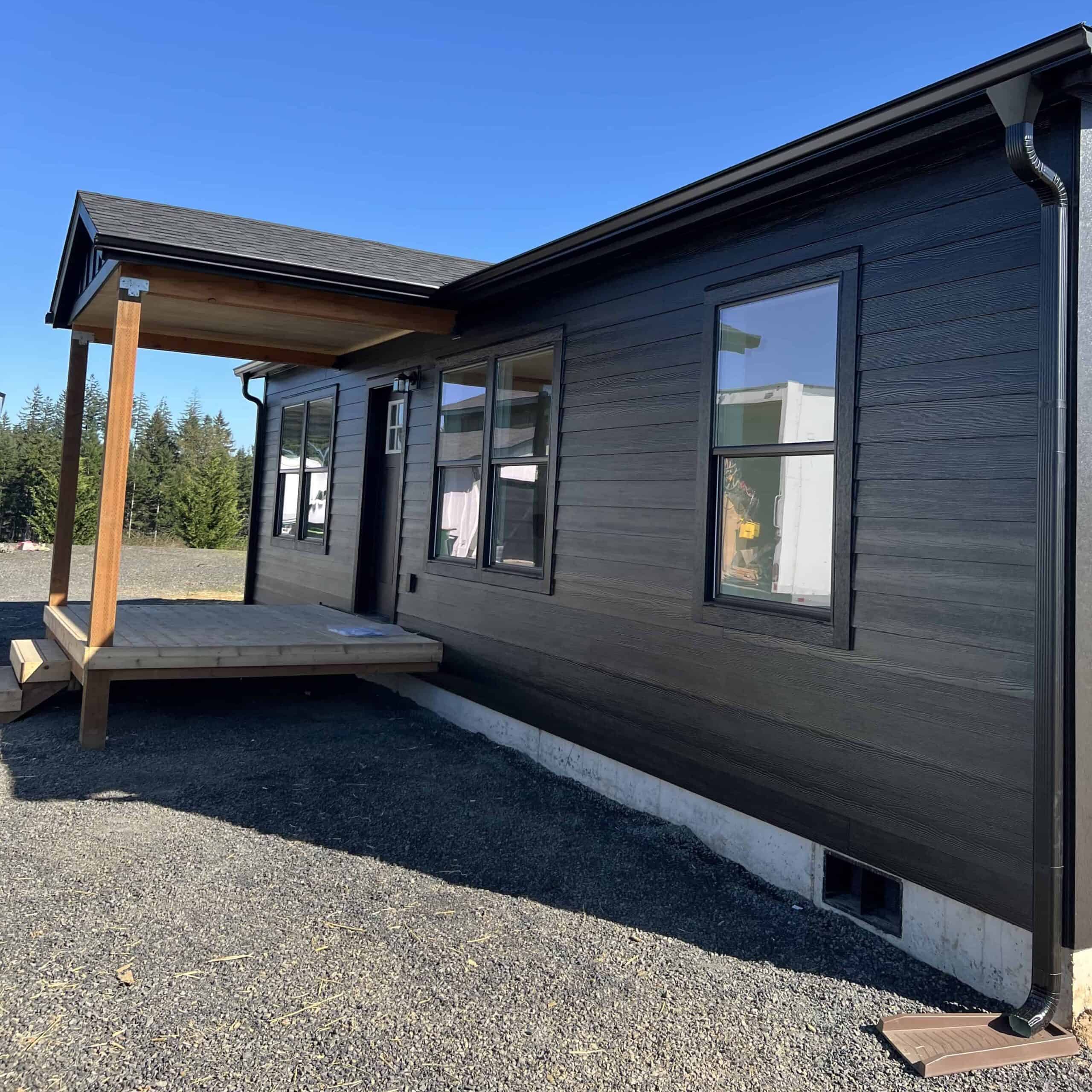
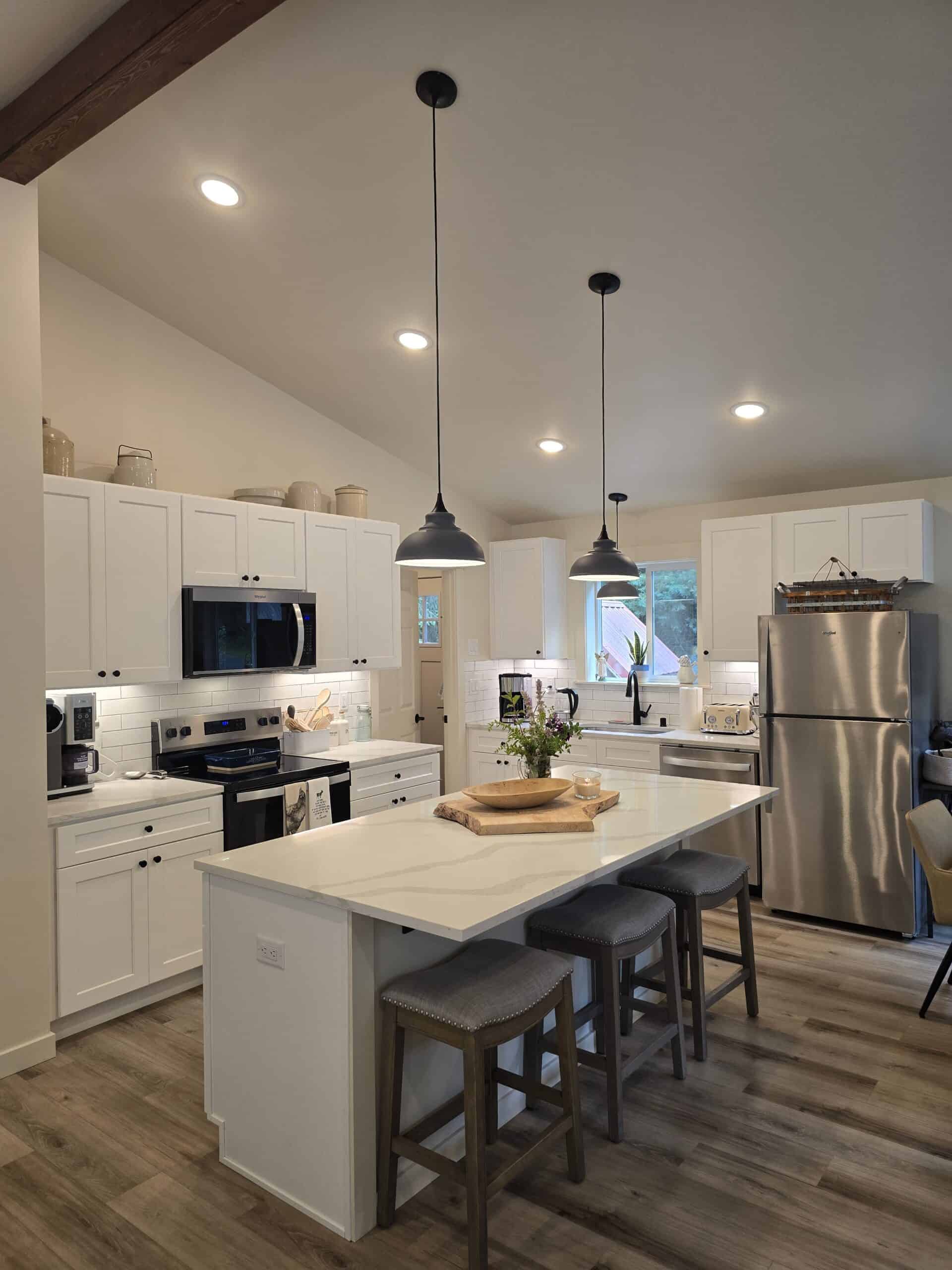
Wolf’s models are designed around practical residential living. Depending on the model, layouts may include full kitchens, private bedrooms, bathrooms, storage, laundry areas, vaulted ceilings, and comfortable living spaces within a relatively compact footprint.
The goal is not to create a temporary-feeling structure. The goal is to create a real home.
A Turn-Key ADU Builder for Springfield OR
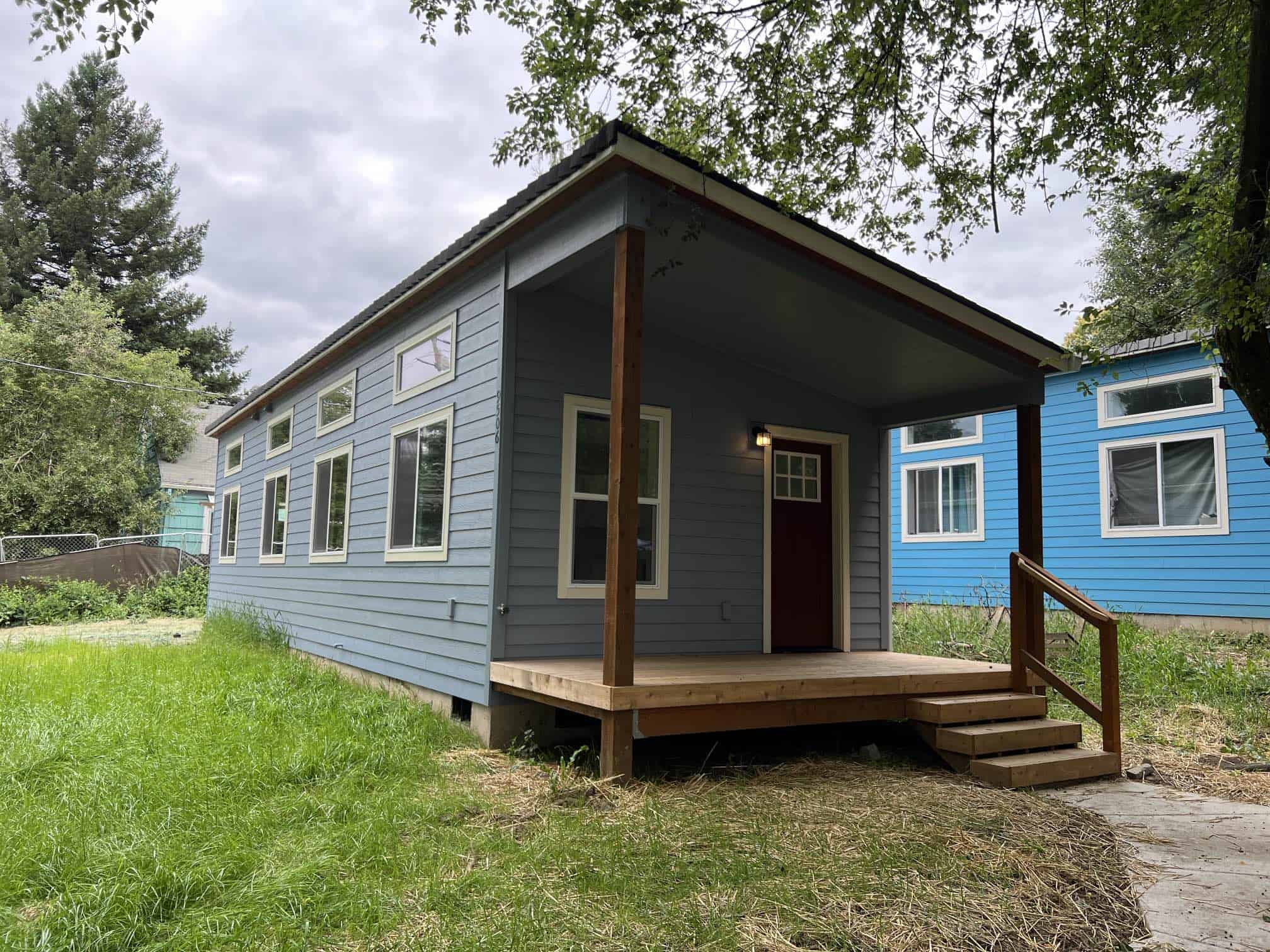
The home itself is only one part of an ADU project.
Someone still needs to evaluate the property, prepare plans, coordinate permits, develop the site, install the foundation, schedule delivery, connect utilities, complete inspections, and address the final details.
When each phase is handled by a different company, homeowners can quickly become the person responsible for keeping everything organized.
Wolf’s turn-key process is designed to provide a more coordinated path.
Step 1: Free Property Evaluation
The process begins with learning more about your goals and reviewing your property.
Wolf evaluates important early considerations such as zoning, potential home placement, site access, delivery access, utility locations, slopes, trees, and other visible site conditions.
This helps determine whether a modular ADU appears feasible and what additional information may be needed.
The evaluation is especially helpful when you are still asking the most basic question:
“Can I build an ADU on my property?”
Rather than relying on assumptions, you can begin with a clearer picture of the opportunities and potential challenges.
Step 2: Proposal and Project Planning
Once the initial feasibility has been reviewed, Wolf can help match your goals and property with an appropriate home model and project scope.
Your proposal helps outline the anticipated home, sitework, permitting, delivery, installation, and other project components.
Every property is different, so final project pricing depends on the model, site conditions, utility requirements, jurisdictional requirements, access, foundation, and selected options.
A small, level lot with nearby utilities may require a different scope than a sloped property with significant utility extensions or restricted delivery access.
The goal is to identify those differences as early as possible.
Step 3: Permitting
Permitting can be one of the most confusing parts of building an ADU.
Applications may require site plans, building plans, utility information, engineering, supporting documents, and responses to questions from the local jurisdiction.
Wolf’s in-house permitting team helps manage this process.
Instead of leaving you to determine which documents are required, where they need to be submitted, or how corrections should be addressed, Wolf works through the permitting phase with the appropriate departments and professionals.
Permit timelines are ultimately controlled by the reviewing jurisdiction, but having an experienced team managing the process can help keep the project organized and moving.
Step 4: Factory Production
Once the project is ready for production, your ADU is built in Wolf’s controlled manufacturing environment.
The production process brings together framing, roofing, insulation, plumbing, electrical work, interior finishes, cabinetry, flooring, fixtures, and other major components of the home.
Because Wolf offers established models and a structured selection process, homeowners can personalize important features without turning the project into an unpredictable custom build.
The result is a home designed for efficient production, transportation, installation, and long-term residential use.
Step 5: Sitework, Delivery, and Setup
While the home is being prepared, the property must also be made ready.
Depending on the project, sitework may include:
- Clearing and grading
- Excavation
- Foundation installation
- Water and sewer connections
- Septic coordination
- Electrical service
- Trenching
- Drainage improvements
- Driveways and walkways
- Decks, stairs, porches, or landings
- Accessibility improvements
Site access is especially important for modular construction.
The home must be transported to the property and moved into its final location. Wolf evaluates the route, width, turning space, overhead obstacles, slopes, trees, fences, neighboring structures, and other conditions that could affect delivery.
Once the site and foundation are ready, Wolf coordinates delivery and installation. The home is placed on the foundation, utilities are connected and tested, remaining on-site finishes are completed, and required inspections are scheduled.
Wolf stays involved through final approval and occupancy.
From evaluating accessibility and delivery access to handing over the keys after final occupancy has been granted, our goal is to provide one coordinated process.
Designing an ADU for Aging in Place
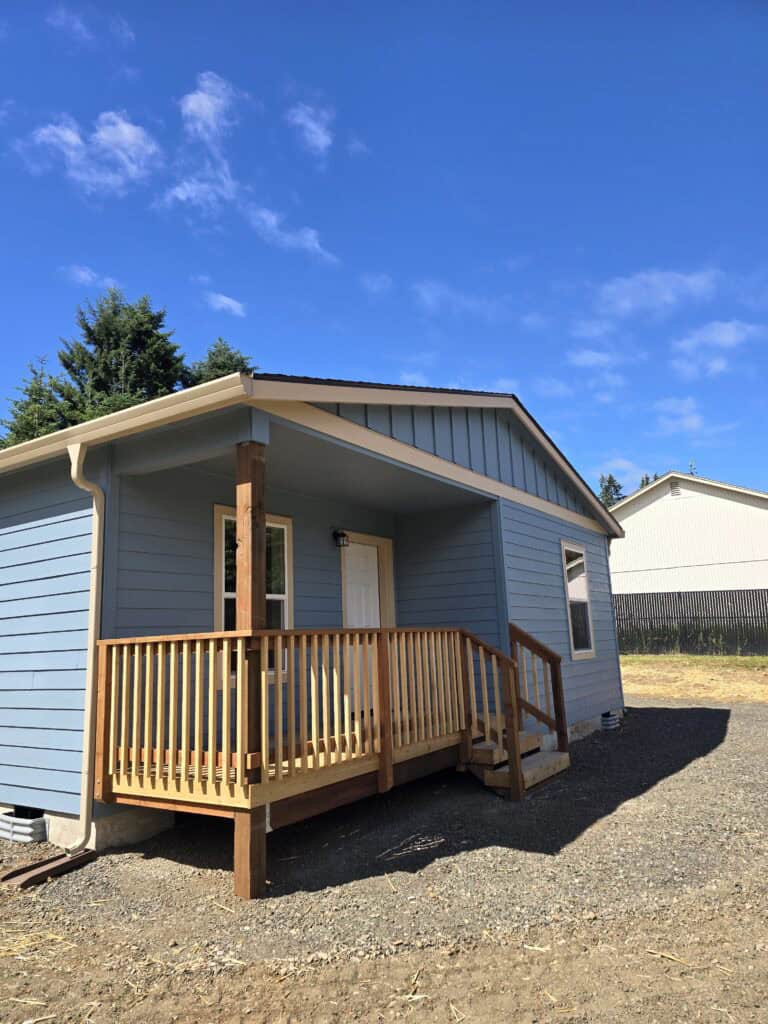
Many Springfield OR homeowners are considering ADUs because they want parents or other family members to live nearby. Proximity can make it easier to provide help while still allowing everyone to maintain independence and privacy. When an ADU is intended for aging in place, the property and floor plan should be evaluated carefully.
Helpful features may include:
- Single-level living
- Minimal steps
- Wider doors
- Accessible entryways
- Walk-in or low-threshold showers
- Lever-style door hardware
- Easy-to-reach storage
- Space for future mobility assistance
- Well-planned exterior walkways
- Convenient parking and drop-off access
Not every accessibility feature is needed for every project. However, discussing future needs during the planning phase can prevent expensive changes later.
Wolf’s team can help you consider both the home and the path a resident will use to reach it.
Could an ADU Become a Rental Property?
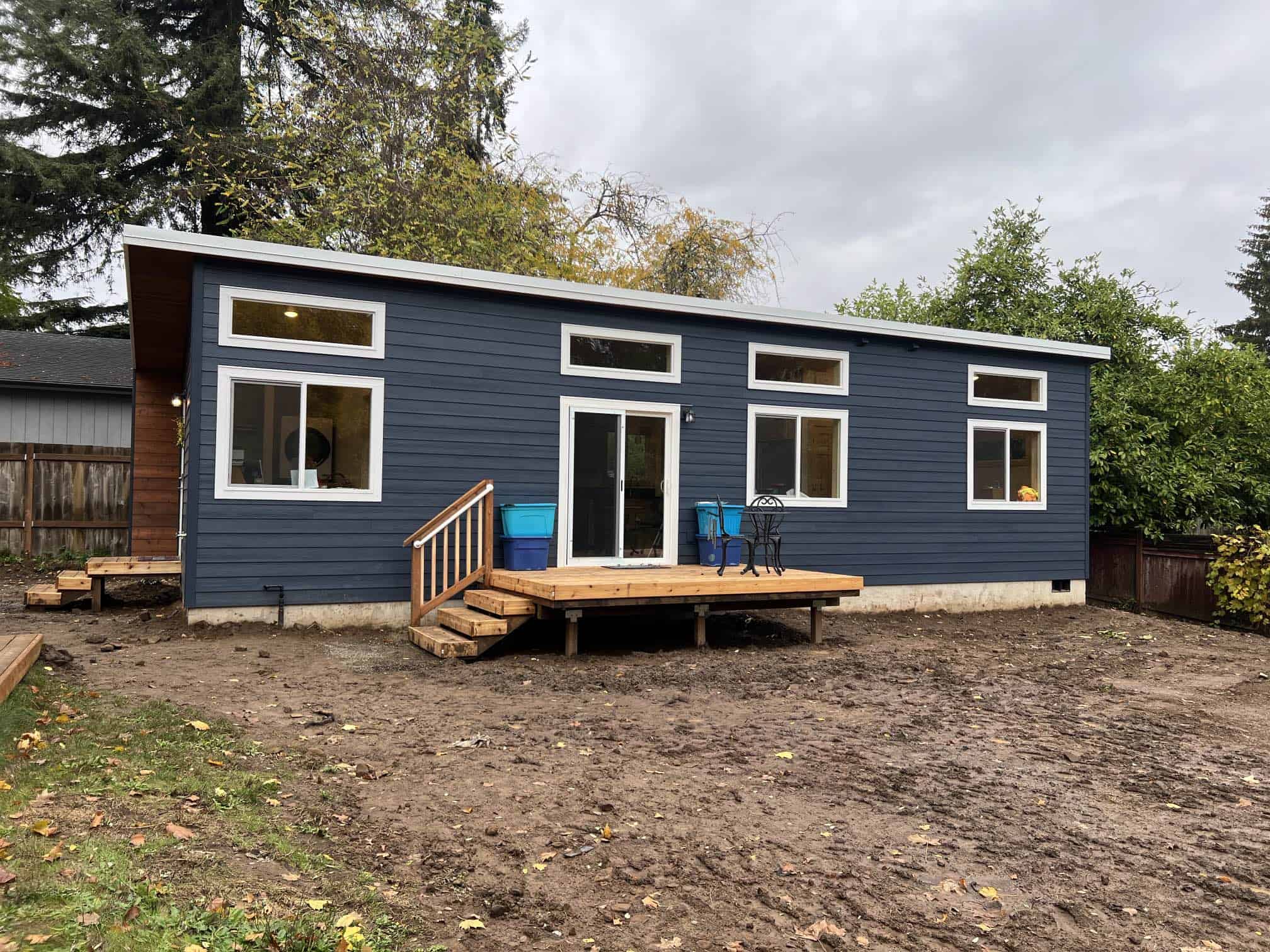
Some homeowners build ADUs to create potential rental income. A well-designed ADU can provide an independent residence while allowing the property owner to retain the primary home and land.
Before relying on a specific rental strategy, homeowners should research current local requirements, financing, insurance, taxes, utility arrangements, and property management responsibilities.
The layout should also be designed with the future resident in mind.
A rental-focused ADU may benefit from:
- A private entrance
- Dedicated outdoor space
- Practical storage
- Durable finishes
- Convenient parking
- Laundry facilities
- Separation from the primary home
- Clearly planned utility arrangements
A rental ADU should feel like a complete home, not an afterthought placed in the backyard.
Why Work With an Experienced Springfield OR ADU Builder?
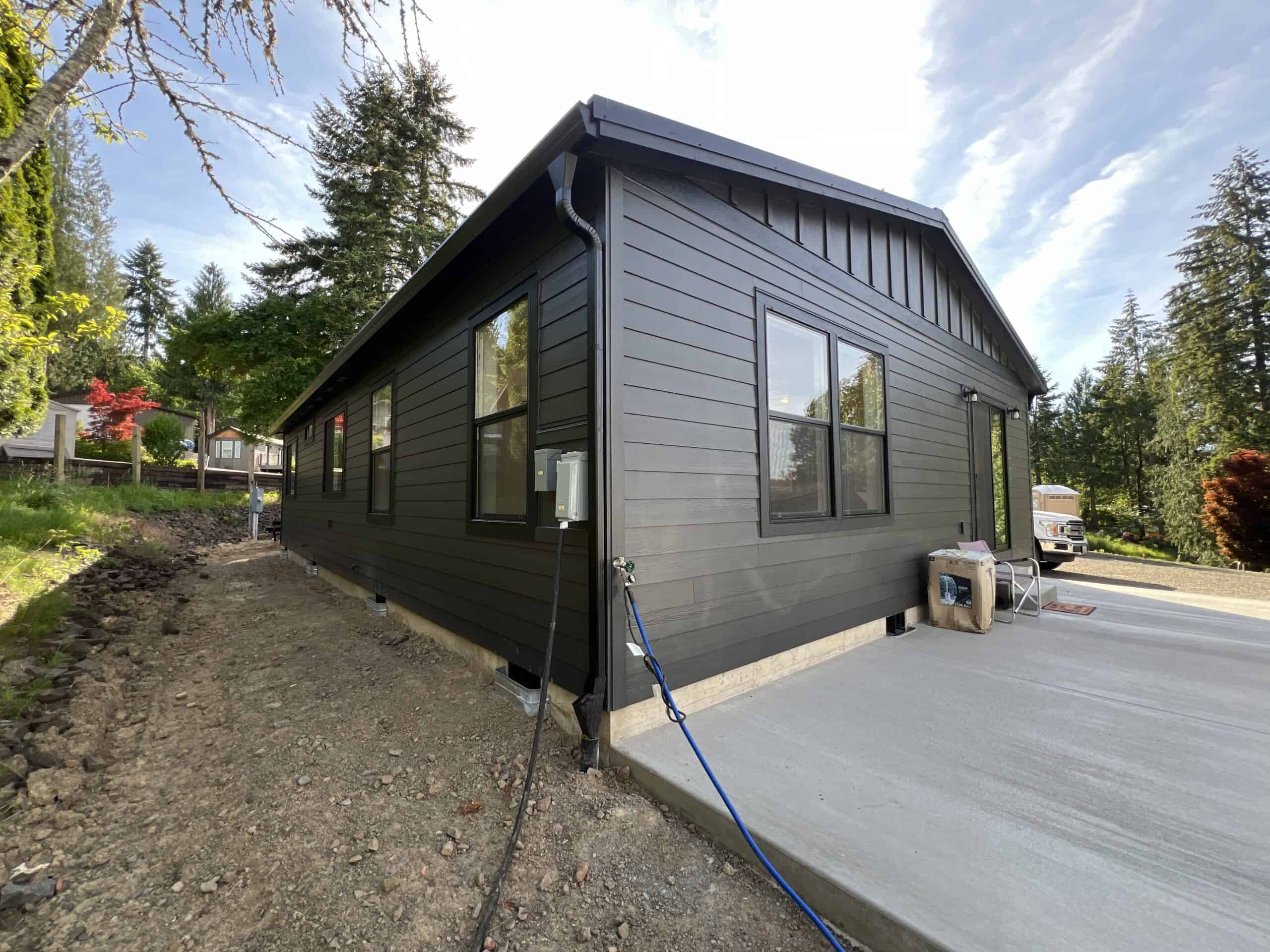
ADUs combine residential construction, land-use requirements, transportation logistics, utility coordination, and site development into one project. Experience matters because problems in one phase can affect every phase that follows.
A home that fits on paper may still be difficult to deliver. A property may have enough open space but complicated utility connections. A selected floor plan may work well for a rental but not for a family member with limited mobility.
Wolf’s experience building more than 600 modular homes and ADUs throughout the Pacific Northwest helps our team identify these concerns earlier. Our role is not simply to sell you a structure. It is to help determine whether the complete project can work.
Start With a Free Property Evaluation
You do not need to know which model you want.
You do not need to have finished plans.
You do not need to understand every Springfield OR permit requirement before contacting Wolf.
You simply need a property and an idea of what you hope to accomplish.
Wolf’s Free Property Evaluation is the best way to begin. Our team will review your property, discuss your goals, and help identify the potential next steps.
You may discover that your property is well suited for an ADU. You may uncover an access or utility issue that needs to be addressed first. You may learn that a different model or placement would make the project more practical. Either way, getting better information early can help you avoid expensive assumptions.
Find out what may be possible on your Springfield property. Start your Free Property Evaluation with Wolf Industries today.
Frequently Asked Questions About Building an ADU in Springfield OR
What is the first step in building an ADU in Springfield OR?
The best first step is evaluating your property. Wolf’s Free Property Evaluation reviews factors such as potential placement, site access, delivery access, utilities, slopes, trees, and other visible conditions that could affect feasibility.
Does Wolf handle ADU permits?
Wolf offers an in-house permitting service as part of its turn-key process. The permitting team helps prepare and coordinate required information, submit project documents, communicate with reviewing departments, and work through requested corrections.
Does Wolf complete the sitework?
Wolf’s turn-key projects can include site preparation, foundation work, utility coordination, delivery, installation, and final setup. The exact scope depends on the property and project requirements.
How is a modular ADU different from a manufactured home?
Wolf builds modular homes rather than manufactured homes. Modular homes are constructed to the applicable residential building code, built in a controlled production environment, transported in sections or as completed modules, and permanently installed on an approved foundation.
Can an ADU be designed for an aging parent?
Yes. Wolf offers models and options that may work well for multigenerational living and aging in place. Accessibility needs should be discussed early so the home placement, entry, walkways, bathroom, doors, and interior layout can be evaluated together.
How much does an ADU cost in Springfield OR?
The total cost depends on the selected home, property conditions, permitting, foundation, utility connections, access, site development, delivery, and chosen options. A property evaluation and project proposal are needed to develop meaningful pricing.
How long does it take to build a modular ADU?
The schedule depends on permitting, site complexity, production availability, inspections, utility coordination, and jurisdictional review times. Modular construction can create efficiencies because factory production and certain site activities may be coordinated rather than completing every phase sequentially.
How do I know whether an ADU can be delivered to my backyard?
Wolf reviews delivery feasibility during the property evaluation process. The team considers road access, driveway width, turning areas, slopes, trees, fences, structures, overhead obstacles, and the proposed route to the foundation.
Talk to an ADU Builder Serving Springfield OR
Your unused yard may be more valuable than you think. It could become a home for someone you care about, an independent space for a changing family, or a long-term improvement that makes your property more useful.
The first step is not choosing cabinets or signing a construction contract. The first step is finding out what is actually possible.
With more than 600 ADUs and modular homes built throughout the Pacific Northwest, Wolf Industries has the experience to help Springfield OR homeowners move from an early idea to a completed home.
From property evaluation and permitting to factory production, sitework, delivery, inspections, and final occupancy, Wolf provides a turn-key process built around one goal: Making your ADU project more manageable from start to finish.
Start your Free Property Evaluation today and discover what your Springfield OR property could become.