
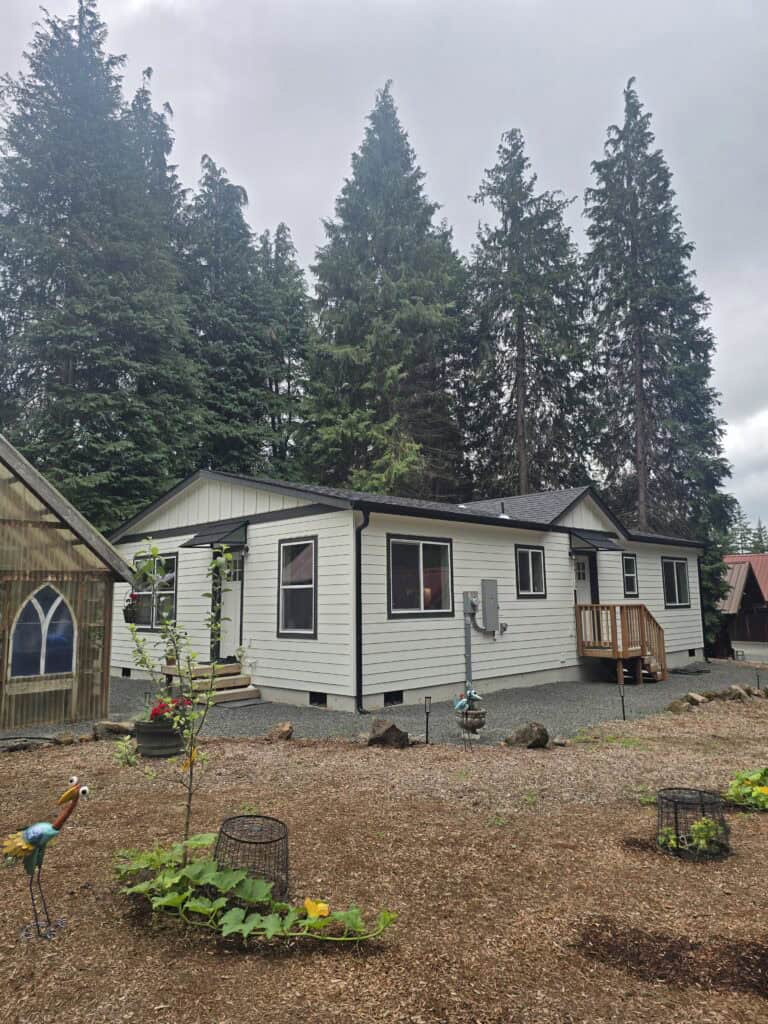
Building an ADU can create more living space, bring family closer, generate rental income, or simply make better use of property you already own.
But there is one decision that can affect almost everything that comes afterward:
Which ADU builder are you going to trust with the project?
That question is bigger than comparing floor plans or finding the lowest initial quote.
An ADU project involves zoning, permits, utilities, site preparation, foundation work, construction, delivery, inspections, and dozens of smaller details that need to line up correctly. Choosing an experienced ADU builder can make those pieces feel manageable. Choosing the wrong one can leave the homeowner coordinating contractors, chasing answers, dealing with unexpected expenses, and wondering who is actually responsible for getting the project across the finish line.
So before signing a contract, ask questions.
A lot of them.
Here are 10 questions every homeowner should ask when choosing an ADU builder.
1. How Many ADUs Have You Actually Built?
This should be one of your first questions. There is a major difference between a contractor who can build an ADU and an ADU builder whose team has completed them again and again.
ADUs have their own challenges. Backyard access can be tight. Setbacks matter. Utilities have to be planned. Local jurisdictions can have different permitting requirements. Site conditions can completely change the scope of a project.
Experience helps a builder identify these issues before they become expensive surprises.
Ask how many ADUs or similar homes the company has completed. Then ask to see examples.
Wolf Industries has built over 600 modular homes and ADUs throughout the Pacific Northwest, giving the team experience with a wide range of properties, site conditions, jurisdictions, and homeowner goals.
A portfolio full of completed projects tells you something that a sales pitch cannot. The builder has been through the process before.
2. Will You Evaluate My Property Before I Commit?
Before falling in love with a floor plan, you need to know whether your property can support the project. That means looking beyond square footage or a trendy design.
An ADU builder should be thinking about questions such as:
- What does the zoning allow?
- Where could the ADU realistically sit?
- What setbacks may apply?
- How will water, sewer and power reach the home?
- Is there enough access for construction or delivery?
- Are there slopes, trees or other site conditions to address?
- What site preparation could be required?
This is why Wolf encourages homeowners to begin with a free property evaluation.
It gives the team an opportunity to look at the property and identify important feasibility considerations before the homeowner gets too far into planning.
Not sure whether an ADU will work on your property?
Start with Wolf Industries’ Free Property Evaluation. It is designed to help you understand what may be possible before you invest heavily in a project.
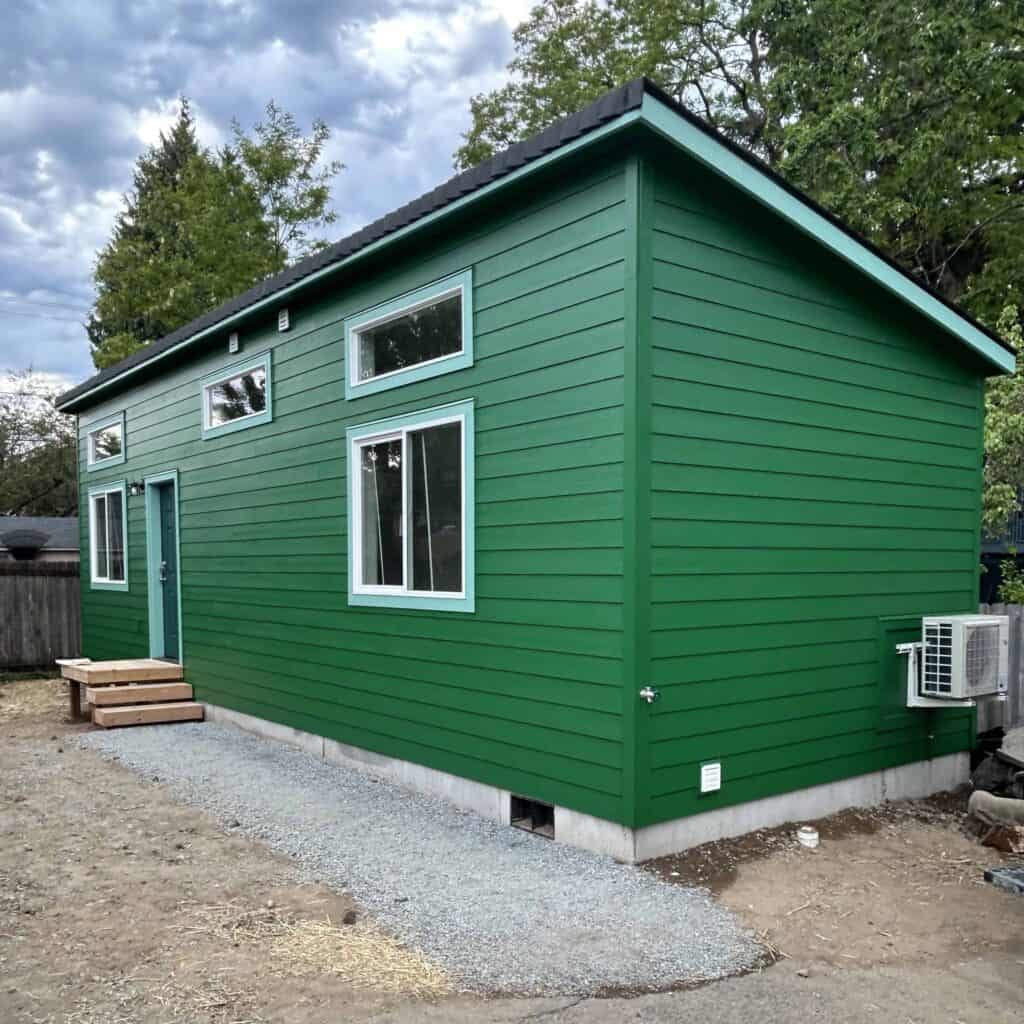
3. Who Handles the Permits?
For many homeowners, this is where an exciting ADU project suddenly starts feeling complicated.
Building permits are not just a form you fill out and send in. Depending on the property and jurisdiction, the process may involve site plans, construction documents, utility information, stormwater considerations, erosion control requirements, jurisdictional review, revisions, fees, and inspections.
Ask the builder exactly what they handle.
- Do they prepare the permit package?
- Do they submit it?
- Do they communicate with the jurisdiction?
- Do they respond when revisions are requested?
- Or are you expected to coordinate some or all of that yourself?
Wolf has a dedicated permitting process and Permit Specialists who work through the jurisdictional review process with customers. The company also coordinates permitting with the larger project schedule instead of treating permits like a completely separate piece of the job.
That distinction can matter. You are not just hiring someone to build four walls and a roof. You are trying to create a legal dwelling unit on your property.
4. What Is Actually Included in Your Quote?
Two ADU quotes can look very different even when the numbers at the bottom appear similar.
Why?
Because one quote may include work that another builder leaves out.
A low price can become much less attractive when you later discover that major pieces of the project were never included. Before signing anything, ask for a clear explanation of what is included and what is not.
Important areas can include:
- The home itself
- Permitting services
- Engineering
- Foundation work
- Excavation
- Utility connections
- Delivery
- Setup
- Decks or exterior features
- Site preparation
- Finish work
- Inspections
- Other property-specific requirements
Wolf’s proposal process reviews the project in multiple parts, including permits, home selections, delivery considerations, utilities, topography, excavation, tree removal, demolition, and other site-specific work.
The goal is to understand the broader project, not simply the sticker price of the home. That is the number homeowners really need to compare.
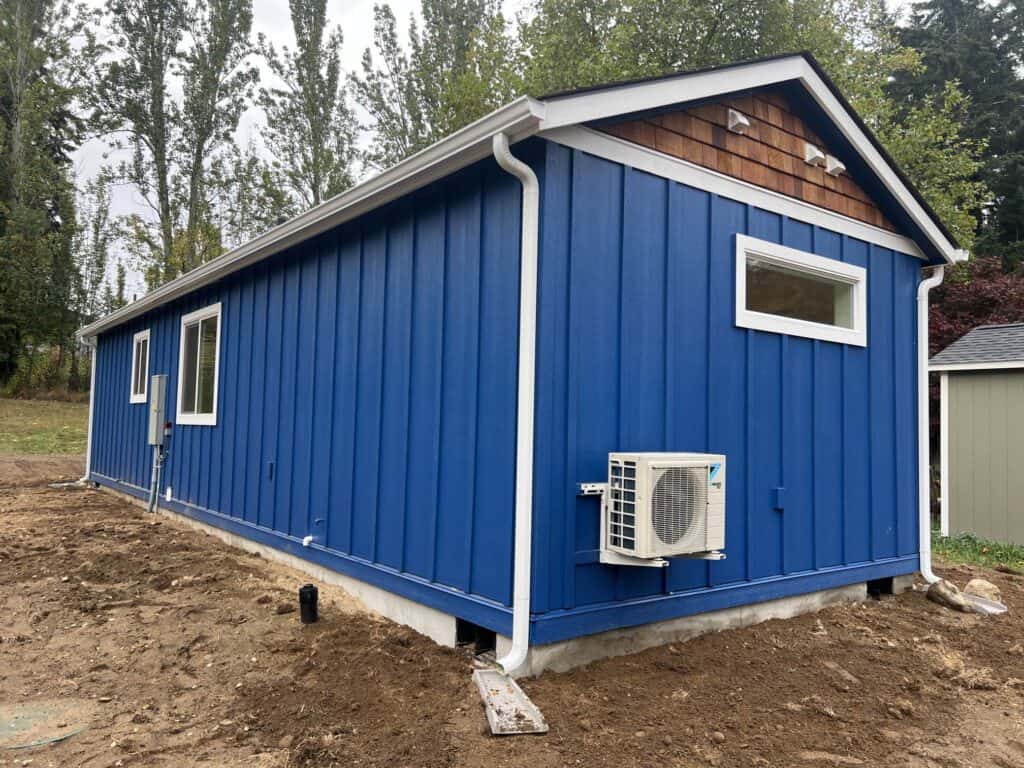
5. Who Coordinates the Entire Project?
This question is easy to overlook. It is also one of the most important.
Imagine hiring one company for the ADU, another contractor for excavation, someone else for utilities, another person for foundation work, and then discovering that nobody is responsible for making sure all of those schedules work together.
Guess who becomes the project manager? You.
For some homeowners, that is fine. For many, it is exactly what they were trying to avoid. Ask potential ADU builders how much of the project they actually manage.
- Who coordinates the site?
- Who coordinates permitting?
- Who makes sure the property is ready before the home arrives?
- Who handles setup?
- Who coordinates the final steps?
Wolf’s approach is designed around a turn-key process that guides the homeowner from early property evaluation through permitting, production, delivery, setup and final completion.
One accountable team can eliminate a lot of finger-pointing later.
6. How Will My ADU Be Built?
Not every ADU is constructed the same way. Some are built entirely on the property using traditional site-built construction. Others, like Wolf’s modular ADUs, are constructed primarily in a controlled production environment before being transported to the property. That difference is worth understanding.
With modular construction, much of the home can be built indoors rather than sitting exposed to Pacific Northwest rain and changing weather. Production follows a defined process, and the home is inspected throughout construction before eventually being delivered to the prepared site.
There is also another benefit homeowners often appreciate:
You do not have to turn your backyard into a full construction zone for the entire home build.
There will still be site preparation and setup work, but much of the actual home construction happens away from the property.
If reducing disruption matters to you, ask every ADU builder how much work will actually take place in your backyard.
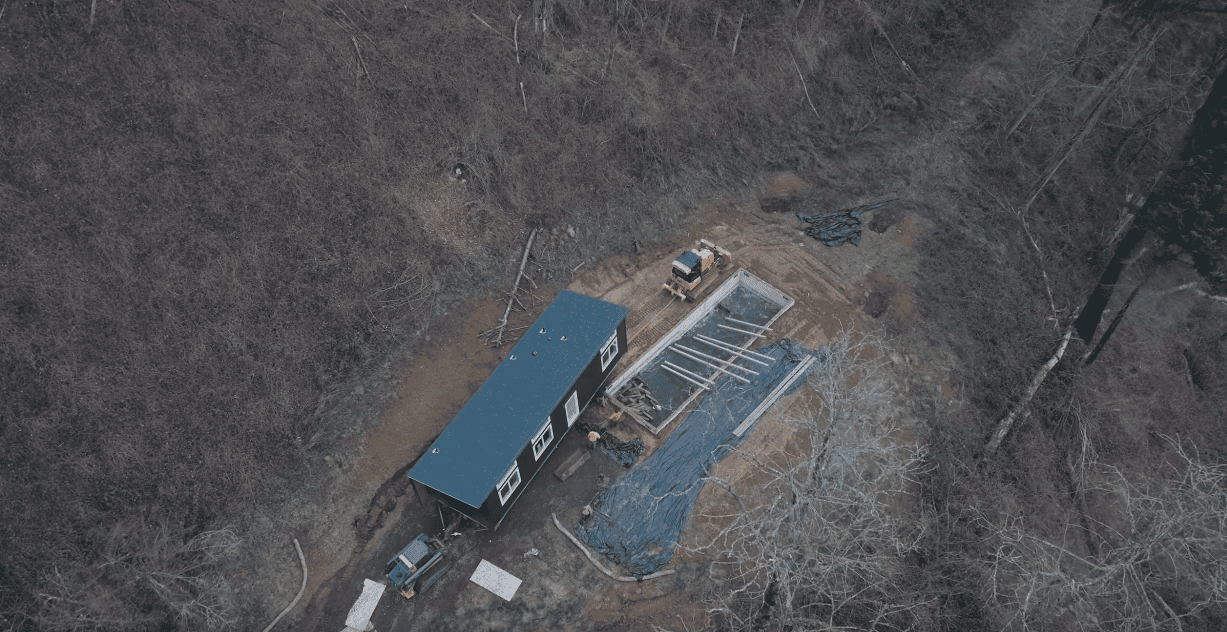
7. How Will the ADU Get Onto My Property?
Here is a question homeowners sometimes do not think about until surprisingly late in the process:
How is the home actually getting there?
For a modular ADU, delivery access is a major part of early planning.
Driveways, neighboring structures, overhead lines, trees, slopes, street access, fences, and backyard conditions can all affect how a home reaches its final location.
An experienced modular ADU builder should be thinking about delivery long before delivery day. Wolf’s property evaluation and proposal process considers access and placement early so the project can be designed around what is realistically possible.
Wolf has delivered and placed modular homes on a wide range of property types throughout the Pacific Northwest, including urban lots, rural properties, sloped sites, and backyards with limited access. That experience matters because there is a huge difference between saying a home will fit on a lot and knowing how you are actually going to put it there.
Wondering whether a modular ADU can reach your backyard?
You do not have to figure it out yourself. Start with Wolf’s Free Property Evaluation and let the team take an initial look at your property, potential placement, access, utilities, and feasibility.
8. What Happens After the Home Is Built?
Some homeowners spend so much time thinking about construction that they forget to ask what happens afterward. But a finished ADU sitting on a trailer is not a finished project.
The home still needs to reach the property, be placed, connected, completed, inspected, and cleared for use.
Ask:
- Who handles delivery?
- Who sets the home?
- Who coordinates utility connections?
- Who completes remaining exterior work?
- Who handles inspection issues?
- Who stays involved until the project is actually finished?
Wolf’s process continues after factory production. Once the home and site are ready, the ADU is delivered and set into place. The remaining project work can include utility connections, exterior completion, inspections and the final steps required before the homeowner receives the finished space.
When comparing builders, do not only ask where their construction responsibility begins. Ask where it ends.
9. Can I Talk to Past Customers or See Completed Projects?
Marketing photos are useful. Completed projects are better. Reviews from real homeowners are even better than that. Before hiring an ADU builder, spend time looking at their project history.
Look for examples of homes similar to what you are considering. Look at testimonials. Read reviews. Ask how long the builder has been operating.
You are looking for patterns.
- Do customers talk about clear communication?
- Were there surprises?
- Did the builder help solve problems?
- Did projects actually get completed?
- Does the company have a history you can verify?
Wolf has completed hundreds of modular homes and ADUs throughout the Pacific Northwest and maintains galleries, testimonials and case studies showing the types of projects its team has delivered.
The more evidence you can see before signing, the fewer assumptions you have to make.
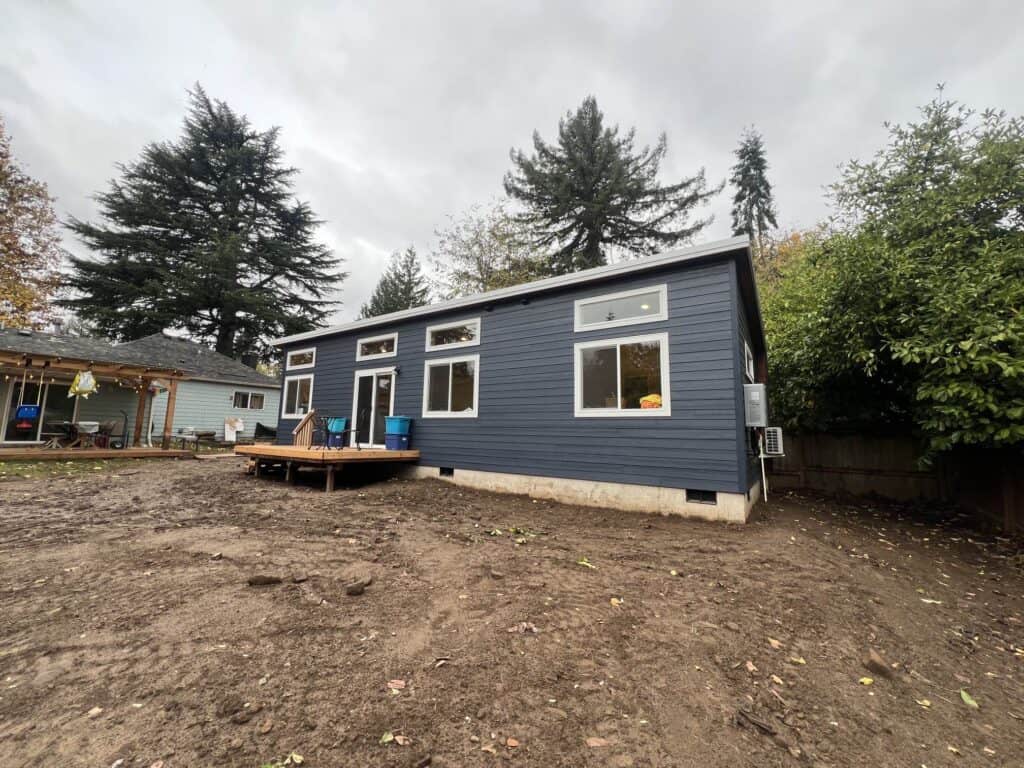
10. What Happens When Something Unexpected Comes Up?
Because something probably will. Every property is different.
A utility may be farther away than expected.
The jurisdiction may request additional information.
A tree may need to come out.
A site condition may require another solution.
The goal is not necessarily to find a builder who promises that nothing unexpected will happen.
The better question is:
What systems and experience does the builder have when it does?
An experienced ADU builder should be able to explain how problems are communicated, who is responsible for solving them, and how changes are handled.
That is one of the biggest advantages of working with a company that has completed hundreds of projects. You are not paying someone to encounter the perfect project. You are hiring them because they know what to do when the project is not perfect.
The Cheapest ADU Builder May Not Be the Least Expensive Choice
It is tempting to make your decision by opening three quotes and looking for the smallest number. But that number may not tell the whole story.
If one builder leaves permitting, sitework, utility coordination, delivery, or project management outside the quote, the cheaper proposal may ultimately require significantly more work and expense from the homeowner.
Instead, compare the scope.
- Ask what each builder is responsible for.
- Ask what you are responsible for.
- Ask what happens between signing the contract and receiving the keys.
That is where the real differences between ADU builders tend to appear.
Choose an ADU Builder Based on the Whole Process
A great ADU should improve your property. The process of getting one should not take over your life.
The right ADU builder should help you understand what is possible, identify potential problems early, navigate permitting, build the home, coordinate the property work, get the ADU into place, and help carry the project through the final steps.
That is the approach Wolf Industries has developed after building over 600 modular homes and ADUs throughout the Pacific Northwest.
Wolf’s modular process keeps much of the construction in a controlled factory environment while its turn-key project approach helps coordinate the many pieces required to turn an idea for a backyard home into an actual finished ADU.
But before choosing a model, picking finishes, or trying to estimate your entire project from information online, there is a simpler first step. Find out what your property can actually support.
Start With a Free Property Evaluation
If you are thinking about building an ADU in Washington or Oregon, Wolf’s Free Property Evaluation is designed to help you understand what may be possible on your property.
The team can begin looking at important considerations such as property feasibility, zoning, placement, utilities, access, and the potential path forward.
There is no reason to guess whether an ADU can work when you can start by asking the people who build them every day.
Get your Free Property Evaluation today and take the first step toward discovering what your property could become.