
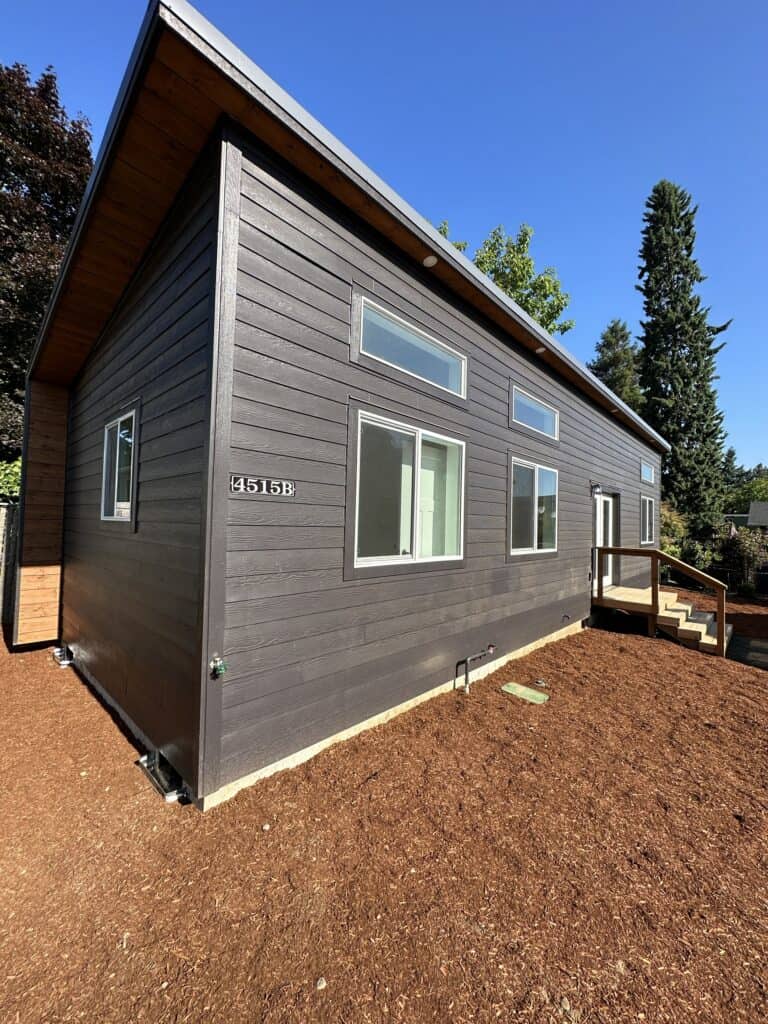
So, you have decided an accessory dwelling unit (ADU) could make sense for your property. Now comes perhaps the most important decision.
Who should actually build it?
For many homeowners, the first instinct is to call a general contractor. After all, contractors build houses, remodel kitchens, add rooms, and handle all kinds of residential construction.
So why would you need a specialized ADU builder?
The answer comes down to the scope of the project. Building an accessory dwelling unit is rarely just about constructing a small house. It involves zoning, property feasibility, permits, utility planning, site preparation, foundation work, construction, delivery, inspections, and coordination between several different pieces of the project.
A general contractor may be able to handle some or even all of those responsibilities. A dedicated ADU builder, however, may already have a process designed specifically around them. That difference can have a major impact on how much work ultimately falls back on the homeowner.
Here is what you should understand before deciding between an ADU builder and a general contractor.
What Is a General Contractor?
A general contractor typically manages construction projects and coordinates the labor and subcontractors required to complete them.
Depending on the company, a general contractor might work on:
- Home additions
- Remodels
- New construction
- Garages
- Decks
- Commercial projects
- ADUs
Some general contractors have extensive experience building accessory dwelling units. Others may only complete one occasionally. That distinction matters.
Building an ADU can require knowledge and coordination that goes beyond the structure itself. A contractor who spends most of the year remodeling bathrooms may approach an ADU very differently from a company that works on ADUs every week.
The important question is not simply:
“Are you a general contractor?”
It is:
“How much experience do you have managing complete ADU projects?”
What Is an ADU Builder?
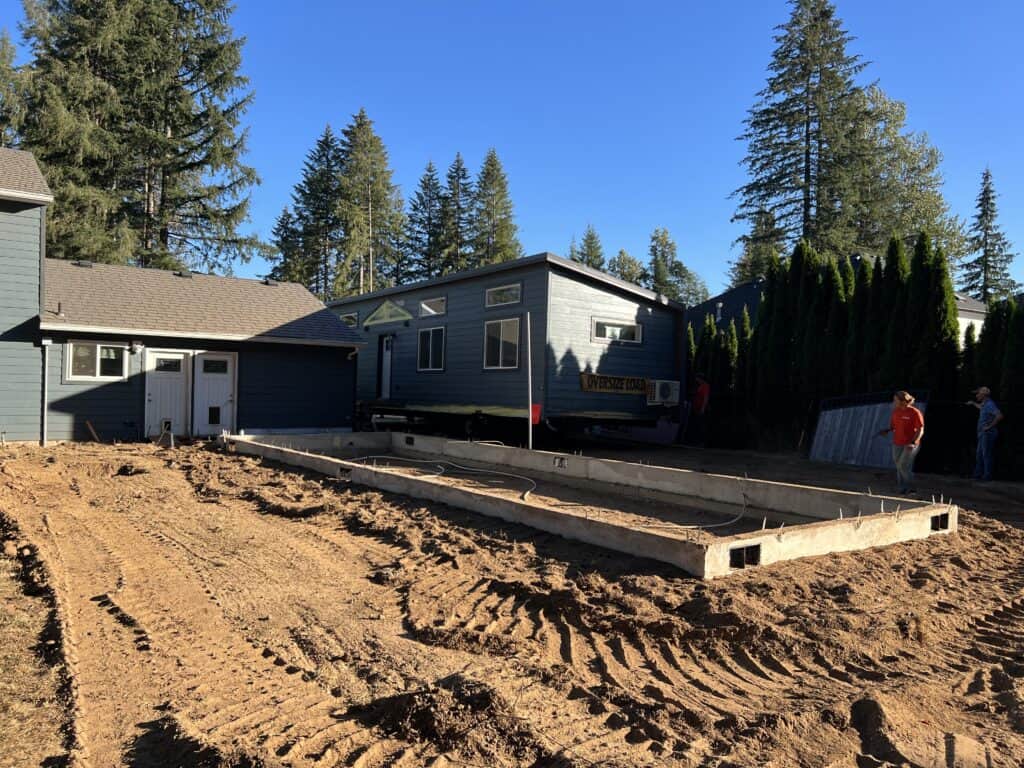
An ADU builder specializes in creating accessory dwelling units and typically has systems built around the unique requirements of those projects. That can include much more than construction.
A full-service ADU builder helps evaluate whether the property is suitable, identify potential placement, navigate permits, coordinate site preparation, build the home, manage delivery or onsite construction, connect utilities, and complete the project through final inspection.
That broader experience can become especially important when unexpected property or permitting issues appear. And with ADUs, those issues are not unusual.
The Biggest Difference May Be What Happens Before Construction Starts
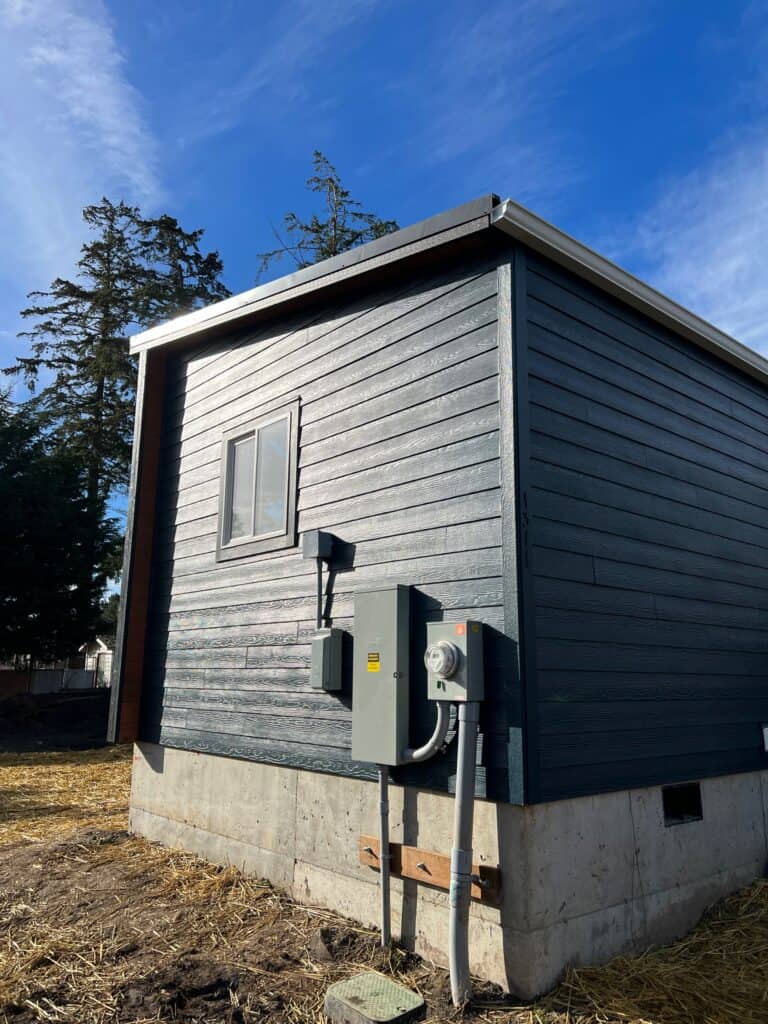
It is easy to focus on the home itself.
- Floor plan.
- Kitchen.
- Bathroom.
- Siding.
- Windows.
- Finishes.
But some of the most important decisions happen before construction begins.
- Can you legally build the ADU where you want it?
- Does it fit within required setbacks?
- Where are the utilities?
- What will the foundation require?
- Can equipment access the site?
- If the home is modular, can it actually be delivered to the proposed location?
- Are there trees, slopes, fences, overhead wires, or other obstacles that need to be considered?
A builder who specializes in ADUs should be looking at these questions early.
Wolf Industries begins its process with a property evaluation so the team can review factors including zoning, access, utilities, setbacks, and general project feasibility before a homeowner gets too far into the project.
Before you choose a builder, find out what your property can support.
Wolf offers a Free Property Evaluation to help homeowners begin understanding whether an ADU may work on their property.
Who Is Handling the Permits?
This is one of the most important questions to ask any builder. ADU permitting can be more involved than many homeowners expect.
Depending on the jurisdiction and project, the process may require construction plans, site information, engineering, utility details, jurisdictional reviews, revisions, fees, and inspections.
If you hire a general contractor, ask specifically what role they play.
- Will they prepare the permit package?
- Will they submit it?
- Will they communicate with planners and permit staff?
- Will they handle requested revisions?
- Or will some of those responsibilities fall on you?
Wolf has dedicated Permit Specialists who create and submit permit packages and communicate with the local jurisdiction during review. Wolf also plans the timing of permitting around the home’s production schedule.
That is an example of where an ADU-specific process can simplify a complicated part of the project.
Who Is Coordinating the Site Work?
The home itself is only one part of an ADU project. The property has to be ready for it.
Depending on the project, site work can include:
- Excavation
- Foundation preparation
- Utility trenches
- Water connections
- Sewer or septic connections
- Electrical work
- Grading
- Tree removal
- Access preparation
- Decks and exterior features
- Drainage or stormwater work
With a traditional general-contractor approach, homeowners need to understand exactly which of those services are included.
- If they are not included, who hires the additional contractors?
- Who schedules them?
- Who makes sure the foundation is ready when the home is ready?
- Who makes sure utility work does not delay the project?
These questions become particularly important when several companies are involved.
Wolf’s turnkey process combines home production with site work, delivery, installation, and utility connections rather than treating each step as an unrelated project.
The fewer handoffs there are between unrelated parties, the easier it can be to understand who is responsible for moving the project forward.
How Is the ADU Actually Being Built?
Another major difference can be the construction method.
A traditional general contractor will usually build the ADU onsite. That means framing, roofing, siding, plumbing, electrical work, drywall, finishes, and other construction stages happen on the property.
Wolf takes a different approach.
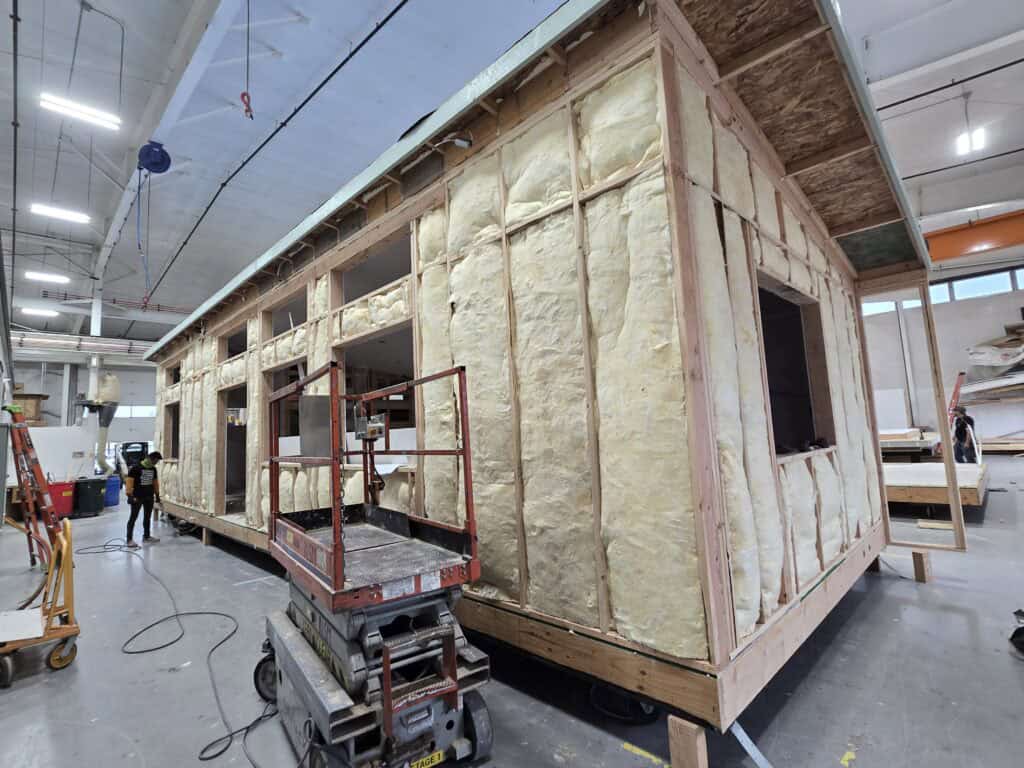
Wolf’s ADUs are modular homes built primarily inside its production facility. The company’s process describes a series of factory construction and inspection stages covering framing, mechanical systems, electrical, plumbing, roofing, siding, drywall, cabinetry, countertops, and finishing work.
That means much of the home can be completed without months of full-scale home construction taking place in the backyard.
For many homeowners, that is a significant advantage. There will still be property work, foundation preparation, delivery, and installation. But much of the actual home construction takes place away from the property in a controlled environment.
What Happens When Weather Gets Bad?
Anyone who lives in Oregon or Washington knows that weather can change quickly. That can matter when nearly every stage of construction is happening outdoors. Traditional site-built projects can be affected by rain, mud, moisture, wind, and changing seasonal conditions. Factory-built modular construction moves much of the home-building process indoors.
Wolf’s indoor production process is one of the advantages of our modular approach, allowing construction to continue in a controlled environment rather than relying entirely on outdoor jobsite conditions.
That does not mean weather never affects an ADU project. Site work and delivery still happen outdoors. But it does mean that the home’s framing, interior work, and many other construction stages are not completely dependent on having perfect backyard weather.
Who Is Responsible for Keeping Everything on Schedule?
ADUs can involve several moving timelines.
- Permits need to be approved.
- The foundation needs to be ready.
- Utilities have to be coordinated.
- The home has to be completed.
- Delivery has to be scheduled.
- Inspections need to happen.
If those pieces are managed separately, a delay in one area can affect everything behind it. That is why homeowners should ask every prospective builder:
Who is responsible for coordinating the entire schedule?
Do not assume the answer. A contractor may be responsible only for the portion of the work described in their agreement.
Wolf’s process is built around coordinating permitting, production, site preparation, delivery, and setup as parts of the same project. That is one of the practical differences between hiring someone to construct an ADU and hiring a company whose entire system is designed around delivering completed ADU projects.
What Happens on Delivery Day?

If you are building a site-built ADU, there may not be a dramatic delivery day. The home gradually takes shape on the property over time.
Modular construction is different.
The finished home needs to travel from the production facility to the property and then be installed on its foundation. That creates another area where specialized experience matters.
The route to the placement location needs to be considered. Trees may matter. Fences may matter. Overhead utilities may matter. Street conditions and driveway access may matter. Even the location of neighboring structures can affect the plan.
Wolf’s delivery and setup process includes transporting the home, installing it on the prepared foundation, connecting and testing utilities, completing final cleaning, providing documentation, and ultimately turning over the keys.
A builder who works with modular ADUs regularly should be thinking about delivery feasibility well before the home leaves the factory.
Wondering whether an ADU can actually reach your backyard?
Wolf’s Free Property Evaluation is a good place to start.
Our team can take an early look at the property, including important considerations such as access, utilities, setbacks, and general feasibility.
Does a General Contractor Ever Make Sense for an ADU?
Absolutely. The goal should not be to automatically rule out every general contractor. There are general contractors with substantial ADU experience who may be excellent fits for certain projects.
For example, a homeowner wanting a highly customized site-built structure may find a contractor who specializes in exactly that type of work. What matters is understanding the contractor’s experience and scope.
Ask:
- How many ADUs have you completed?
- Will you evaluate the property?
- Who handles permits?
- Who handles engineering?
- Who coordinates utilities?
- Who performs the site work?
- Who manages inspections?
- Who keeps the project moving if there is a problem?
- What work is not included in your proposal?
Those answers will tell you much more than the words printed on the contractor’s business card.
When Does a Specialized ADU Builder Make More Sense?
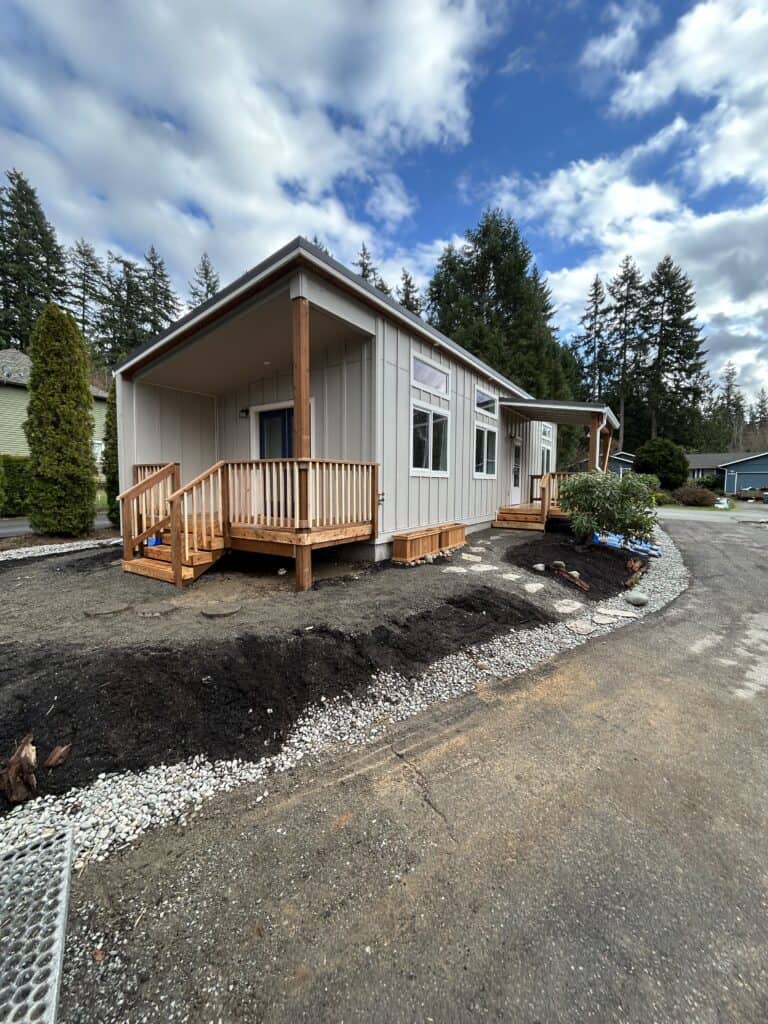
A specialized ADU builder can be particularly attractive when you want one company to guide the project from the early feasibility stage through completion. That can reduce the amount of coordination the homeowner needs to perform personally.
Wolf’s process begins with evaluating the property and continues through proposal development, permitting, production, site work, delivery, utility connections, inspection, and final handoff.
For homeowners who would rather not become the project manager of their own backyard construction project, that can be a major advantage.
ADU Builder vs. General Contractor: Questions to Compare
Before selecting either type of company, put the proposals side by side and ask the same questions.
Property Evaluation
Does the company evaluate whether the project appears feasible before you make major commitments?
ADU Experience
How many accessory dwelling units have they actually completed?
Permitting
Will they manage the permit process or will you?
Site Work
Are excavation, foundation work, utilities, and other site requirements included?
Construction
Where will the home be built and how will the construction process affect your property?
Project Coordination
Who keeps all the different pieces moving together?
Delivery and Installation
If the ADU is modular, who handles transportation and setup?
Inspections
Who stays involved through the final inspection process?
Communication
Will you have one primary company responsible for the overall project?
Total Scope
Does the proposal represent most of the finished project, or will you need to hire several additional companies?
The answers can make two similar-looking quotes feel very different.
Do Not Compare ADU Builders on Price Alone
Price matters. But scope matters just as much. One proposal may appear less expensive because it covers only the structure. Another may include permitting assistance, site work, delivery, utility coordination, and other major portions of the finished project.
That is why simply looking at the number at the bottom of the page can be misleading. Ask every builder to walk you through exactly where their responsibility starts and exactly where it ends. Then ask yourself what happens to everything in between. If the missing work becomes your responsibility, it deserves to be part of your decision.
The Right ADU Builder Should Make a Complicated Project Easier
Adding an ADU involves a lot of moving pieces. The homeowner should not have to become an expert in every one of them. The real value of an experienced ADU builder is not simply that they know how to construct a home. It is that they understand how all of the pieces fit together.
Wolf Industries has built its process around that idea.
From the initial property evaluation and permitting process through modular production, site preparation, delivery, setup, utility connections, and final handoff, Wolf coordinates the project as a complete path toward a finished ADU.
And the best way to find out whether that process could work on your property is not to start with a contract.
Start with the property.
Find Out What Is Possible With a Free Property Evaluation
If you are considering an ADU in Oregon or Washington, Wolf Industries offers a Free Property Evaluation to help you take the first step.
Instead of trying to determine zoning, setbacks, access, utilities, and feasibility on your own, you can provide Wolf with your property information and begin getting a clearer picture of what may be possible.
Start with a Free Property Evaluation and find out what your property could support.
Give Everyday Storage a Home
Storage decisions become much clearer when you name the objects. Where will the vacuum live? What about towels, a laundry basket, pantry items, seasonal clothing, and hobby supplies?
- List what needs to stay inside the ADU.
- Separate items used every day from things used occasionally.
- Check which closets and cabinets are included in the plan.
- Ask about options before assuming extra storage can be added.
A smaller home can work well when its storage matches its resident. Relying on an undefined corner of the main house for everything else can make independent living less convenient than expected.