
Florence is a river town at the edge of the dunes: Old Town on the Siuslaw, Heceta to the north, and the Dunes National Recreation Area to the south. People come here for space and a slower pace than Newport. Building here means dealing with wind, sand, a high water table near the river, and a delivery that has already crossed the Coast Range. Wolf builds modular homes in its own factory. They’re Oregon BCD prefabricated structures, not HUD code (the federal standard for manufactured homes) manufactured dwellings. If someone described a “mobile ADU” to you, that falls under a different code.
City of Florence or Lane County
The first permitting question is who reviews the parcel. Inside city limits, City of Florence (ci.florence.or.us) handles planning and building. Outside, Lane County (lanecounty.org) land use may control. A Glenada address or a lot near Dunes City doesn’t file at Florence City Hall. Dunes City is its own municipality, and unincorporated dune-adjacent land is county.
Once you know the reviewer, confirm how the dwelling is classified: accessory dwelling unit, secondary dwelling, guest cottage, hardship dwelling, or primary residence. Each category has different size, setback, and utility standards, and attached vs detached changes the drawing. Working with someone who has filed modular ADUs here can save a revision cycle.
City lots and rural Lane County lots shouldn’t be priced from the same assumptions. The model might be the same, but the permit path, fees, and site work usually aren’t.
Statewide, cities over 2,500 inside a UGB must allow at least one ADU on lots zoned for detached single-family (ORS 197A.425). HB 2001 bars owner-occupancy and extra parking mandates for long-term units in covered cities. Florence still sets siting, SDCs, and design standards. See the Oregon ADU rules guide. We quote Florence city setbacks and size limits from the city packet for your zone once we have it.
Rural Lane County ADUs
If the parcel is rural residential in unincorporated Lane County, the county’s public ADU page points to Ordinance 23-05 (August 29, 2023) and Oregon’s SB 391 framework. The county publishes this early screen:
- The county has adopted an ordinance allowing rural residential ADUs.
- The lot or parcel must be at least two acres.
- One single-family dwelling must already be sited.
- Fire protection, sanitation, and wastewater must be addressed.
- The ADU is limited to 900 square feet of usable floor space.
- The ADU must be within 100 feet of the existing single-family dwelling.
- Vacation occupancy and land-division separation are prohibited under the county’s summary.
That’s an early screen, not the whole code. A property can pass those basics and still fail on access, wildfire mitigation, septic, slopes, or a truck that can’t reach the pad. The official starting point is Lane County Accessory Dwelling Units, and our Lane County ADU guide walks through the same list.
The vacation occupancy prohibition is the rule that surprises coast buyers most. A short-term rental cottage on a two-acre lot outside the city doesn’t qualify under the rural ADU path. If vacation rental is the plan, the property needs to be in a jurisdiction that allows lodging. Inside the city, short-term rentals fall under city rules, not SB 391.
Timbered rural lots also bring wildfire mitigation requirements that Florence city lots usually don’t, along with long driveways that have to work for fire apparatus. Modular delivery needs similar clearances, so if a fire truck can’t use the driveway, our truck probably can’t either.
How a Florence permit moves
- Identify jurisdiction: City of Florence, Lane County, or another city.
- Pull zoning maps and the current ADU or secondary-dwelling standards.
- Classify the structure. If the city will call it a primary or a hardship unit, file it that way.
- Confirm size, height, and setbacks for that classification.
- Site plan: property lines, existing house, proposed pad, utilities, and delivery route.
- Building permit with the city or county. The module carries the state insignia; the local permit covers foundation, placement, and utilities.
- Inspections, then occupancy when they pass.
Trade permits (mechanical, electrical, plumbing) may be separate. When the lot isn’t on city sewer, septic review often sets the schedule. Oregon DEQ’s ADU septic fact sheet is the state’s reminder that onsite systems have size and capacity limits, and septic review decides whether your tank can take a second dwelling.
Dunes, river, and wind: checking the lot
Florence lots need a different site review than a Willamette Valley lot.
- Sand and wind. Dune-adjacent lots shift. Foundations and drainage have to account for that. A slab that works in Springfield may be the wrong foundation in loose sand or a high water table.
- Siuslaw floodplain. River-adjacent and slough lots need a flood-map check, and a lot that’s close to downtown can still be in a flood overlay. We don’t publish a base flood elevation here; it comes from the current map for your parcel. If the pad is in a mapped flood area, note it on the evaluation. If you’re buying land with an ADU in mind, check the overlays before you make an offer.
- Tsunami overlays. Oceanward parcels and some river-mouth areas are in inundation mapping. That doesn’t automatically rule out a dwelling, but it affects the foundation, utilities, and insurance.
- Drainage. Winter water sits on the site. Stormwater and erosion control have a real effect on cost.
- Salt. Marine air is hard on fasteners and flashing. The factory keeps the house dry while it’s assembled, but the exterior still has to be detailed for the coast.
- Access. Old Town streets are tight, and dune roads can be soft. A Model K on a single-wide is a different crane day than a larger L.
The town has three distinct kinds of lots. Old Town and the Siuslaw waterfront have tight streets, tourist parking, and the bridge. A module coming in on 126 still has to make the last turns, and overhead lines, parked cars, and a lot that’s already mostly covered are the usual problems. South and west toward the Dunes NRA, lots get bigger and the ground gets softer, with sand management, wind, and access roads built for ORVs and cabins rather than a 60-foot truck. Some of that land is city, some is county, and some is Dunes City, and each files with its own office. North toward Heceta and the lighthouse, you get headland and timber that feel more like Yachats. That area is still Lane County or Florence depending on the line, and it doesn’t become Lincoln County until you’re well north of town.
Models that fit
These are modular homes with a state insignia and a local installation permit. Lane County and the city see a lot of HUD and park-model proposals because the dunes have a history of that kind of housing. A manufactured dwelling is a different permit type, and a manufactured-home park placement isn’t an ADU on a single-family lot.
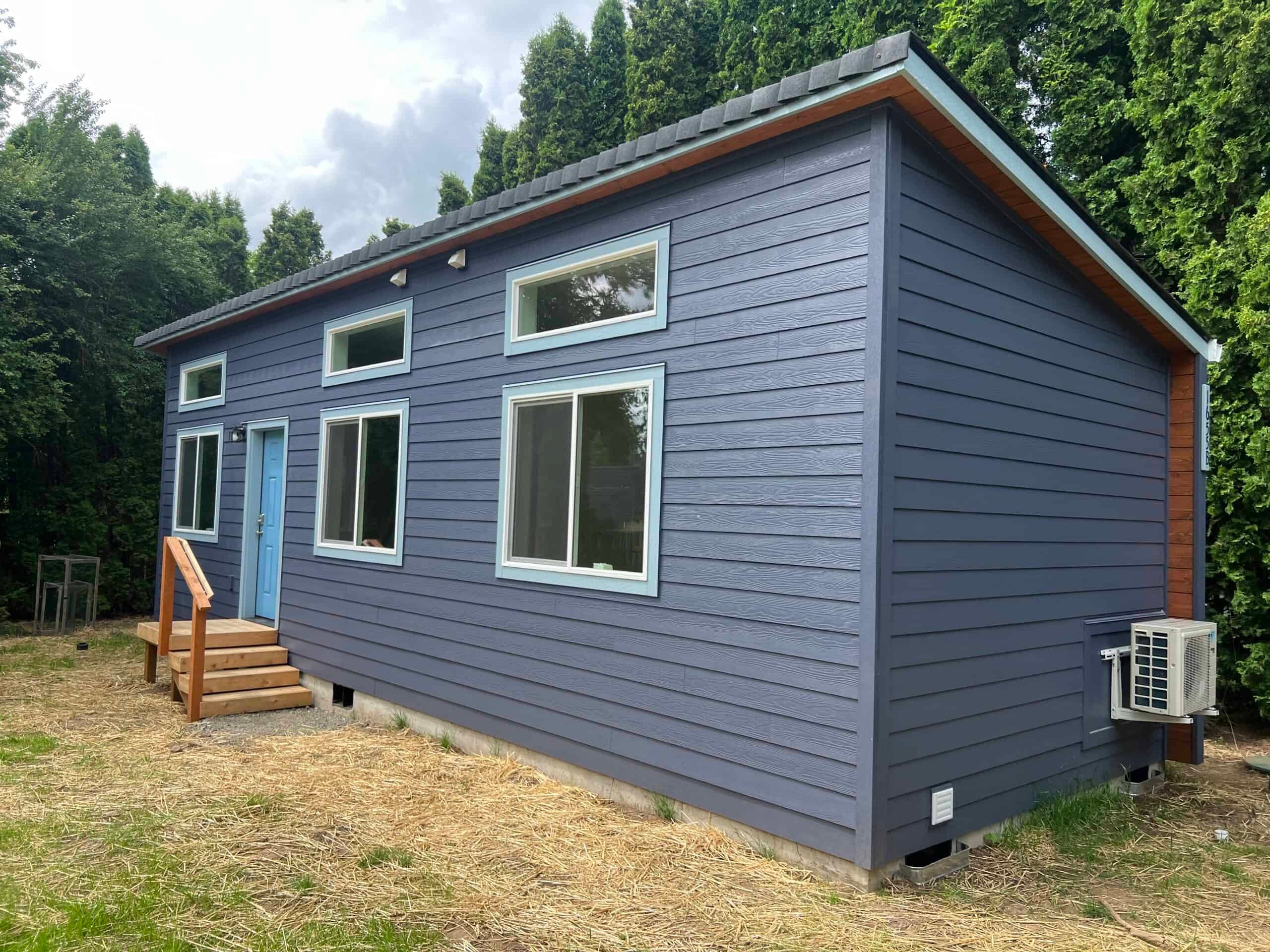
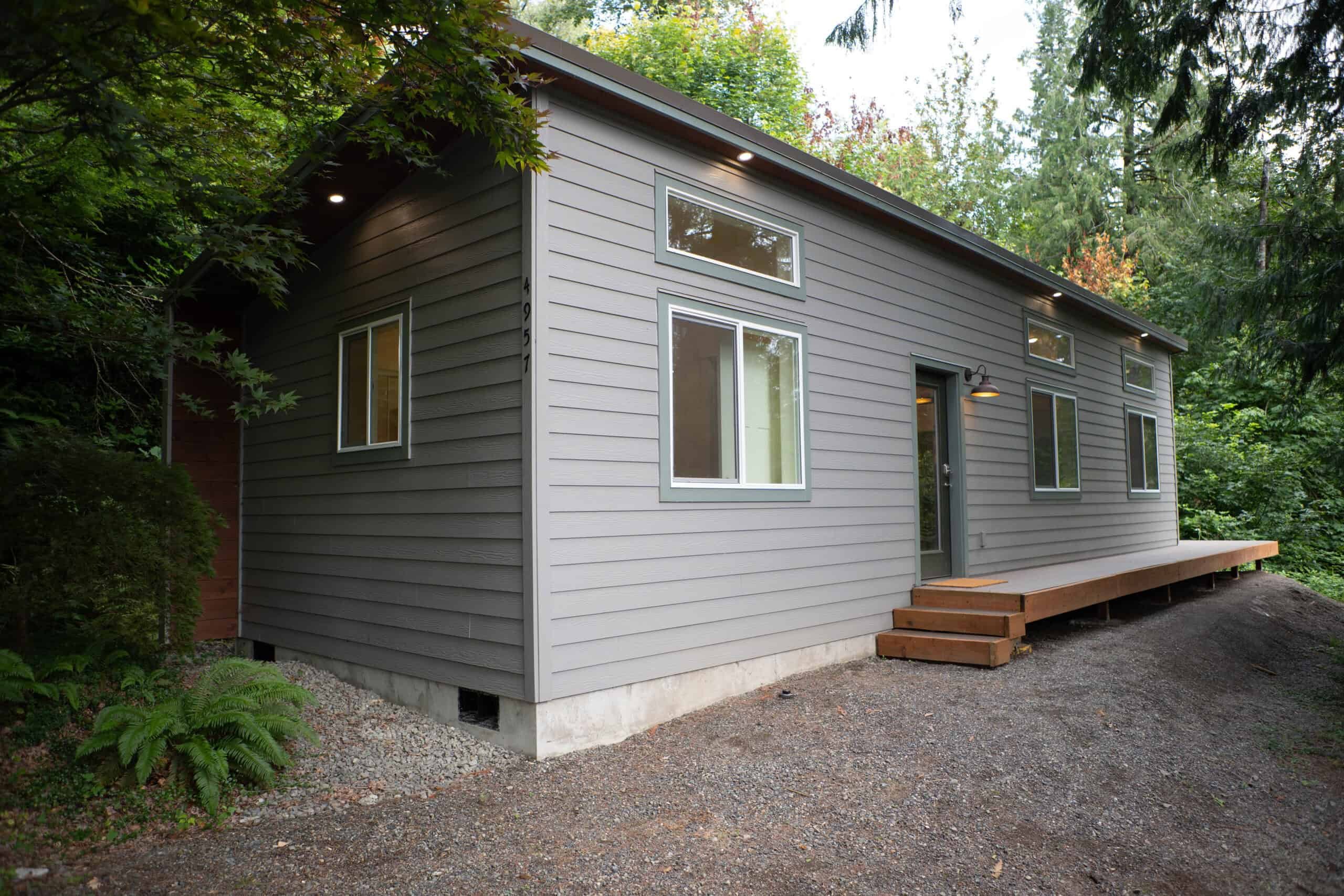
- Model K (~432 sq ft): a compact one-bedroom for a guest, a parent, or a long-term rental. For an Old Town lot, we need to check the buildable area and delivery access before recommending it.
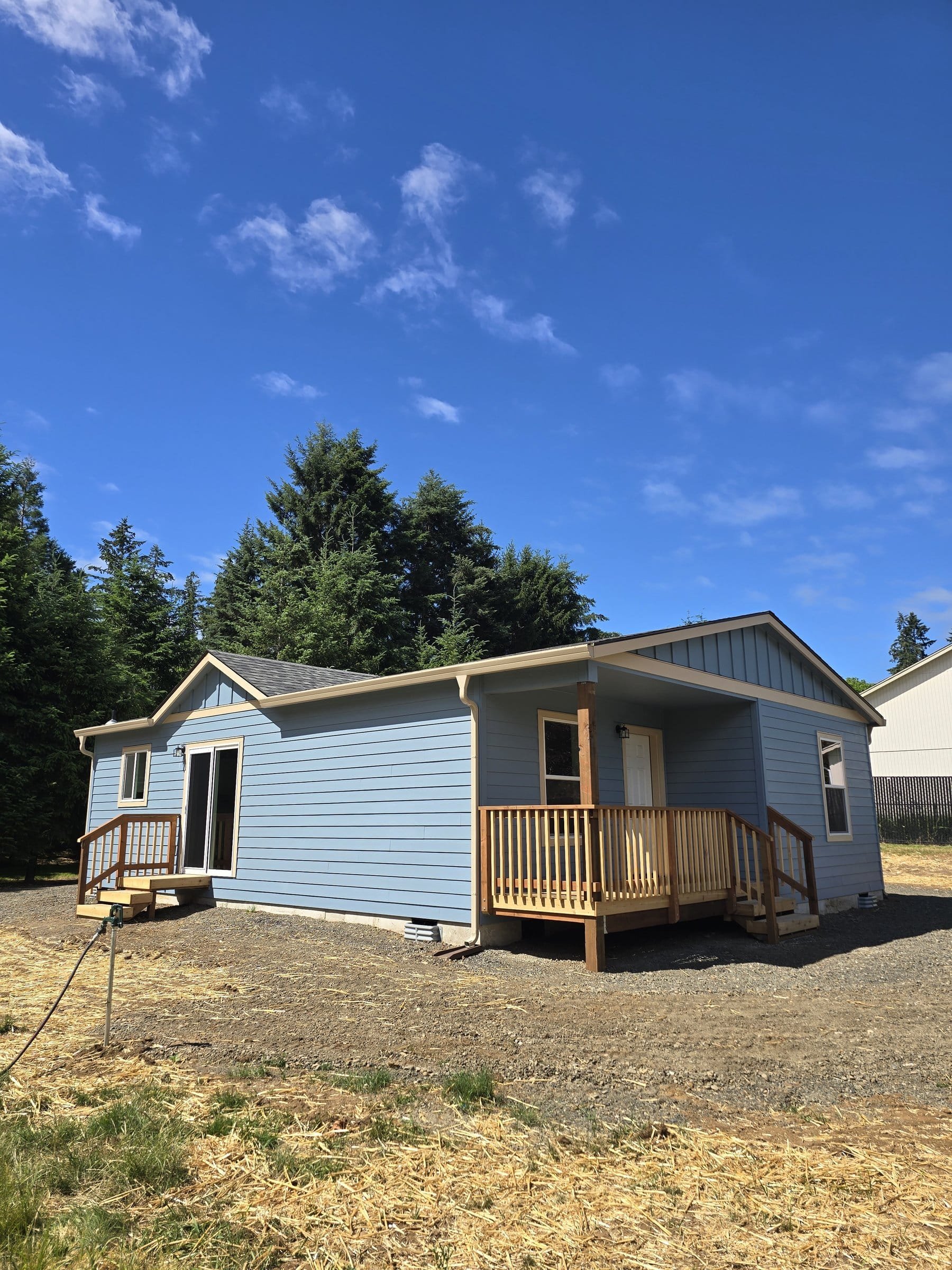
- Model E (~616 sq ft): two bedrooms when lot coverage and the size rule allow it.
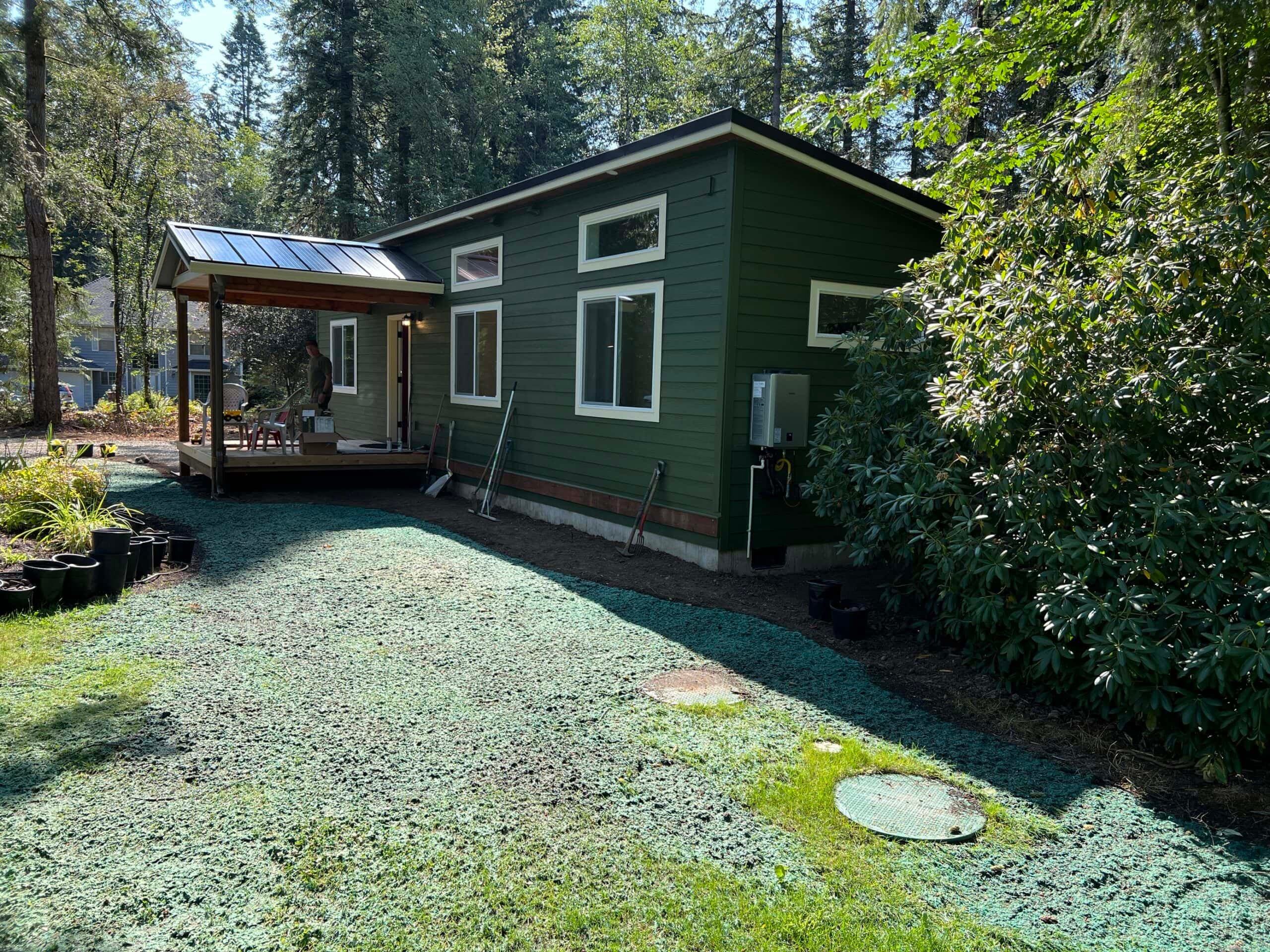
- Model L when the lot can take a larger cottage. On the rural 900 sq ft screen, check usable floor space against the county’s definition before you commit to a plan whose published size is larger.
Delivery: OR-126 or US-101
From our factory in Battle Ground, just north of Portland, this is a long day. The typical route is I-5 south to Eugene, then OR-126 west over the Coast Range to Florence. The other option is US-101 south from the north coast, which is longer but useful when we’re already staging coast jobs. Either way, it’s a full day of driving.
Coast Range weather, wind on the dunes, and summer traffic on 101 all affect set day, so we plan around a weather window. A dual-wide adds a marry day. Warranty visits mean a real drive from the factory, which is the main practical difference between a Florence job and a Portland one.
Uses
Florence owners add units for parents, adult children, a guest cottage behind a retirement house, long-term rentals for the coastal workforce, and vacation use where the city allows it. Investors drawn by coastal rental demand still have to get through classification, short-term rental rules, and septic review. Outside town, the rural vacation-occupancy prohibition rules out that use on county ADU lots.
See our case studies for completed Wolf projects, including a documented vacation home in Yachats. We evaluate each Florence property under its own local rules and site conditions.
What affects the cost
We provide a property-specific estimate rather than reusing a sample from another jurisdiction. Sandy soil, drainage, utility laterals, and the longer delivery distance can all increase the total. Factory construction makes the home price more predictable than building on site through a Siuslaw winter, but city and Lane County fees still apply. See financing.
If Florence assesses SDCs on your use, we look at them at the start. Statewide, ADU SDCs range from waived to expensive, so we get the number for this city. Owners who also have a house in Eugene sometimes carry over Eugene and Springfield assumptions, but Eugene’s SDC history, tree rules, and wet-clay winters don’t apply to a dune lot with coastal wind. Our Lane County guide covers the county split, and Florence’s fee schedule for your dwelling type is what goes in the proposal.
Nearby towns
Reedsport is in Douglas County and has a different building department. Yachats is in Lincoln County. Coos Bay is farther south and a different delivery. Eugene is inland, with its own ADU rules and a valley climate. If your lot is in Dunes City or unincorporated Lane County, tell us that up front.
After the set
Weather-sealing, trade tie-ins, inspections, and occupancy. Florence is far enough from the factory that the punch list is a planned coast trip. Keep the site accessible, because dune sand can cave a trench and push the schedule. Warranty comes from the same company that built and set the home, just with a longer drive.
What we check
Jurisdiction, zone, city rules vs the rural SB 391 screen, septic vs sewer, flood, tsunami, and dune overlays on the taxlot, the truck path off 126 or 101, sand and drainage, electrical, and use, especially whether vacation occupancy is legal on that parcel.
Send the address. We’ll tell you whether Florence or Lane County will treat the project as an ADU, whether a Wolf model fits the size rule, and whether the site has a pad we can set on.