

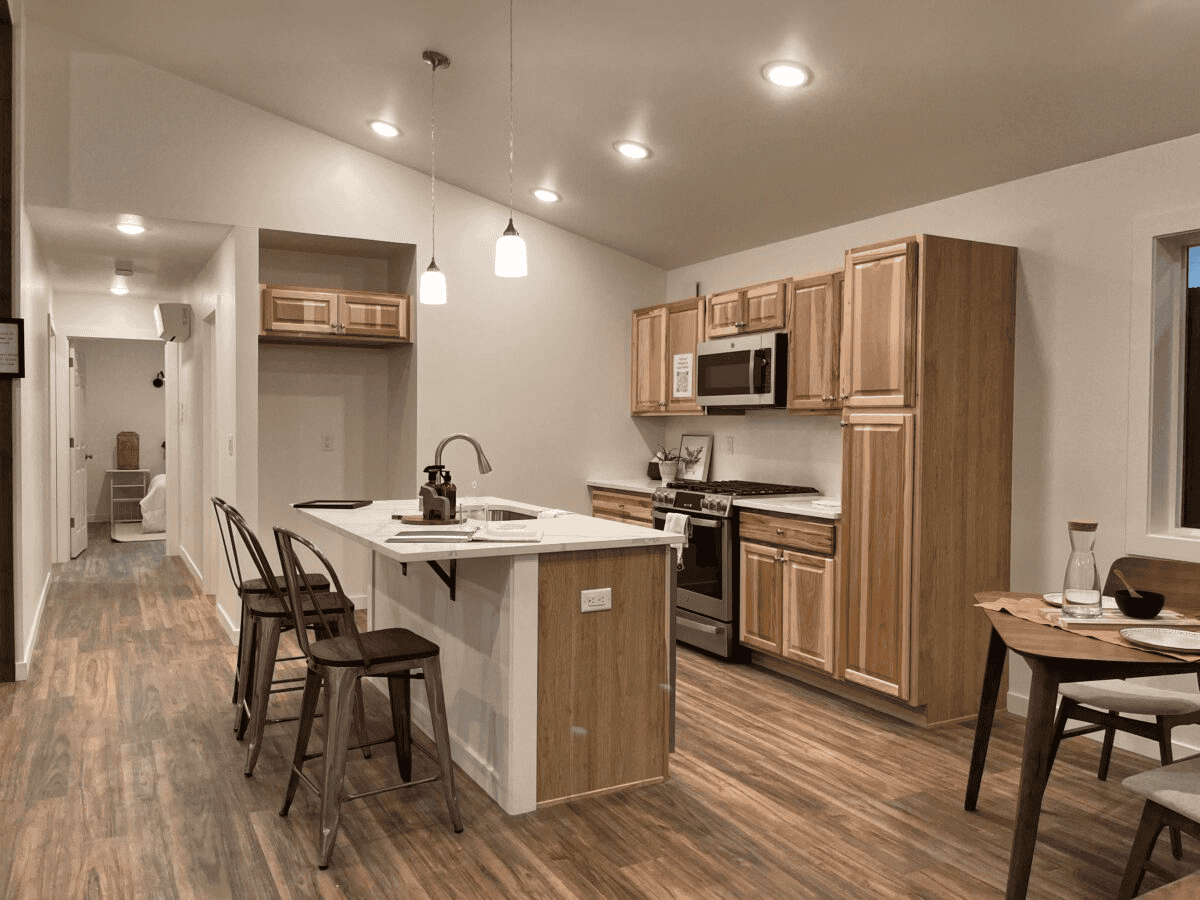
Camas sits against the Columbia with a mill-town grid downtown and newer hillside plats climbing toward Washougal. The Mount Hood views are real, and so is the slope. We’ve already set detached ADUs here, and the work comes down to matching a model to a lot that may be tight, steep, or both. A floor plan only works if it can actually be delivered up a Camas driveway.
Wolf’s factory is in Battle Ground, so the Field Team’s initial site visit and punch-list work after the set are both a short drive. The reviewer is the part that changes from lot to lot. The City of Camas and Clark County are separate jurisdictions, and a Camas mailing address can still sit on unincorporated land.
City of Camas or Clark County first
Pull the parcel on Clark County GIS, which shows city limits, zone, and taxlot. If the lot is inside Camas, the city’s Community Development and building staff handle it. If it isn’t, you file with the county even when the mail says Camas. On the east edge, a Camas address can also sit inside Washougal city limits. Sorting this out is the first step, and it tells us which planning office to talk to.
Washington law allows two ADUs on qualifying properties in urban growth areas. The available space, utility capacity, and any protected areas still affect what you can build. Read the Washington ADU laws guide for the statute, including the Clark / Vancouver section. Camas still sets the local requirements. Lot coverage, parking, and impact fees vary by zone and by lot, so we confirm them against the current handout when we file.
Setbacks also depend on the underlying zone, so there’s no single citywide number. On a hillside, slope and retaining can shrink the buildable area even when the zone looks generous on paper.
How Camas handles an ADU permit
City staff see plenty of infill ADUs. A complete packet moves, and a packet missing tree, stormwater, or access information comes back with comments. Here’s the path we use:
- Confirm the dwelling is allowed in this zone, using GIS plus the current Camas ADU materials.
- Draw the plot plan: existing house, proposed cottage, setbacks for that zone, utilities, and a truck and crane path that works on a hillside.
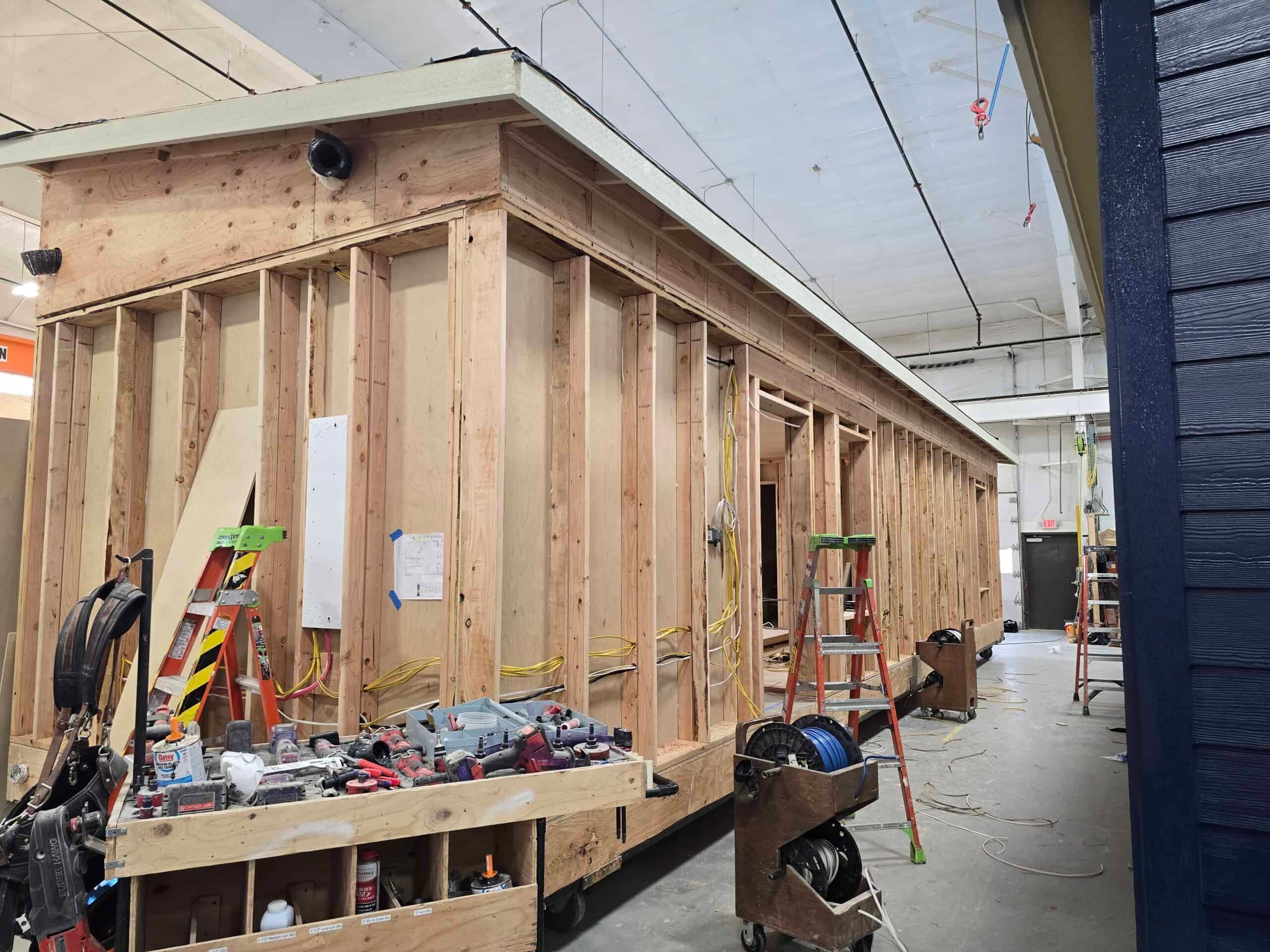
- Prepare the engineered modular plan set. These are modular homes built under the Washington State Building Code and inspected by L&I in the factory. They aren’t HUD (the federal standard for manufactured homes) manufactured homes, and Camas still reviews the foundation, placement, and utilities.
- Submit to the City of Camas (or Clark County if unincorporated) with utility connection plans. Site prep, including grading, the foundation, and sometimes retaining, is part of the job from the start.
- Complete inspections as called, then get occupancy. Keep approved drawings on site until the inspector signs off.
County lots may also need WAVE, septic, critical areas, road approach, or habitat review. Sewered city lots still need laterals checked and panel capacity confirmed.
Camas neighborhoods and what they mean for a lot
Downtown Camas still has its mill-town layout: short blocks, older houses, mature trees, and alleys that look useful until you measure the turning radius. Main street wasn’t laid out with a crane in mind. Around Lacamas Lake, trees and drainage come into play, and a wooded lot isn’t automatically an ADU site until we measure the pad and the truck path. Prune Hill and the upland plats that filled in toward Washougal feel like a different city: wider lots, views, thicker HOA (homeowners association) packets, and driveways drawn for a passenger car.
These are the constraints that come up on evaluations:
- Slope and retaining. A backyard rectangle that looks perfect on a plat map can shrink once you cut a level pad.
- Delivery and crane. Narrow streets, parked cars, overhead lines, and a maple in the only swing path. A 12-foot-wide Model K needs a very different plan than a two-piece home.
- Trees. Camas takes canopy seriously on some sites, and root protection can move the cost.
- Stormwater. Every hillside lot needs on-site infiltration or a legal connection, and it’s part of the design from the start.
- Panel and laterals. A house with 100-amp service needs a utility plan for the new dwelling before anyone picks light fixtures.
Case studies
We’ve built multiple ADUs in Camas. Two completed projects:
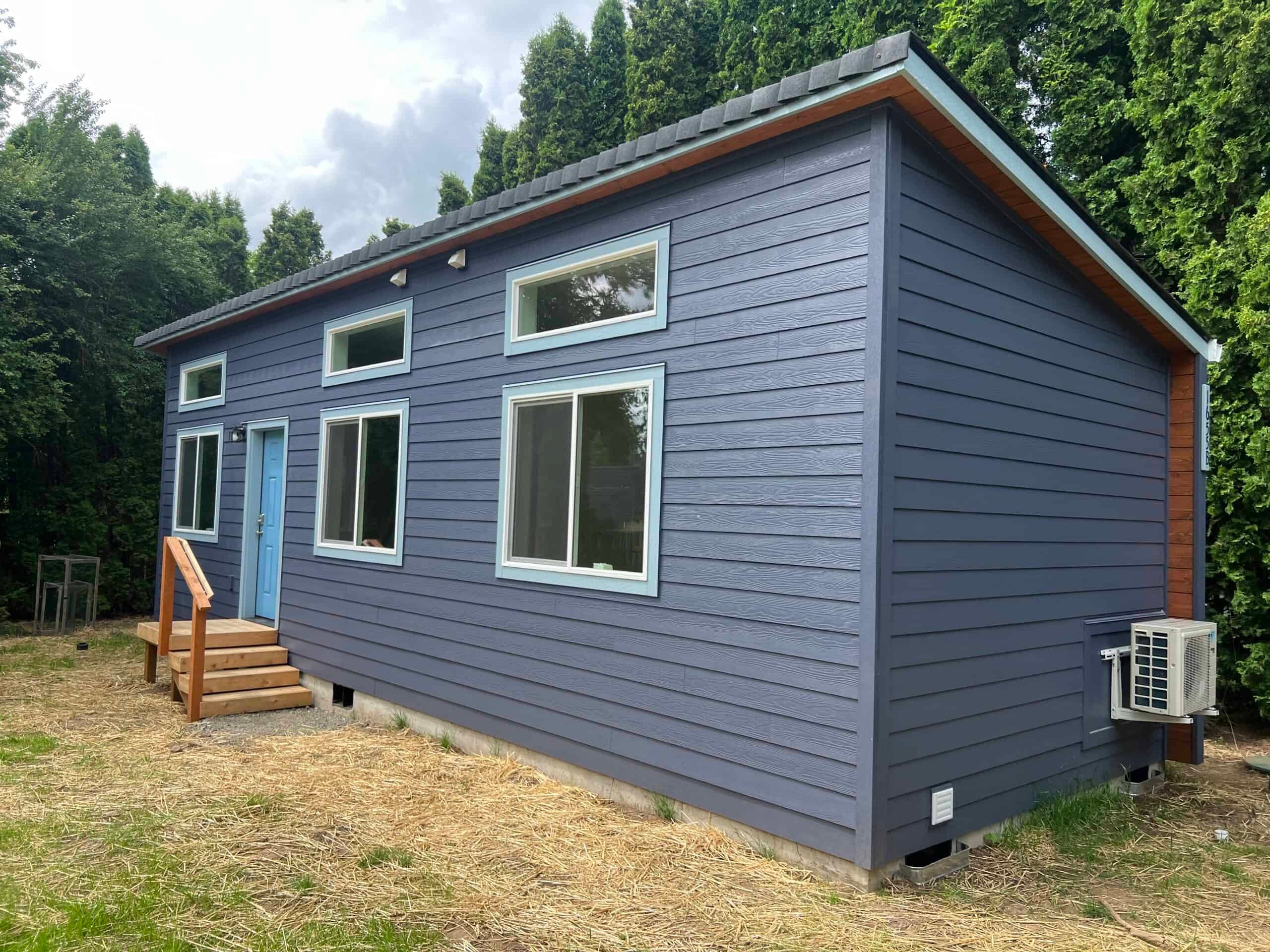
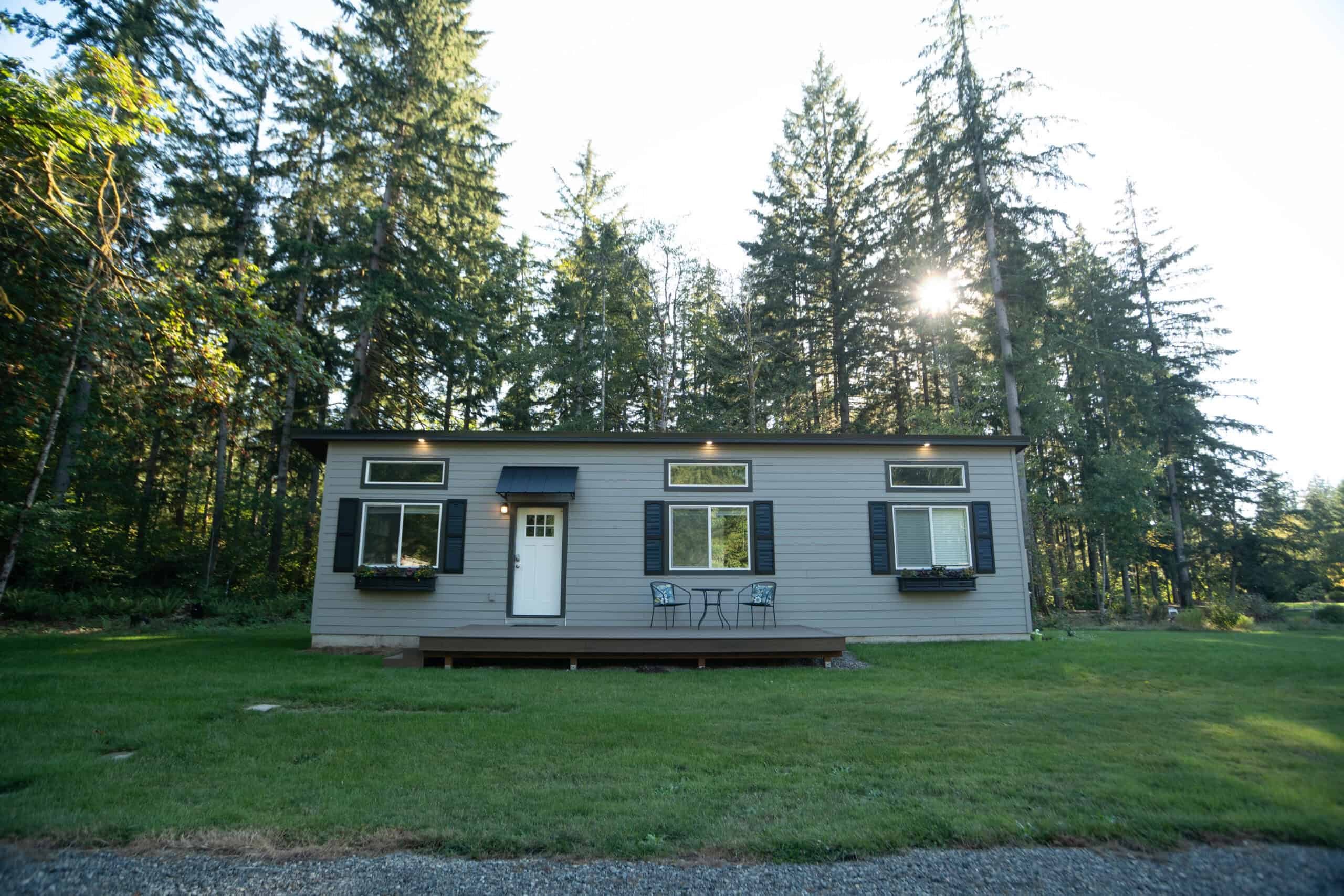
- A detached ADU in Camas: one bedroom, about 400 square feet on a 10 × 40 footprint with a gable roof, used as an additional dwelling. It’s compact by design and works as a full home.
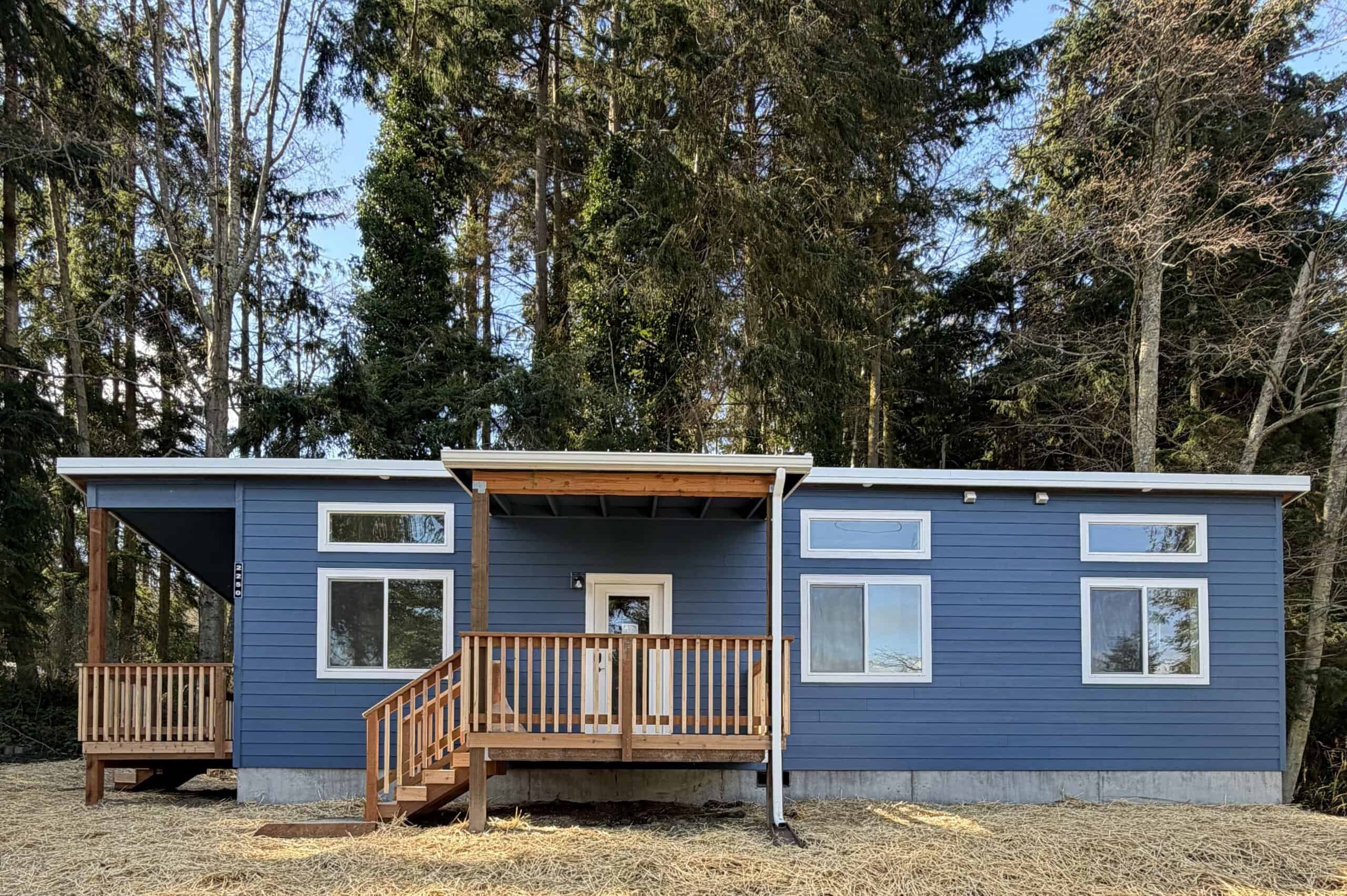
- A Portland-metro / Camas backyard ADU: a compact one-bedroom built to keep family close, with accessibility-minded details.
Browse case studies for more Clark County projects.
Models that fit Camas lots
- Model K (~432 sq ft). A one-bedroom guest cottage or rental on a typical residential lot. On a slope, it’s often the model that fits when a wider home can’t get to the pad.
- Model E / Model F (~616 sq ft). Two bedrooms when the zone and the hillside allow.
- Wolf has set compact homes in Camas, and the full lineup has other sizes. We still check your house and your coverage before locking a plan.
Choosing a model gives us the starting home price. We price trenching, retaining, and the foundation after reviewing the property.
Uses, rentals, and what counts as an ADU
“Tiny home,” “granny flat,” and “mother-in-law unit” sound like different products. If it has a kitchen and a bath, Camas treats it as a dwelling. Family occupancy, long-term rental, and short-term lodging are separate use questions. Inside the UGA, state law removed owner-occupancy mandates, but local short-term rental rules can still apply, so check before you plan on Airbnb income. Tell us during the evaluation whether the home will be a rental, a parent’s home, or a guest cottage, because the use can affect parking and sometimes the model.
Camas is close enough to Portland that extra housing is valuable, but it’s still Washington. Portland’s DevHub process, its 800-square-foot limit, and Oregon’s SDC waivers don’t apply here. Washougal shares SR-14 and much of the same hillside with Camas, but it has its own city hall, and a Washougal pad isn’t reviewed like a Camas mill-town lot. Vancouver’s east-side plats are close on SR-14 and still belong to Vancouver. Our factory is in Battle Ground, but your permit still goes to Camas or Clark County.
Site work, delivery, and set
On Camas jobs, the field team handles foundation excavation, utility trenching, grading the disturbed area, and minor tree and brush work so the home can sit, plus tree removal when the city agrees it’s necessary. On a hillside, that prep decides whether the truck gets to the pad. Budget for it as part of the project.
Delivery from Battle Ground is local, usually over I-205 and SR-14. The hillside last mile is the part people underestimate. A standard delivery trailer and, when the swing requires it, a crane get the home onto the foundation. We weather-seal the same day when we can, then handle the mechanical and plumbing tie-ins. Two-piece plans add a day to join the halves. That’s why we look at access in the first week.
Climate, soils, and the river
Southwest Washington is wet from fall through spring, and the house is built indoors. On a Camas hillside, saturated soils and a cut pad change the excavation and erosion control plan. Low spots near the Columbia and the lake need a flood-map check, and we confirm any base flood elevation from the maps. Summer is the easy set window, and winter sets need tighter site control.
Cost, time, and financing
Site work, retaining, trench length, and electrical upgrades can make the total differ between two Camas properties with the same model. Factory construction makes the home price more predictable than a site-built project, but substantial retaining can still add cost. Financing is often a HELOC, a cash-out refinance, or a construction loan from a lender familiar with factory-built ADUs. See financing.
Review time depends on a complete file. Every Prune Hill backyard is different, so we give you a scoped proposal after a property evaluation.
After the set
Next come inspections, a walk-through, the punch list, keys, and warranty. Because Battle Ground is close, fixing a missing piece of trim is a routine trip for the same field crew that set the home. Camas inspectors, or Clark County inspectors on an unincorporated lot, still control occupancy, and the approved drawings stay on site until they sign off. Once they do, the home is ready for a parent, a tenant, or guests.
Questions we get on Camas lots
Will the city allow two ADUs? Inside the UGA, state law says qualifying lots must be allowed at least two. Camas implements that through the packet you file, and we confirm it against the current handout.
Do I have to live on the property? Owner-occupancy mandates inside UGAs are gone statewide. Confirm the current Camas handout when you file.
What about parking and impact fees? Both vary by lot. HB 1337 caps impact fees and limits parking requirements near major transit, but your street may not qualify. Parking depends on the lot and the current code.
Can I put this on a slope? Sometimes. It takes retaining, a level pad, and a truck path that works on the grade.
What a Camas evaluation looks at
Bring the address, your best guess at the pad location, and any survey or prior permit. We look at:
- City versus county, using GIS.
- Zone, coverage, slope, and trees.
- Water, sewer, and electrical.
- The truck path from SR-14 and city streets to the curb, then crane or rollers to the pad.
- Whether the home is for family, a rental, or a cottage you might live in yourself.
An address and a rough idea of where the cottage would sit on a slope is enough to start, and enough for us to tell you whether the pad works. Send the address, and we’ll match a model to the Camas lot you actually have.