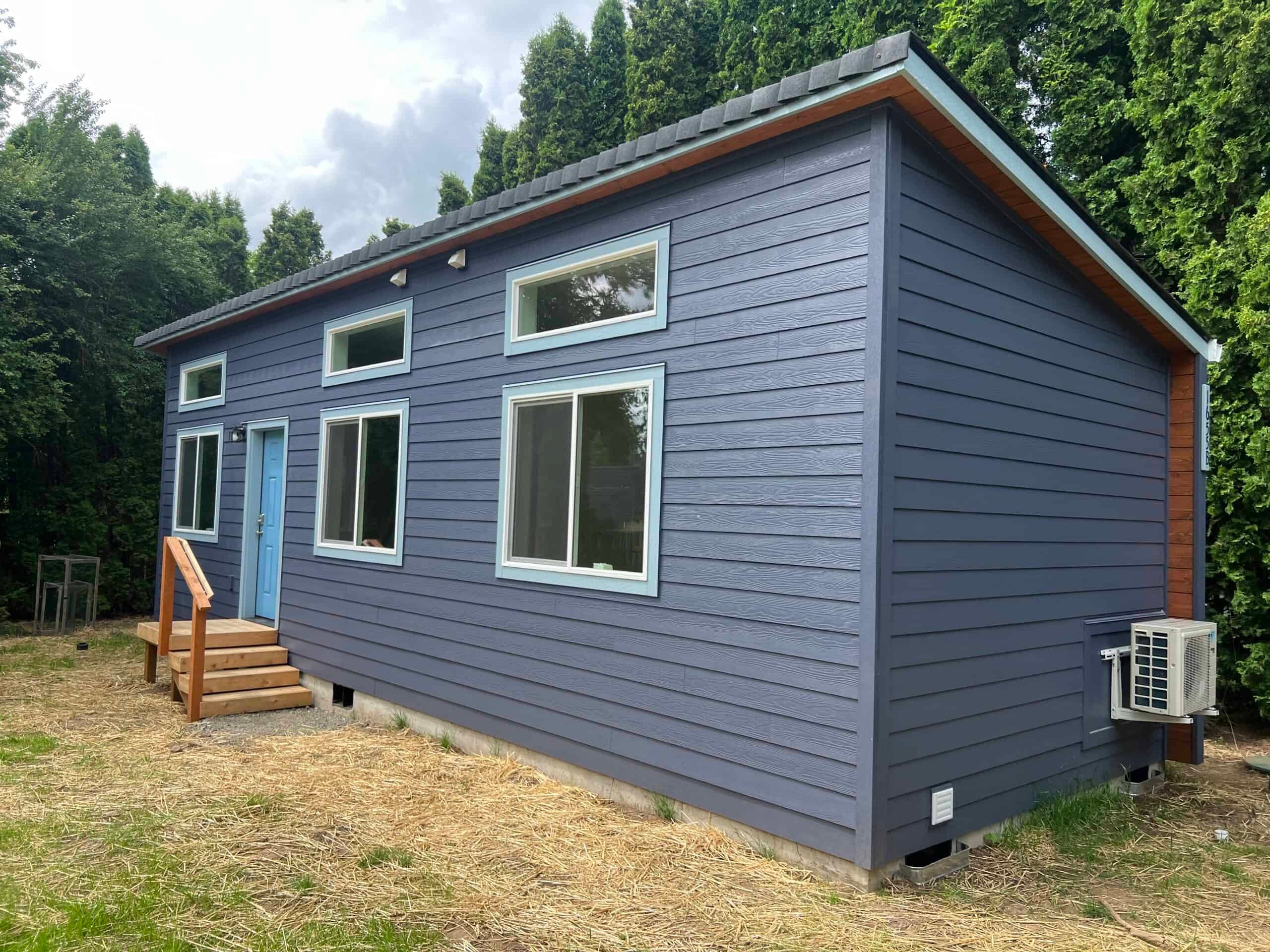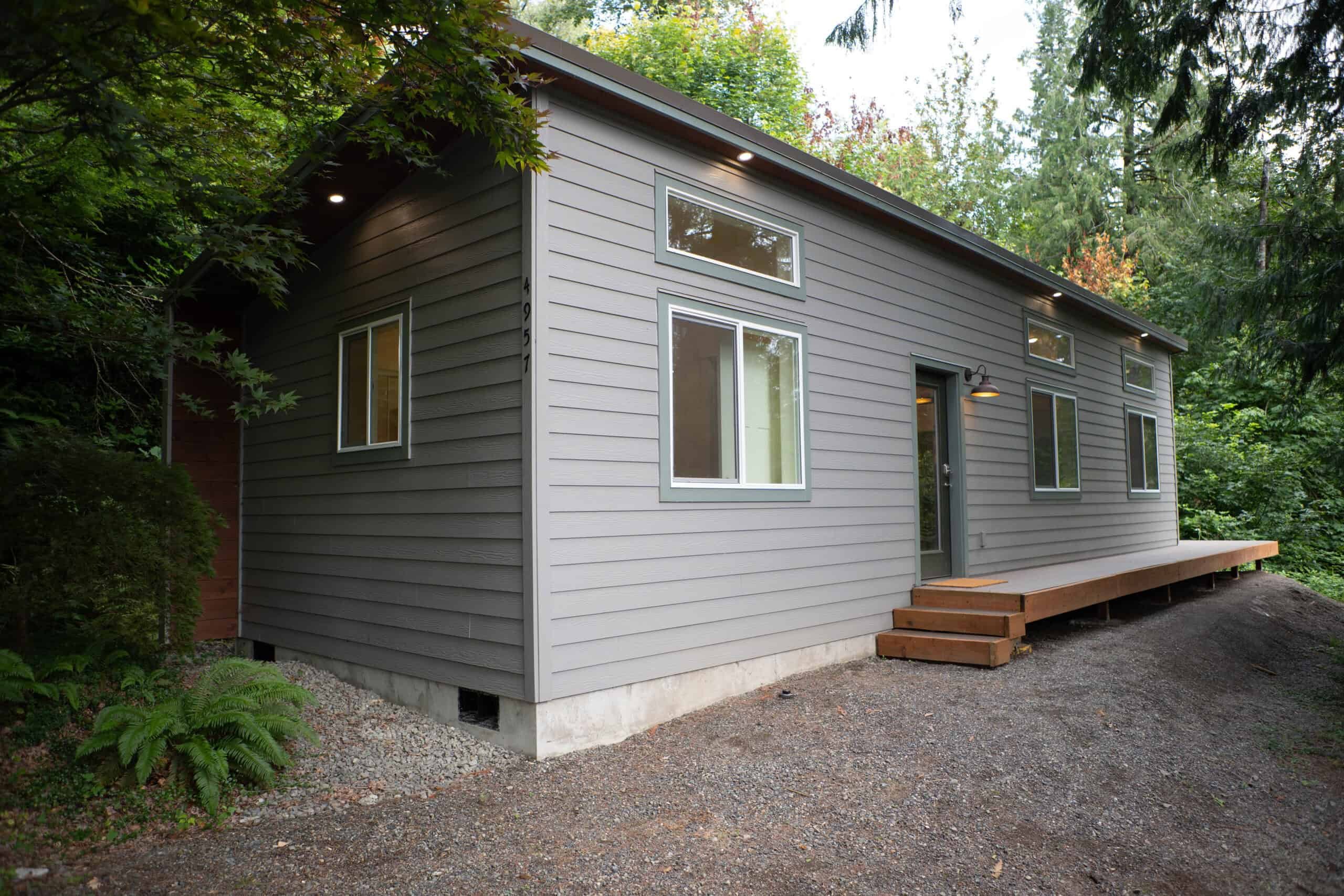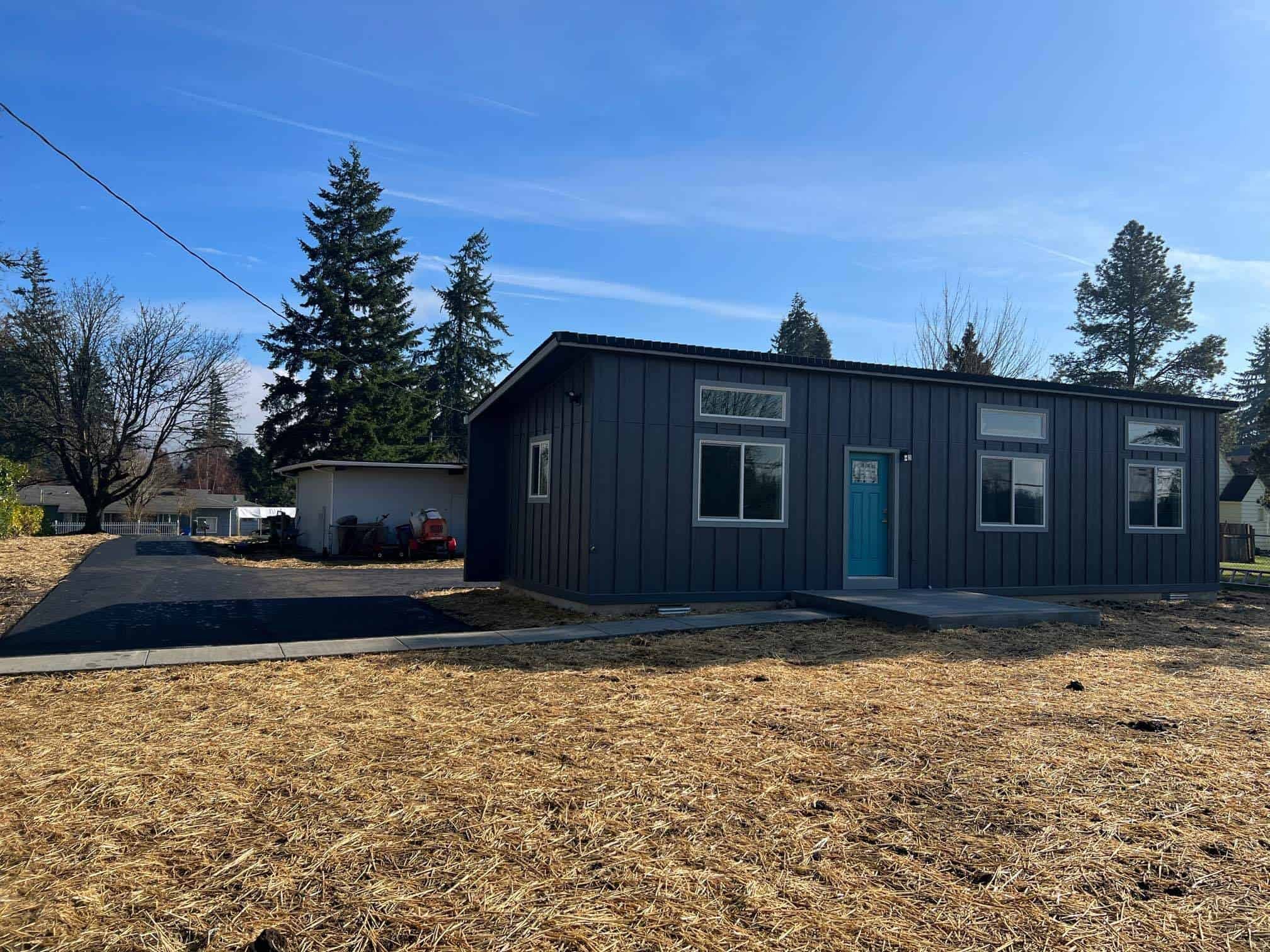

Vashon, and Maury Island, which is connected to it, sit in Puget Sound between West Seattle and Tacoma with no bridge. There’s no City of Vashon, so permits go through the King County Department of Local Services. Water may come from Water District 19. Sewer exists only in a small pocket of the town core. Fire review runs on an island schedule. And the house has to arrive by ferry.
The ferry is what makes Vashon different, and we’ve done it before. A Vashon Fire and Rescue housing project required ferry transport and delivery coordination that most mainland ADUs never need.
Wolf’s factory is in Battle Ground, near Vancouver, WA. The module travels I-5 to a WSF terminal as an oversize load, usually Fauntleroy–Vashon from West Seattle or Point Defiance–Tahlequah from Tacoma, then continues on island roads that weren’t built for house trailers. Commuter boats, school traffic, and a low-tide ramp are all part of the plan. If any piece of that doesn’t work, the floor plan doesn’t matter, and we’d rather redesign around a 12-foot-wide Model K than miss the sailing with a wider plan.
King County is the permit office
Unincorporated King County is the jurisdiction. Applications for a new detached ADU generally go through MyBuildingPermit.com: King County, Building, Single Family Residential, New Construction, Accessory Dwelling Unit. Other cities share that portal, so make sure you select King County rather than Seattle or Tacoma.
King County’s published residential ADU materials (confirm when you file, since the county has been amending them) describe:
- An ADU as a complete dwelling on the same lot as a primary house, whether attached, inside, or detached.
- A heated-floor-area cap commonly described as about 1,000 square feet, with separate rules for unheated area. Check the current handout against your model.
- A Notice on Title identifying the dwelling as accessory, recorded before the county approves the construction permit.
- Health review of the on-site sewage system (OSS) or a sewer certificate, the same as for any other dwelling.
- Zoning, setbacks, and lot coverage from the King County Code. Vashon doesn’t have its own special-district ADU chapter.
Vashon-Maury community groups have pushed for ADUs in the town core, because Water District 19 and the sewer area make those lots easier. New detached structures on forested, septic, or shoreline lots are harder, with drainage, land disturbance, fire access, critical areas, and sometimes sprinklers or solar-ready roofs depending on size and water supply. Island workshops have pointed out that attached conversions are usually cheaper to permit, while new detached structures draw more civil review comments. Wolf builds detached modular homes, so if a garage conversion or attached remodel is the better county path, we’ll tell you we’re not the right fit.
Seattle, Burien, Kent, and Tacoma have their own ADU chapters, and those don’t apply to a Vashon tax lot. The Washington ADU laws guide covers the statewide ADU rules inside UGAs, but most of Vashon’s rural and shoreline lots fall outside that.
The ferry sets the schedule
Washington State Ferries treats a modular home as an oversize/overweight move. In practice that means:
- A travel request and a modular-home measurement diagram, submitted on WSF’s timeline (commonly at least two business days, and often more once terminal staff and tides are factored in).
- Choosing the route. Fauntleroy is a tight urban dock on the West Seattle side, and Tahlequah is a quieter Tacoma-side landing with a longer drive up to the north end. The vessel, ramp, and tide all matter, and extreme low tides can limit what the ramp can take. We choose the dock based on where your lot is.
- Staging at the terminal without blocking a commuter boat.
- A pilot car or extra traffic control once you’re on Vashon Highway, Cemetery Road, or a one-lane driveway under the cedars.
- A backup sailing, because weather, mechanical problems, and full commuter boats happen.
We plan factory completion, the foundation cure, and the sailing as one schedule. A pad that’s almost ready means a missed boat and a crew waiting in a holding lot. On the mainland a project might slip a day, but ferry projects can slip a week.
On the island, overhead lines, trees, school-bus hours, and a climbing driveway make up the rest of the route. A narrow single-wide Model K is much easier to get onto the ferry and down the last mile than a two-piece home, which is why the K leads our list for Vashon. Our 10-foot-wide Model B is only offered in the City of Portland, so the K is the narrowest home we can bring to the island.
Set day on the island
The module leaves the factory on a truck that’s already an oversize load on I-5. At the terminal, WSF takes over: measurements, the requested sailing, the ramp angle, the tide, and a deck crew that has loaded houses before but still has a commuter schedule to keep. We pick the dock that suits the lot, even when the other one is a shorter drive for the truck.
Once the module is off the boat, the last few miles involve cedars, school buses, and a driveway that may need tree work before the house can get through. Crane pads here sit on glacial till or sand, and the two behave differently, so we check the soil where the crane will set up. We still weather-seal the same day. A two-piece home needs an extra day to join the halves and either a second sailing or an overnight layover, which adds cost. That’s why we bring up the ferry on the first call, long before anyone chooses countertops.
Island residents care about growth, and while that doesn’t change the building code, it does affect how neighbors react to a crane on a one-lane road. We plan the set with the neighbors in mind and give them notice.
Water, septic, fire, and shoreline
Most Vashon lots are on septic. King County Public Health has to confirm the system can handle another dwelling based on bedrooms, soil, and the reserve field. A town-core lot on sewer and District 19 water is a much simpler utility situation, so know which one you have.
For fire, island hydrants and long driveways affect sprinkler and access requirements. Local reporting on county workshops has noted that fire inspections run on a limited weekday schedule, with a pre-construction meeting after the permit is issued. Sprinklers aren’t required on every lot, so we check fire access and water supply on yours.
Much of the island is in or near shoreline jurisdiction, wetlands, or steep slopes, and detached ADUs in those areas need extra reports. A clearing that looks perfect on paper can shrink once the biologist walks it.
Island neighborhoods
The town core around Vashon Highway and Bank Road has sewer and District 19 water, so utilities there are close to what you’d find on the mainland. Burton, Dockton, and Maury add shoreline rules, narrower roads, and views that complicate crane placement. The Heights and the forested north end have long driveways, septic, and trees that often sit right in the only crane path. Quartermaster Harbor lots fall under shoreline jurisdiction, even if the owner thinks of the property as in town.
Even a five-acre clearing doesn’t automatically qualify for a detached ADU. King County still requires the notice on title, the septic review, drainage, and fire access.
Models that work with a ferry and a septic field
Wolf builds modular homes to the Washington State Building Code, with an L&I insignia, set on a permanent foundation. They aren’t HUD (the federal standard for manufactured homes) manufactured homes or tiny houses on wheels.
- Model K (~432 sq ft). One-bedroom backyard housing when the septic field and the last turn allow it.
- Model E (~616 sq ft). More living space when you need two bedrooms and Public Health approves the septic capacity.
A larger plan can work on a wide, sewered town-core lot, but it’s the exception on the island. Ferry, crane, septic, and drainage costs will far outweigh any cabinet upgrade.
How people use these homes
Vashon ADUs house parents in families who already commute by boat, adult children who can’t find an island rental, guests, and sometimes long-term renters in a market with very few small rentals. Short-term rentals fall under King County rules and community expectations, so don’t assume a vacation rental is allowed. Wolf’s Vashon homes are generally planned for family use or long-term rental. Our one public Vashon project, the fire and rescue job, was staff housing for a public-safety agency. It went through the same ferry process a backyard cottage would.
If it has a kitchen and bath, King County treats it as a dwelling, whether you call it a guest house, a mother-in-law suite, a tiny home, or an ADU. Hardship and accessory-structure permits aren’t a way around septic requirements.
Cost, time, and warranty
Ferry transport, crane access, septic review, drainage, and tree work all affect the total. Factory construction protects the home from the weather while the county reviews the permit. Island workshops have cited county review targets of around 60 days, though incomplete critical-area documents can add time. Warranty visits also require a ferry trip. See financing if you plan to finance the project.
Evaluation
Bring the address, whether you’re on sewer or septic, and which dock you actually use. If you have a survey, a septic as-built, or photos of the driveway from the road, send those too. We look at:
- King County zoning, and whether a detached ADU is the right permit.
- The septic system or a sewer certificate.
- Water District 19 or a private well.
- Shoreline and critical areas.
- The driveway, trees, overhead lines, and crane swing.
- The WSF route, measurements, and a realistic sailing week.
- Which model can make it through that whole route.
The ferries leave from West Seattle and Tacoma, but those cities’ rules stop at the terminal. If your lot is on the mainland, see our Seattle, Tacoma, or Burien pages instead.
Start with the island lot. Tell us Tahlequah or Fauntleroy, where the building would sit, and whether it’s for family, a rental, or staff housing, and we’ll tell you whether a module can make the boat.
Planning on Bainbridge, Whidbey, or the San Juans instead? See ADUs and cabins on the Puget Sound islands for how each island permits and receives a home.