
An ADU (accessory dwelling unit) That Pays for Itself: Making the Numbers Work
How Washington and Oregon homeowners evaluate a Wolf ADU for rental income, family use, or resale, including financing and operating costs.
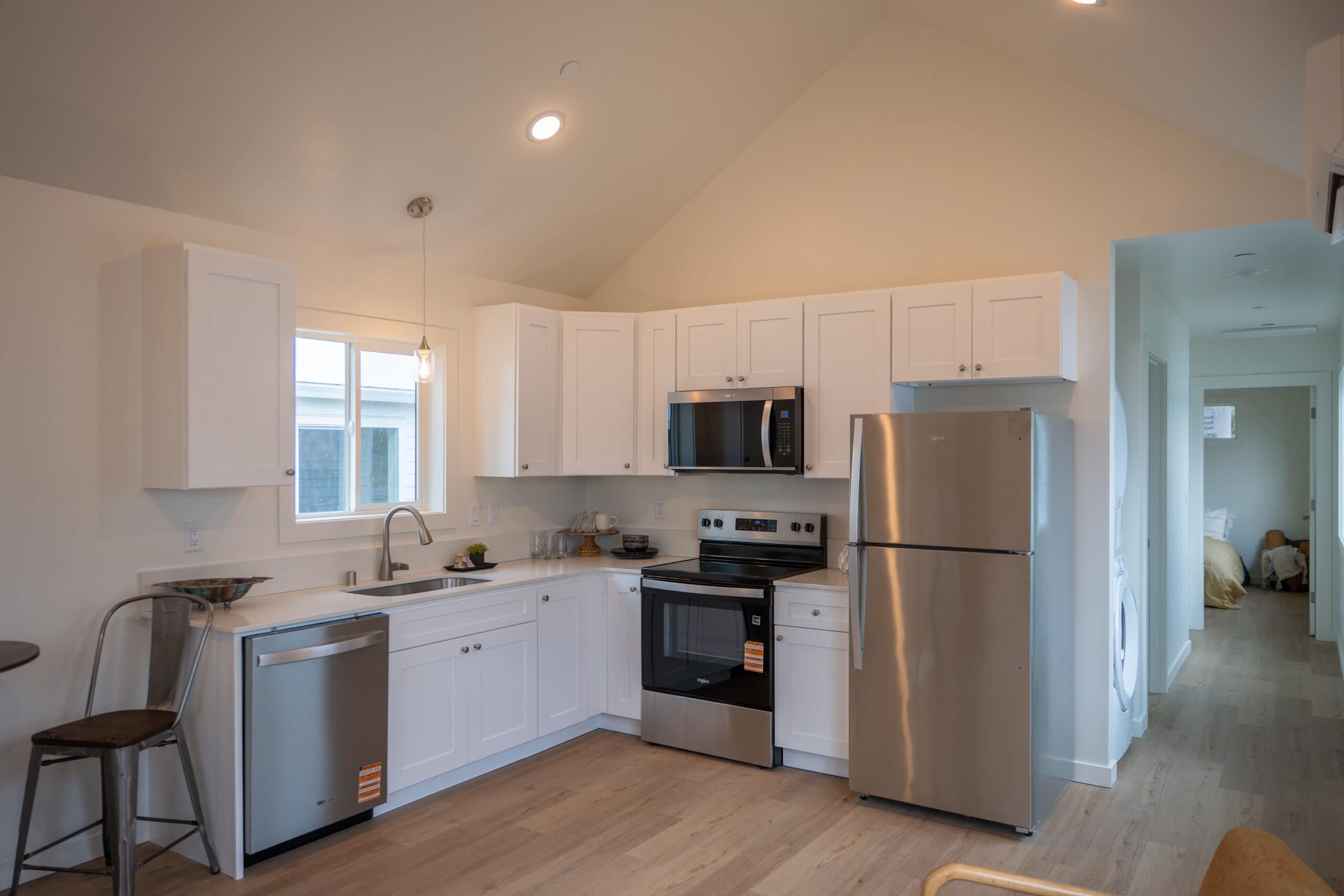
People often ask whether a second home on their property can pay for itself. The answer depends on the total project cost, financing, rent, vacancy, operating expenses, and how long they plan to own it. Start with those numbers before choosing a model.
Here’s how folks across Clark County and the rest of the Pacific Northwest are putting an accessory dwelling unit to work.
Three ways an ADU earns its keep
Rental income. A small detached unit in a decent neighborhood rents. Long-term tenants are the steadier option. Short-term rentals can earn more per night but come with city rules, cleaning, and vacancy gaps. Either way, the rent is what builds the case.
Multigenerational living. A parent who needs to be close but not under the same roof. An adult kid saving for a down payment. A caregiver. The dollar value here is softer, but it’s real money you’re not paying somewhere else, and it keeps family on one property.
Resale value. Even if you never rent it, a permitted, finished second dwelling adds square footage and flexibility that buyers in this market notice. Two living spaces on one lot is a selling point.
Start with the numbers
Returns vary by property and market. Use these steps to estimate the result for your situation.
- Your all-in cost. That’s the home, plus site work, utility connections, foundation, delivery, and setup. Site costs swing the most from lot to lot, which is why we evaluate yours before quoting.
- Realistic monthly rent. Look at what comparable small units rent for in your zip code. Be conservative.
- Annual return. Take yearly rent, subtract taxes, insurance, vacancy, and upkeep, then divide by the total project cost.
A quick gut-check: a unit that’s all-in around $150K and rents for $1,500 a month brings in $18K a year before expenses. Subtract financing, vacancy, maintenance, insurance, and taxes to estimate the payback window using realistic numbers for your property.
Financing it
Most owners don’t pay cash. Common routes:
- HELOC or home equity loan against your existing house, often the simplest if you have equity.
- Cash-out refinance when rates make sense.
- Renovation or construction loans built for adding a dwelling.
Talk to a lender early. Knowing your budget changes which model and finishes make sense, and it keeps the project moving instead of stalling at the bank.
Which Wolf models suit a rental
For income units, smaller and efficient usually wins. You want a place that rents fast and costs less up front.
- Model B (our most compact, available only in the City of Portland) and Model K are tight, sensible footprints, great for a solo tenant or as a clean studio-style rental.
- Model E and Model F step up to two bedrooms in 616 square feet, which works well for long-term renters, roommates, or a small family.
Bigger models like J, L, and I make more sense when the unit is for family or a high-end rental where space justifies the cost. Our models run from 307 up to 1,232 square feet, so there’s room to match the build to the return you’re after.
Why permitting and scheduling affect the numbers
A rental only pays if it gets permitted and finished. We handle design, in-house permitting, factory construction, delivery, and setup, all under one roof at our Battle Ground shop. If approval is not possible, your signed permitting agreement defines the eligible refund and exclusions. Review those terms before paying the permitting service fee.
The home itself moves through four stages in our factory, typically in about three to four weeks, while site work happens in parallel. You can follow the whole schedule in your Owner Portal, so you know when the unit will be ready to list.
Before you commit
Talk to a lender, check the local ADU rules, and gather several comparable rents. Then let us review the lot, because access, utilities, foundation work, and permitting can materially change the budget.
Start with a free property evaluation, and we’ll tell you what your lot can realistically support.