
Modular vs. Stick-Built vs. Manufactured Homes
Modular, stick-built, and manufactured homes differ in code, foundation, financing, and what a city will permit. How Wolf’s residential-code homes fit.
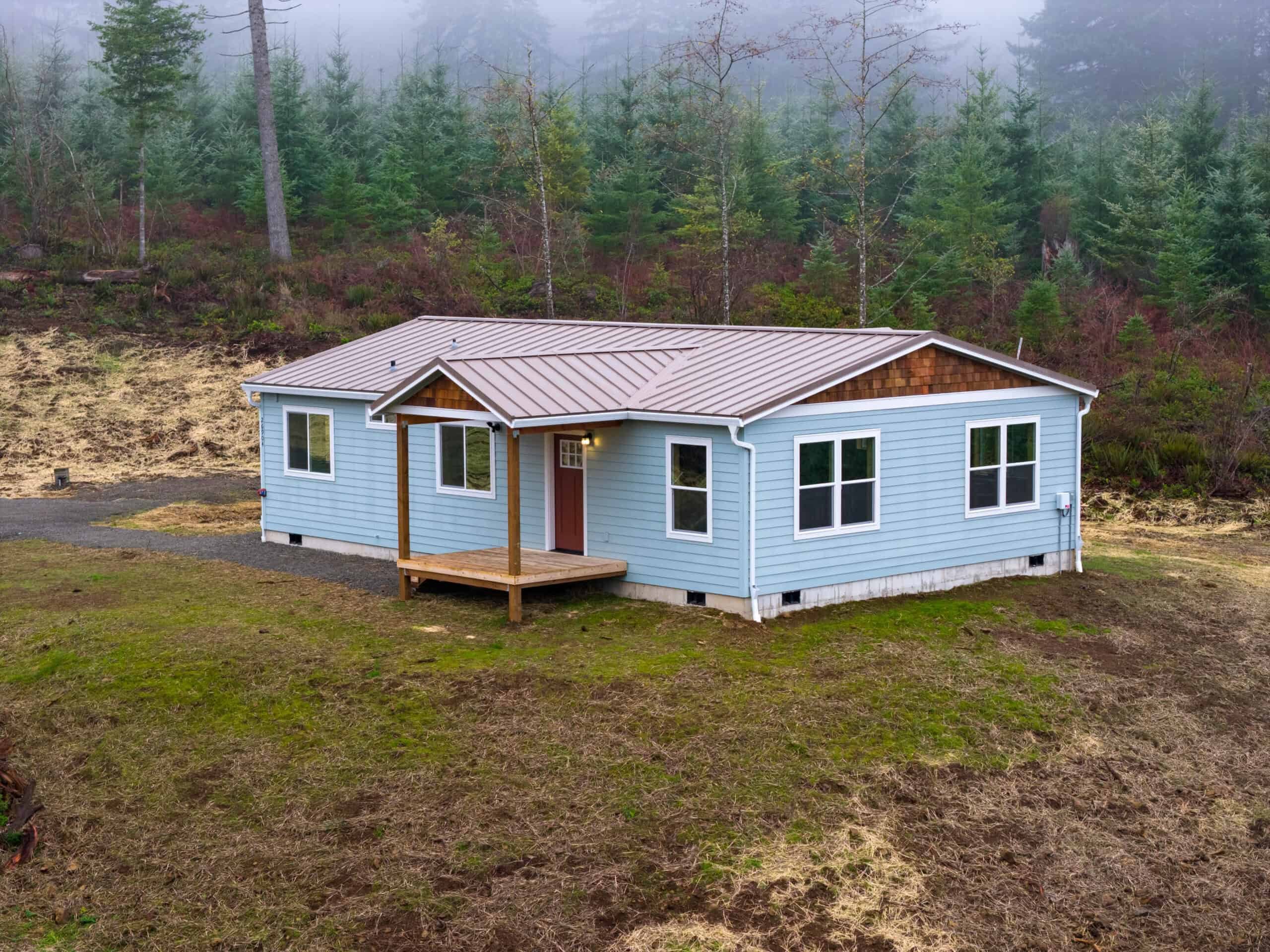
People use modular, manufactured, prefab, and stick-built as if they mean the same thing, but they don’t. The differences affect code, financing, permitting, long-term value, and what can be placed on your property.
Stick-built homes
A stick-built home is built on site. Lumber, trusses, windows, siding, mechanical systems, and finishes all arrive at the property and the house is assembled in the weather.
The upside is flexibility. A fully custom site-built home can be shaped around almost anything.
The tradeoff is that the site controls the schedule. Rain, subcontractor delays, material staging, security, and inspection timing can stretch the build. In the Northwest, that means a lot of rain days.
Stick-built tiny houses in that older size class were often about 200 to 600 square feet, framed on site, usually on a conventional foundation. A house on a permanent foundation is real property. A lender can take a mortgage against it because the house can be sold if the loan fails. Set the same small house on cinder-block piers, with no real foundation, and you give up a lot of that longevity. The blocks move, the skirt fails, and water gets under the floor.
Manufactured homes
Manufactured homes are built to the federal HUD code (the federal standard for manufactured homes). They are often efficient and cost-effective, but they are not the same as modular homes built to local residential building code.
Depending on the property and jurisdiction, manufactured homes can have different rules for placement, financing, appraisal, foundation, and long-term treatment.
They can be the right answer in some situations. They are just not interchangeable with a modular ADU (accessory dwelling unit) or modular dwelling.
A manufactured tiny home is often financed by the seller or the manufacturer. Many still have a chassis, wheels, and a connection that can be undone, and a lot of them sit on blocks rather than a permanent foundation. Moving one, or leaving it on that setup, shortens the life of the structure. That financing and that foundation are why a manufactured home and a site-built house do not appraise the same way.
Modular homes
Modular homes are built in sections in a factory, then delivered and set on a permanent foundation. The important distinction is code: a modular home is built to the applicable residential building code for the jurisdiction, not HUD manufactured-home code.
That makes modular a strong fit for ADUs, backyard cottages, small primary homes, and multi-unit cottage projects where owners want a permanent dwelling with a controlled build process.
In Washington, Labor & Industries approves the factory plans and issues the insignia. In Oregon, the Building Codes Division Prefabricated Structures program does the same job. The local building department still permits the foundation, the placement, and the utilities. A Wolf home is set on a permanent foundation under that residential-code approval.
Why Wolf builds modular
We build indoors because the Northwest is hard on outdoor construction. Factory production gives us:
- Dry materials.
- Repeatable quality checks.
- Fewer weather delays.
- A faster home build once permits are ready.
- One team for design, permitting support, production, delivery, setup, and warranty.
The site still matters. A modular home needs permits, foundation, utility connections, delivery access, and final inspections. But the home itself is built in a controlled environment instead of sitting open on a lot for months.
Foundation, chassis, and the state insignia
A Wolf modular home is built to the residential code, inspected in the factory, and set on a permanent foundation. It is not a house on a trailer, and it is not a recreational vehicle. Washington Labor & Industries or Oregon’s Building Codes Division issues the insignia for the structure. The city or county then permits the foundation, the placement, and the utilities.
A manufactured home is built to the HUD code on a steel chassis. Lenders, appraisers, and some zones treat that chassis differently from a modular home on a foundation. If a lot’s zoning allows a manufactured home and not a second dwelling built to the residential code, those are two different applications.
Which one is best?
It depends on the project.
Choose stick-built when the site or design requires a fully custom structure that cannot be handled well as a modular plan.
Consider manufactured housing when HUD-code placement is allowed and the project goal is the lowest structure cost.
Choose modular when you want a permanent residential-code home, a shorter controlled build window, and a more predictable process from design through set.
Start with the property
Before you pick a construction method, find out what the jurisdiction allows, where the home can sit, how it will be delivered, where the utilities are, and what size fits. Those answers usually narrow the choice quickly.