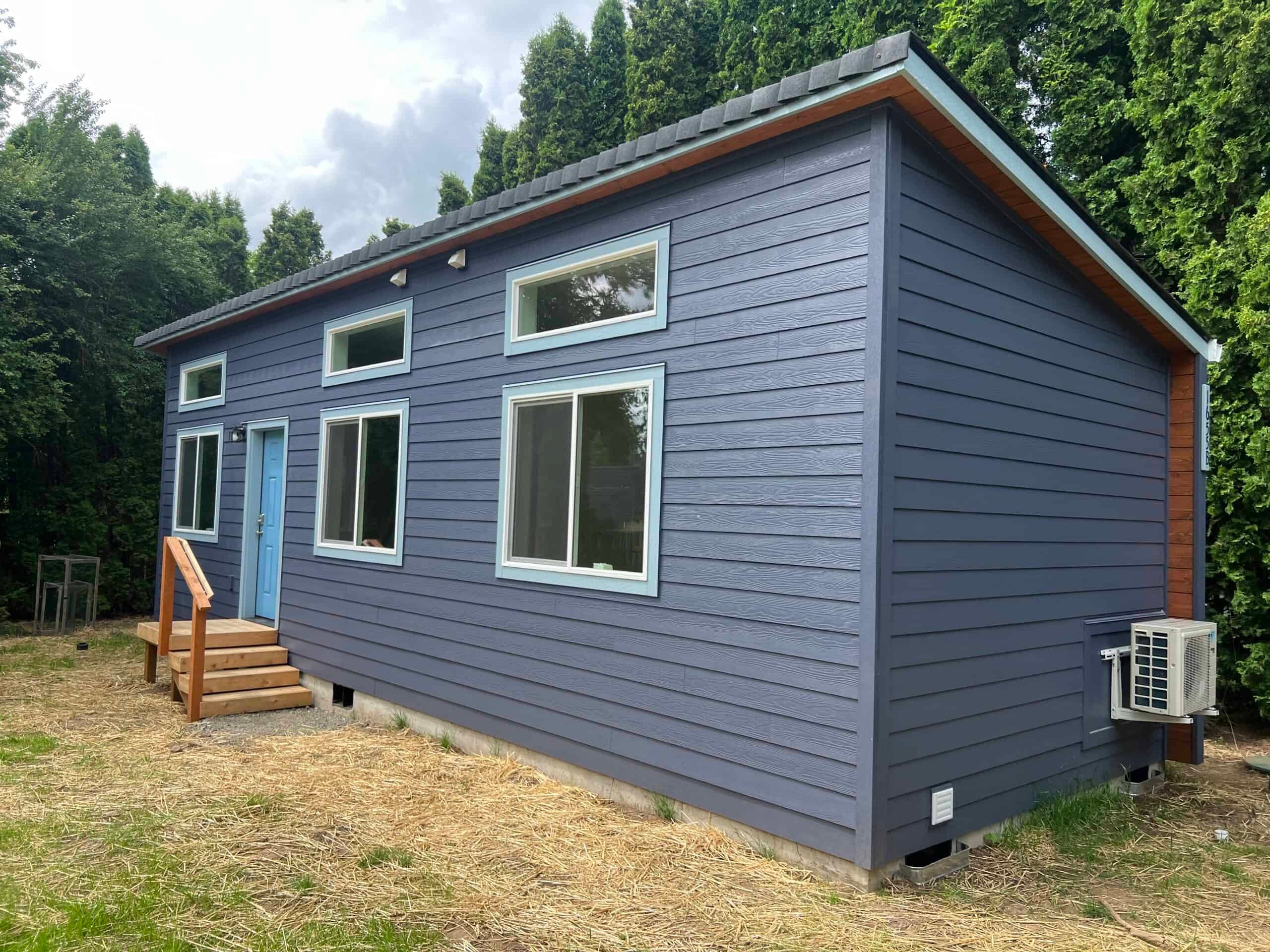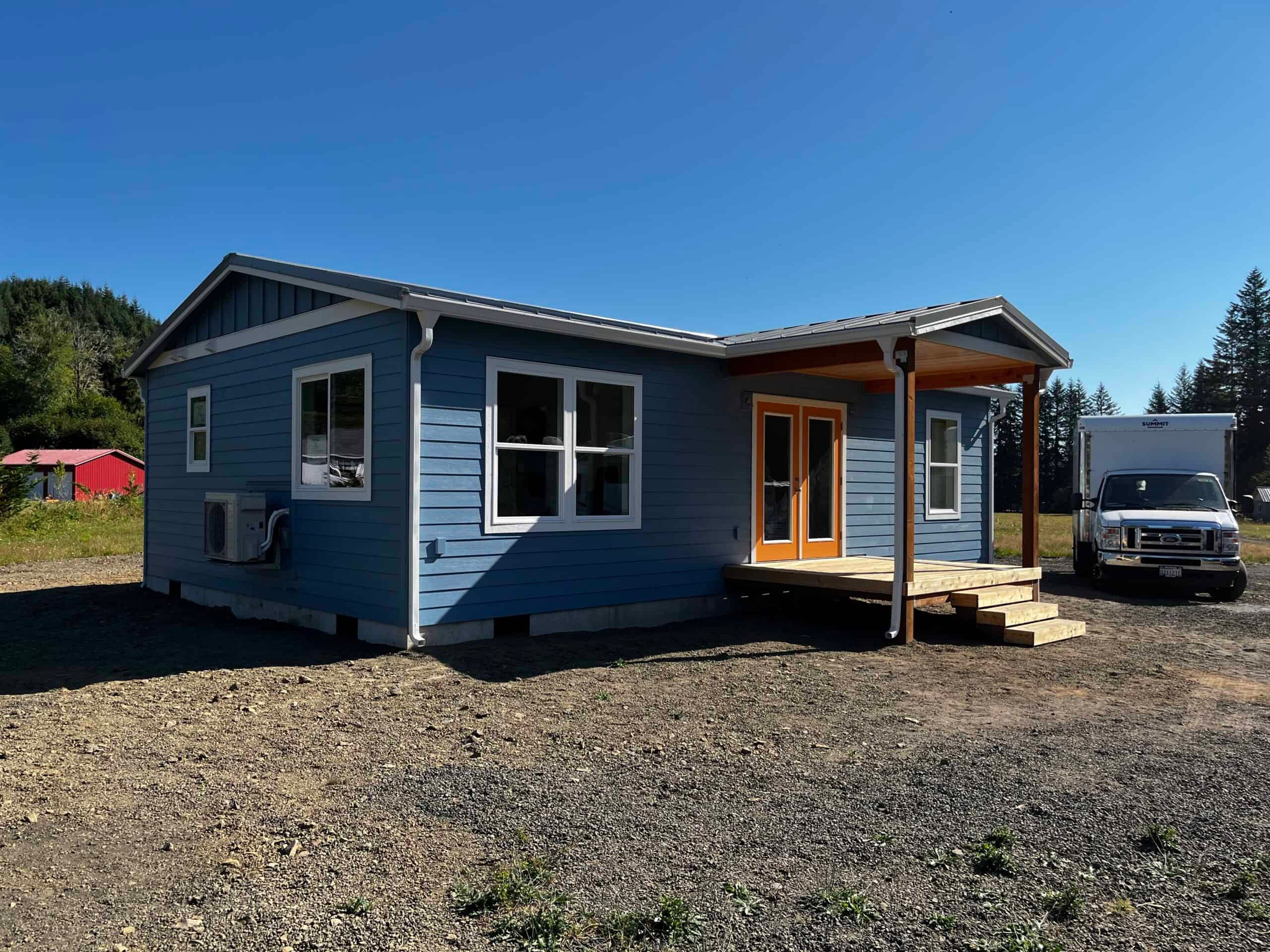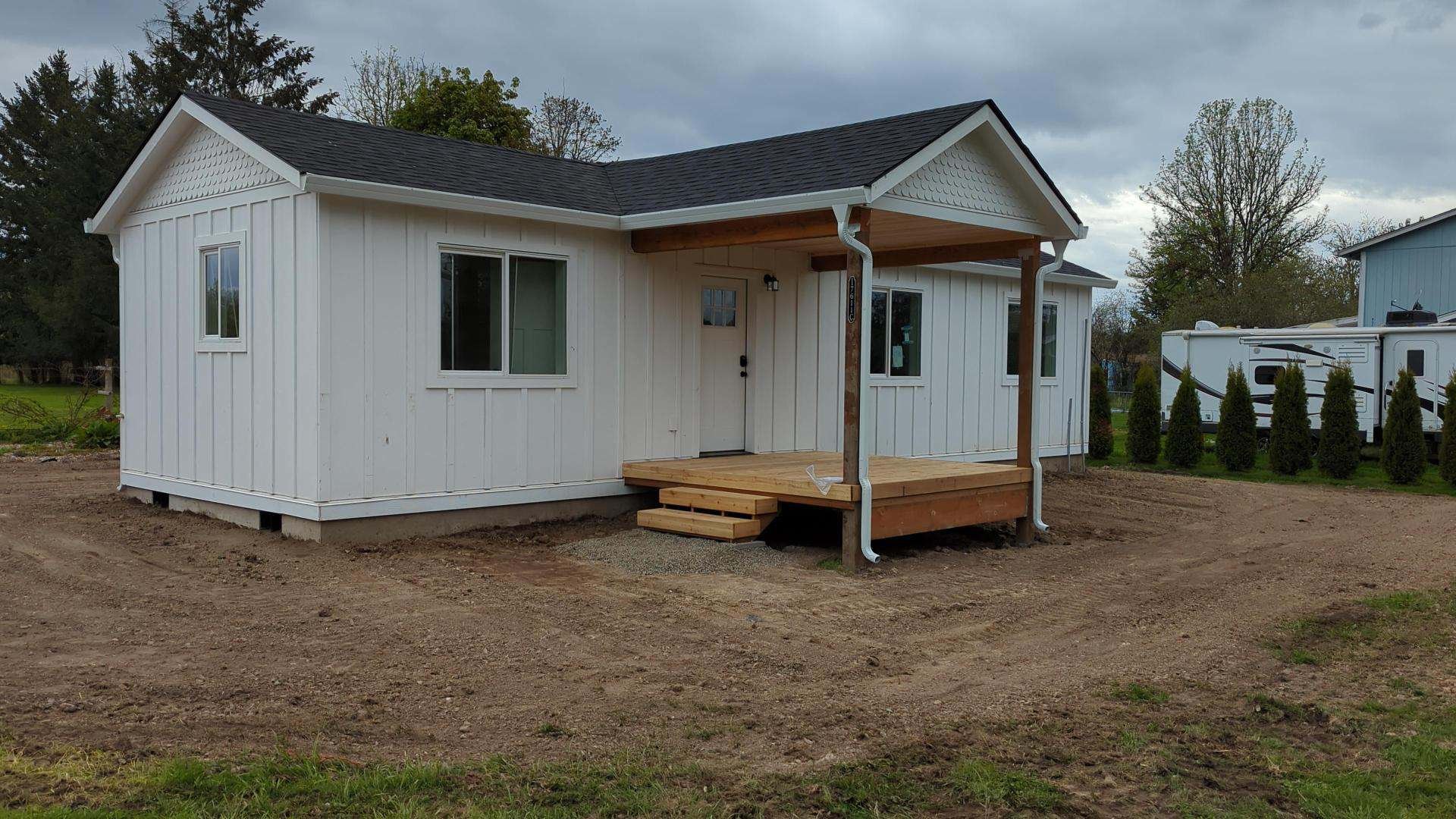

Port Townsend sits at the northeast tip of the Olympic Peninsula, where the Strait meets Puget Sound, with a downtown of brick buildings and painted Victorians that people travel to photograph. That history shapes the permit. A lot in the historic districts, a lot on the Uptown bluff, and a lot in unincorporated Jefferson County toward Port Hadlock or Irondale each go through a different review. The water is always a factor: wind, salt, shoreline jurisdiction, and a delivery route that depends on the Hood Canal Bridge.
Sequim is to the west, in Clallam County and the rain shadow, with its own city hall and county guide. For Port Townsend and Jefferson County lots, our Jefferson County ADU guide covers the county rules, and the city has its own code chapter.
We don’t have a Port Townsend case study yet. The closest peninsula work we can point to is the Sequim rental project, which shows we deliver this far, though an Uptown lot in the historic overlay has its own requirements.
City of Port Townsend or Jefferson County
Start by identifying who reviews the permit: City planning and building, or Jefferson County DCD. The tax lot decides, and researching both “just in case” wastes a month.
Inside the city, accessory dwelling units are covered in PTMC 17.16.020. The current published language (confirm at filing, since the city has been amending its housing chapters):
- Two ADUs can be established as accessory to a single-family detached house, shotgun house, duplex, triplex, or townhome, with conditions that have to stay in place over time.
- Size: the current code text lists 1,000 square feet both for ADUs in an outbuilding and for ADUs attached to or within the primary. Older planning packets cited 800 square feet for a detached outbuilding, so if you have a printout from a few years ago, check it against the chapter in force now.
- Lot coverage of the house plus ADU can’t exceed the underlying zone’s limit.
- Neither the main dwelling nor the ADU may be used as a short-term rental, except as provided in PTMC 17.57.020(B)(2). That’s stricter than many Washington cities, so if you’re planning a vacation rental, confirm it before you order a module.
- A certificate of occupancy has to be posted in the ADU.
- Legal nonconforming houses and outbuildings have a conversion path, including some window and entry rules when you’re close to a neighbor.
Historic overlays are the other big factor in town. Projects in designated historic districts go through historic design review under PTMC Chapter 17.30. An elevation that works on a 1970s street can draw comments on Water Street or in a landmark neighborhood, and we want to know that in the first week, well before the factory paints anything.
Unincorporated Jefferson County (Port Hadlock, the Irondale UGA, Marrowstone, and a lot of forested acreage) follows the county chapter our guide summarizes:
- Currently one ADU per legal lot.
- A size cap of 1,250 square feet.
- Owner occupancy: the owner has to live in the house or the ADU. That’s expected to change as the county aligns with state law, but plan on it until the code actually changes.
- Water and septic decide rural jobs. Under statewide septic rules effective April 1, 2025, a 3-bedroom system may be able to serve two residences in some cases (for example, a 2-bedroom house on a 3-bedroom design, leaving room for a 1-bedroom ADU). Confirm with the county for your system.
- ADU setbacks can’t be stricter than the house’s, and the exact yards follow the zone.
The county’s rules are in transition, so we work from this year’s handout.
How Port Townsend takes a permit
Here’s the city sequence we use:
- Confirm the zone and whether the lot is in a historic district or shoreline overlay.
- Check the two-ADU, 1,000-square-foot, and short-term rental rules against the current PTMC.
- Prepare a site plan showing the house, the proposed module, coverage, entries, and any parking the zone requires.
- Apply for the building permit with the factory’s engineered drawings. Modular homes still need local foundation and utility permits.
- Go through historic review if the overlay applies. This is often the longest step.
- Complete inspections and post the certificate of occupancy in the unit.
County projects add water, septic, and recording the owner-occupancy requirement until the code update takes effect. Depending on the lot, Jefferson County review can also include critical areas, forest practice, road approach, and wetland and habitat review. A sewered in-town lot usually needs far less of that.
Downtown, Uptown, and the county
Downtown and the historic waterfront are the postcard view: brick, steep streets, tourists, and design review that cares how a backyard building looks from the sidewalk. Uptown and the bluff streets are often a little wider but still windy, with views people paid for and neighbors who will notice a 24-foot wall. Chetzemoka and the bluffs add grade. Cape George, Kala Point, and Marrowstone are in the county or run by associations, with gates, septic, shoreline rules, and fire-access questions. Port Hadlock and Irondale sit in the UGA, which our Jefferson guide treats separately from rural land.
Fort Worden and the state parks have their own rules, and a park cabin isn’t a model for a PTMC ADU.
Wind, salt, and the bridge
Port Townsend is windy, and salt air affects flashing, fasteners, and finishes, so we specify them for the marine climate. The house is built indoors, but the lot isn’t, and wind on the bluff affects tie-downs and the set-day forecast. Downtown and Uptown streets can be narrow, steep, or both, so we measure the last turn before recommending a Model J. Cape George and the county coast add shoreline jurisdiction.
Our factory is in Battle Ground, in Southwest Washington near Portland. From there, delivery comes up the peninsula over the Hood Canal Bridge, then SR-19 / SR-20 into town. Bridge closures for maintenance or wind go on the calendar, and they’ve stranded peninsula traffic before, so we watch the WSDOT bulletins as closely as the crane schedule. We don’t barge homes to Point Hudson for backyard ADUs. We also don’t assume a 23-foot-wide two-piece home can make it through the historic grid, which is why the narrow Model K is first on our list here. In Port Townsend, width is a problem more often than square footage.
Set day still needs a legal access path, a crane if the side yard is steep or overgrown with rhododendrons, and a weather seal before the next squall. Dual-wide plans add a day to join the two halves. We sort out access in the first week.
Models that fit under 1,000 square feet
- Model K (~432 sq ft). A one-bedroom ADU that still looks like a small house.
- Model J (~828 sq ft published). A premium two-bedroom under the 1,000-square-foot cap when coverage and delivery allow.
- Model E / Model F (~616 sq ft). When you need two bedrooms but a J is more house than the lot can take.
These are modular, L&I-inspected homes on permanent foundations, built to the Washington State Building Code. They aren’t HUD (the federal standard for manufactured homes) homes, tiny houses on wheels, or trailers.
Site work, historic design review, and the longer peninsula delivery all affect the total. See financing if you plan to use a loan or home equity.
Tiny houses on wheels versus a Wolf home
The city also permits tiny houses on wheels as ADUs under a separate chapter (PTMC 17.58). These are ANSI (American National Standards Institute) park-model recreational vehicles, generally 400 square feet excluding the loft, certified by L&I as that product, and up to two are allowed on a lot as ADUs. Most “tiny home” questions in Port Townsend are really about that chapter. Wolf doesn’t build them. We build modular dwellings on permanent foundations, inspected to the state building code and sized like small houses. If you want a THOW, we’re not the right builder. If you want a backyard cottage that’s a permanent dwelling, we are.
Guest bedroom structures, hardship units, and accessory buildings are each different from an ADU. Jefferson County still cares about owner occupancy and septic, and the city cares about short-term rentals, so pick the category that matches how someone will actually live there.
Utilities and site work
In-town Port Townsend lots are usually on city water and sewer, which keeps the utility work fairly simple, though we still check lateral length, the cleanout, and whether the existing electrical service can carry a second dwelling. In unincorporated Jefferson County, water and septic usually decide the project before the model does. If your septic system was designed for three bedrooms and the house only uses two, the April 2025 state rules may let it serve a small ADU as well, but the county has to confirm that for your system.
Site work covers the foundation, trenching, grading, and any retaining a bluff lot needs. It can run while the home is being built at the factory, so the pad is ready when the delivery window over the bridge opens. After the set come inspections, the posted certificate of occupancy, the punch list, and warranty visits, which are scheduled trips up the peninsula.
How people use these homes
Port Townsend ADUs house parents, adult children moving back, long-term renters in a town short on modest housing, and guests. The city has specifically kept short-term lodging out of the ADU chapter, so tell us the intended use from the start. If it has a kitchen and bath and sits on a foundation, it’s a dwelling permit. If it’s on wheels, it falls under the THOW chapter.
Evaluation
Bring the address, a photo of the street, and whether you’re in a historic district. We look at PTMC 17.16 versus Jefferson County rules, the historic overlay, shoreline, the short-term rental prohibition, the bridge schedule for the delivery week, and whether a K, E, or J can physically get to the lot. Site work, historic comments, and the haul drive most of the cost.
Poulsbo and Bainbridge Island are in Kitsap County, Port Angeles is in Clallam, and Sequim is in the Clallam rain shadow, each with its own reviewer. If Port Townsend or Jefferson County DCD reviews your lot, send the address with whether it’s city or county, where the building would sit, and how it will be used.