

Sequim is the sunny strip of the north Olympic Peninsula, in the rain shadow of the Olympics and facing the Strait of Juan de Fuca. People move here for the lavender, the Dungeness, and a drier yard than anywhere else on the peninsula. The climate helps, but it doesn’t make the lot any simpler.
Two governments share the name. The City of Sequim has its own planning and building departments and, since October 2024, a fully online permitting portal. Clallam County reviews everything outside the city line, including much of Bell Hill, Happy Valley, the areas around Carlsborg, and acreage people call Sequim because that’s where their mail goes. The city and county use similar EnerGov software, and logging into the wrong portal is a known local problem, so we confirm which login you need before anyone uploads a drawing.
Port Townsend, the next town east, is in Jefferson County, with different rules. Our Clallam County ADU guide covers the county rules. Inside Sequim city limits, the city issues the permit.
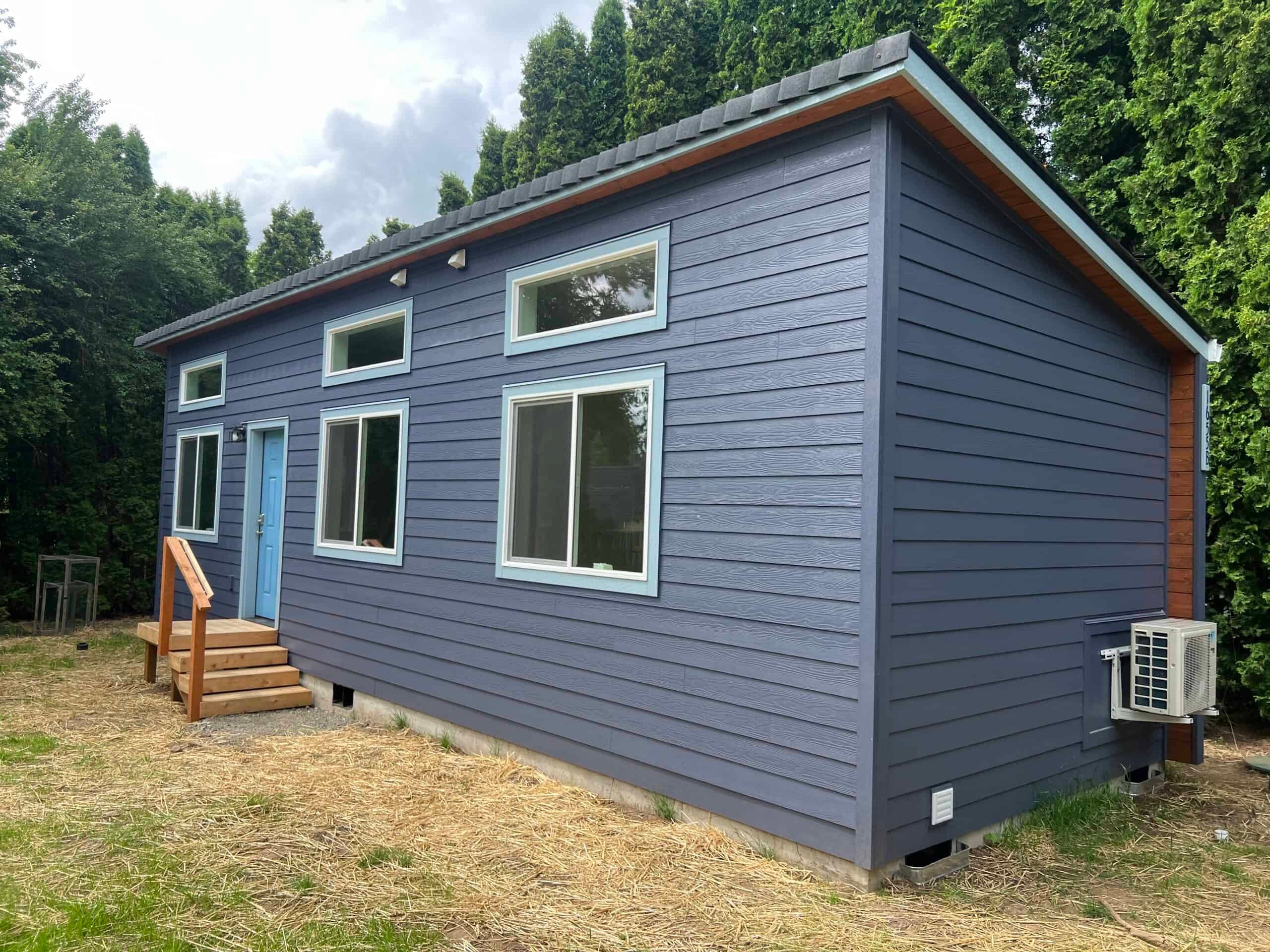
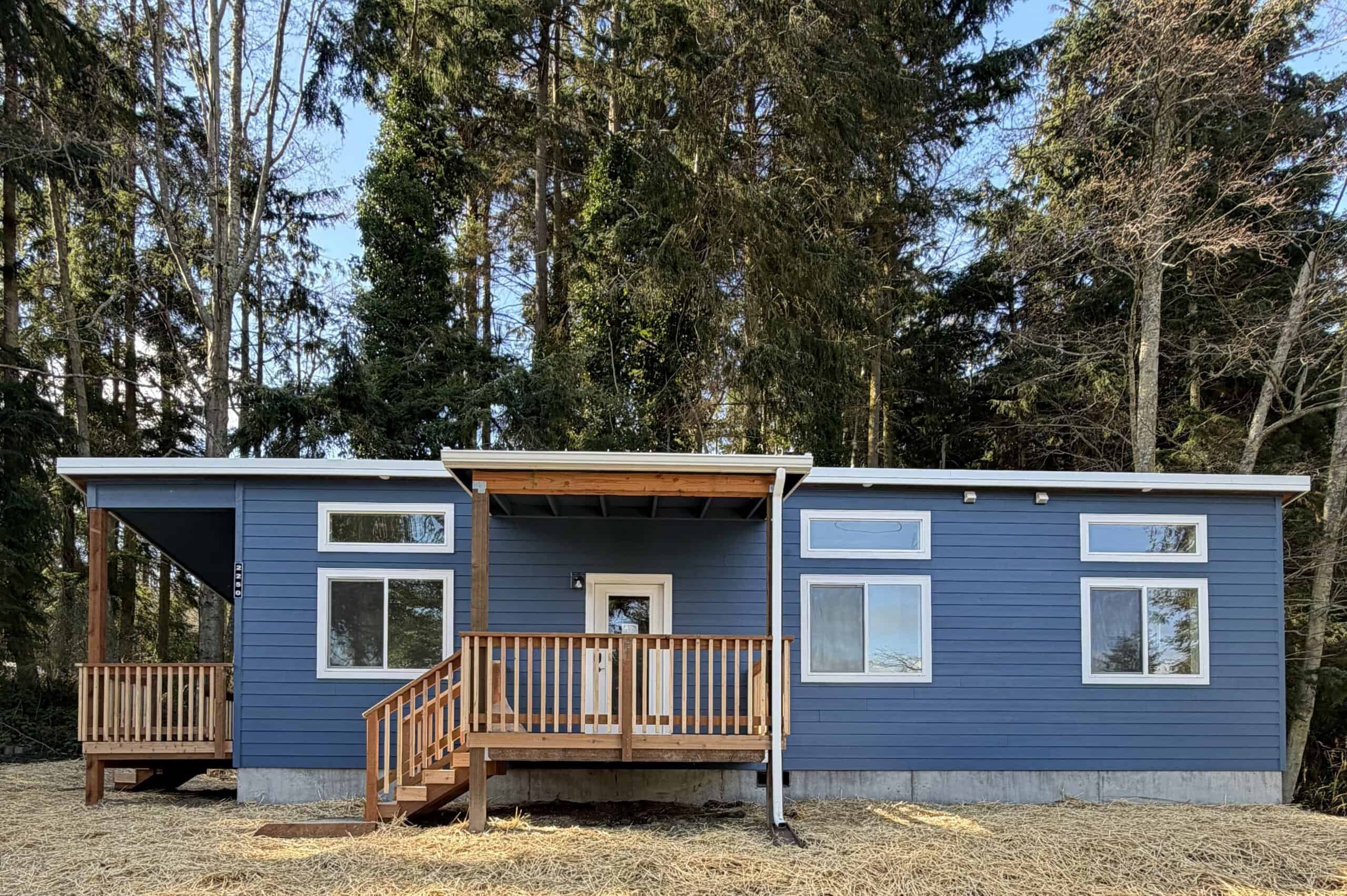
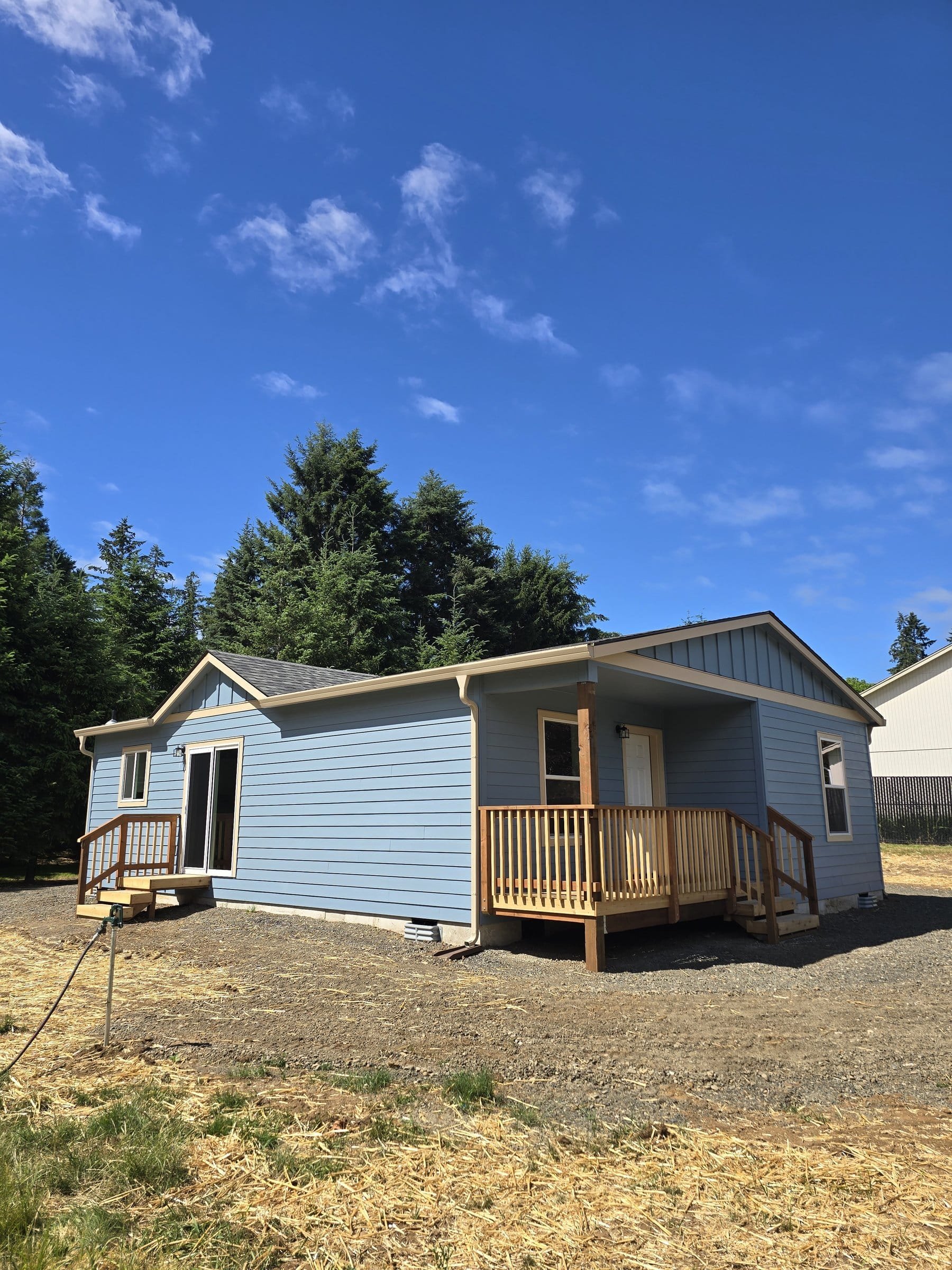
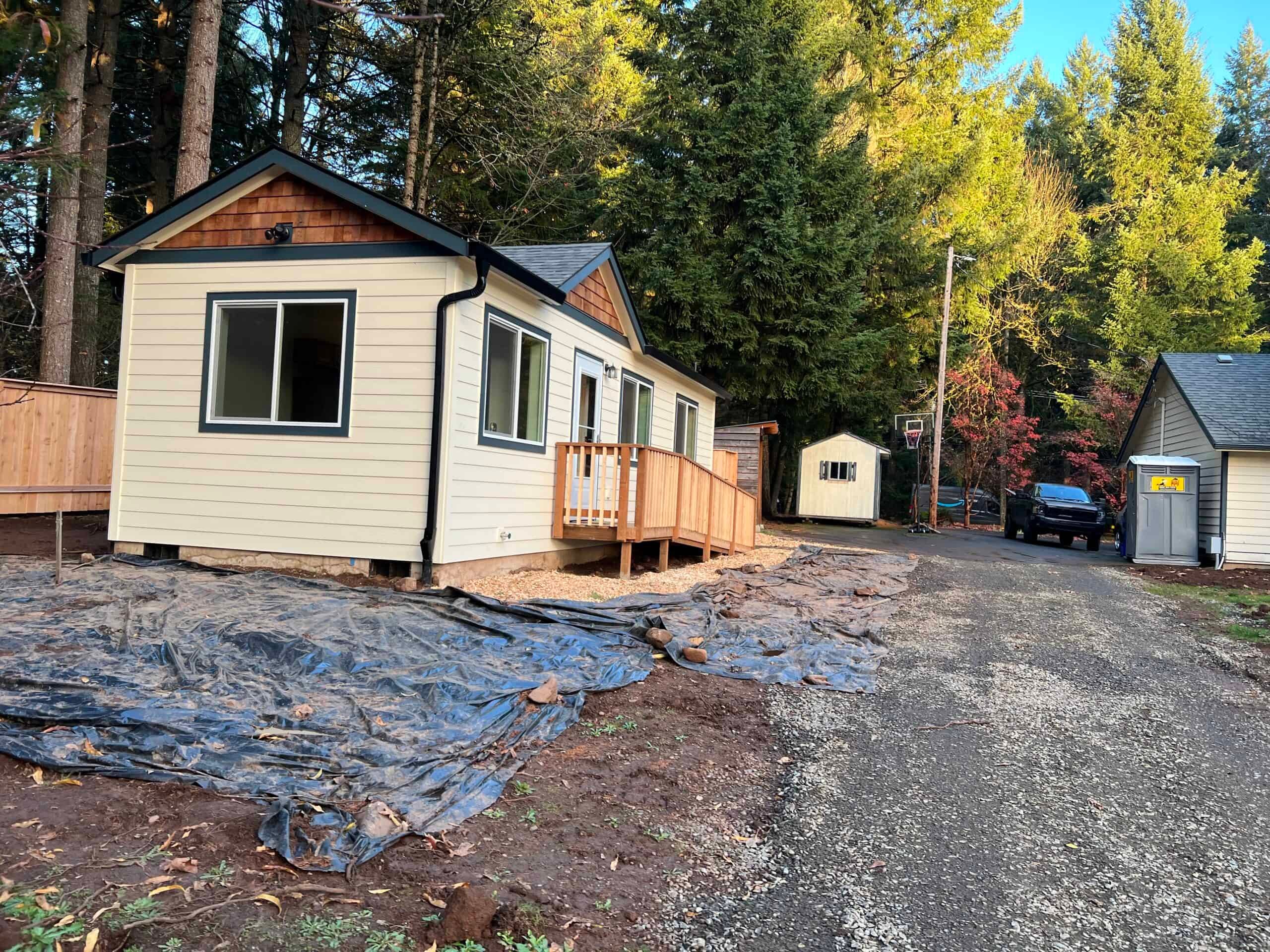
Wolf has set homes here. A Sequim rental project put two compact dwellings on a peninsula lot to serve tourism demand.
City of Sequim and Clallam County rules
Inside the city, the housing code has been moving to line up with RCW 36.70A.680 and .681. A January 2026 draft of Sequim Municipal Code Chapter 18.21 shows the direction staff have been publishing. Treat it as the current intent, and confirm what’s been adopted the week you file:
- In zones that already allow a single-family house, two ADUs per lot in addition to the principal dwelling, attached, detached, or conversions, in any mix.
- New ADUs not larger than 1,000 square feet of gross floor area. Conversions of existing garages, basements, or outbuildings aren’t subject to that cap if the space already exists and meets habitable code.
- No owner-occupancy covenant, deed restriction, or long-term rental commitment as a condition of ADU approval under the draft.
- No street or frontage improvements required just because you’re adding an ADU.
- Setbacks, lot coverage, height, and entry rules follow the principal dwelling, with no stricter ADU overlay.
- Parking: none within a half-mile walk of a major transit stop; otherwise one space per unit in the draft language.
Older city ADU chapters (the 18.66 family) called for a Type A-1 administrative permit and a recorded deed restriction, the kind of local rule HB 1337 was written to remove inside UGAs. If your neighbor’s 2018 ADU came with a covenant, yours may not, so confirm the current rules instead of copying their packet.
Unincorporated Clallam County is stricter and has more unusual rules. Chapter 33.50 still drives most rural projects:
- Detached ADUs outside UGAs generally need at least 1.5 acres, with a possible waiver when community water and adequate sewage exist.
- Detached size: 50 percent of the primary’s gross floor area, and not more than 1,250 square feet.
- Attached size: 35 percent of the primary.
- The ADU must use the same potable water source as the house, and Environmental Health has to certify water and sewage.
- Parcels in the Dungeness Water Rule area may need mitigation for well use. That’s a Sequim-area issue specifically.
- Owner occupancy: the owner lives in the house or the ADU, and a Notice to Title is recorded. Either dwelling may be a vacation rental, not both.
- One shared access from the road, with no new driveway just for the ADU.
- Detached ADUs are prohibited in Commercial Forest zones, and Agricultural Retention has extra limits.
The county has discussed drafts that would allow the greater of a percentage or 1,000 square feet, with parking numbers closer to the state ADU rules. Those drafts don’t count until they’re adopted. Our Clallam guide is a starting point, and we confirm the rules for your parcel.
How Sequim takes a permit
City building permits go through the online portal, where you apply, pay, schedule inspections, and print approved plans. The city’s FAQ warns that its software looks like Clallam County’s, so make sure you’re on the Sequim site.
The process follows the usual seven steps: research zoning on the city and county sites, review building codes, consult planning, prepare utility and grading plans, submit, inspect, and receive occupancy. We file with whichever office governs the taxlot instead of sending you to both.
Clallam County permits can include attached ADU, detached ADU, hardship, guest house, WAVE (water adequacy verification), septic, propane, critical areas, forest practice, wetland and habitat, and road approach. A city infill ADU on sewer won’t need most of those. A Happy Valley lot on well and septic might need half of them.
A complete city or county file usually includes the application, a site plan with the existing house, the proposed cottage, setbacks, utilities, and the driveway, the engineered modular plan set, and foundation and connection drawings. County files add the water and septic paperwork for Environmental Health, and a Dungeness mitigation plan where the rule applies.
Inspections happen at foundation, electrical, plumbing, and final. The module itself is inspected at the factory under L&I, and Sequim or the county still inspects the site work.
Prairie, Bell Hill, and the strait
In-town Sequim can look suburban, with sewer, city water, a portal account, and a 1,000 sq ft cap. That’s the simplest version. Other areas bring their own issues:
- Prairie and irrigation. Dungeness soils, irrigation laterals, and a high water table in spots that look bone-dry in August. Laterals often run right through the one area that looked buildable.
- Bell Hill and the benches. Grade, views, retaining walls, and driveways never meant for a house on a trailer.
- Happy Valley and the county prairie. Wells, Dungeness mitigation, and the 1.5-acre detached rule.
- Carlsborg area. City and county lots mixed together.
- Jamestown and the shoreline. Wetlands, habitat, and shoreline review toward the strait. County habitat determinations are common on rural jobs.
- Wind off the strait. Tie-downs and weather-sealing on set day still matter.
- Water. City water in town, community systems and individual wells outside. Dungeness mitigation is a real project cost.
The dry climate helps excavation schedules, but a lot that looks perfect in a lavender-field photo can turn out to be Agricultural Retention land or a critical-area problem. We site the dwelling from records and a visit, not a photo.
Utilities and site work
Most in-city lots are on city water and sewer. You still need to check lateral length, cleanout location, and whether the electrical service can carry a second dwelling without a panel upgrade. Outside the city, the county requires the ADU to share the house’s water source, so a marginal well or a drainfield already at capacity can stop the project before design starts.
Foundation excavation, trenching, grading, and minor tree work are part of a normal Sequim job. We weather-seal the same day when we can, then finish the mechanical and plumbing tie-ins.
Delivery across the Hood Canal Bridge
Delivery from our factory in Battle Ground, near Portland in Southwest Washington, is a peninsula haul: I-5, then the Hood Canal Bridge and SR-104 to US-101, or a ferry if that makes more sense that week. Bridge openings, wind restrictions, and summer tourist traffic are planned for the same way we plan a crane. Two-piece plans add a day to join the halves and need a pad that’s ready when the bridge window opens.
The home is built out of the rain at the factory. Warranty work is a scheduled peninsula trip, which goes smoothly when the 1.5-acre question and the WAVE were settled at the start.
Models that fit Sequim
Wolf builds modular homes to the Washington State Building Code. They’re not HUD (the federal standard for manufactured homes) manufactured homes or park-model tiny houses on wheels.
- Model K (~432 sq ft). One-bedroom home for a parent, a guest, or a renter.
- Model F (~616 sq ft) when you need a second bedroom and the city’s 1,000 sq ft cap (or the county’s 50 percent / 1,250 limit) still works.
- Model E (~616 sq ft) if its two-bedroom layout suits you better than the F.
- Model L (~984 sq ft) for a cottage-size plan under the city’s 1,000 sq ft cap, or on a county lot that can take it.
The home has a set price. Site costs depend on the lot, so we quote after we see it. Septic work, Dungeness mitigation, long trenches, and the peninsula haul are the usual reasons two Sequim projects with the same model end up at different totals. Most owners pay with a HELOC, a cash-out refinance, or a construction-to-permanent loan. See financing.
Who lives in Sequim ADUs
Sequim ADUs are retirement cottages, homes for parents of families already living on the prairie, and rentals in a tourism market that costs less than central Puget Sound. The Sequim case study was an investor building two compact homes for short-term demand. That use only works if the jurisdiction’s rental rules allow it. Inside the city, check the current STR rules. In the county, the owner has to live on site and only one of the two dwellings can be a vacation rental.
Clallam County treats hardship units, guest houses, accessory structures, and ADUs as separate permit types. If someone will live in it and it has a kitchen and bath, plan on the ADU path, along with the county’s owner-occupancy and Notice to Title rules. A shop or storage building is a different permit.
Inside the city, the draft housing chapter aims to make ADUs routine: two per lot, no occupancy covenant, and no required frontage improvements. Until that chapter is adopted, we confirm the rules for your file rather than filing old deed-restriction paperwork.
Nearby cities
Port Angeles is wetter, closer to the mountains, and has its own city hall. Port Townsend is in Jefferson County. Poulsbo and Bremerton are across the water in Kitsap County. Each has its own rules.
What the evaluation looks at
Bring the address, a well log if you have one, and your best guess at city or county. We look at:
- City or county, and which portal you’ll use.
- Water, especially Dungeness mitigation.
- Septic or sewer.
- The 1.5-acre rural rule if you’re outside the UGA.
- Access and Hood Canal Bridge timing.
- Which model fits the size cap or percentage limit.
Request the evaluation. Tell us Sequim city or Clallam County, where the building would sit, and whether it’s for family, a long-term rental, or a vacation unit. We’ll tell you which of those your parcel can support.