Rockaway Beach is a small incorporated city on a dune-backed strand, with the ocean to the west, lakes and wetlands behind, US-101 running through, and Twin Rocks offshore. Lots are often 50-foot beach-platted leftovers already crowded with cottages, with sand, a high water table, and neighbors on both sides. That’s a different construction problem than Tillamook’s valley grid, Pacific City’s Nestucca spit and sandstone headland, or Neskowin’s forested Cascade Head benches. A five-acre farm with a second house is a different kind of project.
Wolf builds modular homes in its own factory, not HUD (the federal standard for manufactured homes) manufactured homes. Delivery comes down 101 after OR-6 or US-26, and the final challenge is usually the same: fitting a long module onto a short, sandy lot with the highway in front and a lake behind.
City of Rockaway Beach or Tillamook County
Zoning review goes through the City of Rockaway Beach or Tillamook County, and then you work with the planning and building departments on the specific permits. Inside city limits, the city handles land use and building. Outside, on county land near Lake Lytle or with a Nedonna address, you’re in the county. Highway 101 looks the same either way, so check before you file.
Tillamook County ADUs (see our Tillamook County guide) are generally for residential and some rural residential lots that already have a primary dwelling, subject to overlays. The county regulates size relative to the main house, height, and setbacks, but our guidance doesn’t include published numbers, so confirm them against the current code. County materials also include owner-occupancy expectations and STR limits in some areas. In a beach town, vacation rentals are common, but that doesn’t mean they’re allowed on your lot. Confirm the city’s STR rules and any county overlay that still applies.
Oregon’s statewide rules (ORS 197A.425, and HB 2001’s bans on owner-occupancy and extra parking mandates for long-term units in covered cities) apply underneath. Rockaway Beach still sets siting. See Oregon ADU rules.
On this strip, the classification question is usually detached ADU versus guest house, or whether the lot has already used up its coverage. Hardship dwellings exist in the county permit family, but they can’t be used as rentals.
How a Rockaway Beach permit runs
- Check zoning with the City of Rockaway Beach (or the county if you’re outside town). Is a second dwelling allowed, and where can it sit on a 50-foot lot?
- Confirm building codes for the city and, where they apply, the county.
- Talk to city (and county, if needed) planning and building before you commit to a two-bedroom. Narrow lots usually fail on coverage and setbacks.
- Plan utilities (water, sewer, electrical) and site prep: sand, grade, and a foundation designed for a dune rather than a valley slab plan copied from town.
- Submit the building permit with a site plan, utility plan, and fees to the city or county, depending on jurisdiction.
- Complete inspections at foundation, trades, and placement.
- Get occupancy and final approval.
Because you’re between the ocean and a lake, erosion, stormwater, and critical areas come up in review. Incomplete drainage drawings can turn a simple cottage into a file that drags through the winter. Rockaway Beach is a small city, but incomplete drawings still sit.
City staff in a small beach town see plenty of “tiny home” pitches that turn out to be trailers. A submittal with Oregon insignia drawings and a site plan that accounts for the sand and the overlays is the kind of file that gets through without surprises.
Twin Rocks, Nedonna, and the 101 corridor
The city itself is a short, dense strip. Twin Rocks, the north end, and the approaches to Nedonna Beach change lot width, HOA (homeowners association) involvement, and how close you are to the city limit. A Nedonna or other unincorporated address is county, even if you shop in Rockaway. Lake Lytle and the other lakes behind the dunes are why a backyard is sometimes wetland instead of lawn.
Highway 101 is the front door, with businesses, motels, and beach access along it. A module coming from Garibaldi stays on 101 until the last turn. In summer, there are pedestrians and parked trailers everywhere, and we avoid scheduling a set on the Saturday of a beach festival. South toward Barview and Garibaldi, the land starts to feel like a bay mouth, with jetties, the river, and a different flood picture, and it may not be in Rockaway Beach city limits. Confirm it.
Dune lots: wind, sand, and water on both sides
- Narrow platted lots. Model K was designed for this kind of lot. A two-piece Model E or L often won’t fit the coverage or have room for a crane.
- Sand and wind. It’s open coast, and the salt is hard on materials. The factory build keeps the house out of the weather, but flashing and fasteners still need to be rated for a marine environment. Wind affects tie-downs, and a porch added as an afterthought has to hold up in a January storm.
- Water table and lakes. The lakes behind the dunes affect drainage, flood overlays, and whether a crawl space makes sense at all. Base flood elevation comes from the flood map for your lot. Flooding, the lakes, and the high water table are often a more immediate construction problem than a distant tsunami line.
- Tsunami inundation. This is a low strand, so check the overlay for your taxlot. It doesn’t automatically rule out a dwelling, but it can affect the foundation, utilities, and insurance. We plan for elevating equipment and confirm the finished-floor elevation the flood map requires.
- Excavation. Sand sloughs when you dig, and dewatering is common. A foundation detail from a Portland infill job won’t work here.
- US-101 out front. Delivery comes off the highway, then onto a short street that may not have a turnaround. Summer traffic complicates set day, and parked beach cars complicate crane work.
- Wetlands and shoreland overlays. Coastal zone review is a bigger part of the file here than in town in Tillamook.
Why the lot is almost always the constraint
The beach plats in this town weren’t laid out for two-piece modular homes. Coverage, setbacks, and a house that already sits close to the property line take up most of the buildable area. Street parking is how the neighborhood works, and if your use requires an off-street space, it can take the only spot where the ADU would fit. HB 2001’s ban on extra parking mandates for long-term ADUs in covered cities is worth asking about, but check the city packet, because lodging uses can bring parking requirements back.
A 5,000-square-foot remnant with a house, a shed, and a cedar tree is a normal Rockaway Beach lot, and it’s exactly what compact modular homes are for.
Models that fit a strand lot
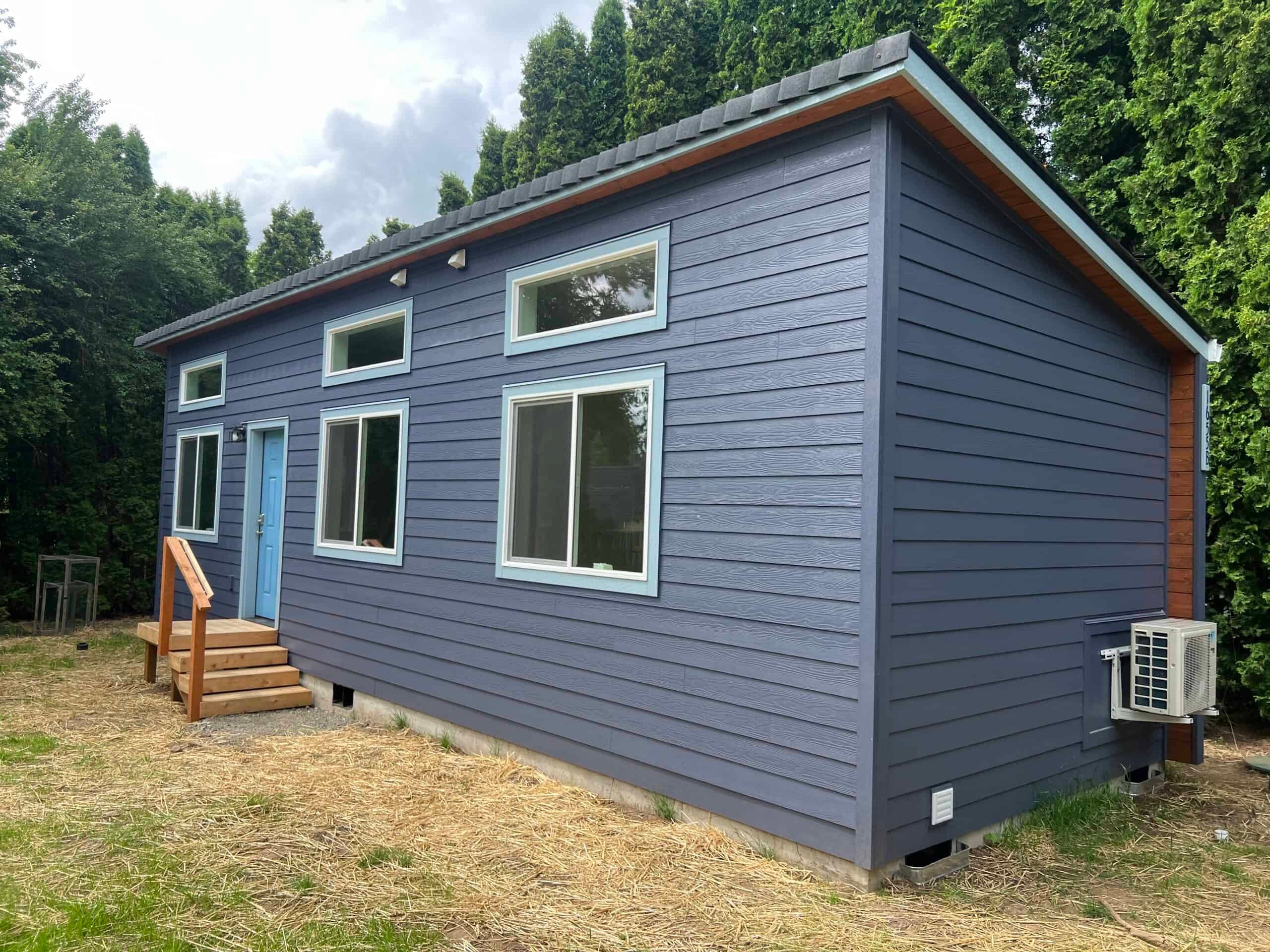
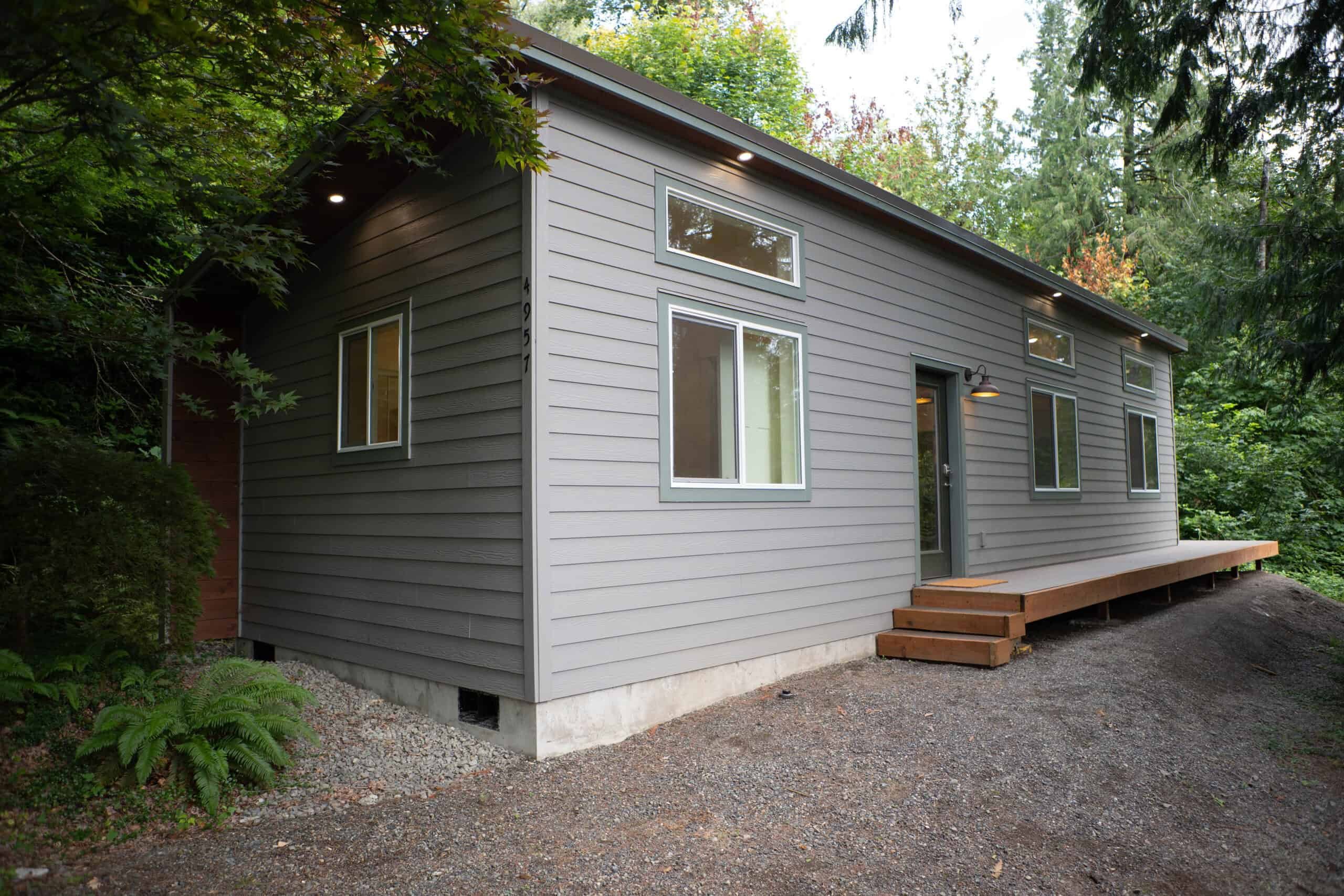
- Model K (~432 sq ft). A one-bedroom cottage for guests, a parent, or a long-term tenant. At 12 feet wide, it’s often the only model that fits.
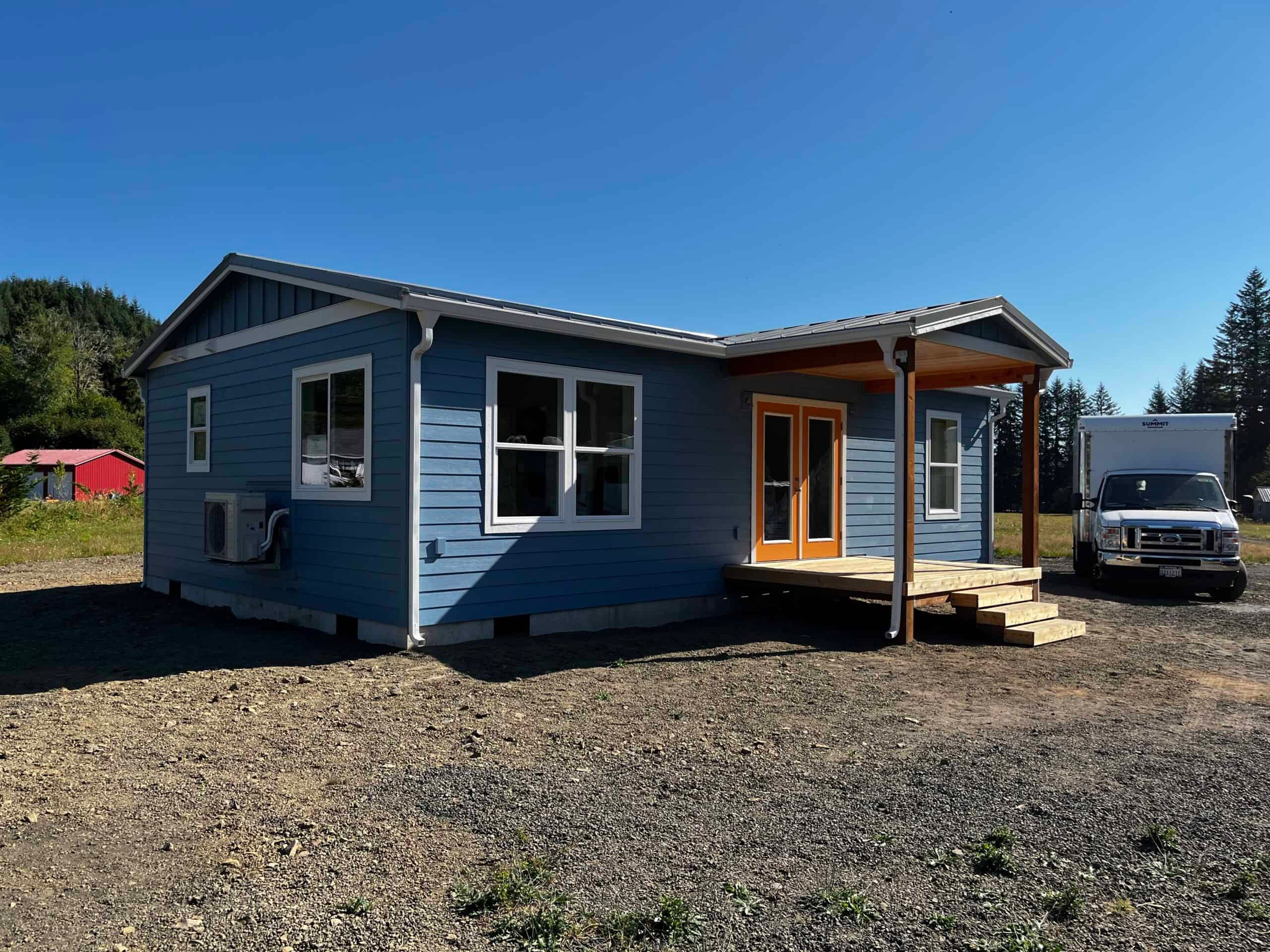
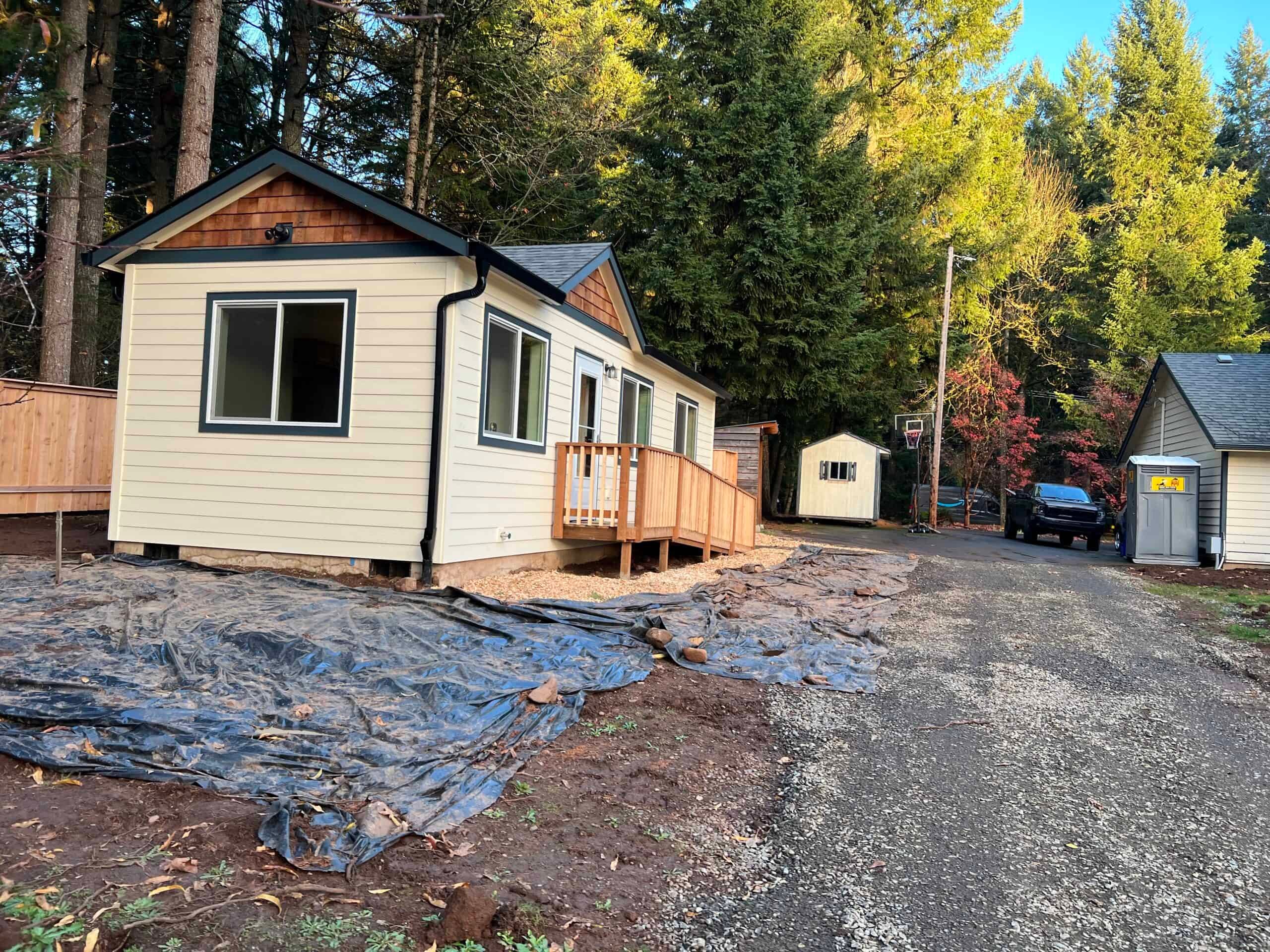
- Model E (~616 sq ft) when you need two bedrooms and the lot has the width, coverage, and room to set a wider module.
We match the number of pieces to the 101 approach and the sand pad. HUD manufactured homes are a different program, and we don’t build them.
Delivery to Rockaway Beach
From our factory in Battle Ground, just north of Portland, the typical route is OR-6 to Tillamook, then US-101 north through Garibaldi into Rockaway Beach, or US-26 to 101 south through Cannon Beach and Manzanita. Either way, the last miles are on 101 along the dune strip, with wind, tourists, and a lot that may be only 80 feet deep. It’s a longer trip than a metro set, and we plan for a weather window instead of setting in a gale.
Uses and rentals
Rockaway Beach owners build family beach cottages, homes for grandparents who already own the front house, and long-term rentals in a town that needs them. Short-term rentals are only possible where the city license and any owner-occupancy rules allow. A “tiny home” in Rockaway is still a dwelling, and a dune address doesn’t mean STR is allowed.
The town depends on visitors, but the city doesn’t want more unlicensed VRBO bedrooms. Tell us whether the ADU is for family, a long-term tenant, or lodging. If it’s lodging, plan for the licensing process and the possibility that the answer is no. County owner-occupancy rules can still matter depending on how the file is classified.
We don’t have a Rockaway Beach case study yet, and a Yachats vacation home isn’t a good comparison for a Rockaway lot.
Sewer and electrical
On a dune lot, we check sewer lateral length and condition, and whether the city will allow a second dwelling to tie into a 1940s line. We also check the electrical service, including panels exposed to salt air and whether the service can handle a range and a dryer in a new unit. We look at those before we talk about finishes.
Factory build and set
While the city reviews the file, we can build the home at the factory and the site contractor can prepare the sand and the pad. That overlap is what lets a wet-coast ADU finish in a reasonable season, and inspections still happen on schedule. After the set, we weather-seal the same day if the wind allows, then finish the trades, inspections, and occupancy. Winter punch-list visits are scheduled around the weather.
Cost
The model gives us a reliable starting home price, but we need to see the property before pricing the rest. Sandy soil, flood-related foundation work, sewer laterals, and delivery on Highway 101 can all affect the total, and on many Rockaway properties site work matters more than factory upgrades. A smaller model that fits the lot is a better choice than a larger plan that would need a variance the city is unlikely to grant. See financing.
Nearby
Tillamook is the county seat in the valley, and Garibaldi is at the bay mouth. Manzanita is another city with its own city hall. Pacific City is a separate unincorporated area about an hour south on 101 and inland roads.
What we check
We check city versus county, lot width and coverage, overlays (flood, tsunami, wetlands, shoreland), sewer, the truck path off 101, sand and the water table, electrical, and whether the use is STR, long-term, or family.
Most of a Rockaway Beach evaluation comes down to geometry. Bring the address, a sketch of the backyard (a phone photo from the alley or the lake side works), and any survey. We’ll tell you whether a 12-foot-wide Model K is the only model that fits, or whether a Model E can sit without taking up the required yards. We’ll also look at 101 as a delivery route and at the lakes for drainage.
Send the address and your lot measurements, and we’ll tell you whether a Wolf model fits your Rockaway Beach lot.