Pacific City is where the Nestucca River meets a wide sand beach under Cape Kiwanda, with Haystack Rock offshore and a dory fleet that still launches through the surf. It feels like a town, but it’s not incorporated. There’s no City of Pacific City, so Tillamook County handles planning, building, septic, and overlays. If you’re looking for a municipal permit portal, that’s Rockaway Beach or Lincoln City.
Building here means dealing with sand, a river, and a sandstone headland in one small area. Flooding can come from the Nestucca and the tide as much as from the ocean. Wind on the cape is stronger than on Cascade Head, and nothing like a sheltered dairy valley. Lots range from tight beach-plat rectangles to riverside parcels to hillside pieces off Brooten Road and the cape roads.
Wolf builds modular homes in its own factory under Oregon’s prefabricated structures program, not HUD (the federal standard for manufactured homes). Delivery is a long 101 / OR-6 trip with a sandy last mile and tourist traffic headed for the cape.
Tillamook County review
The steps that apply:
- Confirm the taxlot is in unincorporated Tillamook County. It will be, unless the lot is actually in another community.
- Check the zoning maps and code on the county site. There’s no Pacific City municipal code.
- Decide the classification: ADU, secondary dwelling, cottage, guesthouse, hardship, or primary. Each has different utility, setback, and placement rules.
- Apply the county’s current ADU standards for detached or attached units, including size, height, and minimum lot standards. Our Tillamook County ADU guide notes that size, height, and setbacks aren’t published as figures in the source guidance we use, so confirm them against the current code. Code 5.110 is a starting reference to verify.
- Check the existing primary dwelling, overlays, owner-occupancy expectations, and STR limits in the county framework. The local economy leans on visitors, but lodging still requires a license and has its own rules.
- Prepare the site plan and utilities, then apply for the building permit with the county.
Statewide ADU law inside UGBs still matters if the parcel is in a UGB. Many Pacific City lots sit in an unincorporated coastal community, so don’t assume the city rules under HB 2001 apply. Confirm it. See Oregon ADU rules. Lincoln County’s 800 sq ft Ordinance 507 doesn’t apply here, even though Lincoln City is a short drive south.
Spit, river, or cape
Pacific City is small enough that people treat it as one neighborhood, but it has three very different kinds of lots, and the landform comes before the model.
The spit and beach plats have sand, wind, tsunami-map concerns, and are often already packed with cottages. Width is the main constraint, and Model K usually fits best. A two-piece Model E needs a pad and a crane position that isn’t on a public beach approach. Migrating sand and a high water table mean foundations and drainage have to be designed for the site, and a Valley slab plan won’t work.
Lots near the Nestucca River and estuary, including properties toward Woods, face river flooding and tide. This is a river-mouth flood problem, different from ocean overwash and from the Hoquarton dairy flats near Tillamook. If the pad is in a mapped flood area, the foundation and insurance follow the map. Check the parcel maps and confirm the required base flood elevation before buying or designing an ADU for a riverfront property. Maps also miss some yards, so tell us if the lot floods during king tides even if the map is unclear, and we’ll walk the wet corner.
The Cape Kiwanda side and the hill have sandstone, grade, park traffic, and wind coming over the cape, with steep drops in places. Hillside lots need retaining and a legal place to set the crane. Retaining, a driveway that visitors on 101 already clog, and whether a truck can legally stage off Cape Kiwanda Drive are all first-week questions. This headland is sandstone with a parking problem, not Cascade Head’s forest.
Low beach and spit parcels need a tsunami inundation overlay check, while upland cape lots may fall on a different map. Tierra Del Mar and Sandlake are nearby unincorporated areas, also county, that people sometimes lump in with Pacific City, so confirm the taxlot.
Neskowin is the next quiet community south, under Cascade Head, with more forest and no Nestucca spit. Rockaway Beach is an incorporated city on 101 with lakes behind the dunes, and Tillamook is inland bay-and-dairy country. Each has different site conditions.
Models
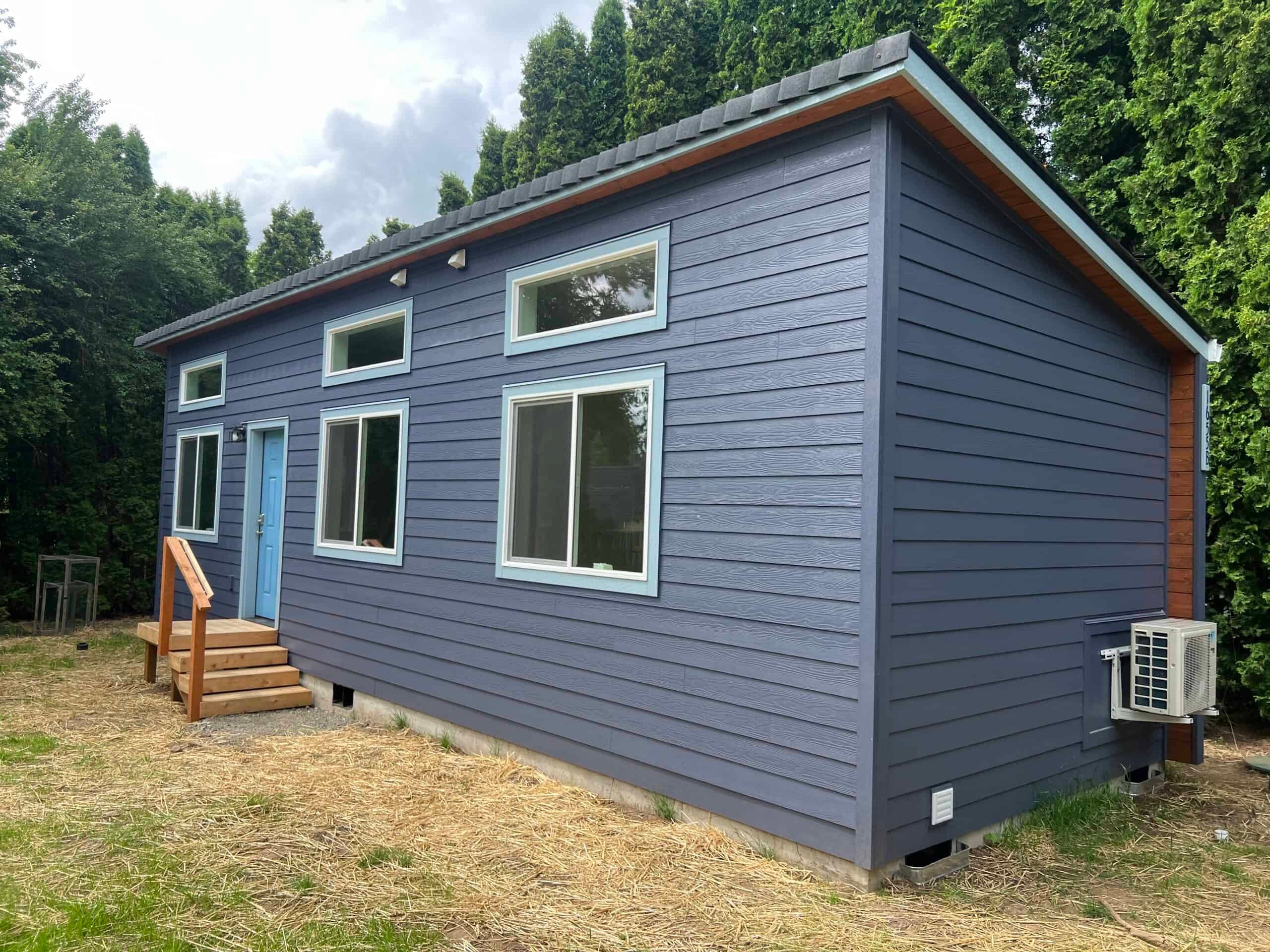
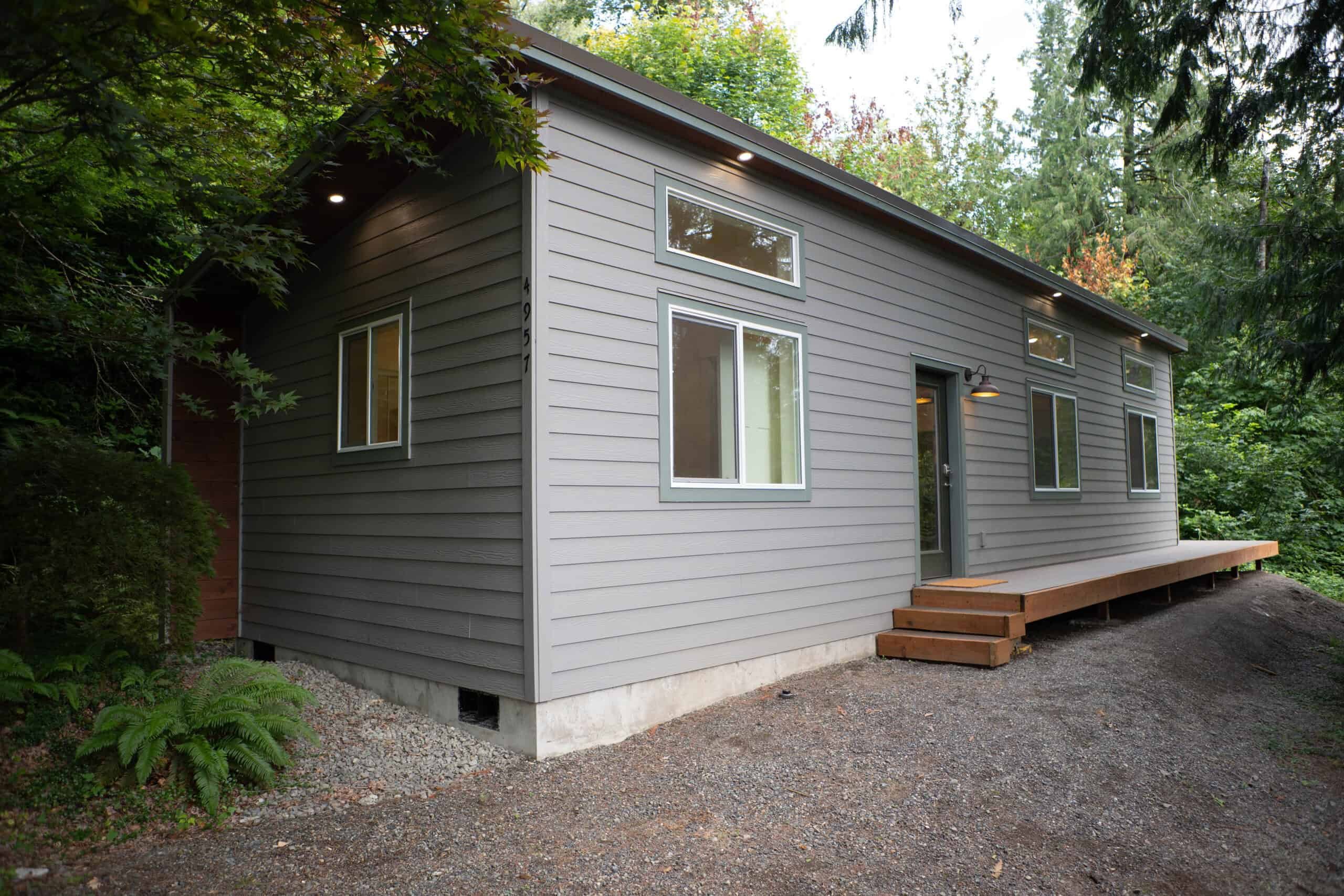
- Model K (~432 sq ft) for one-bedroom living, and usually the right answer on a tight plat.
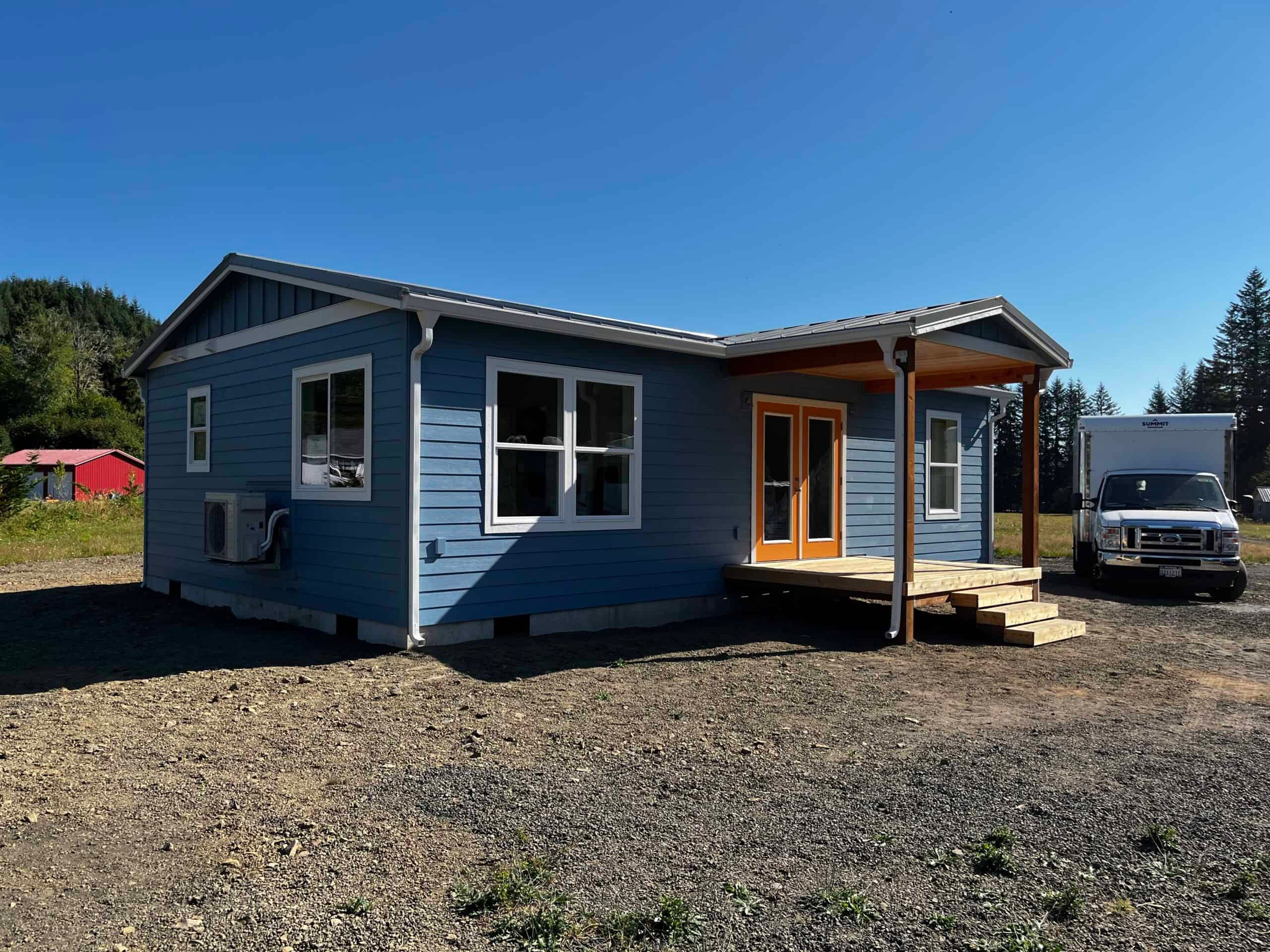
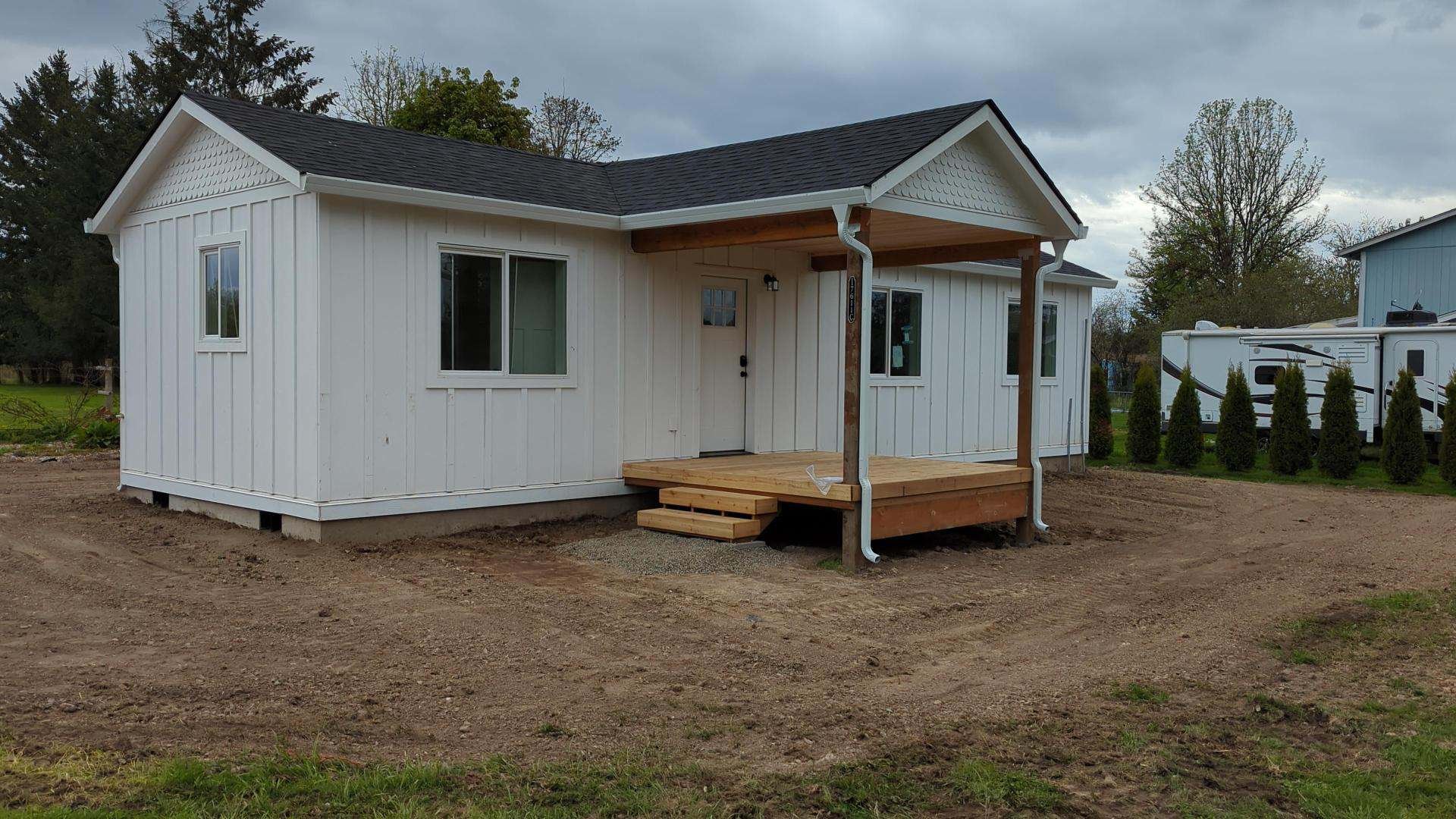
- Model E (~616 sq ft) for two-bedroom flexibility when coverage, septic, and a set pad work, often on a larger river parcel with a clear flood map.
We don’t sell HUD manufactured units. If the county treats a “tiny home” as a manufactured dwelling, that’s a different path, and we sort out the classification before production.
Delivery to Pacific City
From our factory in Battle Ground, just north of Portland, the usual route is OR-6 to Tillamook, then 101 south to the Brooten Road exit. The alternate is 101 north from Lincoln City. It’s a long haul with sand staging at the end. Brooten Road has soft shoulders and overhead lines, and a two-piece home needs a pad to join the halves that isn’t a public beach approach or a neighbor’s lawn.
The beach launch, brewery traffic, and summer cape parking mean set day takes planning, and we can’t block the approach to the sand. Escorts, early hours, and a weekday outside the busy season are how a module gets here. Summer is crowded, and winter brings wind and wet sand. If wind on the cape exceeds what the crane operator will accept, we wait for it to drop.
Uses and short-term rentals
Pacific City owners build guest cottages next to a cape-view house, parent dwellings, a small place to live, and long-term rentals for people who work on the coast. Short-term rental is possible only where Tillamook County STR rules and any community or HOA (homeowners association) limits allow it.
Many owners ask about vacation income. Tillamook County’s framework includes owner-occupancy expectations and STR limits in some areas, and being unincorporated doesn’t mean there are no rules. County licensing and zoning use tables often make it more involved. Long-term rental and family use are the usual ADU uses. If you’re planning for 30-night turnovers, tell us, and we’ll treat it as a lodging question first. Lincoln City’s rules and Yachats’ city portal don’t apply here. A hoped-for rental also doesn’t change the septic requirements.
We don’t have a Pacific City case study yet. Yachats is a separate city in Lincoln County.
Septic, water, and power
Many lots here use onsite wastewater. Sand, a high water table, and a river overlay make septic a job for a specialist, and a second dwelling can require a new system that costs more than a list of Model K upgrades. Water may come from a district or a well, and an ocean view doesn’t mean there’s enough of it. For electrical and propane, salt air, wind, and tanks sitting in the only staging spot all need to be planned around.
Cost
We prepare a property-specific estimate using the correct Oregon tax treatment. Delivery distance, sandy soil, any required flood-related foundation work, and septic tend to drive the total. A smaller model that fits the lot is usually a better investment than a larger one that needs a land-use fight. See financing.
Factory build, set, and warranty
The home is built at the factory while county review and pad work move forward. The module carries an Oregon insignia, and the county issues the installation permit for the lot. It isn’t HUD or a park model. After the set, we seal the home, finish the trades, and complete inspections and occupancy.
On the coast, salt and wind drive most punch-list items: doors that swell, flashing, and whether the crawl space stays dry after a high-water week on the Nestucca. A January punch list on the spit depends on the weather. Our crews come over OR-6 and down 101 on a planned trip, and we handle the warranty the same way we would anywhere else.
Questions we get in Pacific City
Do I need a city permit? No. There’s no City of Pacific City. Tillamook County handles planning, building, septic, and overlays for every lot here, including Woods, the spit, and the cape side.
How big can the ADU be? The county sets size, height, and setbacks, and the source guidance we use doesn’t publish them as figures. We confirm the current county code for your zone before recommending a model. Lincoln County’s 800-square-foot limit doesn’t apply here.
Can I put a two-bedroom on a beach-plat lot? Sometimes. A two-piece Model E needs enough width, a legal crane position off the public beach approach, and a pad where the halves can be joined. On many spit lots, a Model K is the plan that fits.
Can I rent the ADU to visitors? Only where Tillamook County STR rules and any community or HOA limits allow it. Long-term rental and family use are simpler, and we’ll check the lodging rules for your zone before you plan around vacation income.
What happens if the lot floods? If the pad is in a mapped flood area, the map sets the foundation and insurance requirements, and we design the foundation to match before the floor plan is final.
What we check
We confirm there’s no city involvement and check the Tillamook County zone, the existing house, overlays (Nestucca flood, tsunami, geologic, shoreland), septic and water, cape grade versus spit sand, the truck path off 101 and Brooten Road, wind exposure, and whether the use is STR, family, or long-term.
Tell us in your first email which landform you’re on. A spit lot, a river lot toward Woods, and a cape-driveway lot lead to three different model recommendations and three different crane plans. Photos of the approach from Brooten Road, the overhead lines, and the wettest corner of the yard in winter help more than a favorite floor plan.
Send the address. Tell us whether you’re on the spit, the river, or the cape, and we’ll match a model to that lot.