
Vancouver WA ADU (accessory dwelling unit) Rules and Regulations: Everything You Need To Know Before You Build
Vancouver, WA ADU rules: city vs Clark County, up to two ADUs, the 1,000 sq ft limit, no parking minimum, 50% impact fees, and the steps to a permit.
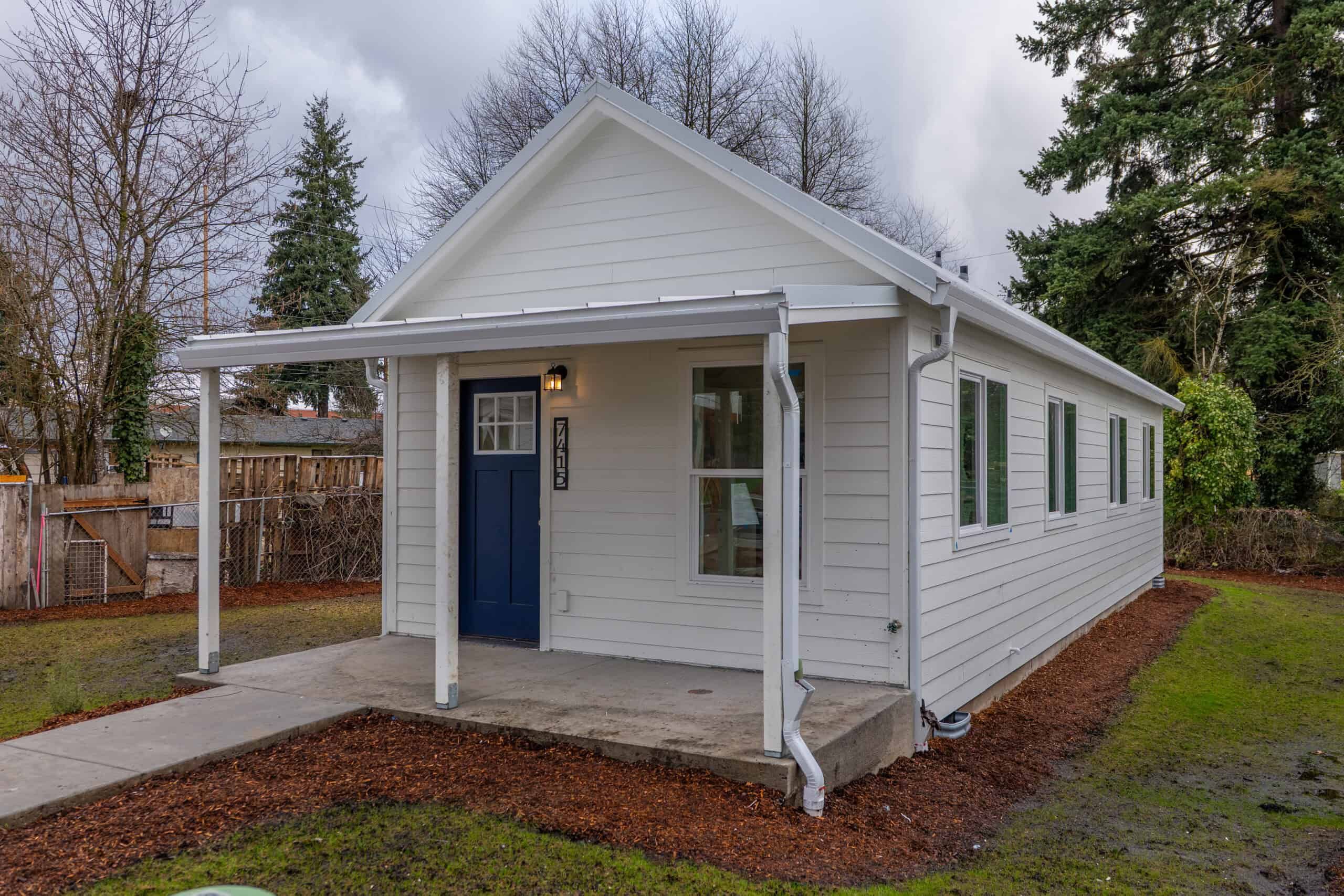
In the City of Vancouver you can add up to two accessory dwelling units (ADUs) as new buildings, additions, or conversions of existing space. There’s no parking minimum and no owner-occupancy rule, and ADUs pay half the impact fees of a house. The details below come from the City of Vancouver’s ADU page and reflect the city’s updated zoning code, adopted as Ordinance M-4533 on June 1, 2026, which took effect July 31, 2026. Check the current version when you apply.
The first question is whether your lot is in the city at all. A lot of land with a Vancouver mailing address is unincorporated Clark County, and those parcels follow the county’s rules in our Clark County ADU rules guide. For how we work in the city, see ADU builder in Vancouver.
What an ADU is in Vancouver WA
The city defines an ADU as a housing unit added to a property that already has a housing unit or units on it, with everything needed for day-to-day living on its own: a kitchen, a bathroom, and a sleeping area. It can be attached, detached, a combination of both, or a conversion of an existing structure such as a garage.
City of Vancouver or Clark County
Look the parcel up in the Clark County Property Information Center. It shows whether the lot is inside city limits and gives the zoning district.
Hazel Dell, Felida, Minnehaha, and parts of Salmon Creek often have a Vancouver mailing address and are still unincorporated. Inside the city, Vancouver’s Community Development department reviews the project. Outside it, Clark County does, under different rules and a different permit system.
Where ADUs are allowed
- ADUs can be built in the Low-Scale Neighborhood and Medium-Scale Neighborhood zoning districts.
- They may also be possible in the Mixed-Use Neighborhood and Regional Activity Center districts, though the city says that’s less likely because of those districts’ higher density requirements.
- The ADU has to be on the same parent lot as a single-family house, duplex, triplex, fourplex, townhome, or rowhome.
How many ADUs you can build
Up to two ADUs on a lot. If you propose more than two additional units, they may still be allowed, but no more than two of them can be counted as ADUs. Washington’s ADU law, RCW 36.70A.681, requires cities to allow two on lots in urban growth areas zoned for single-family homes.
Size limits
- A dwelling unit has to be 1,000 square feet or less to count as an ADU and qualify for the reduced impact fees.
- A larger unit may still be allowed, but it isn’t an ADU.
- The ADU can’t be smaller than the Washington State Building Code requires for a dwelling.
Wolf’s Models K, E, F, J, and L are 432 to 984 square feet, all under the 1,000-square-foot line. The Model I is published at 1,232 square feet and comes to roughly 1,150 square feet measured inside the walls, still over the line. On a lot that already has a house, it would be reviewed as an additional dwelling under the zoning code (VMC 20.420) rather than an ADU, and it would pay full impact fees instead of the 50 percent ADU rate. On a vacant lot, it can be the main house.
Setbacks, building separation, and design
Vancouver doesn’t publish one setback for every ADU. The development standards depend on the building type of the main dwelling, as defined in the city’s zoning code (VMC 20.420), and each building type has its own setbacks and standards.
The building code adds separation rules:
- A detached ADU has to be at least 10 feet from every other structure on the lot, including the house, stairs, decks, garage, and sheds. Closer than that, it needs additional measures such as sprinklers or 1-hour fire-rated construction.
- An attached ADU has to be fully separated from the main unit with 1-hour fire-rated construction and an STC/IIC 45 sound rating, in the walls and in any floor or ceiling between stacked units.
- A single ADU created entirely inside an existing home may not need that separation if hard-wired, interconnected smoke detectors run through the whole home and the ADU. Converted spaces still need a finished ceiling at least 6 feet 8 inches high and legal egress windows.
- The ADU needs its own lockable entrance. A door between the ADU and the house is allowed, but it can’t be the ADU’s main access.
On design, the city says an ADU doesn’t have to be visually subordinate to the main house or match it.
Parking
The city has no minimum vehicle parking requirement for ADUs. If you decide to build parking, the zoning code still governs where it goes and what material it’s made of.
Owner occupancy, renting, and selling
- The property owner doesn’t have to live on the property.
- An ADU rented as a long-term unit has to be registered with the city and is inspected periodically.
- A short-term rental needs a short-term rental permit.
- ADUs can also be sold as individual units. If your project includes a land division, start with the city’s land division page.
Utilities
Some services can be shared between the main house and one or two ADUs, depending on the utility. When they’re shared, each unit needs its own shutoffs, and each unit needs its own temperature control for heat. The questions to answer early:
- Power: does the ADU need a service upgrade, a larger meter, or a separate meter? Clark Public Utilities answers that.
- Water: do you need a separate connection and meter?
- Sewer: is there capacity in the existing line, or do you need a separate or larger line?
- Septic: if the lot is on septic, Clark County Public Health needs a record of the existing system and its capacity, and you need to know whether it can serve the ADU.
Impact fees and property taxes
- ADU impact fees are 50 percent of the main dwelling’s impact fees (VMC 20.450.030).
- If the main house already exists, the city calculates the ADU’s fees from what the house would pay if it were built at the same time.
- An ADU built as part of an addition or remodel may qualify for up to three years of property tax relief through the Clark County Assessor’s Homeowner’s Remodel Exemption. You have to file before construction is finished.
The ADU permit process in Vancouver
Every ADU needs a building permit, including one created inside an existing home.
- Confirm the jurisdiction and zone in the Property Information Center.
- Submit a Request for Utility Services before the building application. The results tell you whether the project needs a civil engineering (ENG) review.
- If the project includes a land division, start with the city’s land division process.
- If it doesn’t, apply for a residential building permit for new housing through the city’s residential building permits page.
- Plan review, corrections, and inspections follow. The city’s building plans examiners (360-487-7828) and land use planners (360-487-7803) take questions.
Building a Wolf ADU in Vancouver
Wolf homes are modular, built to the same IRC and IBC codes as a site-built house. Washington L&I reviews the factory plans and oversees inspections in the plant, and each home carries its L&I insignia before it ships. Vancouver still reviews the foundation, placement, utility connections, and site work.
Our factory in Battle Ground is 20 to 30 minutes from most of Vancouver, and we’ve delivered more than 80 homes with Vancouver addresses, about 30 of them ADUs. Some of them are in our case studies. The Model K starts at $85,500 for the home itself. Permits, impact fees, delivery, installation, and site work are priced after we see the lot. The Washington ADU cost guide has typical ranges.
Get started
Send us the address and a rough idea of where the ADU would go. We’ll confirm city or county, check the building type and the separation rules, and look at the path a module would take to the pad. Start a free property evaluation.
Common questions
Is my Vancouver address actually in the City of Vancouver?
How many ADUs can I build in Vancouver?
How big can an ADU be in Vancouver?
Does a Vancouver ADU need off-street parking?
Do I have to live on the property to rent out an ADU in Vancouver?
What impact fees does a Vancouver ADU pay?
Sources
Requirements change, so check the current forms and rules with your jurisdiction before you file. This is general information, not legal advice.
- City of Vancouver — ADU, Accessory Dwelling Units
- City of Vancouver Ordinance M-4533 (adopted June 1, 2026; effective July 31, 2026)
- City of Vancouver — Residential building permits
- Clark County Property Information Center
- Clark County Assessor — Homeowner's Remodel Exemption
- City of Vancouver — Rental registration program
- City of Vancouver — Short-term rentals
- Washington Department of Commerce — ADUs
- RCW 36.70A.681 — Accessory dwelling units, limitations on local regulation
- Washington L&I — factory-assembled structures