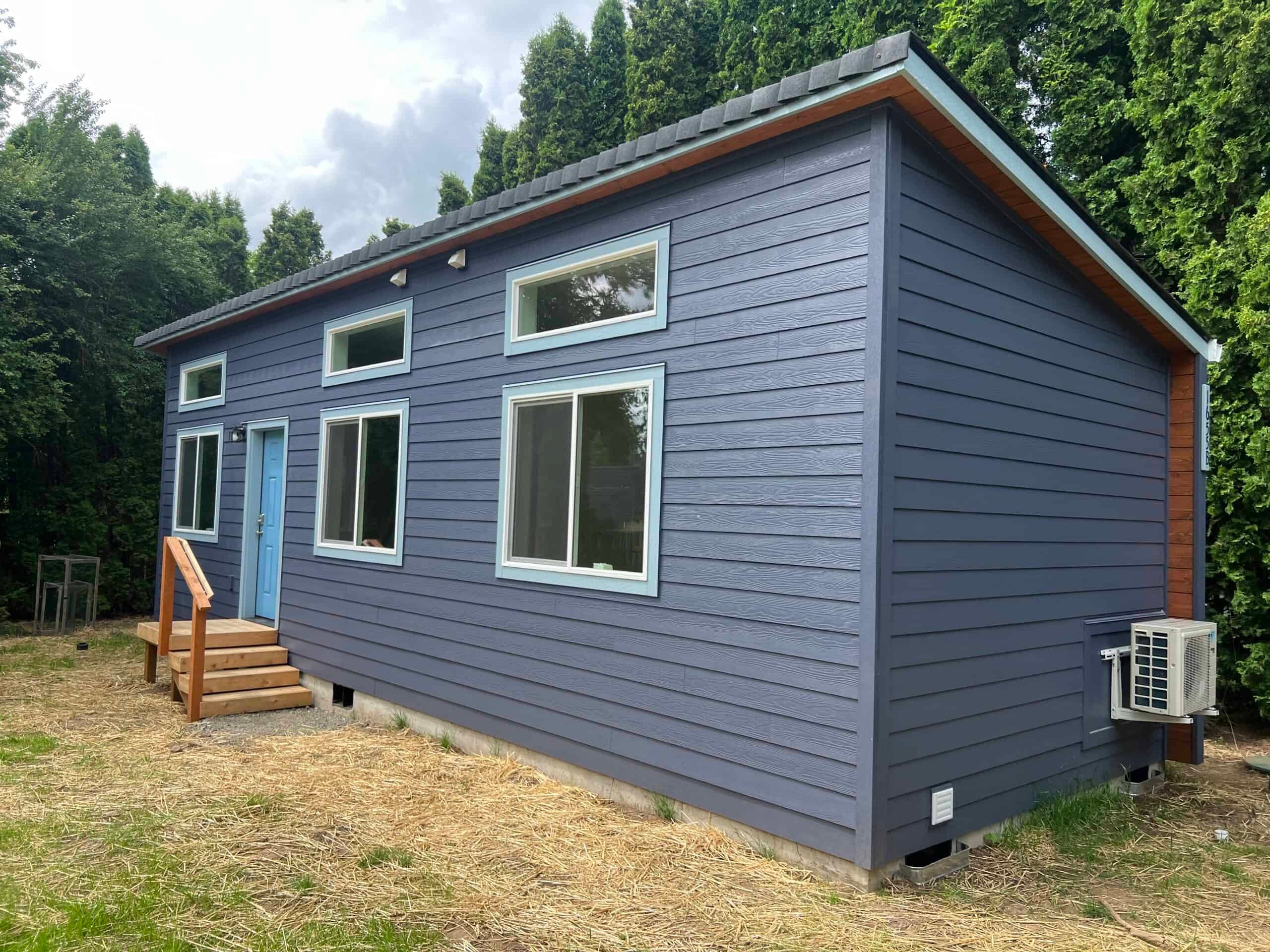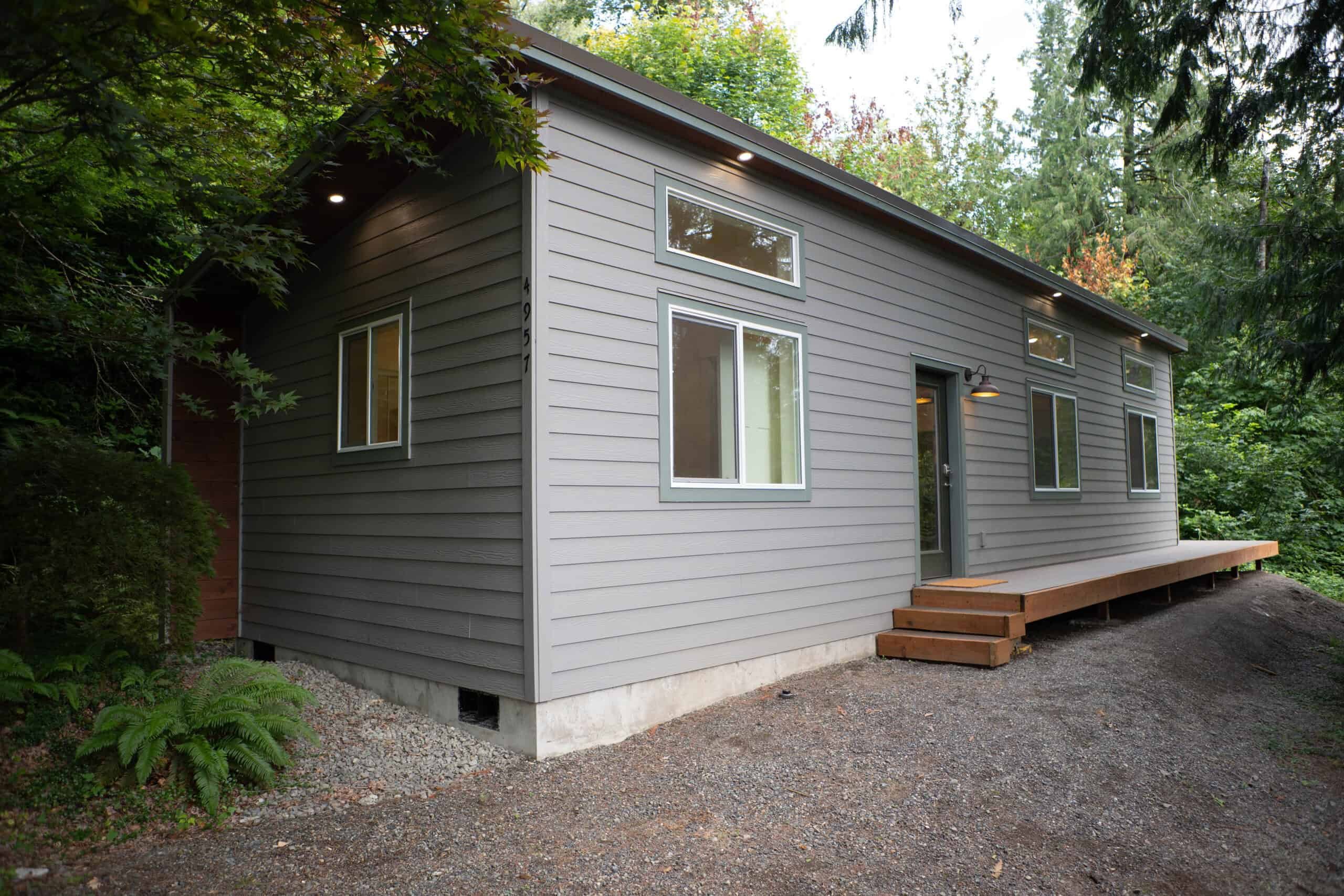

Newport is the Lincoln County seat and the biggest town on the central coast, with the Bayfront, Nye Beach, Agate Beach to the north, and South Beach across the Yaquina Bay Bridge. It’s also a practical place to add a second home. The city updated its ADU rules in 2019 and 2021, and today they’re simpler than what you’ll find in a lot of coast towns.
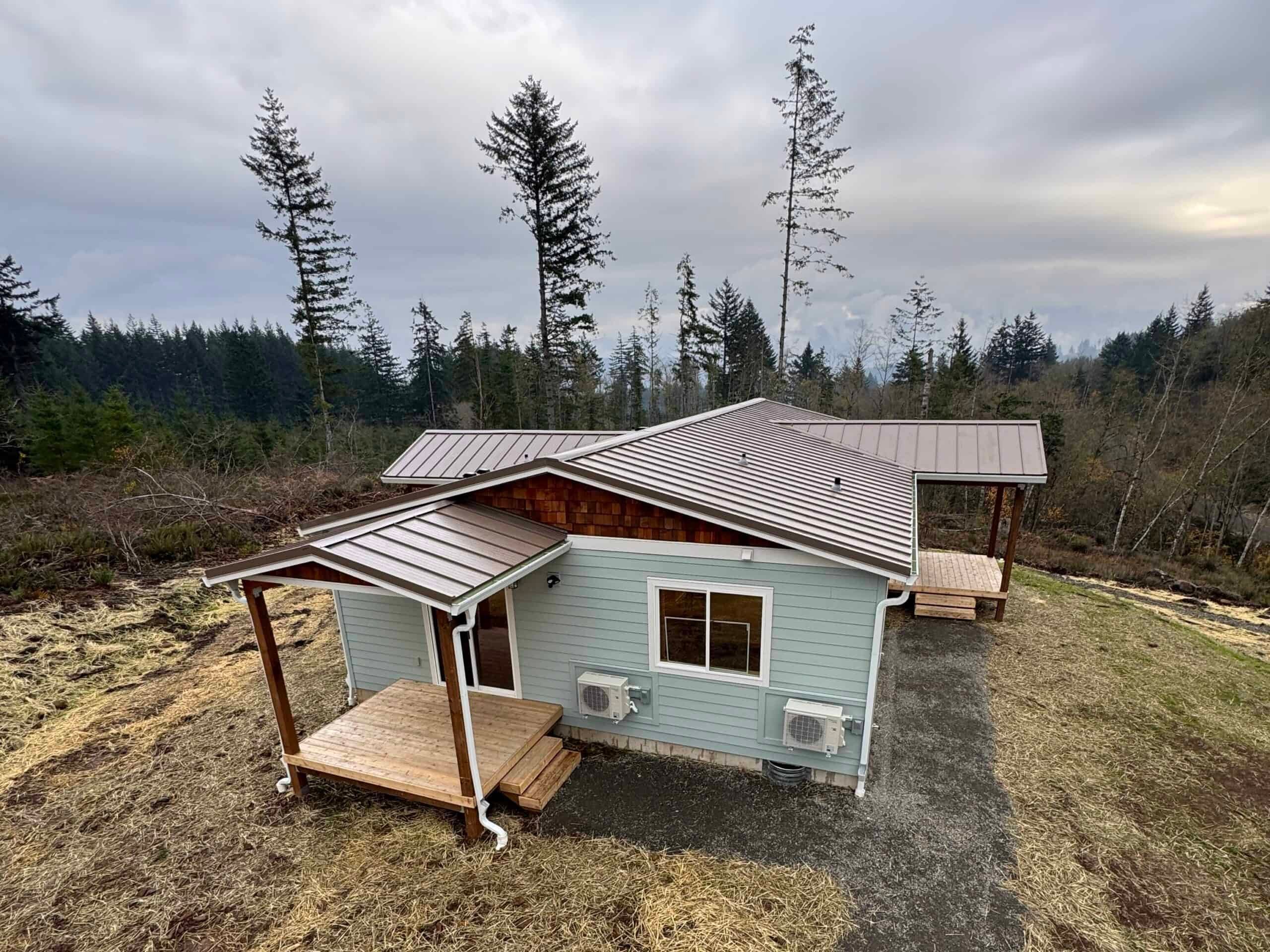
We’ve built here. The photos of the red Model I with the covered porch on our Oregon coast page are from a home we set in Newport. So we know the drive, the weather, and what the city asks for.
Who handles your permit
The City of Newport’s Community Development Department handles both planning and building, and it runs its own building program. The office is at 169 SW Coast Highway. Building permits go through Oregon’s ePermitting system. We put the packet together and file it.
If your lot is outside city limits but inside Newport’s urban growth boundary, Lincoln County zoning applies until the land is annexed. The county’s ADU ordinance (#507) only allows ADUs inside urban growth boundaries, and where the county and the city disagree inside Newport’s boundary, the city’s standards win. Farther out, including some of the unincorporated beach communities north of town, the county’s rules decide whether an ADU is allowed at all. The Lincoln County ADU guide walks through that.
Your factory-built home carries an Oregon insignia from the state’s Building Codes Division, which covers the house itself. The city still reviews and inspects the foundation, the placement, and the utility hookups.
Newport’s ADU rules
Under the city code (NMC 14.16.050):
- Zones: ADUs are allowed outright in the R-1, R-2, R-3, and R-4 residential zones.
- How many: one ADU per detached single-family home. ADUs don’t count against the zone’s density limit.
- Size: 800 square feet or 75% of the main house, whichever is smaller. Converting a whole floor of the house (a basement, attic, or second story) can go bigger.
- Height: a detached ADU can’t be taller than the main house.
- Placement: a detached ADU can’t sit in front of the front setback lines of the neighboring lots, so it usually goes beside or behind the house.
- Setbacks: the zone’s regular setbacks apply. In R-1, for example, that’s 15 feet in the rear and 5 to 8 feet on the sides.
- Owner-occupancy: not required. You don’t have to live on the property.
- Parking: the city doesn’t require an extra parking space for an ADU.
- Materials: the ADU doesn’t have to match the house.
If your lot can’t meet one of those standards, the city lets you ask for relief through a conditional use review. Newport also has a temporary program, running through early 2032, that lets housing projects ask for adjustments to certain development standards. We’ll tell you if either one could help your lot.
One more thing to know: if you’re in the Historic Nye Beach Design Review District, a new home or an accessory structure over 200 square feet goes through design review. Converting space inside an existing building into an ADU doesn’t.
Which Wolf homes fit
The 75% rule matters as much as the 800-square-foot cap. If your house is 1,000 square feet, your ADU tops out at 750.
- Model K (432 sq ft) is a one-bedroom with a separate living room. It fits behind almost any Newport house.
- Model E and Model F (616 sq ft) are two-bedroom plans that fit under the 800-square-foot cap, as long as your house is at least about 820 square feet.
- Model I (1,232 sq ft) is too big for an ADU, but it’s the kind of full-size main home we’ve already set in Newport.
Newport’s code also treats factory-built homes fairly. A manufactured home, prefabricated structure, or small home can go on any lot zoned for single-family homes under the same standards as a site-built house. Wolf homes are modular, built to Oregon’s residential code and set on a permanent foundation.
Bluffs, dunes, and landslides
This is the part of a Newport project that deserves the most attention up front. Newport’s coastline has moved. The city’s own comprehensive plan describes hundreds of feet of coastline lost at Jump-Off Joe, where homes were destroyed in the 1940s, big landslides on both sides of Yaquina Head, and bluffs eroding between Nye Beach and the bay.
Because of that, Newport requires a geologic permit before you build or clear trees in a mapped bluff, dune, or landslide hazard area. The permit comes with a geologic report showing the site is suitable, and since 2025 a geotechnical engineer can prepare it, not just an engineering geologist. The report is good for five years.
The city also doesn’t allow homes on the beach, on active foredunes, or in interdune areas that flood from the ocean, and it wants a site report for lots in its mapped beach and dune areas.
If your lot is on the ocean side of Highway 101, near Nye Beach, Agate Beach, or Yaquina Head, plan on the hazard review. We’ll ask for any report or survey you already have, and we’ll tell you early if the lot needs one.
Tsunami and flood
Most of Newport sits outside the state’s largest tsunami inundation scenario. The areas with the most exposure are South Beach State Park, the Bayfront, Nye Beach, and Agate Beach, and evacuating is harder south of the bay. Newport’s tsunami overlay limits things like schools and critical facilities in the inundation zone. It doesn’t stop you from building a house or an ADU.
The city’s flood rules use FEMA’s 2019 flood maps. Lots near Yaquina Bay and the Bayfront are the ones to check. If your pad is in a mapped flood zone, the map can set how high the floor sits and what the foundation looks like.
Vacation rentals
Newport separates home shares and whole-house vacation rentals. Any rental under 30 nights needs a city business license with a short-term rental endorsement. Renting out a room in a home you live in (a home share or B&B) is allowed in all residential and commercial zones. A whole-house vacation rental is only allowed inside the city’s Vacation Rental Overlay Zone, which is capped at 176 units with a first-come waiting list. Outside the overlay zone, existing vacation rentals have to stop when the property sells.
The ADU rules don’t have their own rental ban, but an ADU rented by the night is still a short-term rental, and the same limits apply. If you’re counting on nightly income, check the overlay map and the waitlist before you design. Most Newport ADUs we’d plan are for family, a caregiver, or a long-term tenant. See vacation rental ADUs for more.
Newport neighborhoods, lot by lot
Where your lot sits in Newport changes what we look at first.
- Nye Beach has older, smaller lots, the historic design review district, and tight street parking. A compact plan like the Model K is often the easiest fit, and we plan the set around the neighbors’ cars.
- The Bayfront is a working waterfront with steep streets up the hill. Lots near the water are the ones most likely to sit in the tsunami and flood maps.
- Agate Beach and Yaquina Head, north of town, are where the landslide and bluff mapping matters most. Expect the geologic permit on the ocean side.
- South Beach, across the bridge, has the bridge rules for wide loads and a harder tsunami evacuation, so we plan both into the project.
Getting your home to Newport
From our factory in Battle Ground, just north of Portland, the usual route is I-5 south to Corvallis, then US-20 west over the Coast Range into Newport. The other option is OR-18 down to Otis and US-101 south through Lincoln City. US-20 comes into town north of the bay, so most Newport lots never cross the bridge.
South Beach is different. Getting there means crossing the Yaquina Bay Bridge, and ODOT requires certified flaggers, or a rolling stop with three pilot cars, for loads wider than 12 feet. The Model E and F are 14 feet wide, so a South Beach delivery of either one takes that extra coordination. It’s doable, and we plan it into the schedule and the quote.
Once we’re in town, the last few blocks are usually the tight part: steep streets near the Bayfront, parked cars in Nye Beach, power lines, and trees. We check the route and the crane spot on the site visit.
Cost and schedule
The home costs the same as anywhere else. The site work is where coast projects add up:
- A geologic report and permit if your lot is in a mapped hazard area.
- System development charges. Newport charges these by square foot, and ADUs pay the small-home rate, so a smaller ADU pays less. Ask the city for the current rates.
- The long haul down I-5 and over the Coast Range, the oversize-load permit, crew travel, and bridge flaggers or pilot cars for South Beach.
- A raised foundation if the flood map calls for one.
Our published installation baseline covers sites within 20 miles of the factory, so Newport delivery and setup are quoted after we’ve looked at your lot. The home is built in the factory while the city reviews your permit, which saves time over building on site. See cost and financing.
Nearby towns
Lincoln City is 25 miles north and has its own ADU and vacation rental rules. Yachats and Waldport are south, each with its own city hall. Depoe Bay, between Newport and Lincoln City, is its own city too. Unincorporated lots around Otter Rock and Seal Rock follow Lincoln County’s rules. For the whole coast in one place, see Oregon coast ADUs and beach cottages.
What we check first
Send us the address and a quick note on what you have in mind. On a Newport lot, we look at:
- Whether the lot is inside city limits, in the urban growth boundary, or in unincorporated county.
- Your zone, and whether the lot is in the Historic Nye Beach design review district.
- The ADU size cap for your house (800 square feet or 75%, whichever is smaller).
- Whether the lot is in a mapped bluff, dune, or landslide area that needs a geologic permit.
- The tsunami and flood maps for your address.
- Our route, including whether we cross the Yaquina Bay Bridge.
- How you plan to use the home, and whether that fits the city’s rental rules.
Send us your address and we’ll tell you what Newport will let you build and which model fits.