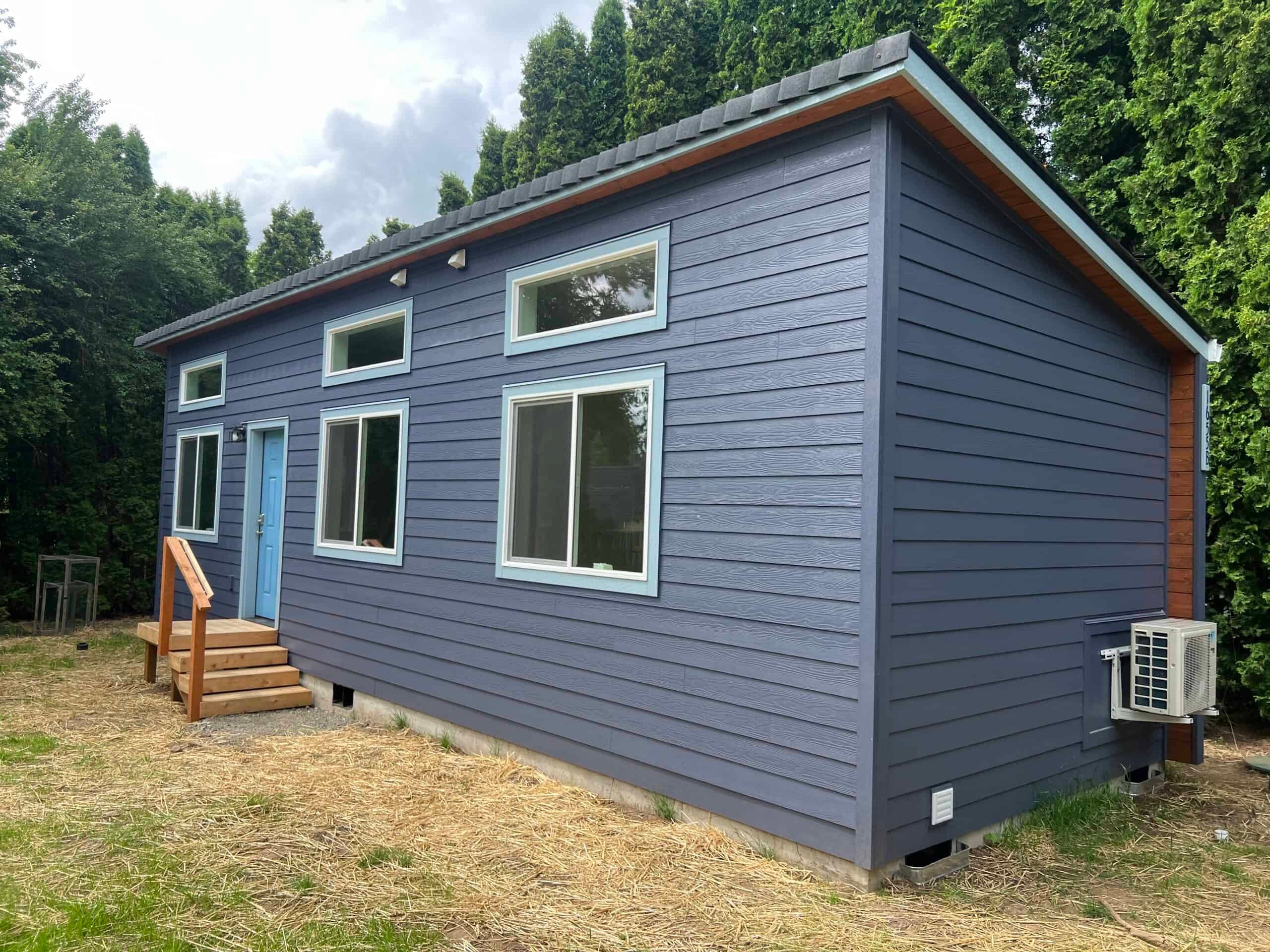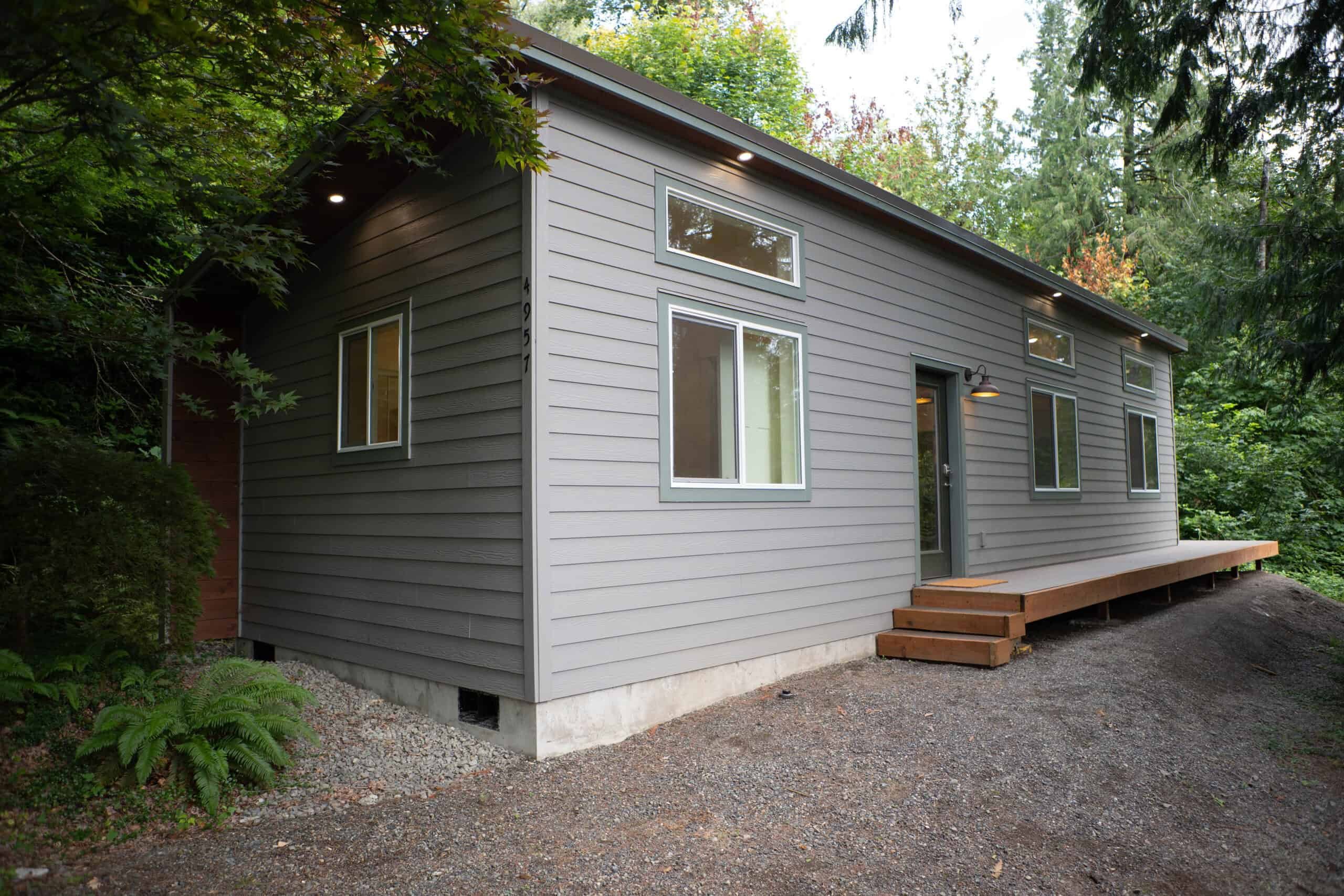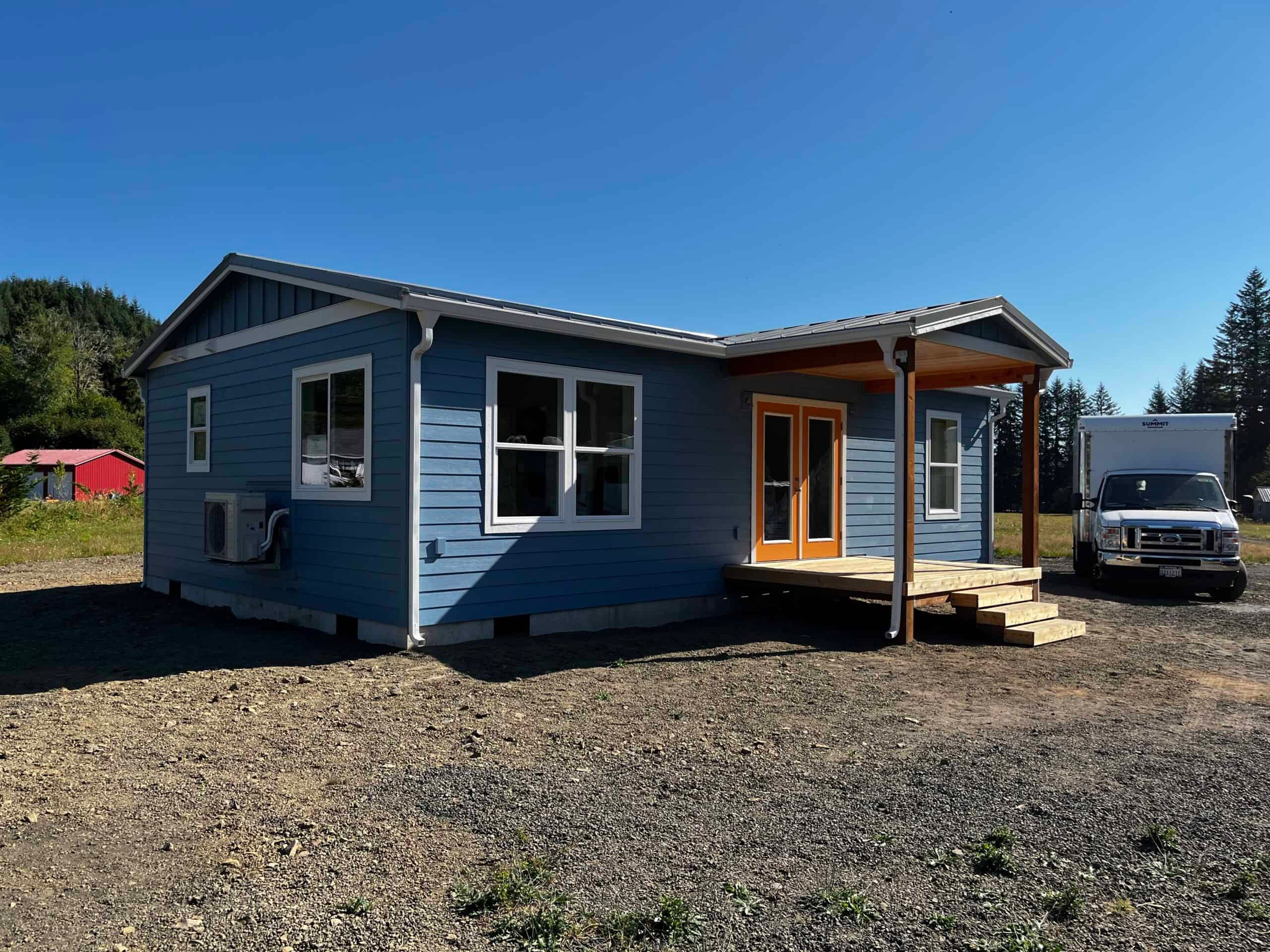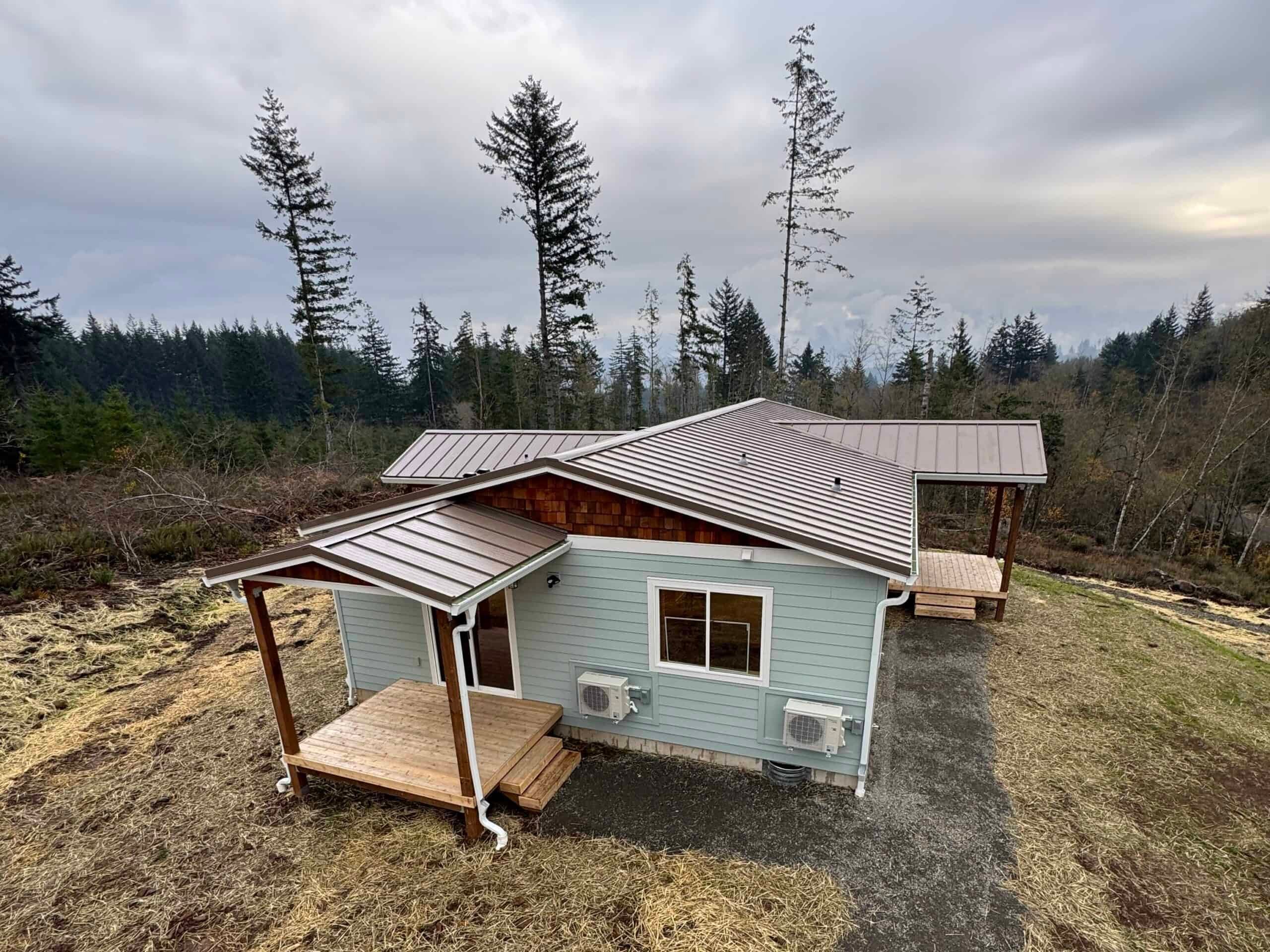

Lincoln City runs about seven miles along US-101, from Roads End at the north end, through Oceanlake, Delake, Nelscott, and Taft, to Cutler City on Siletz Bay. Devils Lake sits just east of the highway. It’s a city of beach cottages, bluff-top homes, and lake lots, and most of it is on city sewer.
The city allows ADUs, and its rules have been updated recently (the ADU section was last amended in 2024). A few of those rules are stricter than what you’ll see in Newport or Yachats, so it’s worth knowing them before you pick a plan. We haven’t set a home inside Lincoln City yet, but we’ve built up and down this coast, including in Newport, Neskowin, and Yachats.
Who handles your permit
The City of Lincoln City issues its own building permits. The city took over its building program in July 2024, and permits and inspections run through Oregon’s ePermitting system. Zoning and ADU questions go to the city’s Planning and Community Development department. We put the packet together and file it for you.
If you’re outside city limits but inside Lincoln City’s urban growth boundary, Lincoln County’s ADU ordinance (#507) points back to the city’s ADU standards, and where the two conflict, the city’s standards are used. You still have to meet the county’s water and septic or sewer requirements. Farther out, in places like Otis or Gleneden Beach, you’re dealing with Lincoln County directly. The Lincoln County ADU guide covers the county side.
Your factory-built home carries an Oregon insignia from the state’s Building Codes Division, which covers the house itself. The city still reviews and inspects the foundation, placement, and utility hookups.
Lincoln City’s ADU rules
Here’s what the city code (LCMC 17.80.110) says:
- Where: ADUs are allowed in the R1, R1-RE, VR, RM, RR, RC, GC, OP, NP, and TVC zones. The main house has to be a single-family home.
- How many: one ADU per lot.
- Size: 800 square feet or 50% of the main house’s floor area, whichever is smaller. Converting a full floor of the house (a basement, attic, or second story) can go bigger.
- Density and lot coverage: in the R1, R1-RE, VR, and RM zones, the ADU doesn’t count toward density or lot coverage.
- Sewer: both the ADU and the main house have to be connected to city sewer. You can’t put an ADU on septic.
- Short-term rentals: neither the ADU nor the main house can be used as a short-term rental.
- Ownership: the ADU can’t be sold separately from the house.
- Owner-occupancy and parking: the city code doesn’t require either, and Oregon law doesn’t allow cities over 2,500 people to require them for ADUs.
In the R1 zone, setbacks are 5 feet on the front, sides, and rear (20 feet in front of a garage or carport), the height limit is 35 feet, and lot coverage is 35%, or 50% in R1-2.5.
The two rules that trip people up are the sewer rule and the rental rule. If your lot is on septic, an ADU isn’t an option under city code until the lot is on sewer. And if the house is already a vacation rental, adding an ADU means giving that up.
Which Wolf homes fit
The 50% rule is the one to do the math on. Your ADU can’t be more than half the size of your house.
- Model K (432 sq ft) works behind a house of about 864 square feet or more. It’s a one-bedroom with a separate living room, and it fits behind most Lincoln City homes.
- Model E and Model F (616 sq ft) need a main house of about 1,232 square feet or more. On a lot with a bigger house, they give you a real two-bedroom.
- Model J (828 sq ft) and Model I (1,232 sq ft) are too big for an ADU here, but they work as the main home on an empty lot.
Lincoln City treats factory-built homes fairly. In the R1 zone, manufactured homes and prefabricated structures are permitted outright, and the design features the city encourages, like porches and dormers, apply the same way to site-built, modular, and manufactured homes. Wolf homes are modular, built to Oregon’s residential code and set on a permanent foundation.
If your lot is empty
On a vacant lot, a Wolf home is the main house, not an ADU. The 800-square-foot and 50% caps don’t apply, and you can build a Model J or a Model I if the zone’s setbacks, height, and lot coverage allow. You can add an ADU later, as long as the lot is on sewer and the rental rules work for you.
Vacation rentals
Lincoln City has been tightening short-term rentals for years. The city now calls them short-term rentals (they used to be “VRDs”), and it covers any rental of 30 days or less. They’re only allowed in certain zones, and in the two biggest residential zones the caps are full: 194 in R1-5 and 91 in R1-RE. R1-5 has a waitlist. An approval also ends when the property sells, and a person can only hold an interest in one short-term rental in a residential zone.
On a lot with an ADU, none of that matters much, because the ADU rules bar short-term rentals on both homes. Plan the ADU for family, a caregiver, or a long-term tenant. If nightly income is your goal, an ADU in Lincoln City isn’t the way to get it. See vacation rental ADUs for how other towns handle this.
Bluffs, dunes, and Devils Lake
A lot of Lincoln City sits on bluffs above the beach, and some of it is eroding.
- Coastal erosion: any development in the coastal erosion zones the state mapped in 2004 needs a geotechnical report. On a bluff lot, the setback from the edge is at least 60 times the annual erosion rate, plus 5 feet. That can take a big bite out of an oceanfront backyard, so it’s one of the first things we look at on the west side of 101.
- Beaches and dunes: homes aren’t allowed on active foredunes, on foredunes that can be undercut or washed over, or on low areas behind the dunes that flood from the ocean. Grading a foredune isn’t allowed either.
- Devils Lake and creeks: the city’s natural resource overlay protects riparian areas up to 50 feet from the high-water mark, and you may need a delineation to show where that line is.
- Flood: the city uses FEMA’s 2019 flood maps. Since 2025, development in a mapped flood zone also has to show “no net loss” of undeveloped space, pervious surface, and trees, which can affect where a home and its driveway go.
- Tsunami: the state’s tsunami maps cover the low areas near the beach, Siletz Bay, and the D River. We check where your lot falls and plan around it.
If you have a survey, a geotechnical report, or a flood elevation certificate, send it along. If not, we’ll tell you early whether you’ll need one.
Sewer and utilities
City sewer runs from west Neotsu, through all of Roads End, down to Cutler City, with more than 5,100 connections. Roads End is inside the city now, after an annexation that was upheld on appeal in 2013. The city doesn’t publish utility maps, so we confirm service with Public Works for your address. Because the ADU has to be on city sewer, this is often the first call we make.
The city charges system development charges for a new dwelling, and an ADU creates one, so plan on paying them. Lincoln City offers installment payments. Ask the city for the current amounts.
Getting your home to Lincoln City
From our factory in Battle Ground, just north of Portland, your home comes down I-5, through the Willamette Valley, and out OR-18, the Salmon River Highway, to US-101 at the north end of town. ODOT’s route map for modular homes authorizes OR-18 for its whole length and US-101 south of OR-18, which covers Lincoln City. Units between 12 and 14 feet wide need a pilot car, and sometimes more on two-lane highways, depending on the route.
Once we’re in town, the tight part is usually the last few blocks: narrow beach streets, parked cars in the summer, power lines, and shore pines. Bluff lots and lake lots can also be tricky for crane placement. We check the route and crane spot on the site visit.
Cost and schedule
The home costs the same as anywhere else. What adds up on the coast is the site work:
- A geotechnical report if your lot is in a mapped erosion zone.
- System development charges for the new dwelling.
- A sewer connection, if the lot isn’t already on sewer.
- The long haul down I-5 and out OR-18, the oversize-load permit, pilot cars, and crew travel.
Our published installation baseline covers sites within 20 miles of the factory, so Lincoln City delivery and setup are quoted after we’ve looked at your lot. The home is built in the factory while the city reviews your permit, which saves time over building on site. See cost and financing.
Nearby towns
Newport is 25 miles south and allows a bigger ADU (800 square feet or 75% of the house). Depoe Bay, in between, has its own city hall. North on 101, Neskowin and Pacific City are unincorporated Tillamook County, with different rules again. For the whole coast in one place, see Oregon coast ADUs and beach cottages.
What we check first
Send us the address and a quick note on what you’re thinking. On a Lincoln City lot, we look at:
- Whether the lot is inside city limits, in the urban growth boundary, or in unincorporated county.
- Your zone, and the square footage of your main house (for the 50% cap).
- Whether the lot is on city sewer.
- Whether the house is a short-term rental today.
- Coastal erosion, dune, flood, riparian, and tsunami mapping for your address.
- The route from OR-18 and where the crane can go.
Send us your address and we’ll tell you what Lincoln City will let you build and which model fits.