
Can Your HOA (homeowners association) Stop You From Building an ADU (accessory dwelling unit) in Washington?
What HB 1337 means for Washington HOAs and ADUs: newer associations generally cannot ban them outright, older covenants may still apply, and the lot still has to qualify.
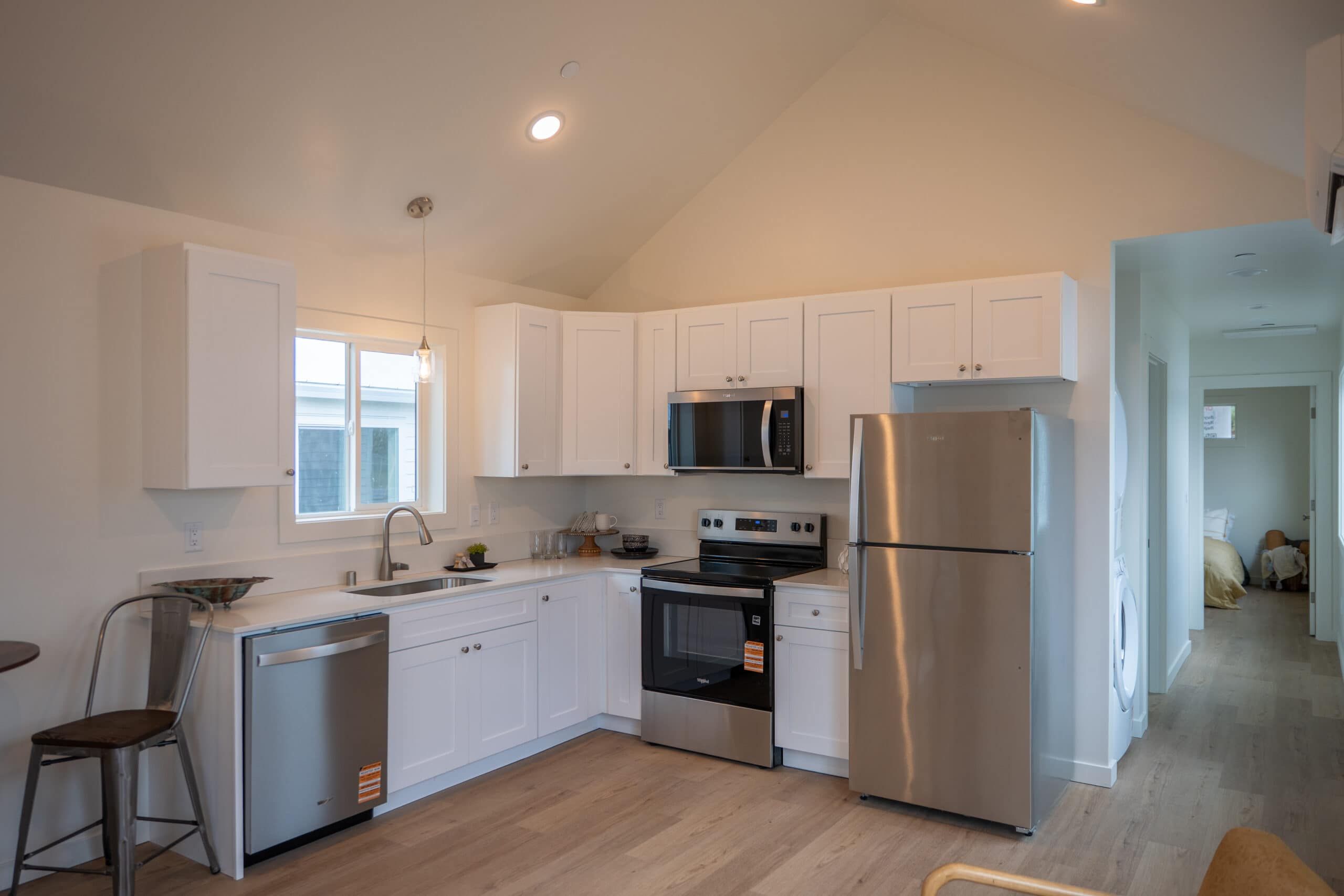
A lot of ADU projects stall when the homeowners association comes up. In Washington, the board can’t always say no. House Bill 1337 changed how certain homeowners associations can regulate accessory dwelling units, but it didn’t erase every covenant in every plat. This is not legal advice. Send the address if you want us to check whether an ADU can work on your lot.
What HB 1337 changes
HB 1337 is part of a broader push to make ADUs easier to build inside urban growth areas. The statute limits how cities, counties, and certain newer homeowners associations can restrict them. In many urban areas, local governments now have to allow more flexibility for both attached and detached units.
For HOAs formed after July 23, 2023, governing documents generally cannot be used to ban ADUs outright when state law already prevents the local city or county from imposing that same restriction. A newer association cannot block the project simply because the board does not want one in the neighborhood.
Read the statute in context on our Washington ADU laws guide. The rules themselves are in RCW 36.70A.680 and RCW 36.70A.681.
Does the law apply to every HOA?
No, and this is where homeowners most often get it wrong.
- Associations created before July 23, 2023 may still have older covenants that affect secondary structures, exterior changes, rentals, or architectural design. Those can remain enforceable.
- The state’s ADU protection generally applies to properties inside an urban growth area. Rural properties outside those boundaries may follow different county rules.
- Washington law also carves out narrower exceptions, including HOA rules tied to on-site wastewater or septic capacity under RCW 64.38.160.
The answer depends on when the HOA was formed, where the property is located, what the governing documents say, and whether the project meets local zoning, setback, utility, and delivery requirements.
If you and the board disagree about whether a covenant still applies, have an attorney look at it. A building permit doesn’t settle a private covenant.
What an HOA can still talk about
Even where a ban is off the table, associations often still have opinions about:
- Exterior materials, colors, and roof form
- Parking and driveway width
- Trees, fences, and common-area access
- Short-term lodging (a separate local path from the ADU permit)
- Construction hours and construction parking
Those are design and occupancy questions, not a substitute for the building permit. Clark County, Vancouver, Battle Ground, and Camas each write their own packet. The first thing to sort out is whether you’re in a city or unincorporated county. If you’re in Clark County, see the Clark County ADU rules.
What Wolf checks
We’ll look up the address, pull the county GIS, and tell you which city or county reviews the permit. If you have CC&Rs or an HOA packet, send it with the evaluation, and we’ll flag language that looks like a ban, a design-review requirement, or a septic exception. We won’t file a permit that ignores a recorded covenant you’ve shown us, and we can’t promise what the board will approve.
A Wolf home is modular, not HUD (the federal standard for manufactured homes) manufactured. Washington L&I inspects the factory. The city or county still permits placement, foundation, and utilities. If you have an HOA, its approval is a separate step on top of both.
Start with the lot
If you only have an address, that’s enough to start. If you have the HOA documents, send those too. Request a free property evaluation, or book a visit if you’d rather talk it through.
The HOA question is separate from hiring the builder. Once you know the covenant is not a hard stop, use the ten questions to ask an ADU builder and the ADU builder vs. general contractor comparison before you sign.