Search
Contact Us
Menu

Peace of mind, built into the process

One company, from permit to keys.

Our team handles permitting, engineering, construction, site preparation, foundation work, utility connections, delivery, installation, and finishing. We coordinate the work and guide you through each decision.

You have one company responsible for bringing it all together. We explain the next step, keep you informed, and help resolve issues along the way.

Full-service availability depends on your location and property. We confirm included work and any exceptions in your agreement before you proceed.

The free preliminary study reviews zoning, setbacks, and what is generally allowed. Delivery access, utilities, engineering, and site costs need further review.

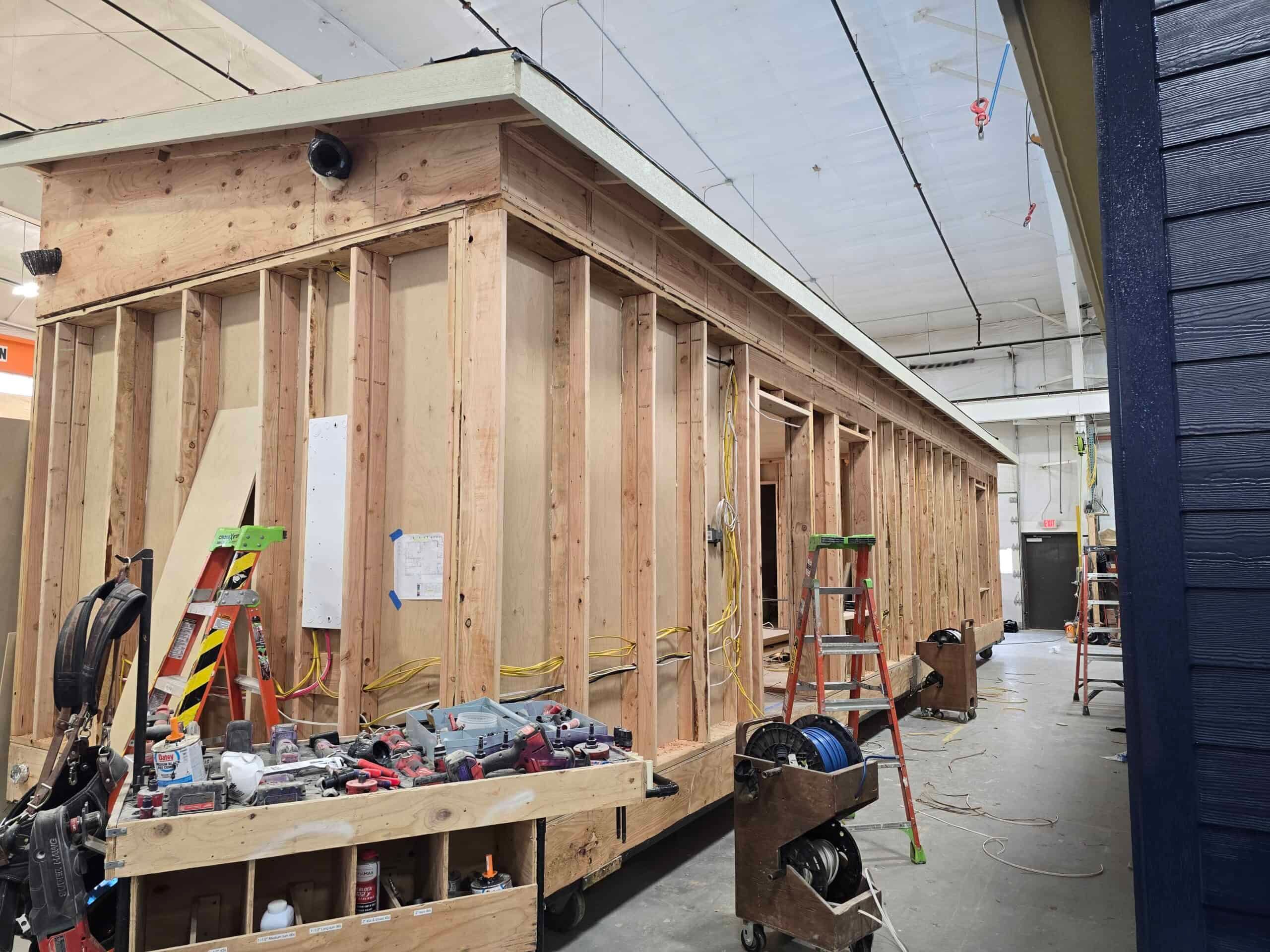
Open framing and electrical work inside Wolf’s Battle Ground factory
See the construction before the finished walls cover it.

The practical advantages

What building indoors can change

01

Build the home under a roof

Framing, insulation, wiring, and interior work happen inside our Battle Ground factory. That shelters the home from direct rain during those stages and reduces the weather exposure that has to be managed on the lot.

What still matters: Materials, transport, installation, and site work still need moisture protection. Indoor construction does not make a home waterproof or eliminate the need for checks before walls close.

Ask us: How do you protect materials and check for moisture before closing the walls?

02

Give the crew a familiar plan

Building established layouts lets our trades work with familiar details and coordinate while the home is still open. You can visit the factory and see the work behind the finished rooms.

What still matters: Repeatable work creates an opportunity for consistency. Workmanship, inspections, and follow-through still determine the result.

Ask us: Can I see the framing, rough plumbing, and electrical work on a factory tour?

03

Move more construction off your property

Much of the framing and interior assembly happens at the factory. That moves those tasks, material storage, and trade activity away from your yard while the home is being built.

What still matters: Excavation, foundation work, delivery, utility connections, and finishing still happen on site. Access, noise, and the duration of site work depend on the property.

Ask us: Which work happens in my yard, and when will crews need access?

04

Allow some work to happen at the same time

Once approvals and scheduling allow, factory construction and site preparation can overlap. The home does not have to be framed on the lot before interior work can begin.

What still matters: Overlap is project-specific. Permits, factory capacity, utilities, site readiness, and delivery conditions still control the completion date. Factory time is only one part of the schedule.

Ask us: Which stages can overlap on my project, and what could hold up occupancy?

05

Start with a defined home and scope

Published plans, standard features, and home starting prices give you something concrete to compare. Our team can then price the site, installation, and selections for your property.

What still matters: A defined home price is not a complete project quote. Modular is not automatically cheaper; compare the same foundation, utilities, finishes, fees, and delivery scope.

Ask us: Does this proposal cover the same work as the other quote?

The Wolf team

We keep the work moving and you informed

Our teams coordinate permits, construction, site work, and installation for your full-service project. We manage the handoffs and explain what happens next, so you know who to call and what to expect.

You receive weekly updates during permitting and factory construction. During field work, your project manager keeps you updated as the work progresses.

See how we handle your project →

Rain and construction

Less exposure means less weather to manage

Keeping framing and unfinished assemblies sheltered reduces direct wetting during the factory build. Moisture protection matters because wood can absorb water and change dimensions as it dries.

The FPInnovations moisture guide identifies prefabrication as one way to reduce exposure time on site. That supports a specific advantage: moving work under cover reduces a source of construction moisture.

Read the construction moisture guide →

The checks still matter

Ask any builder about material storage, moisture checks before enclosure, transport protection, and drying after unexpected wetting. Rain on a job site does not by itself prove poor construction. Indoor assembly does not guarantee a home will never have a moisture problem.

See the work on a factory tour →

A permanent home

Compare the home, the code, and the complete project

Residential construction

Wolf modular homes are built for permanent foundations. Washington L&I approves the factory-built structure; local approvals still apply to the property, foundation, and connections.

See Washington’s approval process →

Value needs evidence

Fannie Mae generally uses the same comparable-sale selection process for factory-built and site-built housing. That is not a promise of equal prices or future appreciation. A blanket claim that on-site construction retains more value needs evidence.

Read the appraisal guidance →

Property fit comes first

An established plan and workable delivery route can make modular a good fit. A difficult delivery path, unusual building shape, or complex addition may favor on-site construction.

Compare Wolf and RG ProBuilders →

Your questions

Before you choose a building method

Does Wolf handle the whole project, including site work?

Yes. For full-service projects, Wolf handles permitting, engineering, home construction, site preparation, foundation, utility connections, delivery, installation, and finishing. Our teams coordinate the work and keep you informed. Site work is priced for your property and included in your project proposal; a separate price does not mean you need to arrange a separate contractor. We confirm service availability and any exceptions for your location before you proceed.

Is modular better in rainy weather?

Indoor construction shelters the home from direct rain during factory assembly. It reduces exposure during those stages, but transport, installation, and site work still need weather planning and moisture protection. A well-managed site-built project can also protect materials and dry the structure before closing it in.

Does factory construction mean a temporary home?

No. Wolf builds modular homes for installation on permanent foundations, with residential building-code requirements and the applicable factory and local inspections. Modular describes the construction method. ADU describes how a dwelling is used on the property.

Will a modular home hold its value?

Construction location alone does not establish future value. Fannie Mae says comparable-sale selection for factory-built housing generally follows the same process as site-built housing. Quality, condition, location, and the local market matter. An appraisal or financing outcome cannot be promised.

When could an on-site builder be a better choice?

On-site construction can be a better fit when the property cannot accommodate modular delivery or you need a building shape outside the available plans. Compare actual access, design requirements, complete scope, and project schedules before choosing.

Start with your property

Tell us who the home is for

We’ll start with zoning, setbacks, and what is generally allowed. Then we can explain the next steps for checking the plan, delivery access, and project scope.

Request a free property evaluation
Ask Wolf

Ask Wolf

A little help finding your home.

Ask about Wolf homes, rentals, your property, or caring for your home. Answers link to Wolf’s published information.

AI-assisted answers. Please leave out personal details.

Search Wolf

Find floor plans, costs, guides, and projects.