

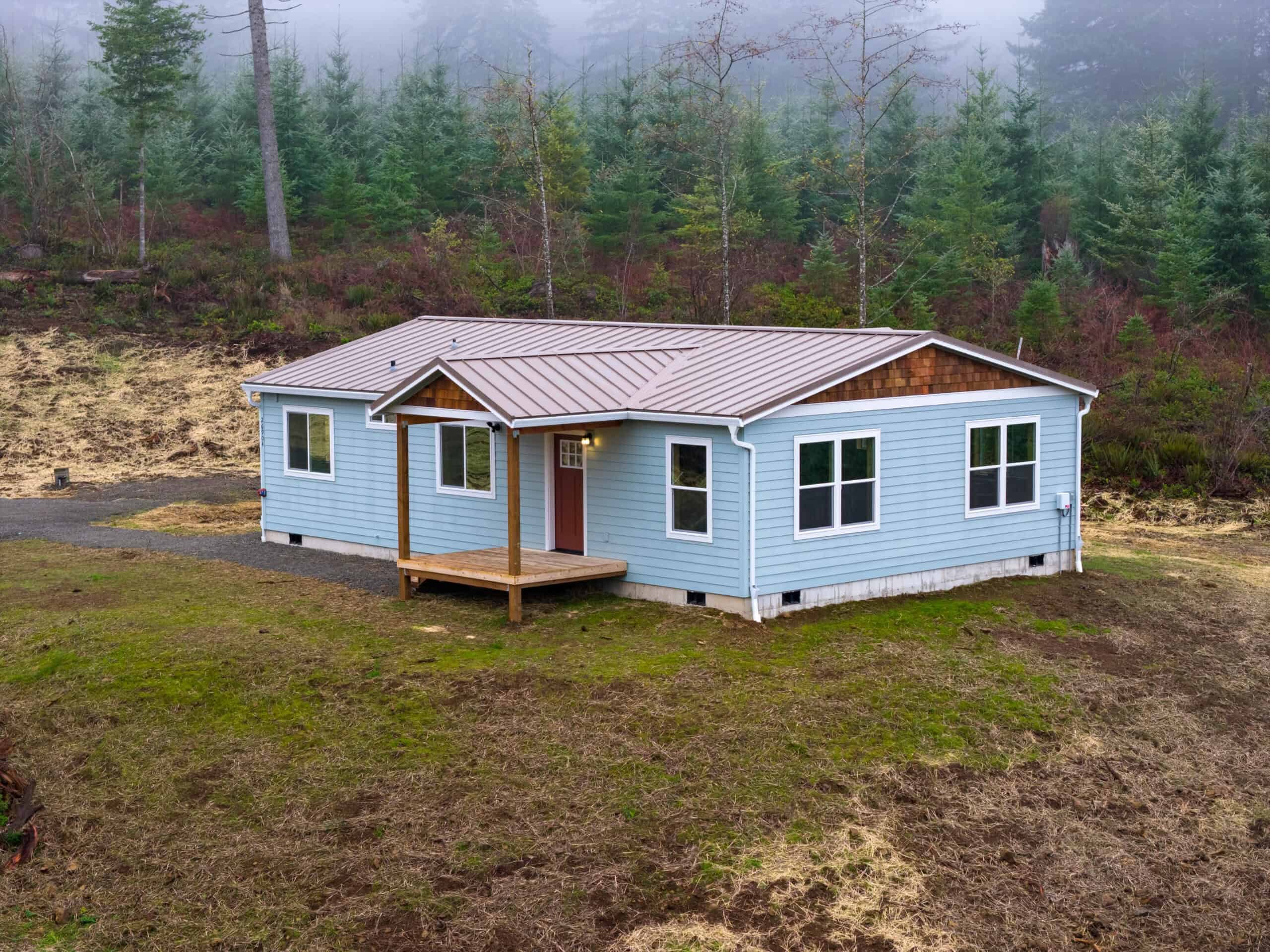
Modular, stick-built, and manufactured homes differ in code, foundation, financing, and what a city will permit. How Wolf’s residential-code homes fit.
People use modular, manufactured, prefab, and stick-built as if they mean the same thing. They don’t. The differences affect code, financing, permits, long-term value, and what you can put on your property.
Stick-built homes
A stick-built home is built on site. The lumber, trusses, windows, siding, mechanical systems, and finishes all arrive at the property. Then the crew puts the house together out in the weather.
The upside is flexibility. A fully custom site-built home can be shaped around almost anything.
The tradeoff is that the site controls the schedule. Rain, subcontractor delays, material staging, security, and inspection timing can all stretch the build. In the Northwest, that means a lot of rain days.
Stick-built tiny houses were often about 200 to 600 sq ft. They were framed on site, usually on a conventional foundation. A house on a permanent foundation is real property. A lender can take a mortgage against it, because the house can be sold if the loan fails. Set the same small house on cinder-block piers with no real foundation, and it won’t last nearly as long. The blocks move, the skirting fails, and water gets under the floor.
Manufactured homes
Manufactured homes are built to the federal HUD code (the federal standard for manufactured homes). They’re often efficient and cost-effective. But they aren’t the same as modular homes built to the local residential building code.
Depending on the property and jurisdiction, manufactured homes can have different rules for placement, financing, appraisal, foundation, and long-term treatment.
They can be the right answer in some situations. They just can’t be swapped in for a modular ADU (accessory dwelling unit) or modular dwelling.
A manufactured tiny home is often financed by the seller or the manufacturer. Many still have a chassis, wheels, and a hookup that can be undone. A lot of them sit on blocks instead of a permanent foundation. Moving one, or leaving it on that setup, shortens the life of the structure. That financing and that foundation are why a manufactured home and a site-built house don’t appraise the same way.
Modular homes
Modular homes are built in sections in a factory. Then they’re delivered and set on a permanent foundation. The evolution of prefab housing covers how factory building got here, from mail-order kit homes to code-built modular homes.
The key difference is the code. A modular home is built to the residential building code that applies in your jurisdiction, not the HUD manufactured-home code.
That makes modular a strong fit for ADUs, backyard cottages, small primary homes, and multi-unit cottage projects. It works well for owners who want a permanent home and a controlled build process.
In Washington, Labor & Industries approves the factory plans and issues the insignia. In Oregon, the Building Codes Division Prefabricated Structures program does the same job. The local building department still permits the foundation, the placement, and the utilities. A Wolf home is set on a permanent foundation under that residential-code approval.
Why Wolf builds modular
We build indoors because the Northwest is hard on outdoor construction. Building in the factory gives us:
- Dry materials.
- Quality checks we repeat on every home.
- Fewer weather delays.
- A faster home build once permits are ready.
- One team for design, permitting support, production, delivery, setup, and warranty.
The site still matters. A modular home needs permits, a foundation, utility connections, delivery access, and final inspections. But the home itself is built indoors instead of sitting open on a lot for months. On a lot near the ocean, the fasteners, flashing, and roofing need more attention. See building materials for coastal vs. non-coastal homes.
Foundation, chassis, and the state insignia
A Wolf modular home is built to the residential code, inspected in the factory, and set on a permanent foundation. It isn’t a house on a trailer or a recreational vehicle.
A manufactured home is built to the HUD code on a steel chassis. Lenders, appraisers, and some zones treat that chassis differently from a modular home on a foundation. A lot’s zoning might allow a manufactured home but not a second home built to the residential code. If so, those are two different applications.
Which one is right for you?
It depends on the project.
Choose stick-built when the site or design needs a fully custom structure that doesn’t work well as a modular plan.
Consider manufactured housing when HUD-code placement is allowed and your goal is the lowest structure cost.
Choose modular when you want a permanent residential-code home, a shorter and more controlled build, and a more predictable process from design through set.
Start with the property
Before you pick a building method, find out what the jurisdiction allows and where the home can sit. You’ll also want to know how it will be delivered, where the utilities are, and what size fits. Those answers usually narrow the choice quickly.
A free property evaluation is the first step. It’s a first look at zoning, setbacks, and what’s generally allowed on your lot. Delivery and utility details get worked out as the project moves forward.